Kitchen classics, vegetables, and bold flavors.
Recipe index
CUISINES

Korean Recipes: Bibimbap, Side Dishes and Gochujang

From bibimbap with colorful toppings to sesame spinach, japchae and sweet-spiced yakgwa, these Korean recipes show different ways to build flavor and texture. Choose a bowl of rice with separate components, serve a few side dishes together, or go for something crispy with gochujang. Some modern dishes are labeled Korean-inspired; the classic recipes keep their own distinctive preparations.

21 recipesBrowse the recipes
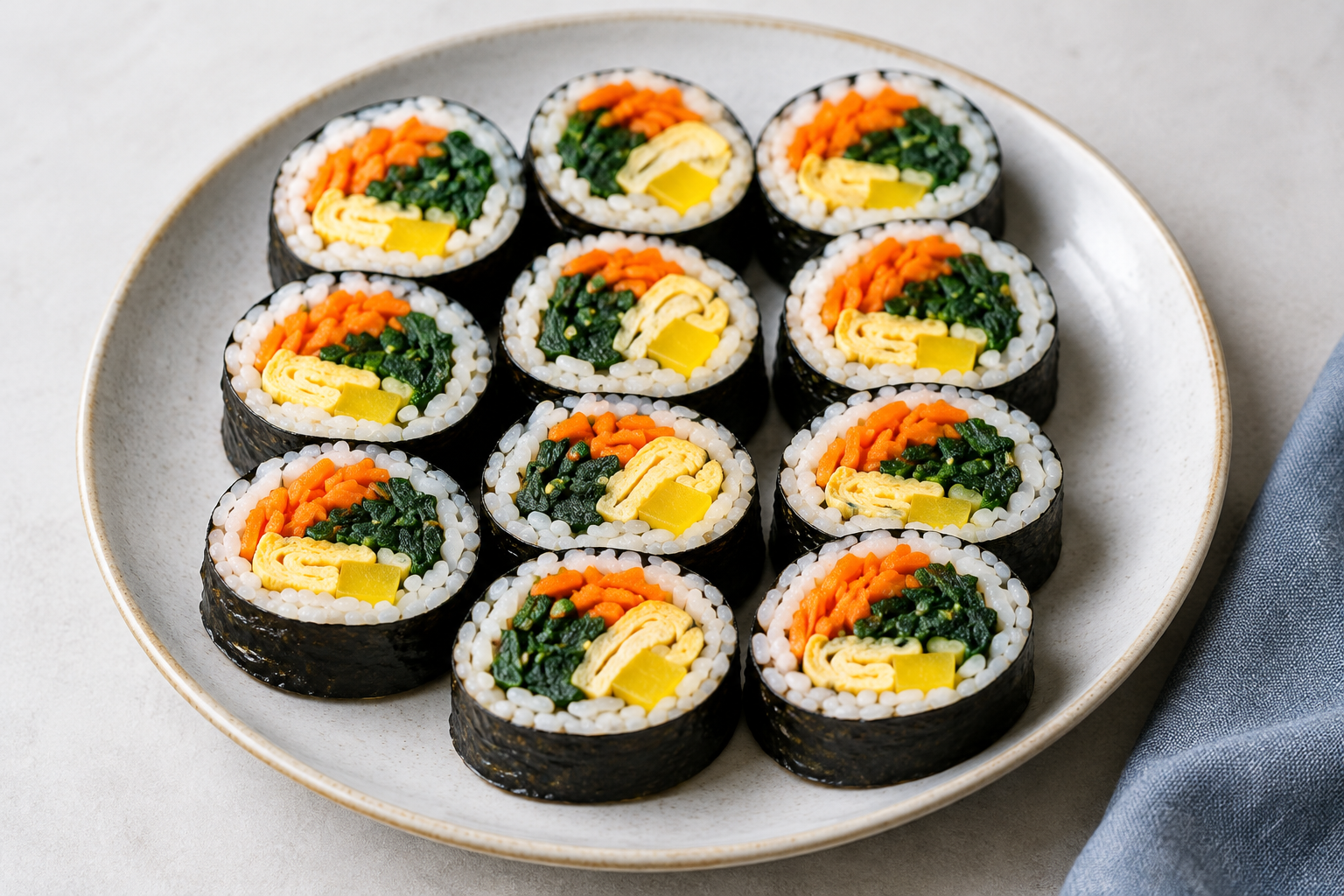
Kimbap slices with rice, spinach, omelet, sautéed carrot and pickled daikon on a platter.

Choose a recipe

Kimbap slices with rice, spinach, omelet, sautéed carrot and pickled daikon on a platter.Lunch
50 minutes

Kimbap with Spinach, Omelet and Carrot

This colorful kimbap fills soft rice seasoned with sesame oil with spinach, thin omelet, sautéed carrot and crisp pickled daikon. Letting the fillings cool first keeps the nori sheets firm and makes the rolls easy to slice.

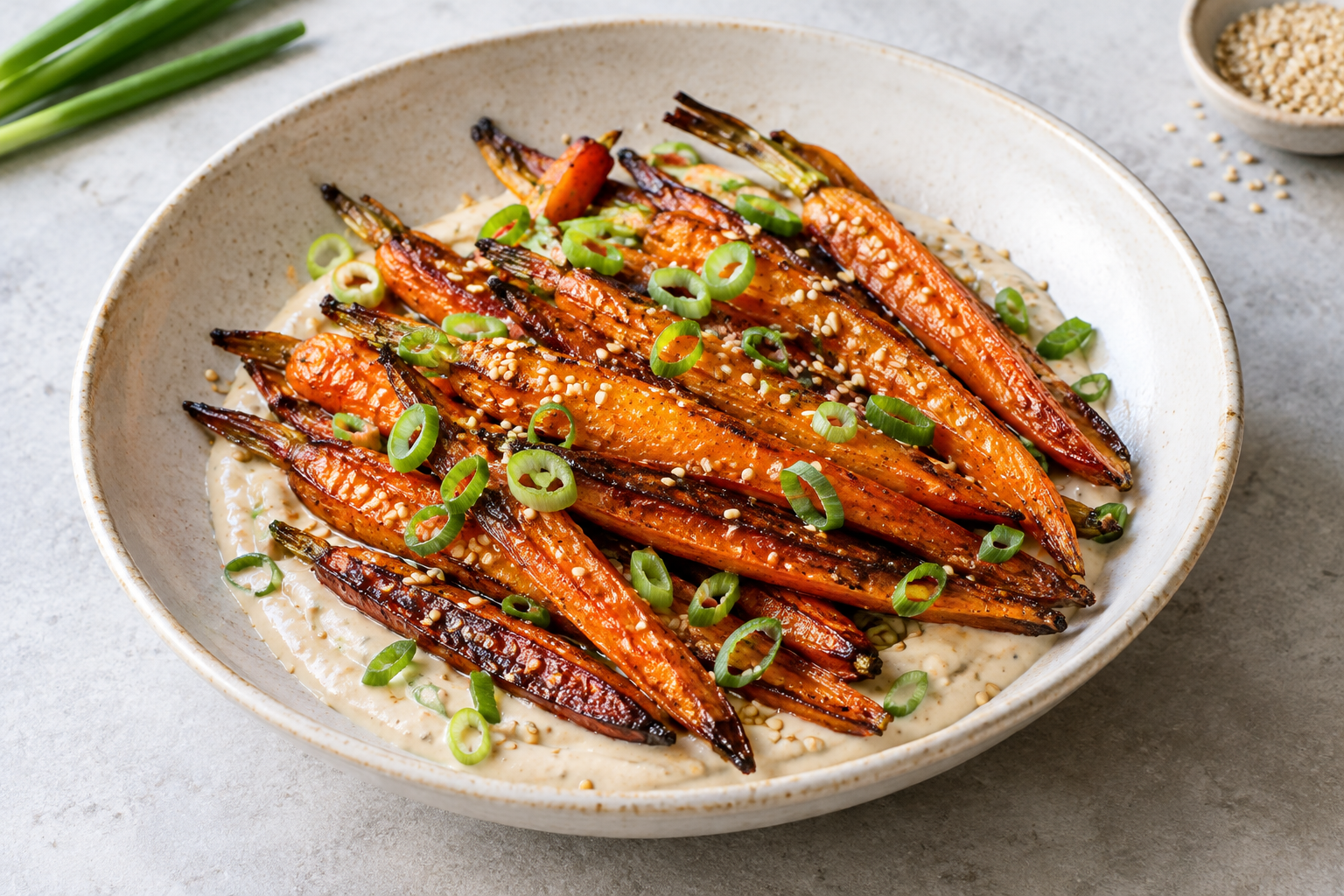
Roasted carrots with dark edges on doenjang yogurt, sprinkled with sesame seeds and spring onion.Side dish
50 minutes

Roasted Carrots with Doenjang Yogurt and Sesame

Sweet, deeply roasted carrots with cool yogurt, the salty umami of doenjang and a bright touch of lime. Sesame and spring onion give this colorful side dish a final bit of crunch and bite.

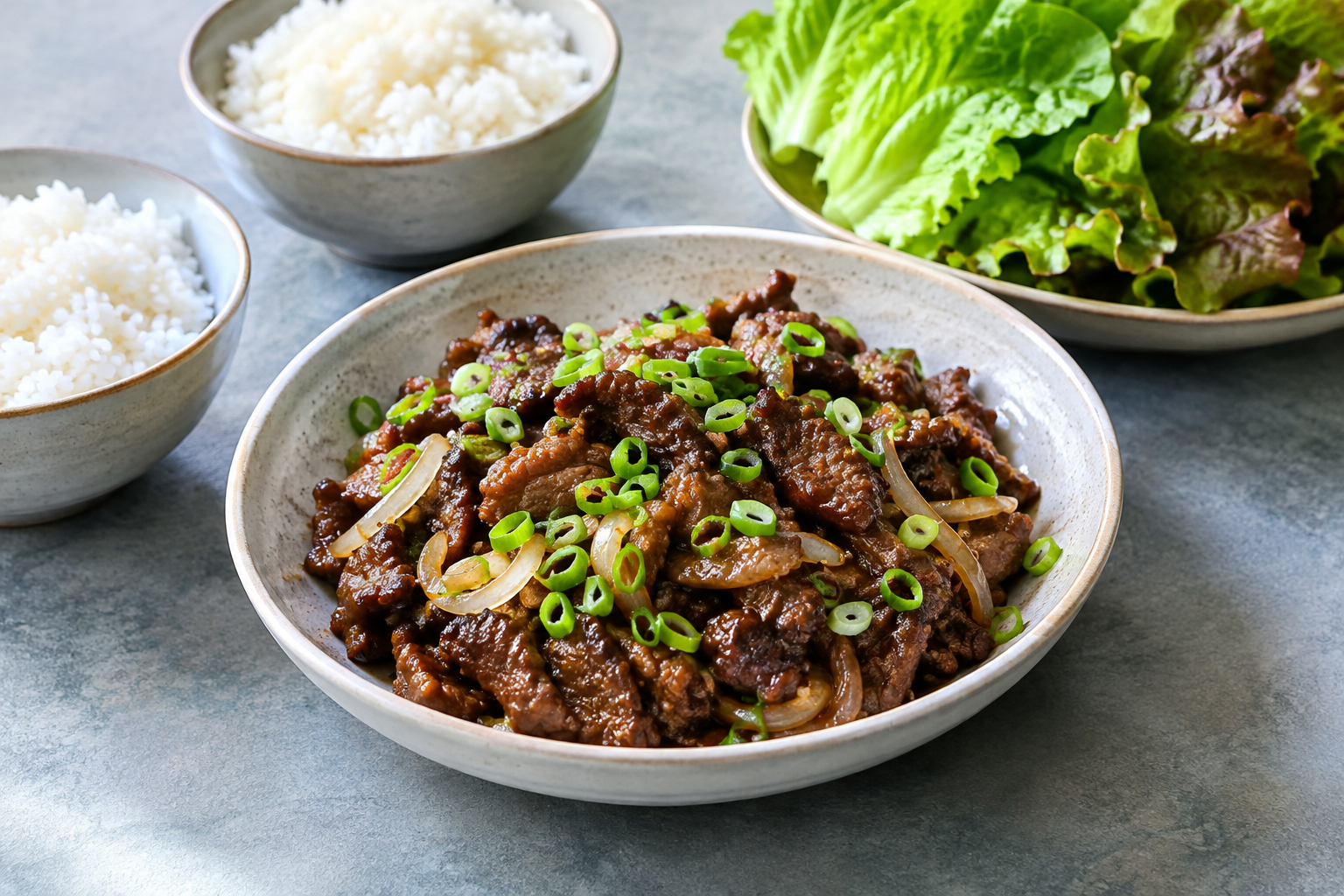
Korean bulgogi with glossy strips of beef and scallions, served with white rice and lettuce leaves.Main course
40 minutes

Bulgogi: Korean Marinated Beef

Thinly sliced beef takes on a sweet-and-savory flavor from a marinade of soy sauce, garlic, sesame oil, and grated pear. Cook it in small batches over high heat for browned, caramelized edges. Served with rice, lettuce, and scallions, it makes a complete main course.

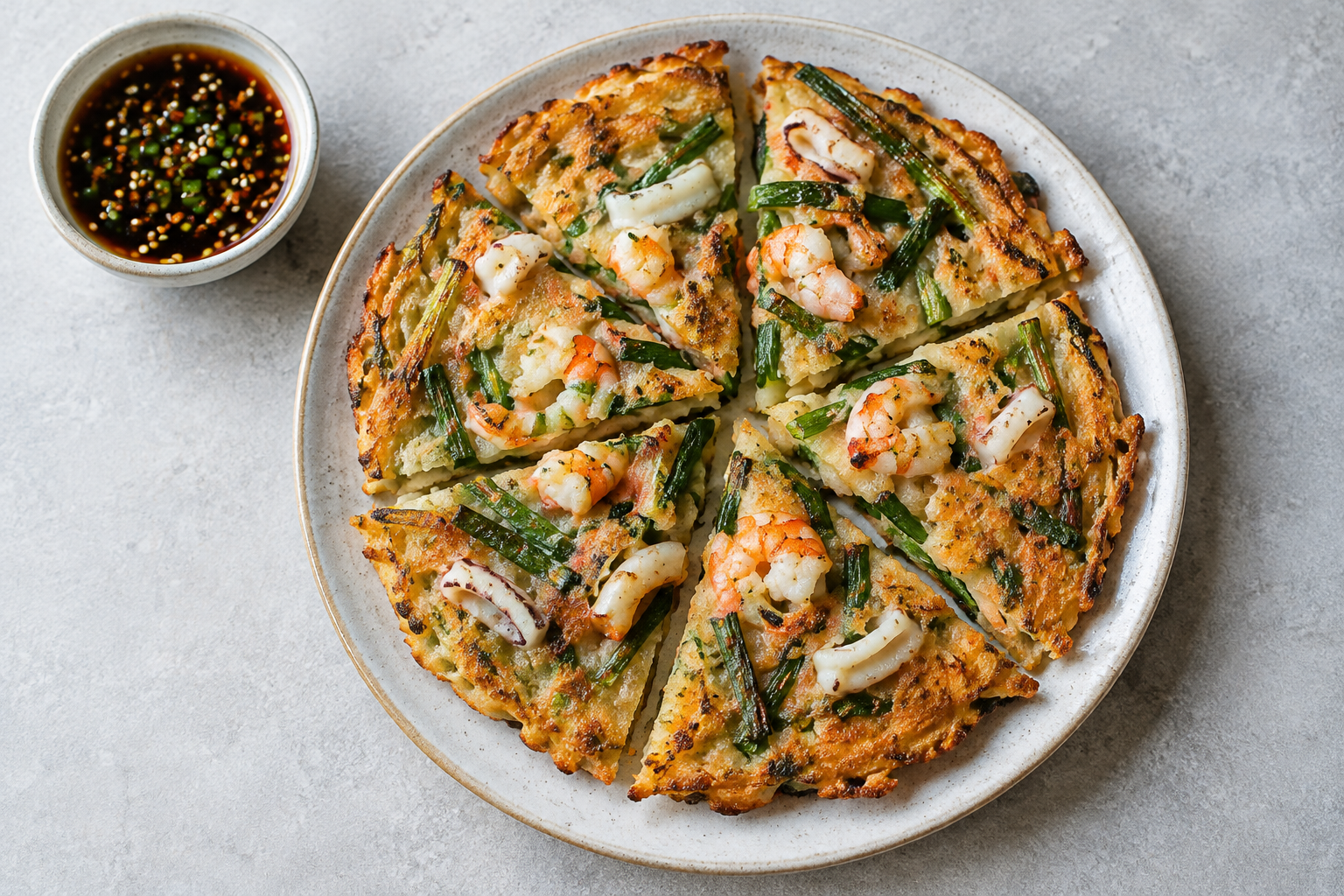
Golden-brown haemul pajeon with scallions, shrimp, and squid, cut into wedges and served with soy dipping sauce.Side dish
38 minutes

Haemul pajeon: Korean seafood pancake

This Korean pancake has crispy edges from scallions and a soft, savory center with shrimp and squid. Serve it cut into wedges with a bright dipping sauce of soy sauce, rice vinegar, and sesame.

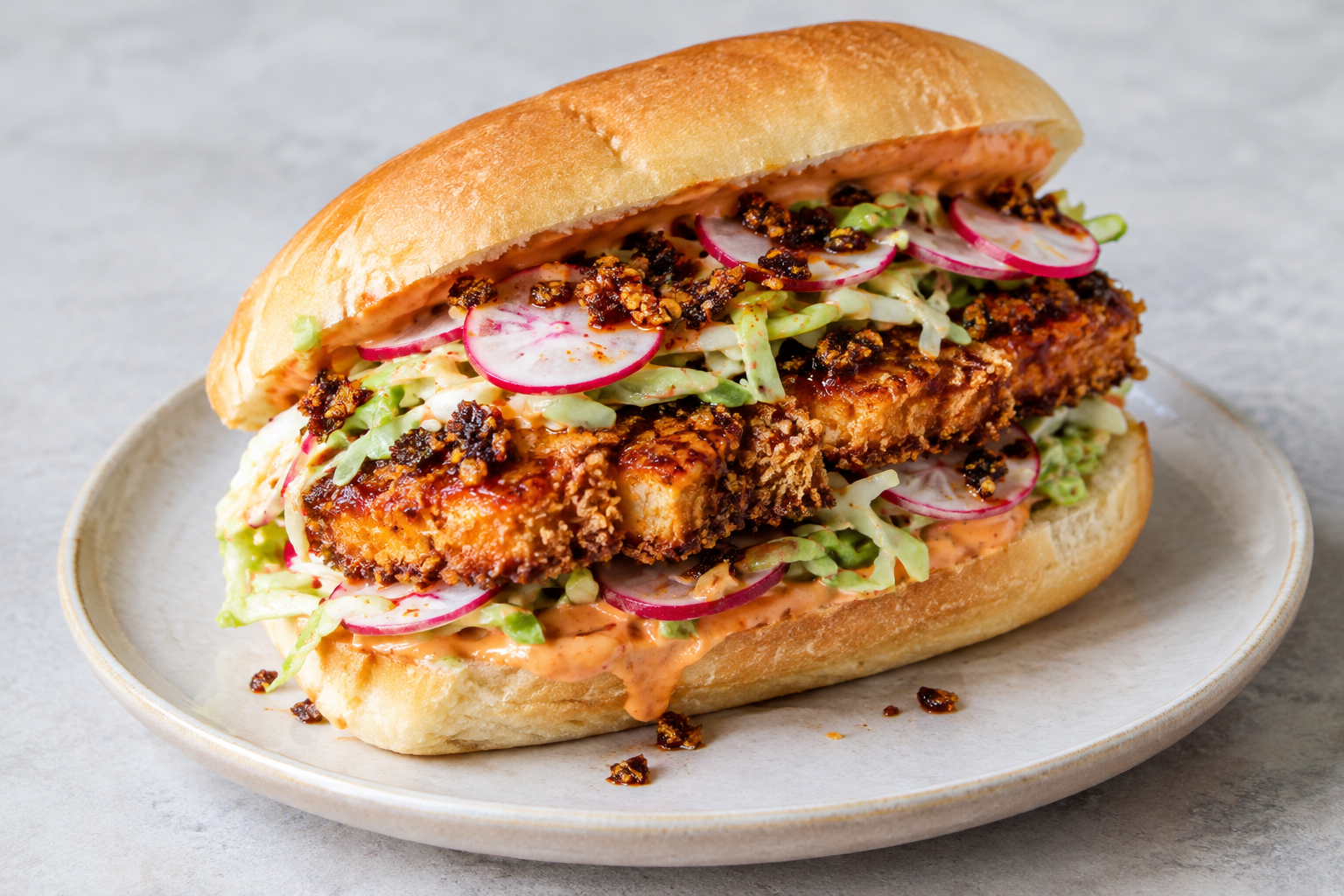
Crispy tofu sandwich with gochujang mayo, pointed cabbage, pickled radish and chili crisp.Lunch
37 minutes

Crispy Tofu Sandwich with Gochujang Mayo

Golden-brown tofu is paired in this sandwich with spicy gochujang mayo, fresh pointed cabbage with miso, and quick-pickled radish. A spoonful of chili crisp makes it extra crunchy and full of spice.

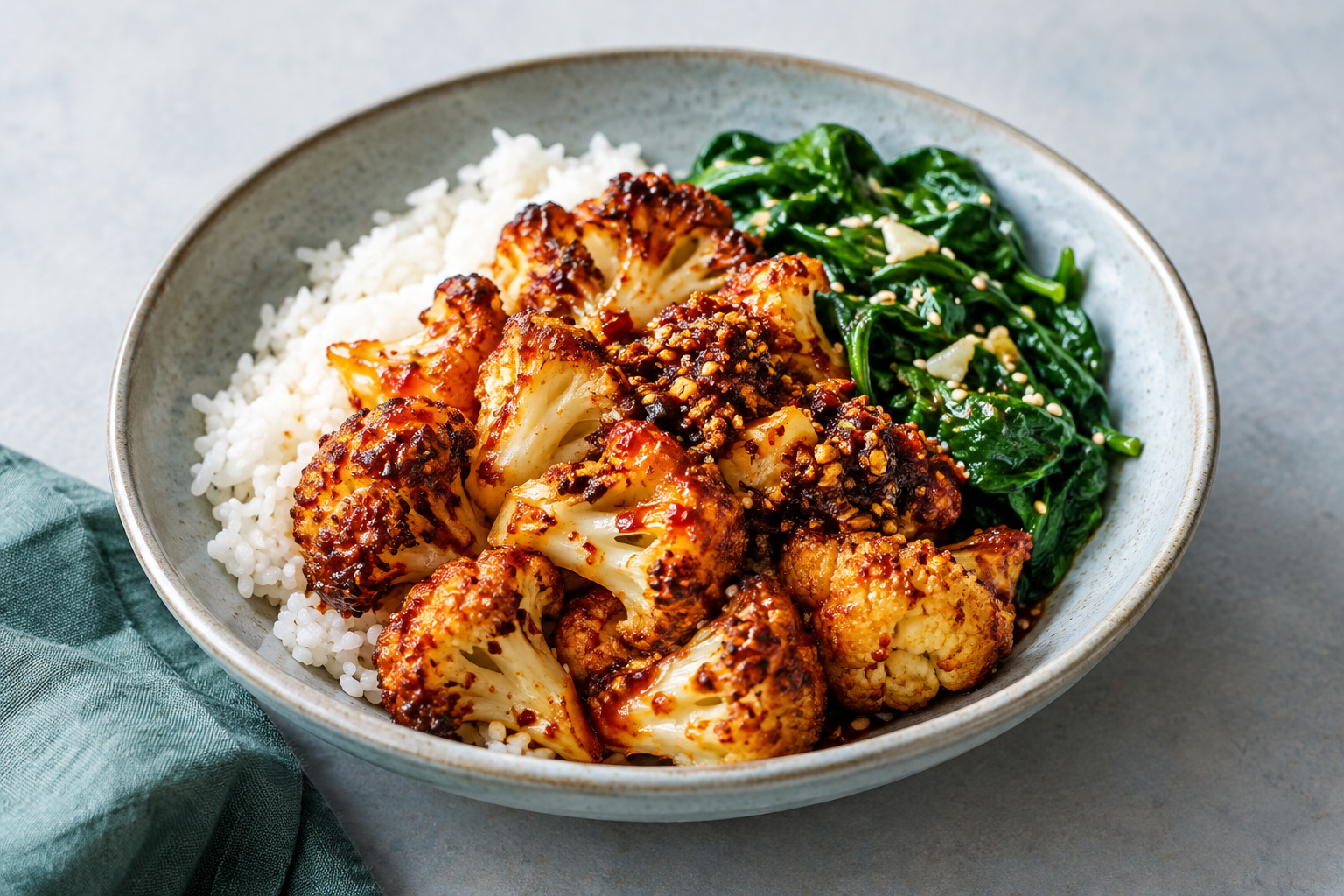
Roasted gochujang cauliflower with rice, sesame spinach and chili crisp on a plate.Main course
50 minutes

Gochujang Cauliflower with Rice and Sesame Spinach

Roasted cauliflower gets coated in a sticky, sweet-and-spicy gochujang and miso sauce. Served with rice, garlicky spinach and a spoonful of chili crisp, it makes a complete meal with soft, fresh and crunchy elements.

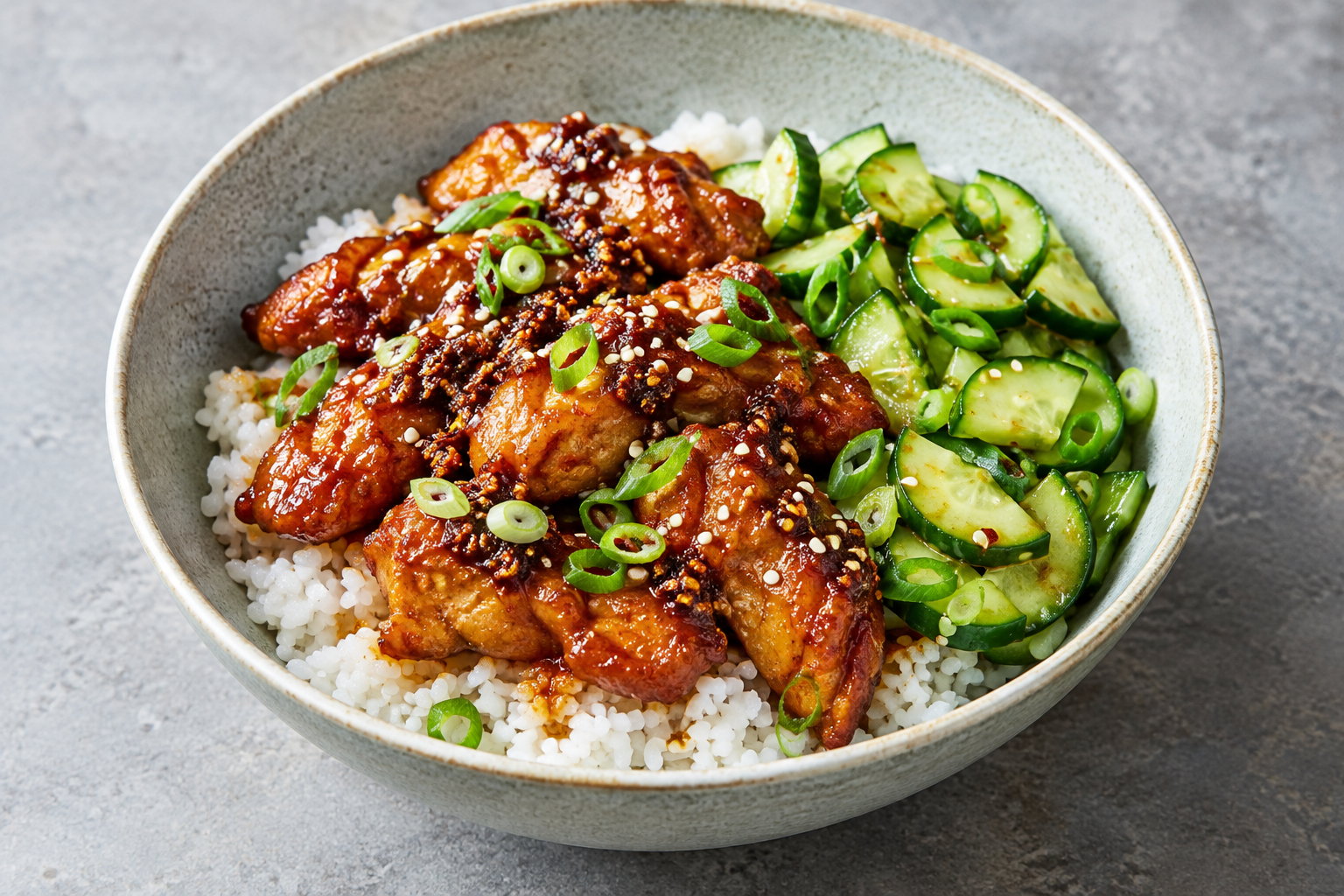
Bowl of rice with glossy gochujang chicken, crunchy cucumber, chili crisp, sesame seeds and scallions.Main course
40 minutes

Gochujang Chicken with Rice and Crunchy Cucumber

Golden-brown chicken thighs get a glossy sauce made with gochujang, miso, soy sauce and rice vinegar. Served with tender rice, fresh cucumber and a spoonful of chili crisp, this is a meal with heat, tang and crunch.

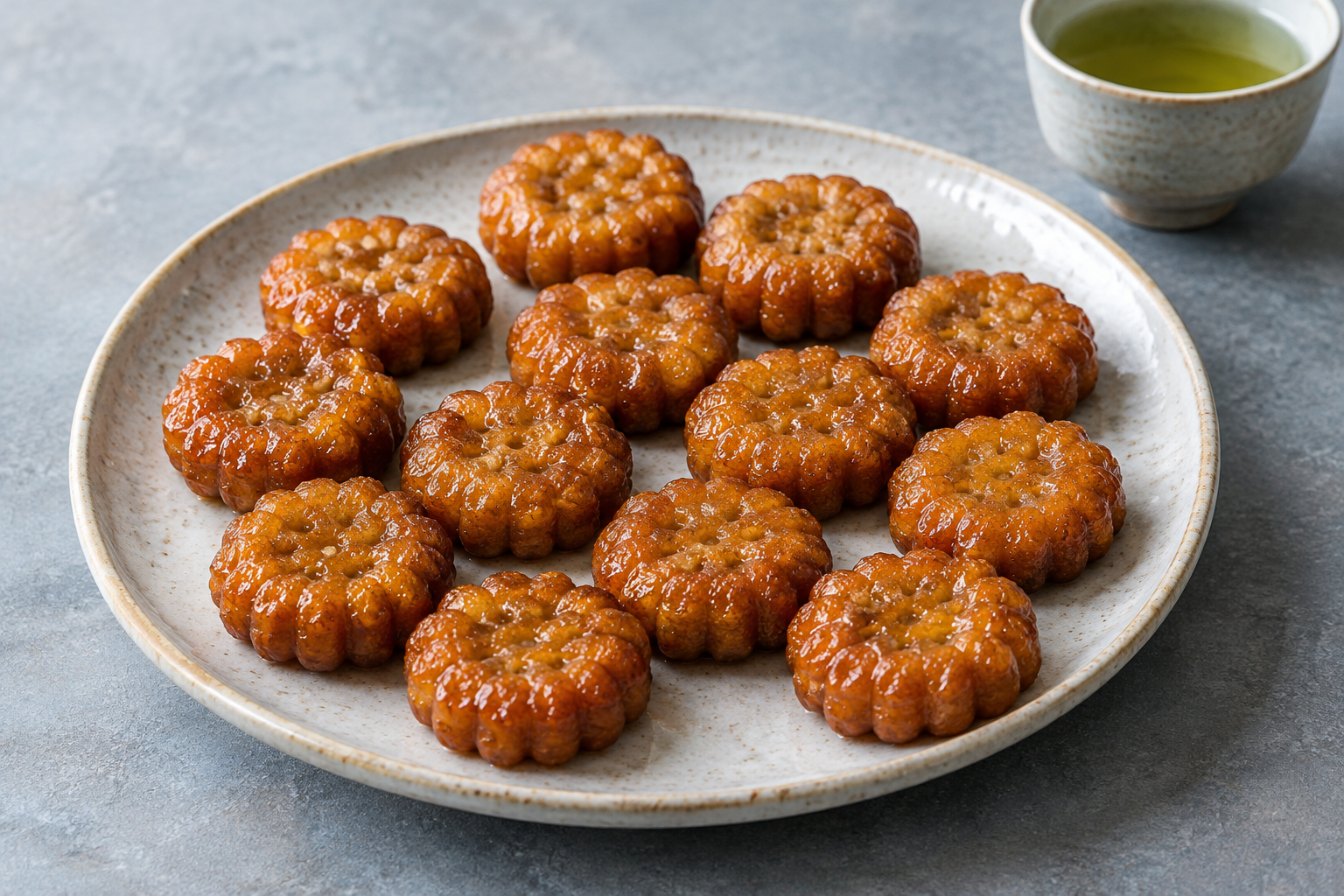
Golden-brown Korean yakgwa with ginger, glossy with honey and rice syrup, served beside a cup of green tea.Dessert
70 minutes

Yakgwa: Korean Honey Cookies with Ginger

These small Korean cookies are fried until golden brown, then soaked in honey and rice syrup. Sesame oil gives the dough a nutty aroma, while ginger balances the sweet, firm cookies. Allow at least three hours for soaking.

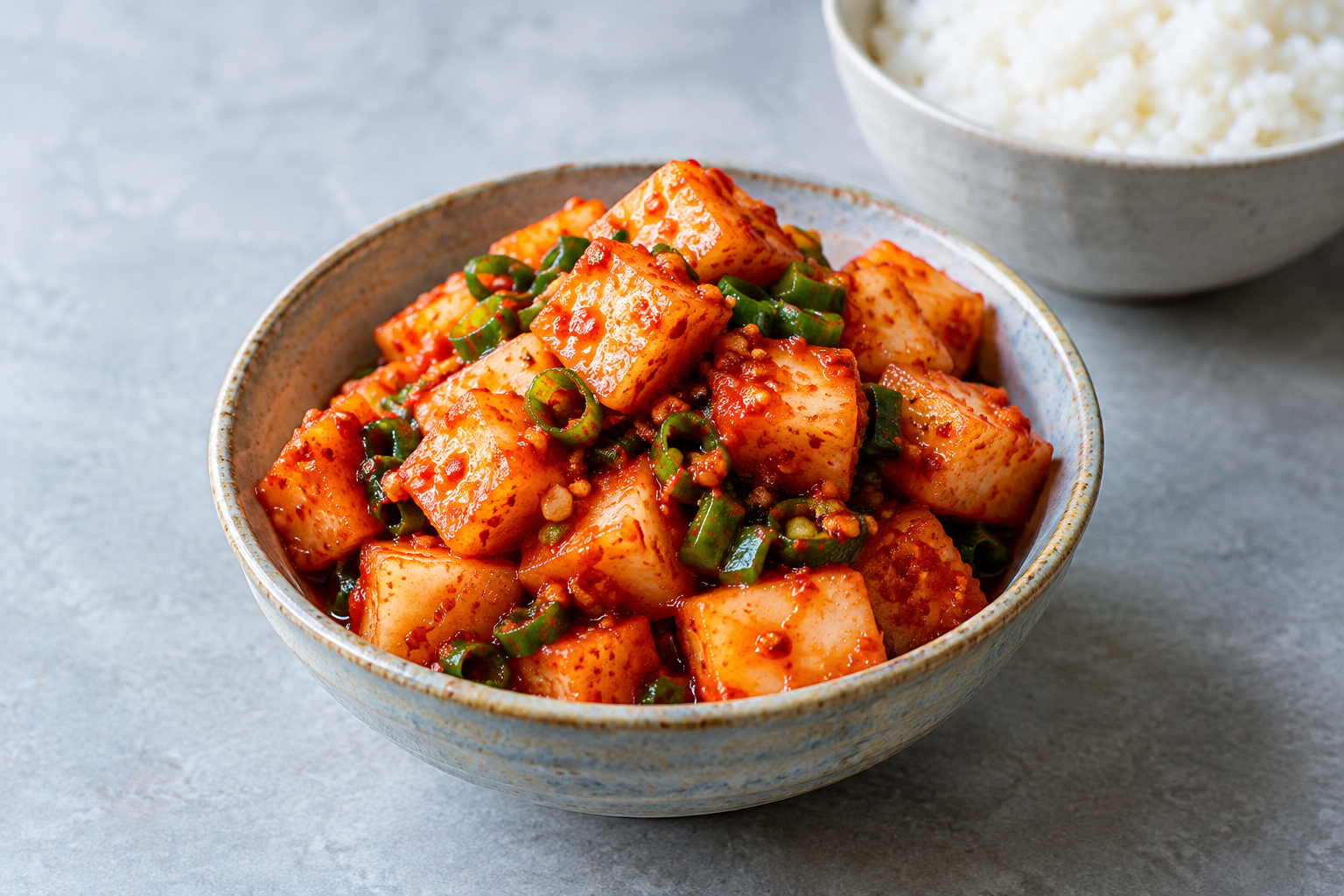
Crisp Korean daikon kkakdugi coated in red gochugaru seasoning, with spring onion, in a small bowl.Side dish
25 minutes

Kkakdugi: Korean Radish Kimchi

Crisp cubes of daikon, spicy gochugaru and garlic make kkakdugi a tangy side dish that goes well with rice, noodle soup and stews. The radish ferments at room temperature after salting, then continues to ferment in the refrigerator.

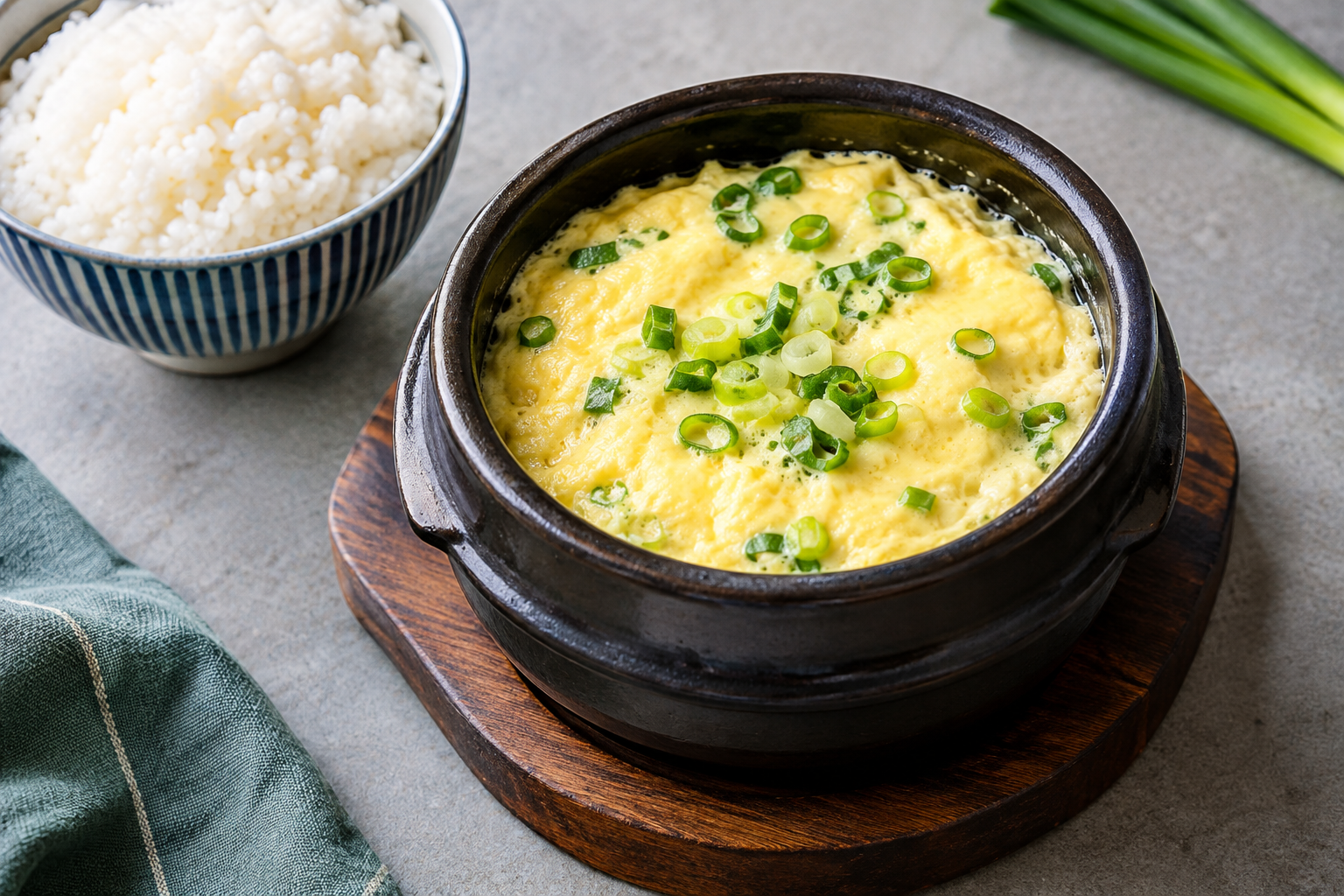
Fluffy Korean gyeran jjim with spring onion in a small pan, served beside a bowl of steamed rice.Main course
30 minutes

Korean Gyeran Jjim: Fluffy Steamed Eggs

Gyeran jjim is a soft Korean egg custard with spring onion and a savory broth base. Serve it fresh from the pan with rice and a few fresh or spicy banchan.

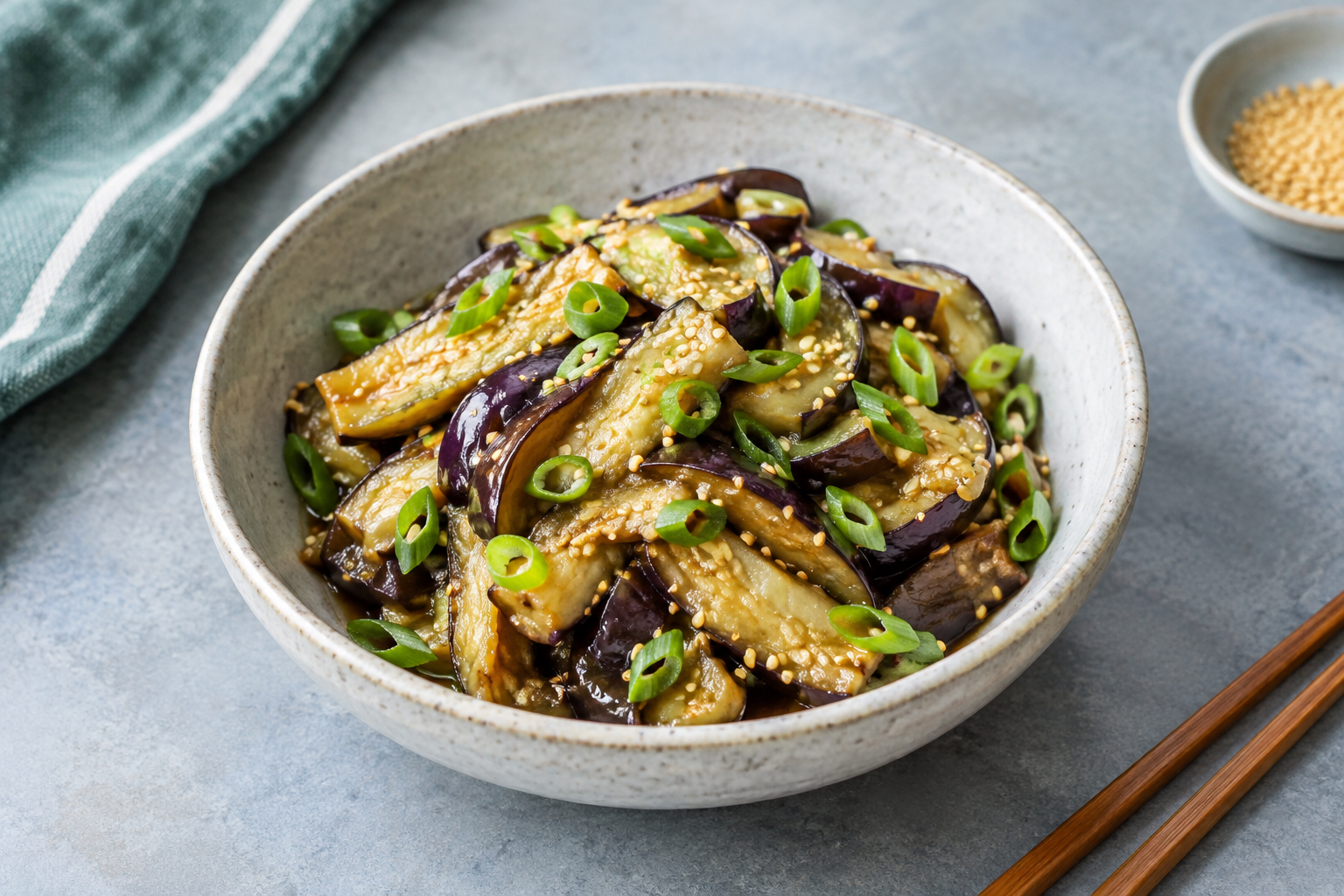
Gaji namul with tender strips of eggplant, scallion and toasted sesame seeds in a bowl.Side dish
20 minutes

Gaji namul: Korean eggplant with sesame

Tender steamed eggplant soaks up garlic, soy sauce and sesame oil in this Korean banchan. Serve gaji namul at room temperature or chilled, alongside rice and other side dishes.

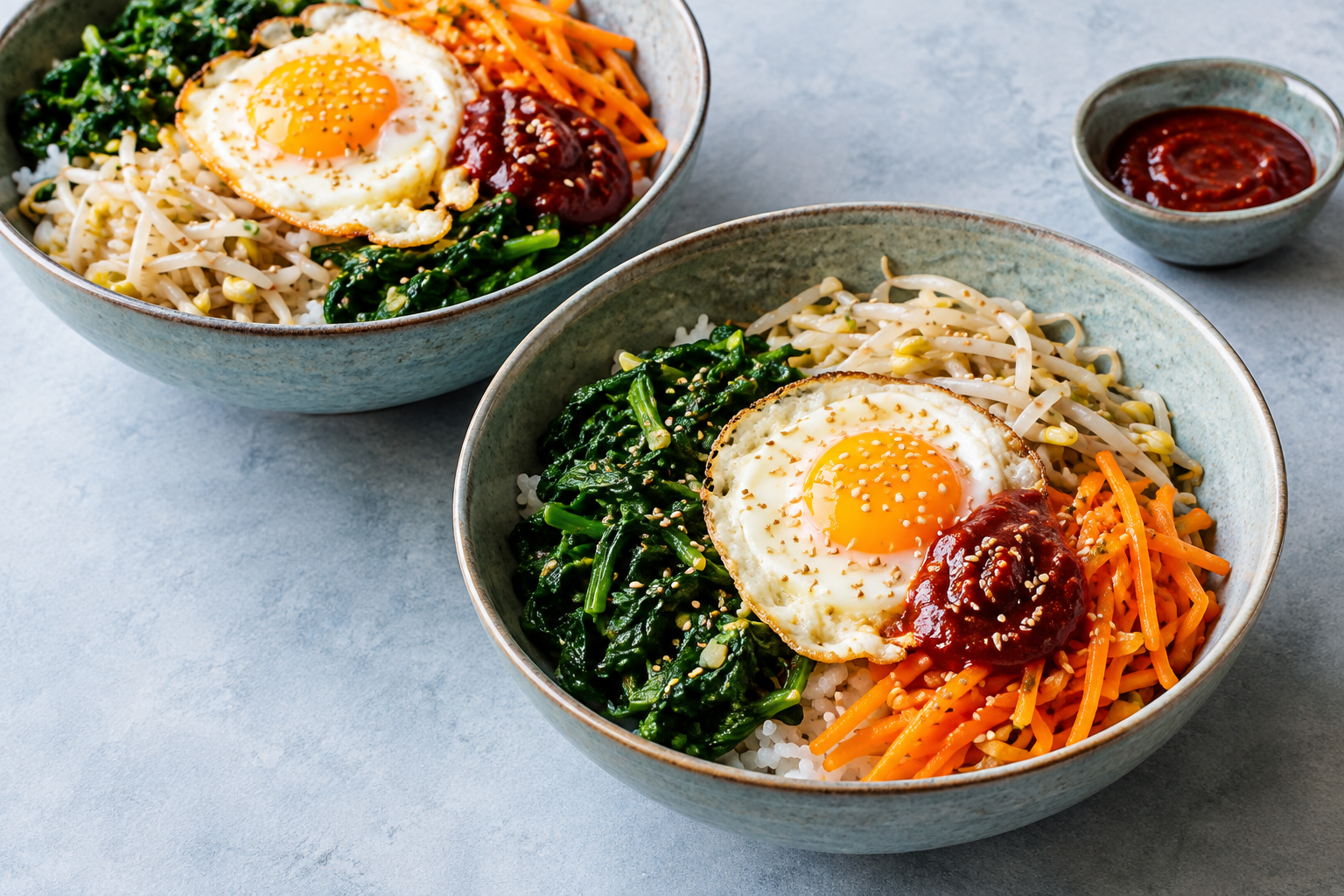
Korean bibimbap with rice, spinach with garlic and sesame oil, bean sprouts, carrot, fried egg and gochujang sauce.Main course
40 minutes

Korean Bibimbap with Spinach and Fried Egg

A bowl of steaming rice with garlic spinach, bean sprouts, carrot and a fried egg. Stir in spicy gochujang sauce at the table, bringing the soft, fresh and crunchy toppings together.

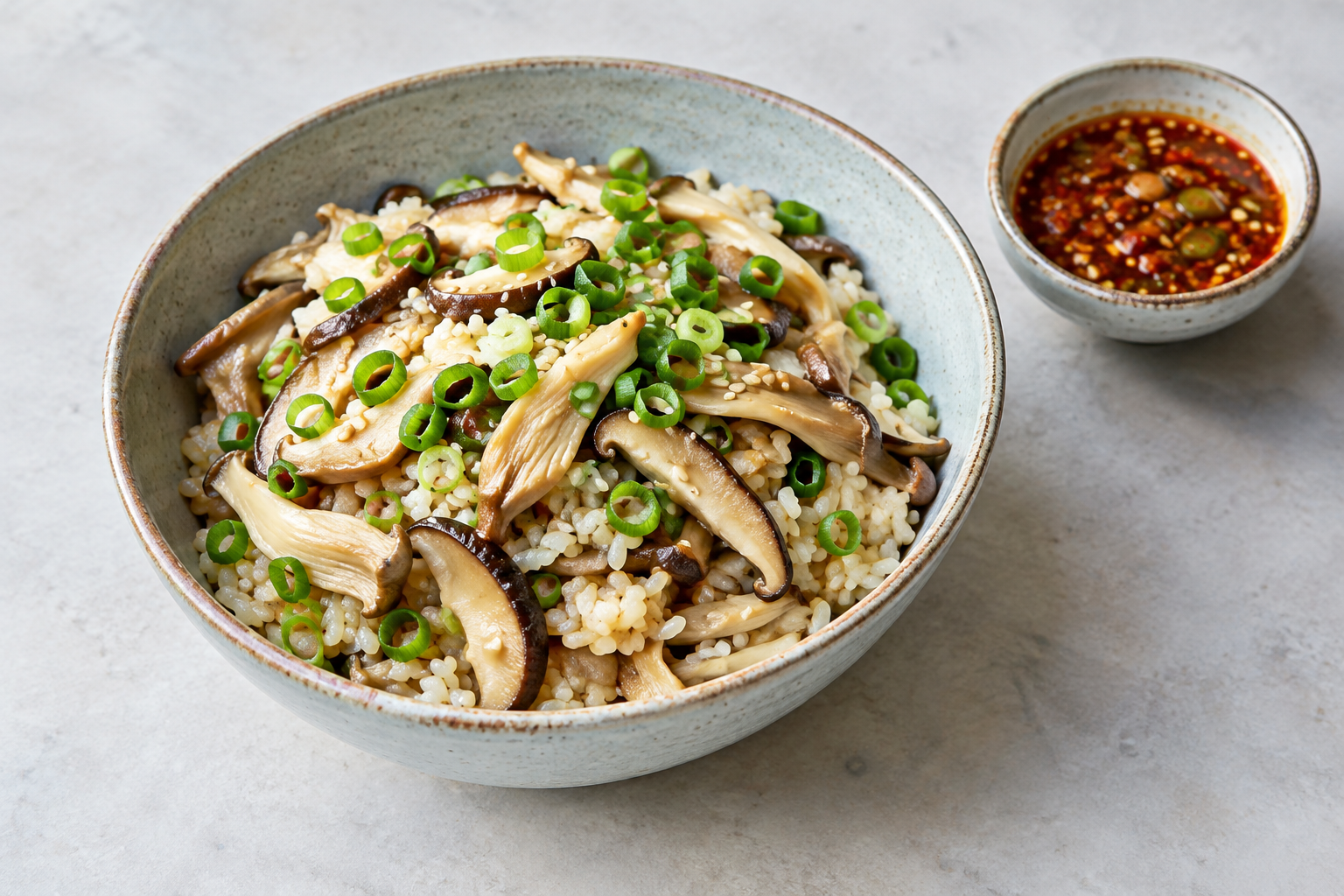
A bowl of beoseot-bap with short-grain rice, shiitake, king oyster mushroom and oyster mushrooms, topped with spring onion and served with a small dish of Korean chili sauce.Lunch
48 minutes

Beoseot-bap: Korean Mushroom Rice

In beoseot-bap, rice and mushrooms cook together, letting the fragrance of shiitake and hearty mushrooms infuse the grains. Serve it with a spicy, salty sauce made with soy sauce, sesame oil and spring onion; everyone can spoon it over their rice as they like.

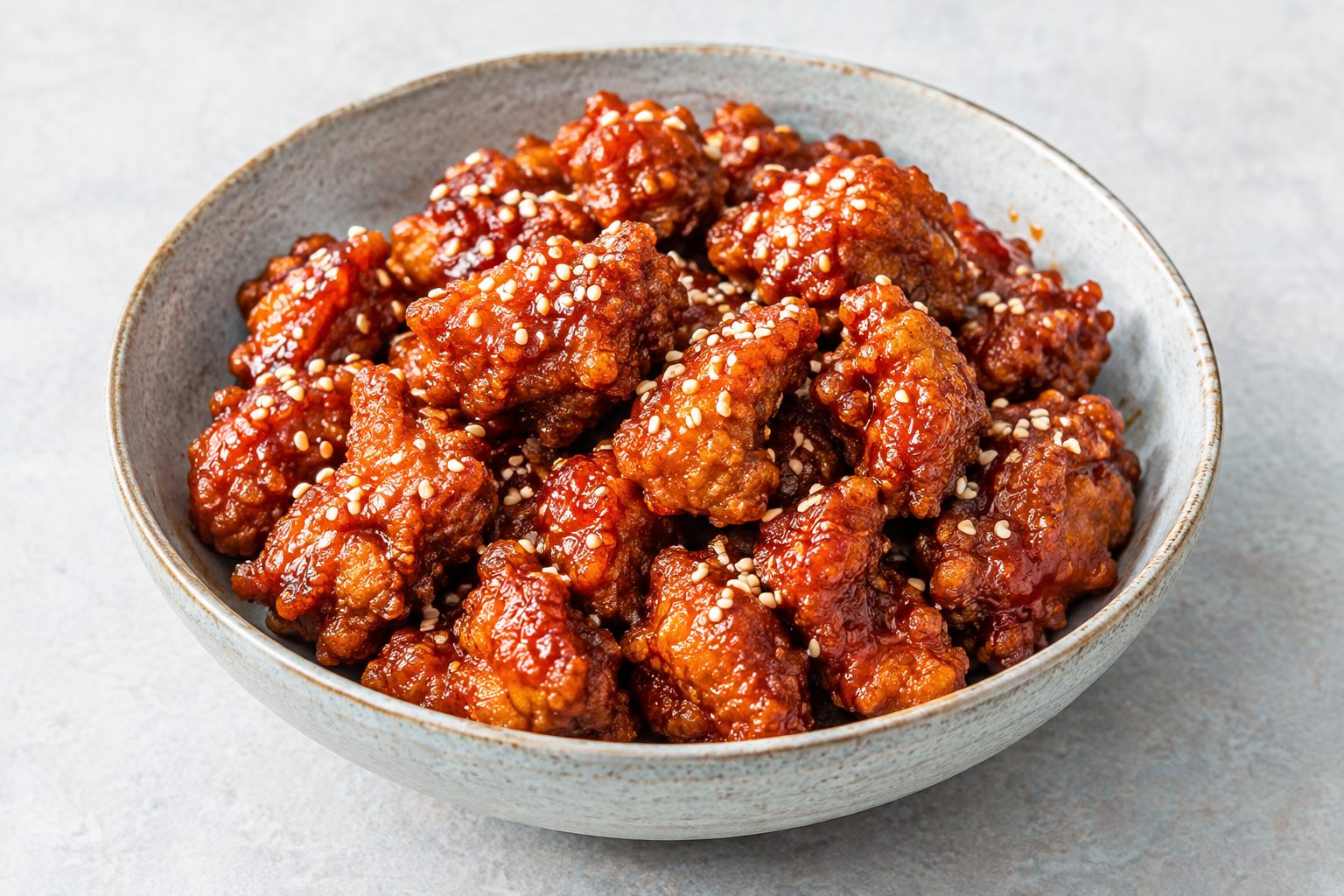
Dakgangjeong with crispy chicken in a glossy sweet-and-spicy sauce and sesame seeds.Side dish
45 minutes

Dakgangjeong: Korean Crispy Chicken with Chili Sauce

Small pieces of chicken get a thin, crispy coating from being fried twice. Then they’re briefly tossed in a glossy sauce made with gochujang, garlic and soy sauce: spicy, savory and lightly sweet. Serve the chicken straight away as a shareable appetizer.

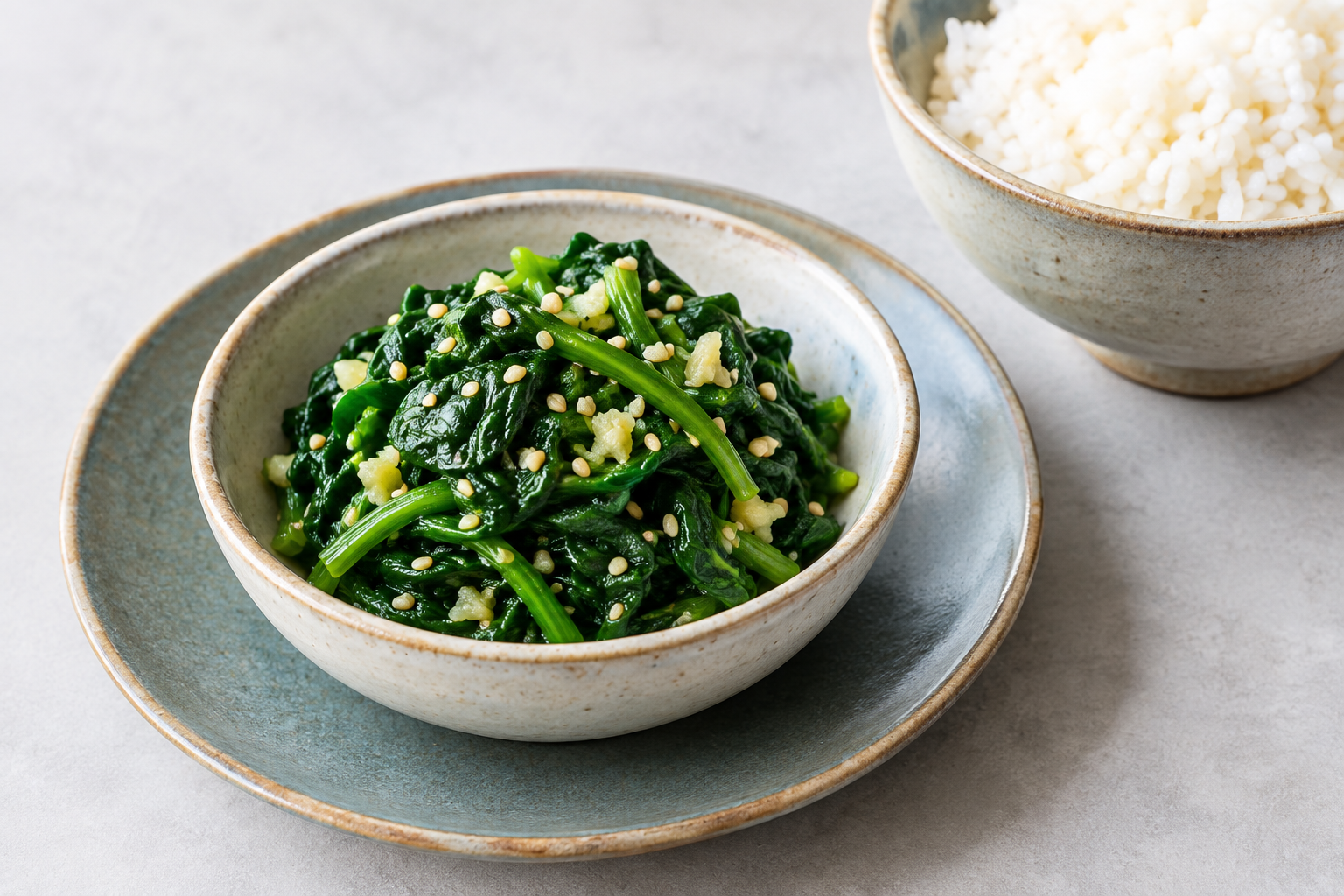
Sigeumchi namul with green spinach, sesame seeds and a bowl of rice alongside.Side dish
13 minutes

Sigeumchi namul: Korean spinach with sesame

This Korean spinach banchan combines tender green leaves with garlic, soy sauce and toasted sesame seeds. Brief blanching and squeezing the spinach well keeps it tender but not watery.

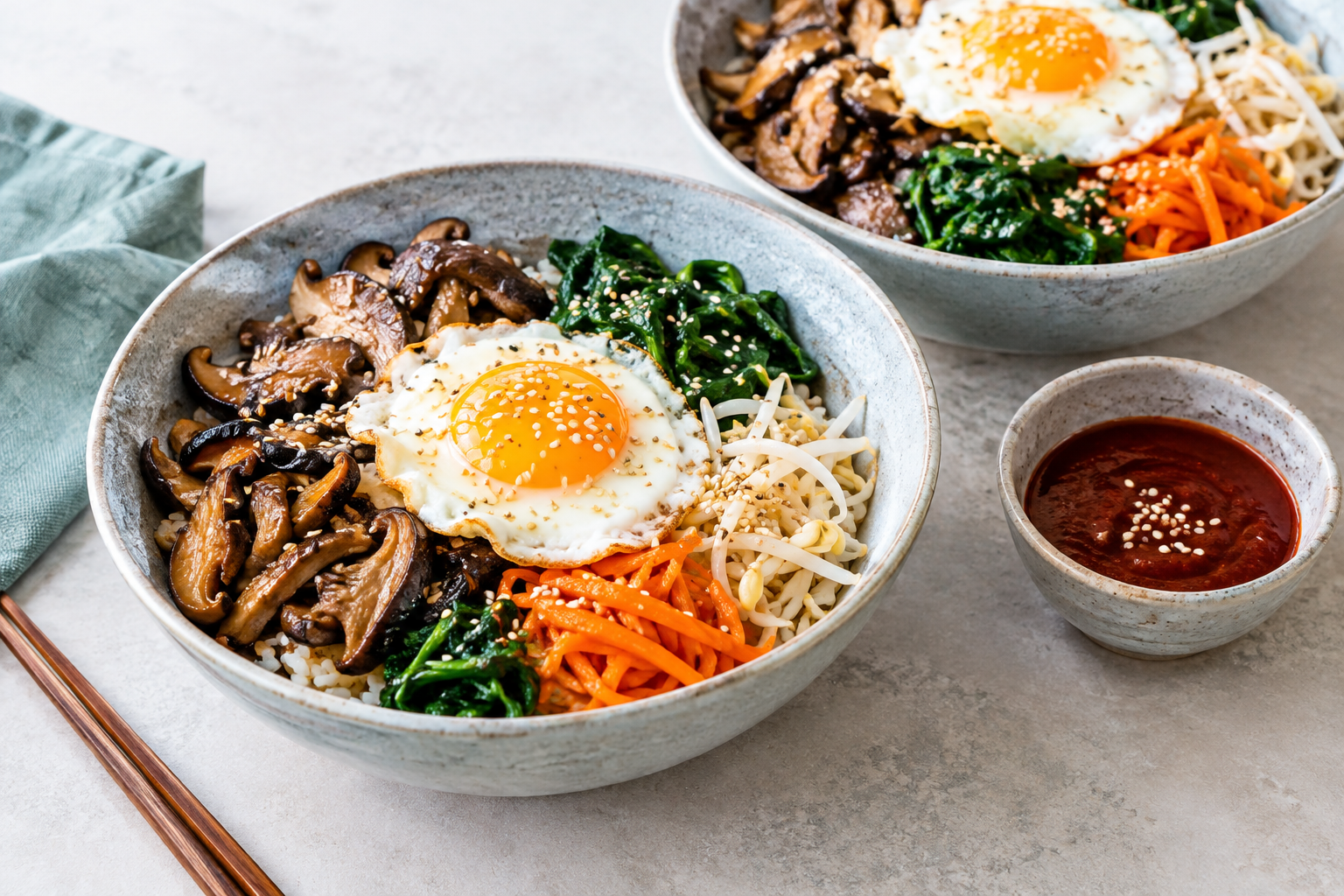
Bibimbap with rice, fried shiitake and oyster mushrooms, spinach, carrot, bean sprouts and a fried egg, with gochujang sauce on the side.Main course
45 minutes

Bibimbap with Korean Mushrooms

A bowl of warm rice topped with separately cooked mushrooms, crunchy bean sprouts, spinach, carrot and a fried egg. Serve the spicy gochujang sauce on the side and mix everything together at the table.

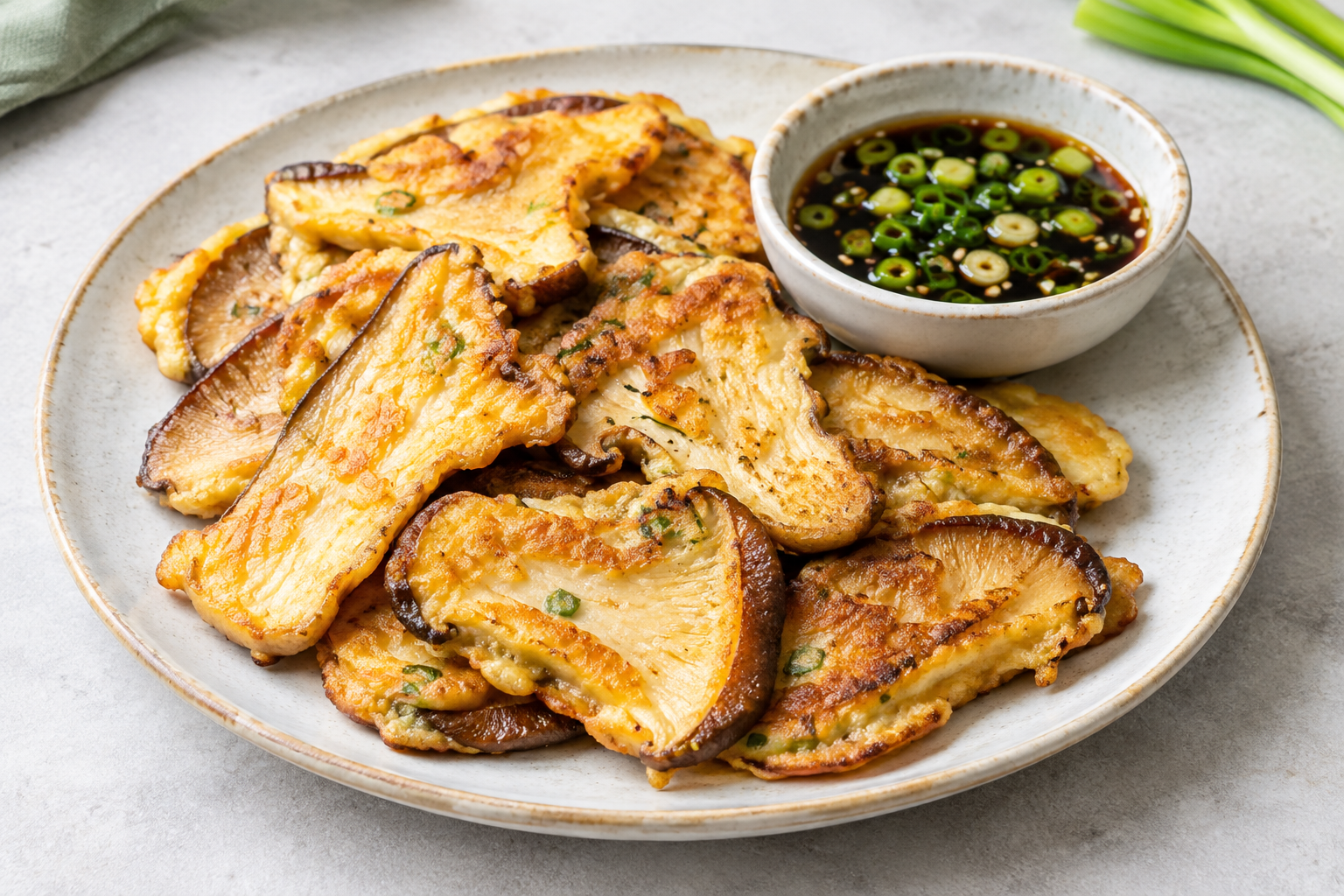
Golden-brown Korean mushroom jeon with a small bowl of soy dipping sauce topped with spring onion.Side dish
27 minutes

Korean Mushroom Jeon with Soy Dipping Sauce

Thin slices of mushroom, lightly dusted with flour and dipped in egg, turn golden brown in no time. Serve this Korean jeon warm with a refreshing dip made with soy sauce, vinegar and spring onion.

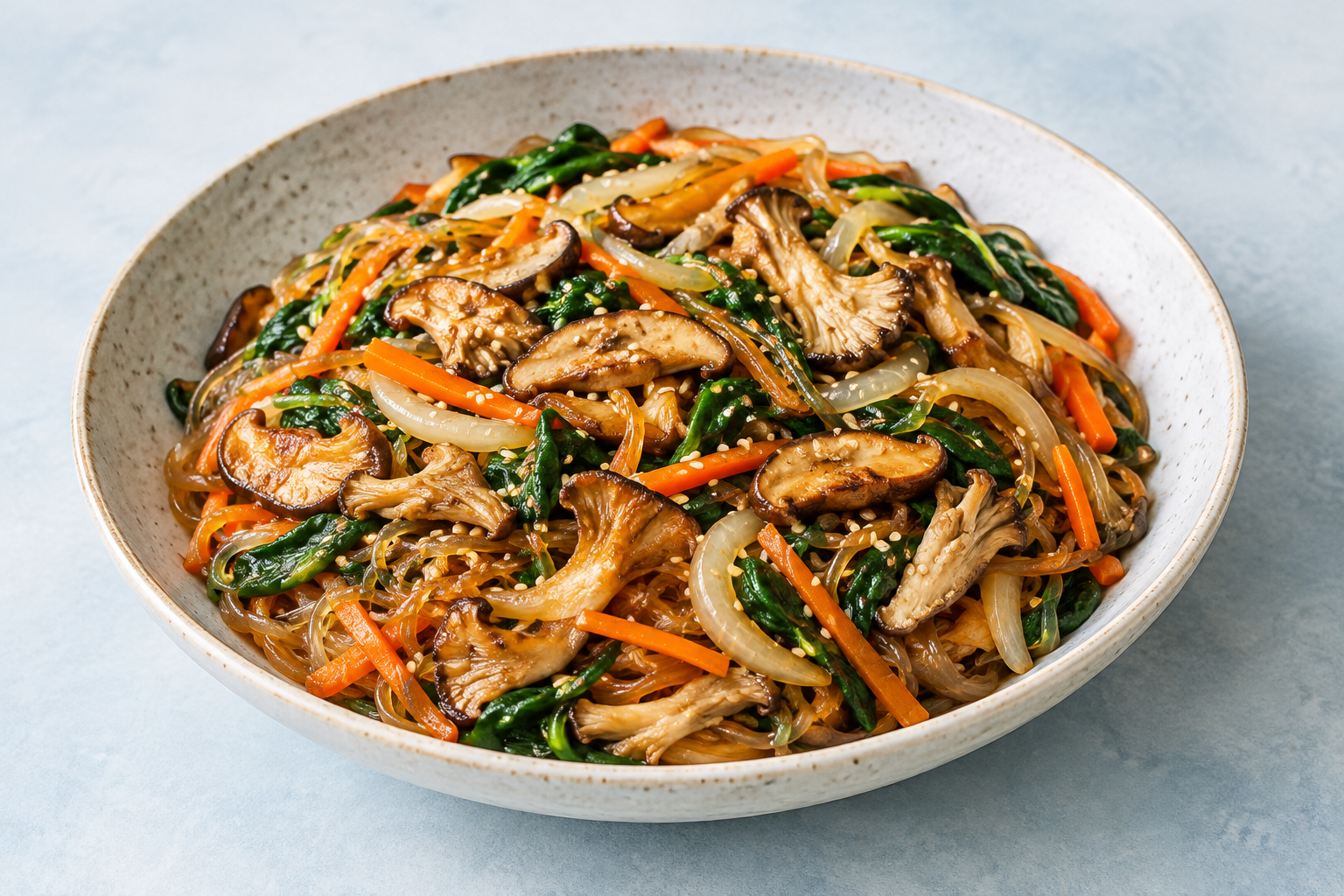
Japchae with glossy sweet potato noodles, shiitake, oyster mushrooms, spinach, carrot, onion and sesame seeds.Main course
45 minutes

Japchae with Shiitake, Oyster Mushrooms and Spinach

Smooth Korean sweet potato noodles soak up the savoury dressing beautifully. With sautéed shiitake and oyster mushrooms, spinach, carrot and onion, japchae becomes a colourful main course with both tender and chewy textures.

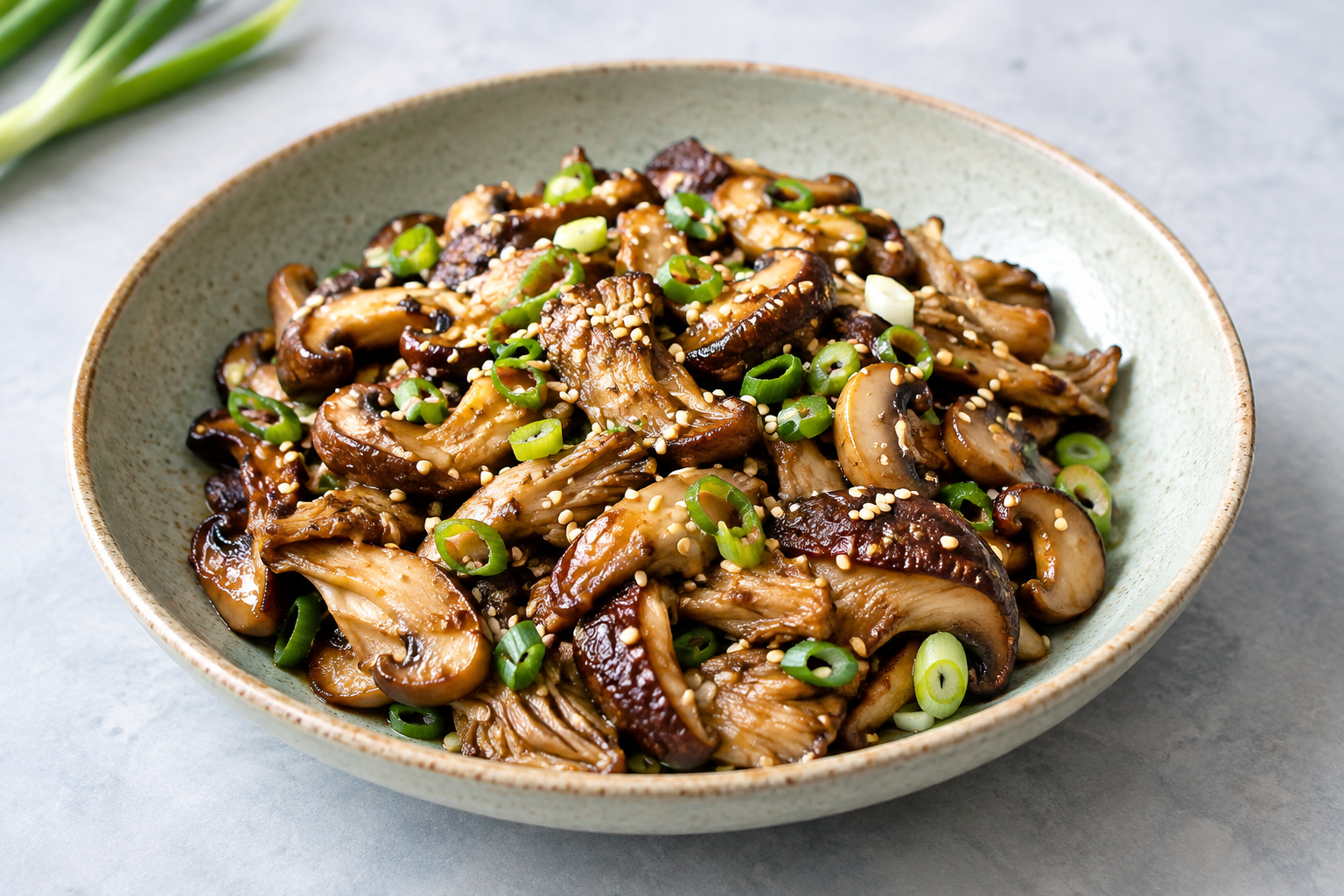
Fried shiitake, oyster mushrooms and button mushrooms with spring onion and toasted sesame seeds in a small serving bowl.Side dish
25 minutes

Korean Mushroom Bokkeum with Sesame

Shiitake, oyster mushrooms and button mushrooms are quickly fried over high heat, so they develop browned edges and stay firm. Garlic, spring onion, soy sauce and sesame oil give this Korean bokkeum its savory, nutty flavor.

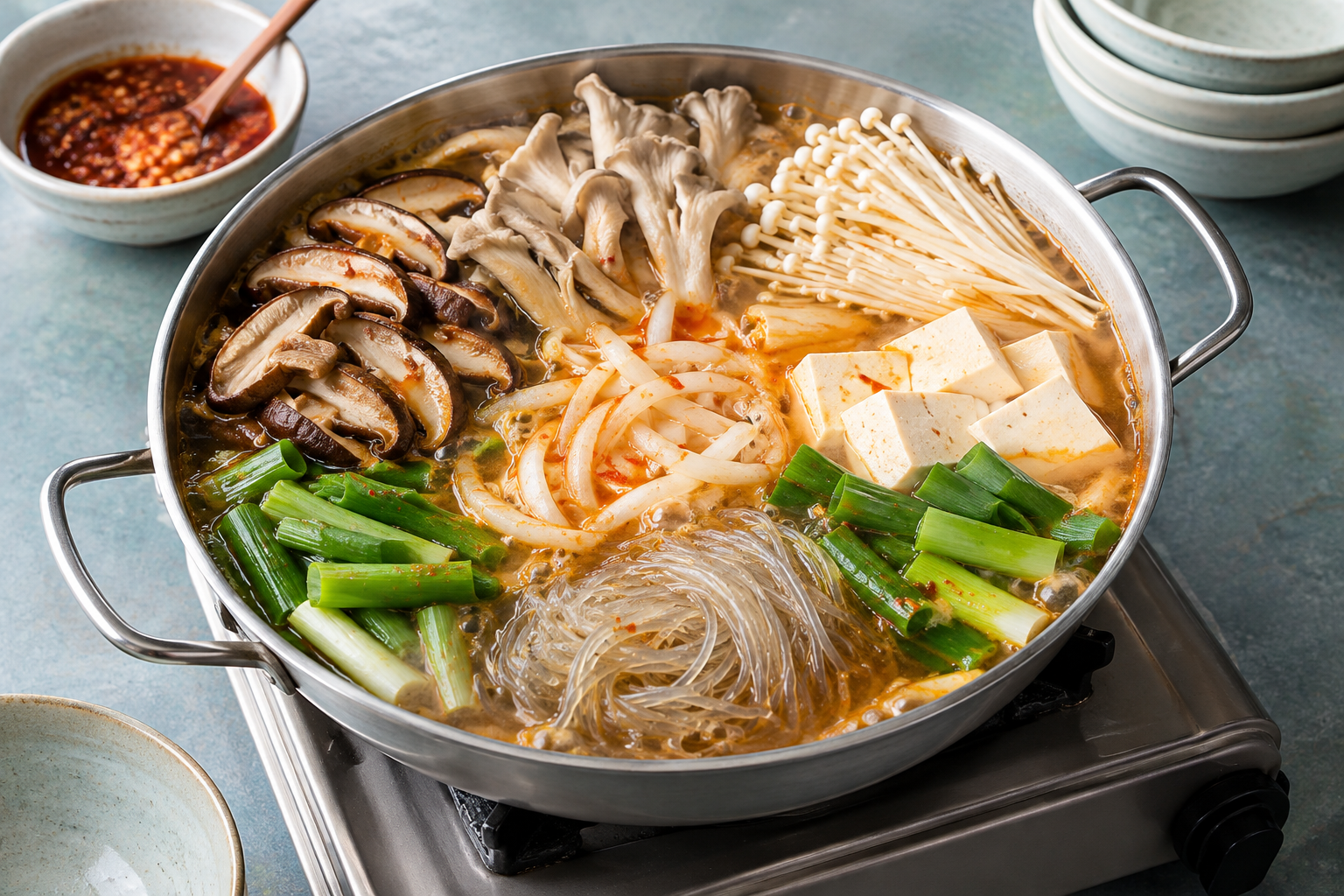
Korean mushroom hotpot with shiitake, oyster mushrooms, enoki, tofu and glass noodles in a spicy broth.Main course
35 minutes

Beoseot Jeongol: Korean Mushroom Hotpot

This Korean hotpot brings shiitake, oyster mushrooms and enoki together with tofu and tender glass noodles in a light, spicy garlic broth. Set the pan on the table and let the ingredients gently cook there.

Build a meal with rice and side dishes

Rice is a useful starting point for several dishes in this collection. In bibimbap, the vegetables, mushrooms, egg and sauce are arranged in separate components over the rice; mix everything to taste at the table. This keeps the toppings distinct and lets you decide how much gochujang to add. The spinach, bean sprouts and carrot are cooked briefly or separately so they keep their own bite and flavor.

Small vegetable dishes such as sigeumchi namul, kongnamul muchim and gaji namul go well alongside rice and a heartier main dish. They are different preparations, not interchangeable recipes: the spinach is briefly blanched, the soybean sprouts are boiled and the eggplant is steamed. Sesame oil, garlic and scallions give each one a savory, fragrant finish. Serve them chilled or at room temperature, as indicated in the recipes.

Gochujang, mushrooms and contrast

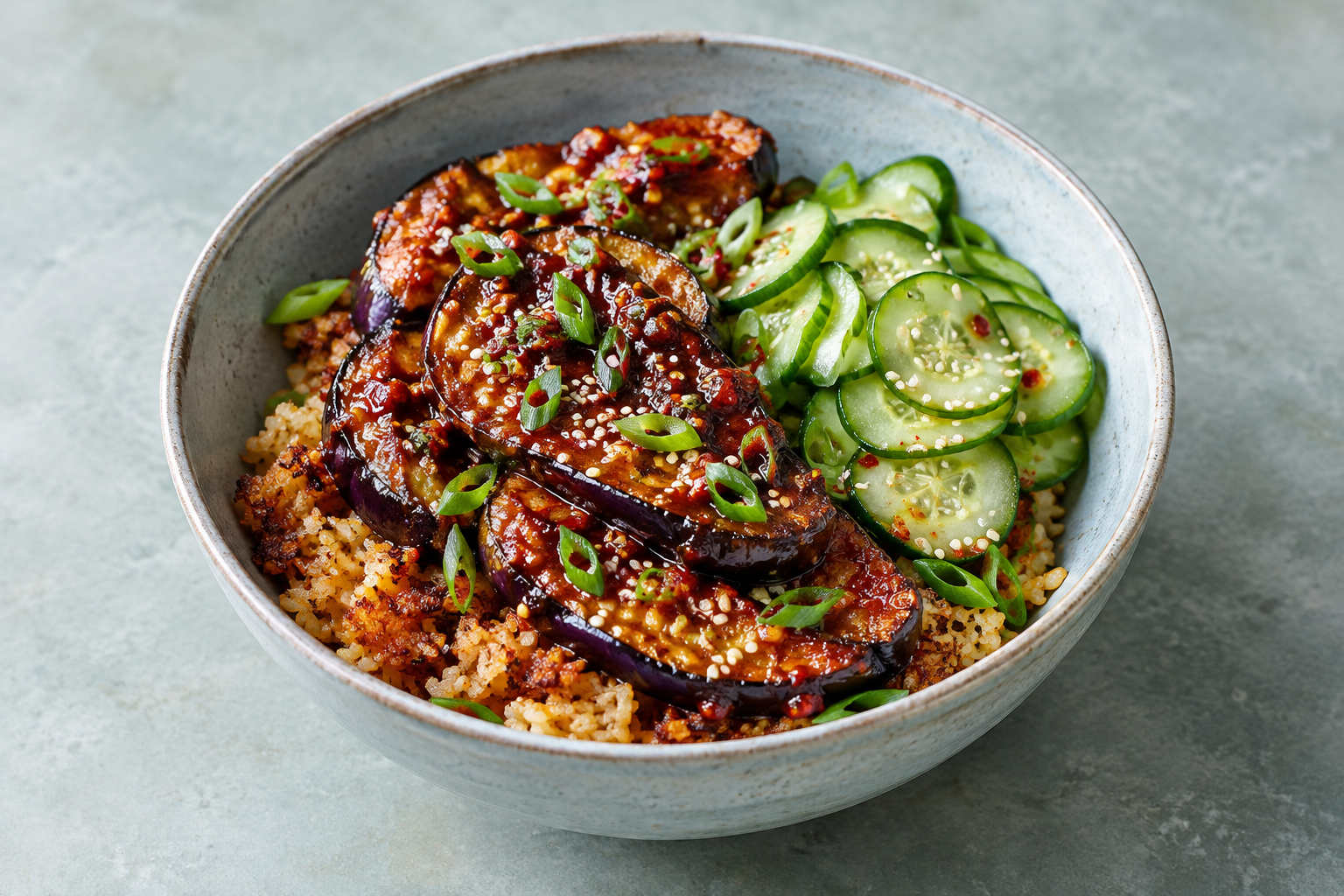
Gochujang gives sauces a concentrated blend of heat and savoriness. In the chicken with rice and cucumber, the sauce turns glossy in the pan and clings to the meat; with the cauliflower and eggplant, it goes into the oven too. The sweeter ingredients in those sauces round out the sharp flavor, while rice vinegar and refreshing cucumber provide balance. Chili crisp adds a crunchy accent, but is optional where the recipe says so.

For a milder flavor, you can reduce the amount of gochujang in modern, Korean-inspired dishes; add a little water if needed to keep the sauce spreadable or spoonable. Mushrooms bring a different kind of savoriness. Cook them in batches and give them room in the pan: that way, they can develop browned edges instead of mostly steaming. This technique works in dishes such as bibimbap with mushrooms, bokkeum and japchae. Japchae uses dangmyeon, glass noodles made from sweet potato starch; regular rice noodles have a different bite, so they are not an exact substitute.

From soft eggs to honey cookies

Not every dish calls for a hot pan or spicy sauce. Gyeran jjim is a soft steamed egg dish: stirring gently as the egg sets slowly helps create an even, tender texture. Serve it right away with the short-grain rice from the recipe. Samgyetang is a meal-in-a-bowl soup made differently: the chicken cooks gently in broth and is opened at the table, so the glutinous rice from inside falls into the soup.

Kkakdugi, cubes of daikon with gochugaru, garlic and ginger, needs time for the flavor to develop. Follow the fermentation steps and put the jar in the refrigerator once it starts to fizz lightly and smells pleasantly sour; keep refrigerated and use clean utensils. For a completely different finish, there are yakgwa honey cookies: frying them at a moderate temperature gives them time to turn evenly golden brown, after which they absorb syrup. Start making them well ahead, because the cookies need to soak in the syrup for at least three hours.