ABOUT THIS RECIPESweetly roasted, savory finish
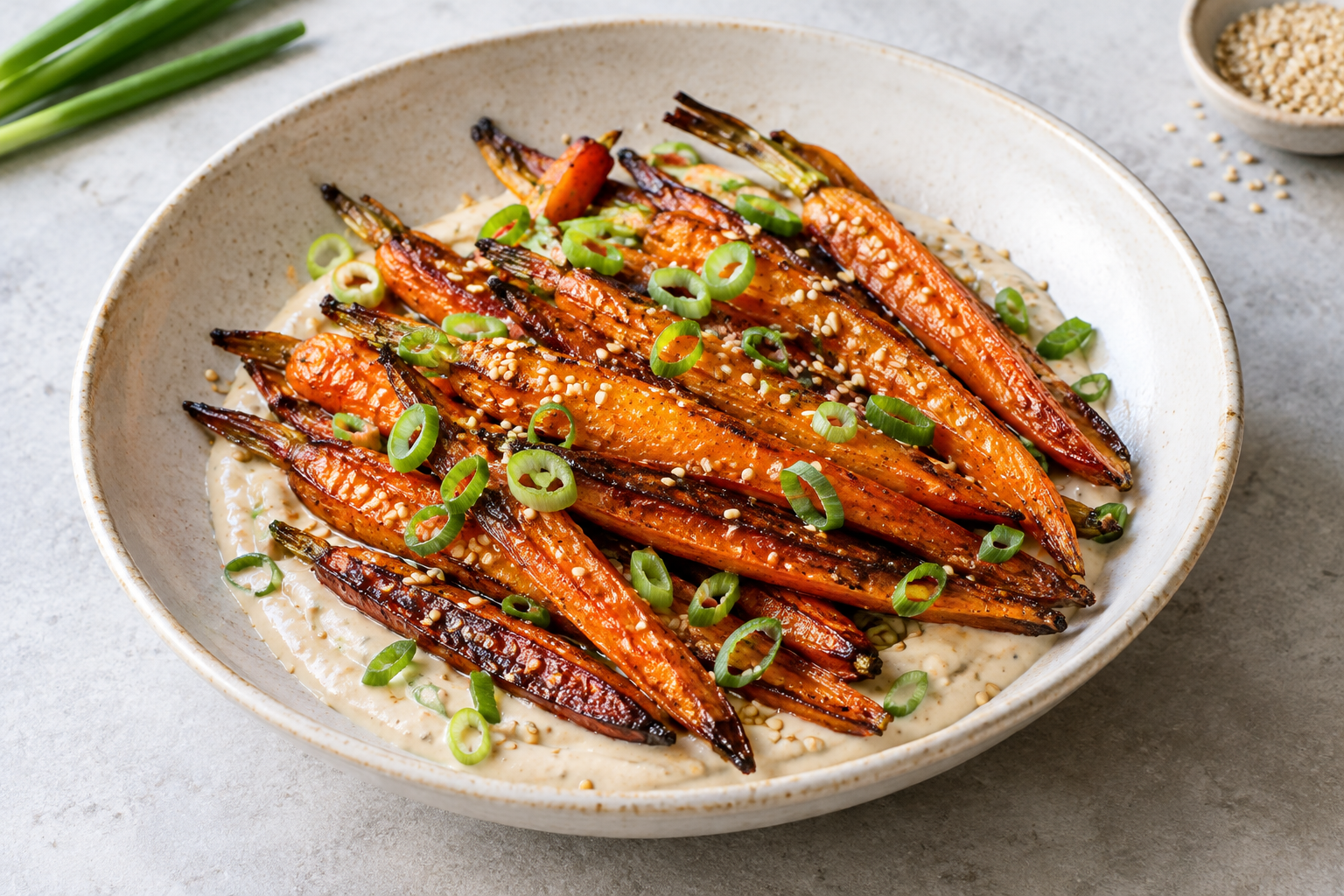
Carrots develop a concentrated, sweet flavor and dark edges in a hot oven, while staying soft inside. If possible, use carrots that are about the same thickness so they cook at the same time. Thin young carrots can go onto the baking sheet whole; cut thicker carrots in half lengthwise or into quarters. Carrots are available year-round. Young carrots are often available in spring and early summer; sturdy storage varieties work just as well in this dish during the colder months.
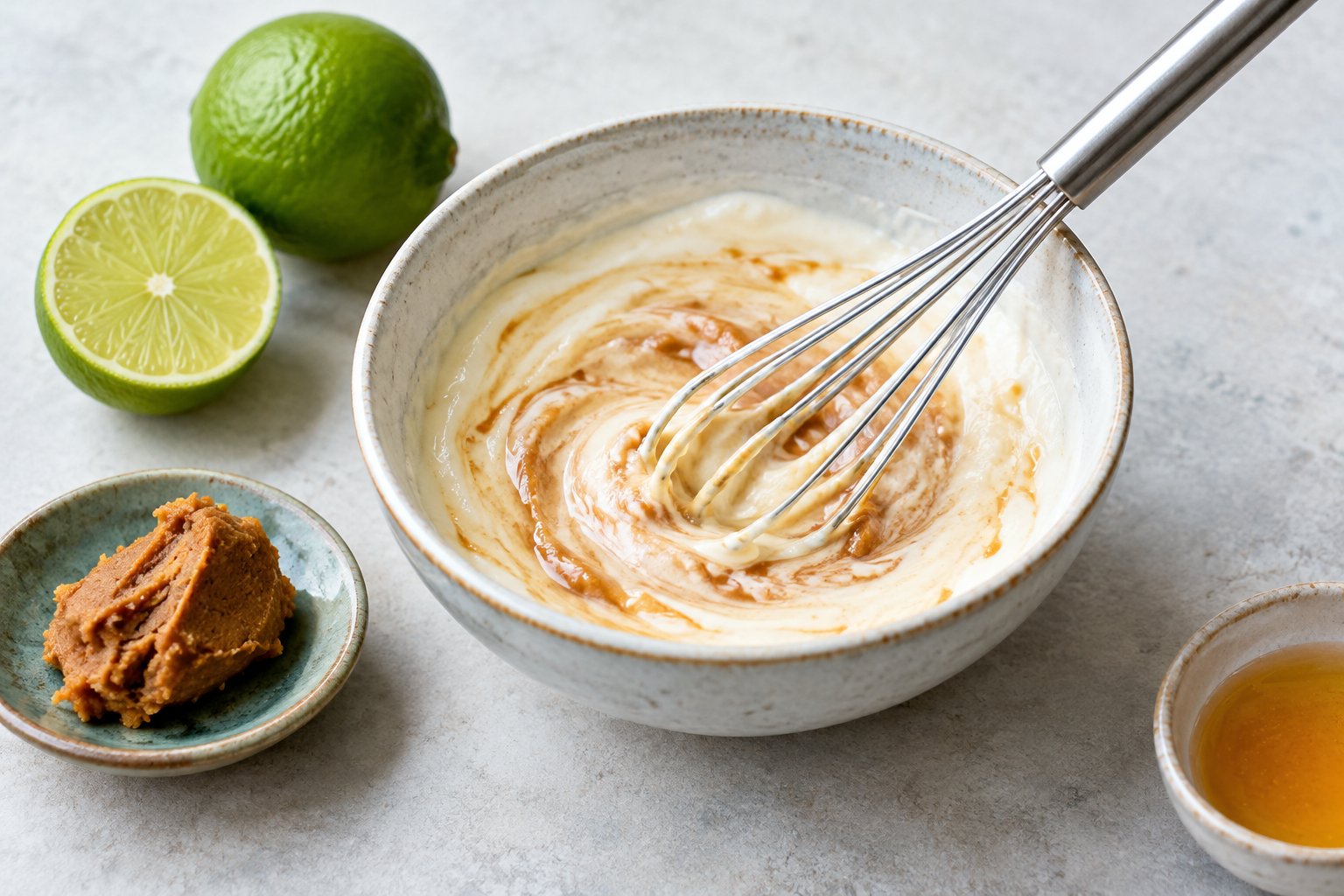
The sauce adds something cool and savory in contrast. Doenjang is a Korean fermented soybean paste with a deep, salty flavor. A small amount is enough: too much makes the yogurt heavy and overpowers the sweet vegetables. First stir the paste well into the yogurt, then add the lime and honey. Taste before adding extra salt; doenjang varies in saltiness from brand to brand. The lime makes the sauce lively, while honey rounds off the sharp edge of the fermentation.
Full-fat yogurt makes a smooth sauce that clings to the carrots. Greek yogurt works too, but it is thicker; if the sauce is hard to spread, stir in a teaspoon of water. If you don't have doenjang, white miso is a useful substitute, but the flavor will be milder and less earthy. Start with a small amount of that too, and taste again. This is a Korean-inspired combination, not a traditional Korean dish.
Briefly toast the sesame seeds in a dry frying pan and keep an eye on them: they're ready as soon as they smell fragrant and take on a little color. The seeds add a nutty crunch that contrasts nicely with the soft carrots and creamy sauce. Spring onion adds a fresh, oniony bite. Serve the carrots warm or at room temperature, with the sauce underneath or alongside. They go well with rice and pan-fried tofu, as well as grilled fish or chicken. Store leftovers covered in the fridge and eat within two days; keep the sauce separate if you can.
 Main course

