ABOUT THIS RECIPECrisp, Spicy Cubes
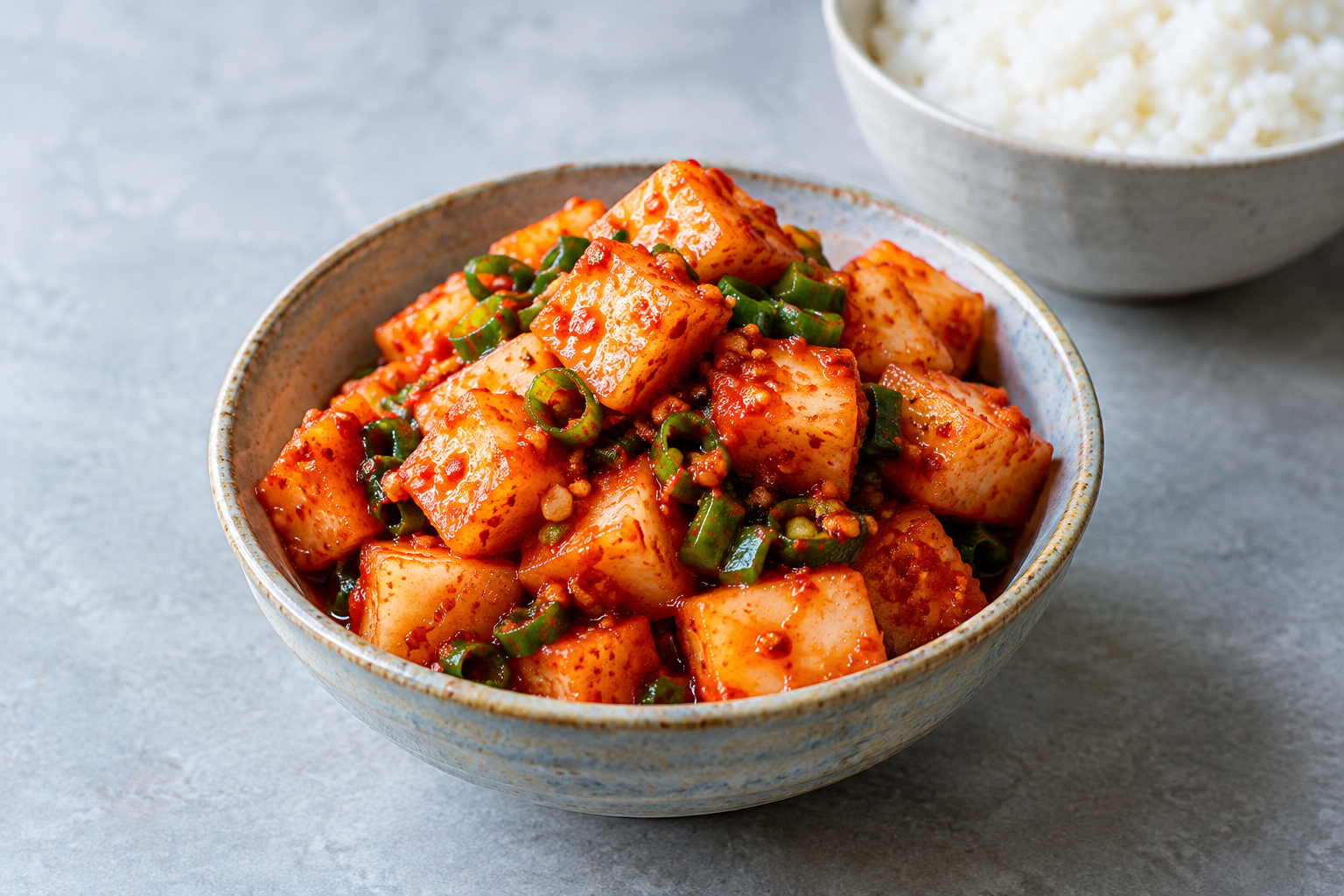
Kkakdugi is a Korean kimchi made with daikon, also known as white radish. The radish is cut into cubes, salted and mixed with a spicy paste. Unlike kimchi made with whole cabbage leaves, this version is easy to serve straight away. The firm, juicy radish keeps a distinct crunch as it ferments; the flavor gradually shifts from lightly salty and sharp to spicy and tangy. Kkakdugi is often eaten as banchan: a small side dish served with rice and other dishes.
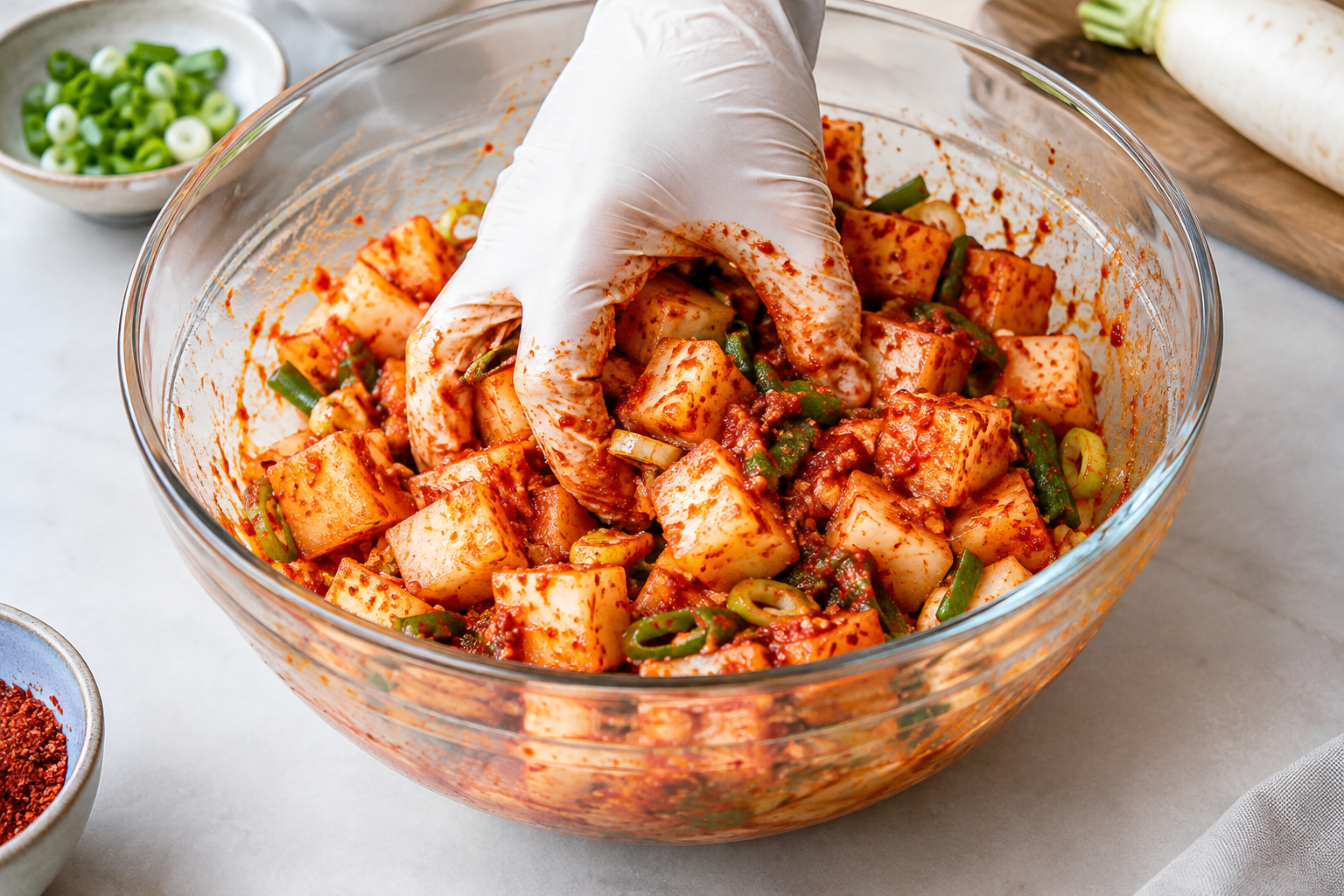
Daikon is generally available year-round in Dutch shops. Choose a heavy, firm radish with no soft spots; fresh daikon stays crisper after salting. Cut the cubes to roughly the same size, around two centimeters, so they salt and ferment evenly. The salt draws moisture from the radish. This moisture helps the spice paste cling to the cubes and forms some of the liquid in the jar. Drain off any excess liquid, but don’t rinse the cubes as a rule: this helps retain enough salt to keep the flavor balanced.
Gochugaru, Korean chili flakes, gives kkakdugi its red color and a fruity chili warmth that’s more than just heat. Preferably use gochugaru rather than finely ground chili powder; the products differ in flavor and heat. Garlic, ginger and spring onion bring fragrance and freshness to the paste. Fish sauce adds savory depth. For a vegetarian version, you can replace it with light soy sauce; this is a practical adjustment that gives a slightly different flavor. Taste the paste before mixing: it can be strongly seasoned, since the radish will mellow it.
Fermentation mainly calls for clean equipment and attention to temperature. A clean glass jar and clean utensils help limit unwanted contamination. Leave space at the top of the jar, as gas can form during fermentation. This happens faster in a warm kitchen than in a cool one, so use the stated time as a guide and also look for small bubbles and a tangy smell. Then put the jar in the refrigerator to slow the process. Open a tightly sealed jar carefully, as gas may have built up inside.
Serve kkakdugi cold or slightly chilled with steamed rice, noodle soup or a rich stew: its acidity and crisp radish offer contrast to soft, full-bodied dishes. It’s also good alongside fried rice, but serve it as a fresh side dish rather than an ingredient to fry for a long time. Store the jar in the refrigerator and always use clean utensils to serve. The flavor becomes more sour during storage and the radish gradually softens; for the most crunch, eat the kkakdugi sooner rather than later.
 Main course

