ABOUT THIS RECIPEA bowl of distinct flavors
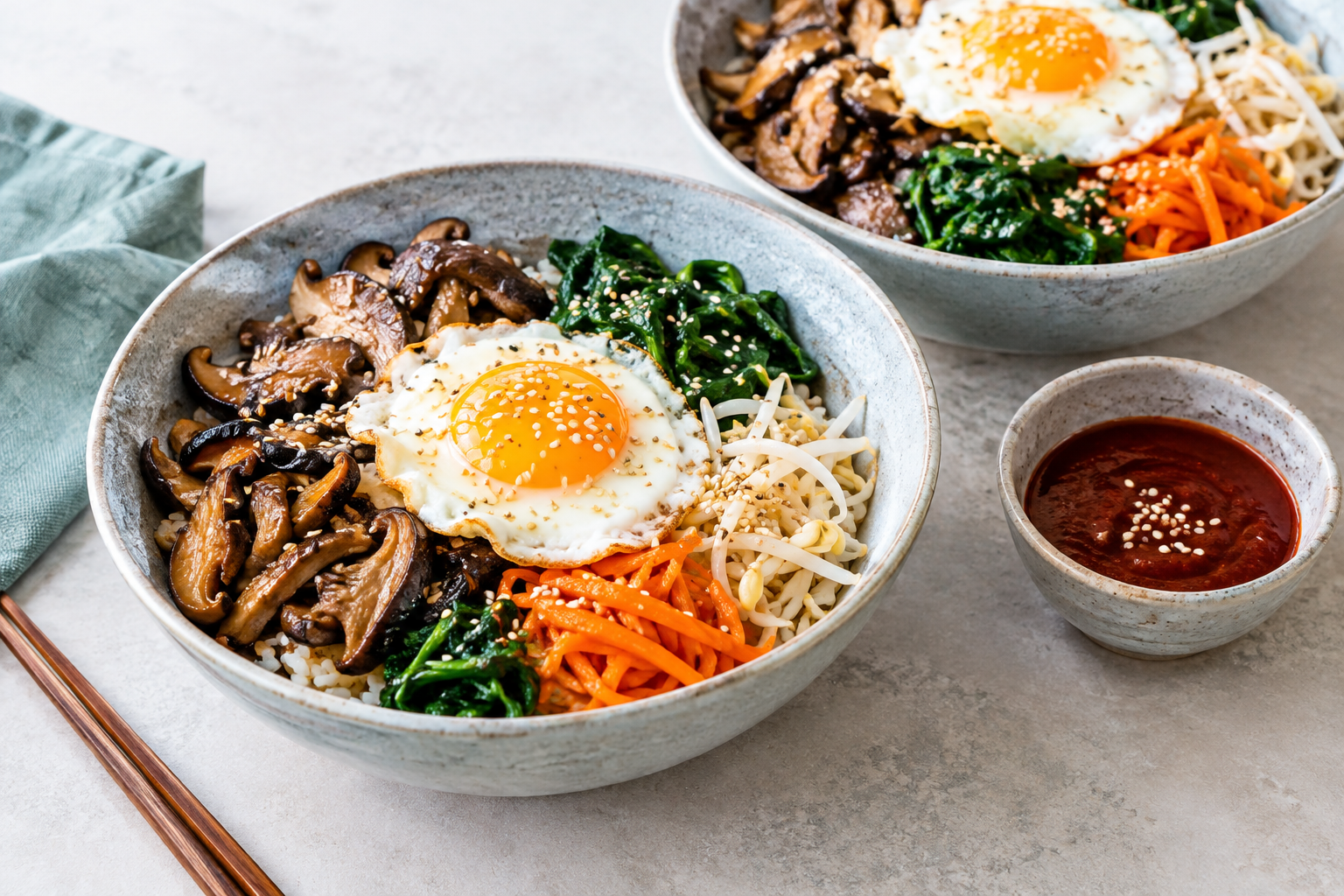
Bibimbap literally means roughly “mixed rice”: the bowl is made with rice and a variety of toppings, which you mix together just before eating. There’s no single set version. The ingredients and how they’re prepared vary from household to household and from region to region; versions with meat or mostly vegetables are both common. In this recipe, shiitake and oyster mushrooms are the savory centerpiece. Their firm bite and lightly browned edges balance the soft rice.
The components are prepared separately and arranged alongside one another on the rice. This isn’t just a way to make the bowl colorful: it keeps the flavors and textures distinct until it’s time to mix everything together. Short- or medium-grain rice is best; it turns soft and slightly sticky when cooked. Rinse it a few times, until the water is less cloudy, to make the rice less sticky on the outside. Let it rest, covered, after cooking while you prepare the toppings.
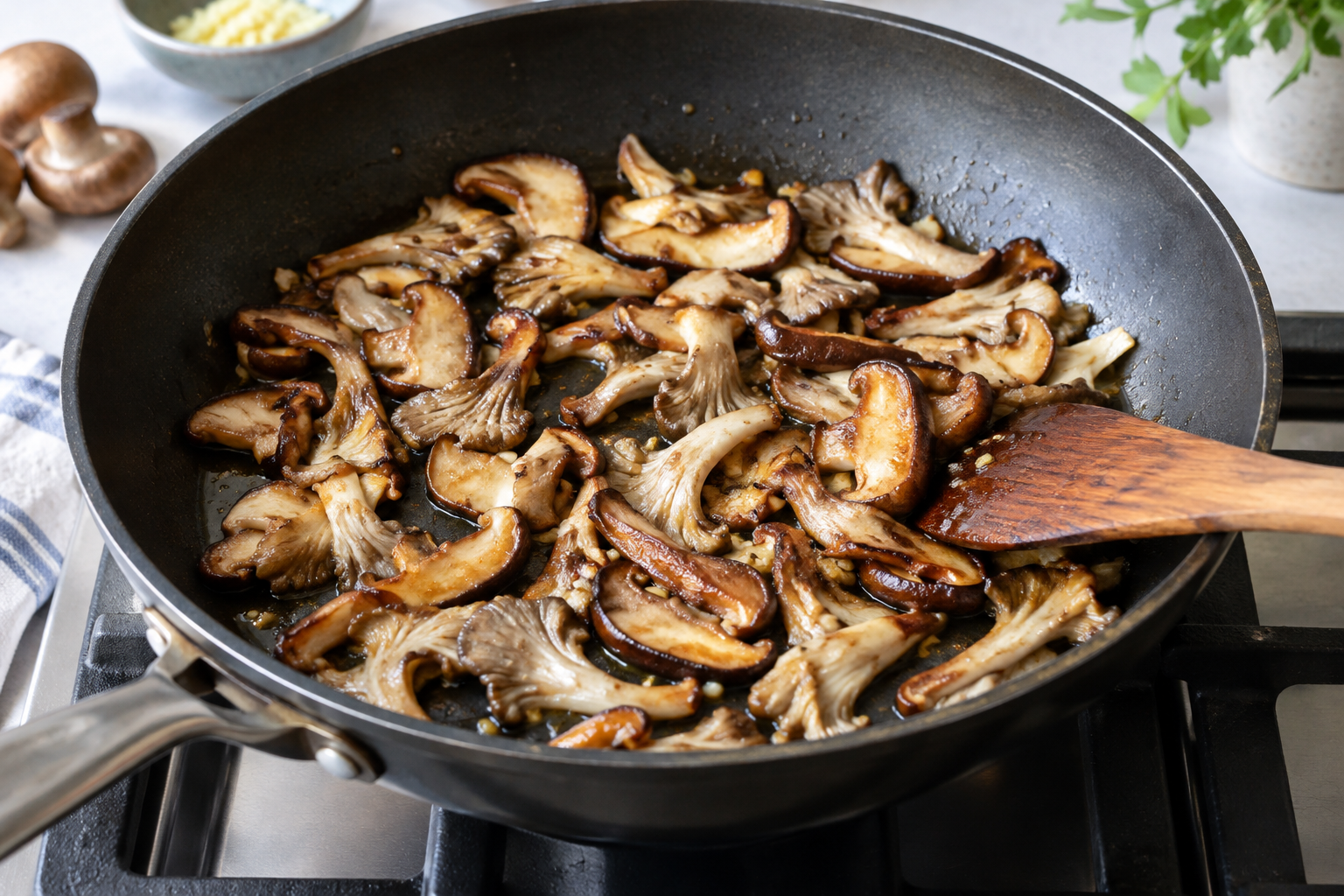
Give the mushrooms plenty of room in a hot frying pan. A crowded pan makes them release moisture and stew rather than brown, so cook them in two batches if needed. Shiitake have a deep, earthy flavor; oyster mushrooms make the texture a little softer and more fibrous. You can adjust the mix to suit what looks good, for example by adding chestnut mushrooms. Remove the shiitake stems if they’re tough. A splash of soy sauce and some garlic are enough to make the mushrooms savory without overpowering the other components.
Cook the vegetables briefly in the pan. This keeps the carrot fresh and slightly firm, the bean sprouts crunchy, and the spinach only just wilted. Cook them one after another and keep them separate so they don’t all pick up the same moisture and flavor. Carrots and spinach are widely available out of season, while mushrooms are available year-round. Bean sprouts are delicate: buy them fresh, keep them refrigerated and follow the use-by date on the package.
A fried egg makes the bowl more substantial; with a soft yolk, it forms a creamy, spicy layer with the gochujang sauce once you start mixing. Stir the gochujang with a little water, rice vinegar and sesame oil to make a sauce that’s easy to drizzle. Start with a little: the heat and saltiness of the paste vary by brand. Serve the sauce on the side, sprinkled with sesame seeds. For a different vegetable, you could quickly fry zucchini, for example, but keep the toppings separate and aim for a mix of soft, juicy and crunchy textures.
 Main course

