MAIN COURSE · NOORS KITCHENBulgogi: Korean Marinated Beef
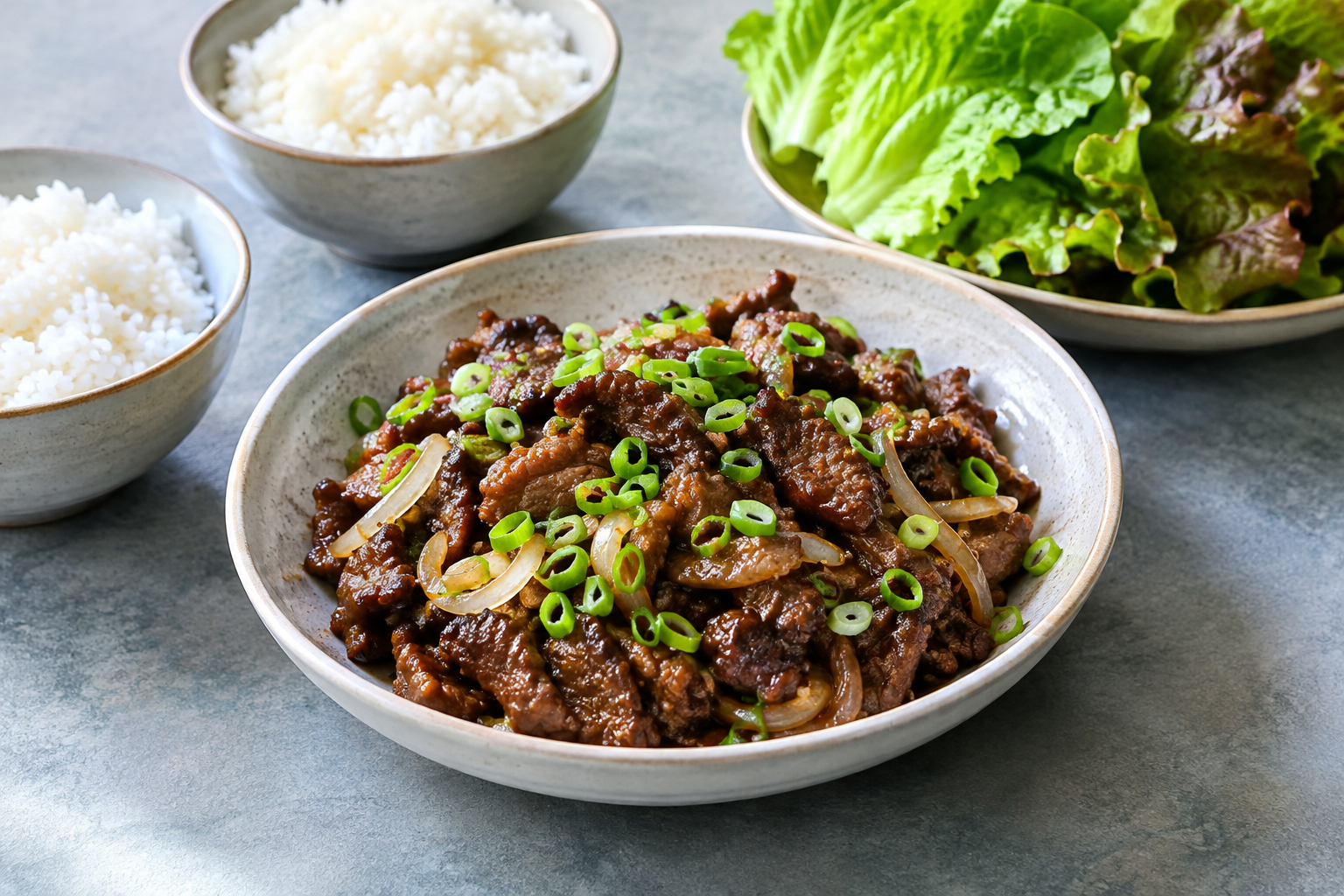
Thinly sliced beef takes on a sweet-and-savory flavor from a marinade of soy sauce, garlic, sesame oil, and grated pear. Cook it in small batches over high heat for browned, caramelized edges. Served with rice, lettuce, and scallions, it makes a complete main course.
ABOUT THIS RECIPEPear in the Marinade, Heat in the Pan
Bulgogi is a well-known Korean dish of marinated beef; the exact ingredients and preparation vary from household to household and recipe to recipe. In this version, soy sauce, garlic, and sesame oil bring saltiness and savory depth. Grated pear adds moisture and mild sweetness, while a little brown sugar helps the beef brown. The marinade is distinctly sweet and savory, but shouldn’t be so sweet that the flavor of the beef disappears.
Slice the meat as thinly as possible, across the grain. This helps it cook faster and makes it easier to chew. A piece of meat that’s slightly frozen is often firmer, making it easier to slice thinly. Ribeye gives a juicy result thanks to its fat; a leaner steak works too, as long as you cook it briefly. An Asian pear is suitable for grating, but a ripe European pear works as well. Choose one that’s firm, not mealy.
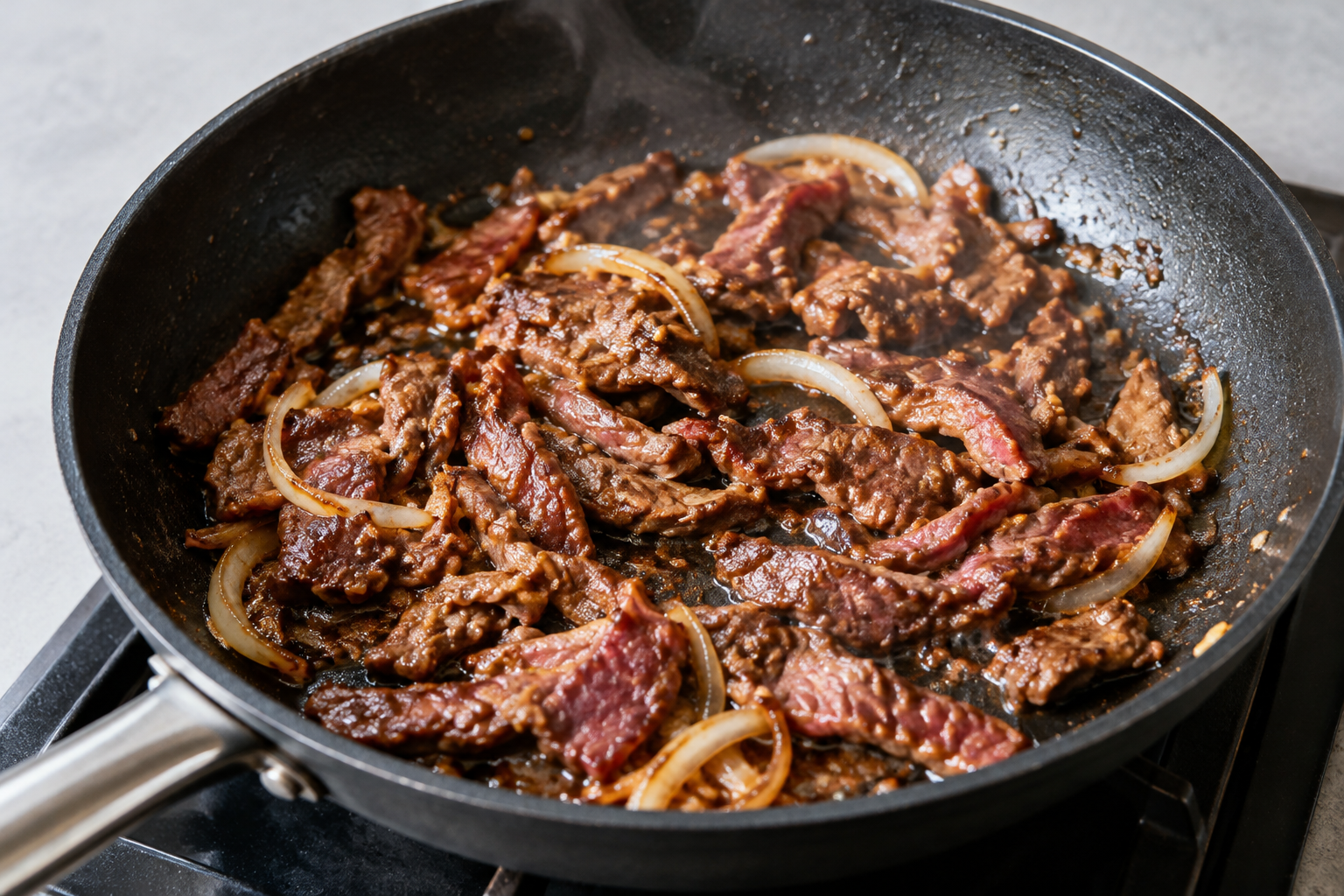
Marinate the meat in the refrigerator for about half an hour. This gives the flavors time to spread over the surface without making the preparation complicated. Then heat a wide frying pan thoroughly and cook the meat in small batches. A crowded pan cools quickly: the meat then releases moisture and is more likely to steam than brown. Remove each batch as soon as it’s cooked through and caramelized in places. If you’re using a griddle or barbecue, spread the strips out and keep a close eye on them; because they’re thin and the marinade contains sugar, they color quickly.
Serve the bulgogi with warm rice, crisp lettuce leaves, and thinly sliced scallions. You can roll the meat and a little rice in a lettuce leaf, or put everything on the table separately so everyone can make their own combination. A fresh cucumber goes well with it, but isn’t part of this basic recipe. If you don’t have sesame oil, you can’t fully replace it without changing the flavor; you could use a neutral oil in the marinade instead, but you’ll miss the distinctive toasted sesame note. For a gluten-free version, tamari is a possible substitute for soy sauce, provided the label confirms it.
Refrigerate leftover meat, covered, within two hours and use it within three to four days. Reheat it in a hot pan until steaming hot throughout; a small amount of water can help keep it from drying out as it reheats. Store raw meat separately from cooked bulgogi, and don’t use any marinade that has been in contact with raw meat as a sauce unless you first bring it to a thorough boil.
 Main course

