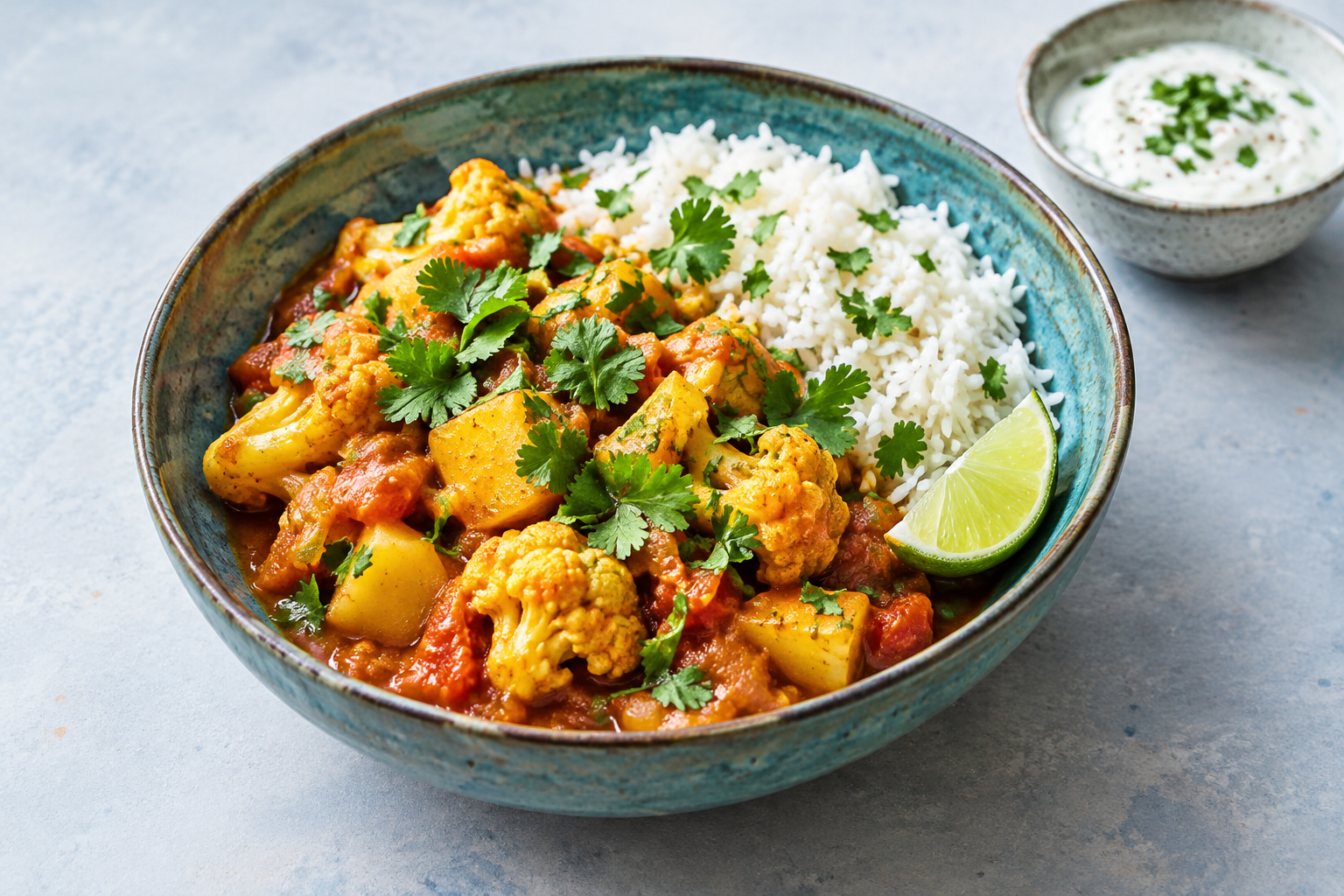
Potato Curry with Cauliflower, Lime and Coriander
Tender potatoes and cauliflower soak up a spiced tomato sauce; lime and coriander add freshness just before serving. Delicious with rice or warm flatbread and a spoonful of yogurt.
Curry isn’t one fixed recipe, but an umbrella term for dishes made with all kinds of spices, sauces and cooking methods. Here you’ll find everything from a sour Southern Thai fish curry and creamy coconut curries to Punjabi beans and slow-braised meat. Choose based on what you’re in the mood for: light and fresh, mild and creamy, or deeply spiced with a sauce that has had time to reduce gently.
39 recipesBrowse the recipes
Tender potatoes and cauliflower soak up a spiced tomato sauce; lime and coriander add freshness just before serving. Delicious with rice or warm flatbread and a spoonful of yogurt.
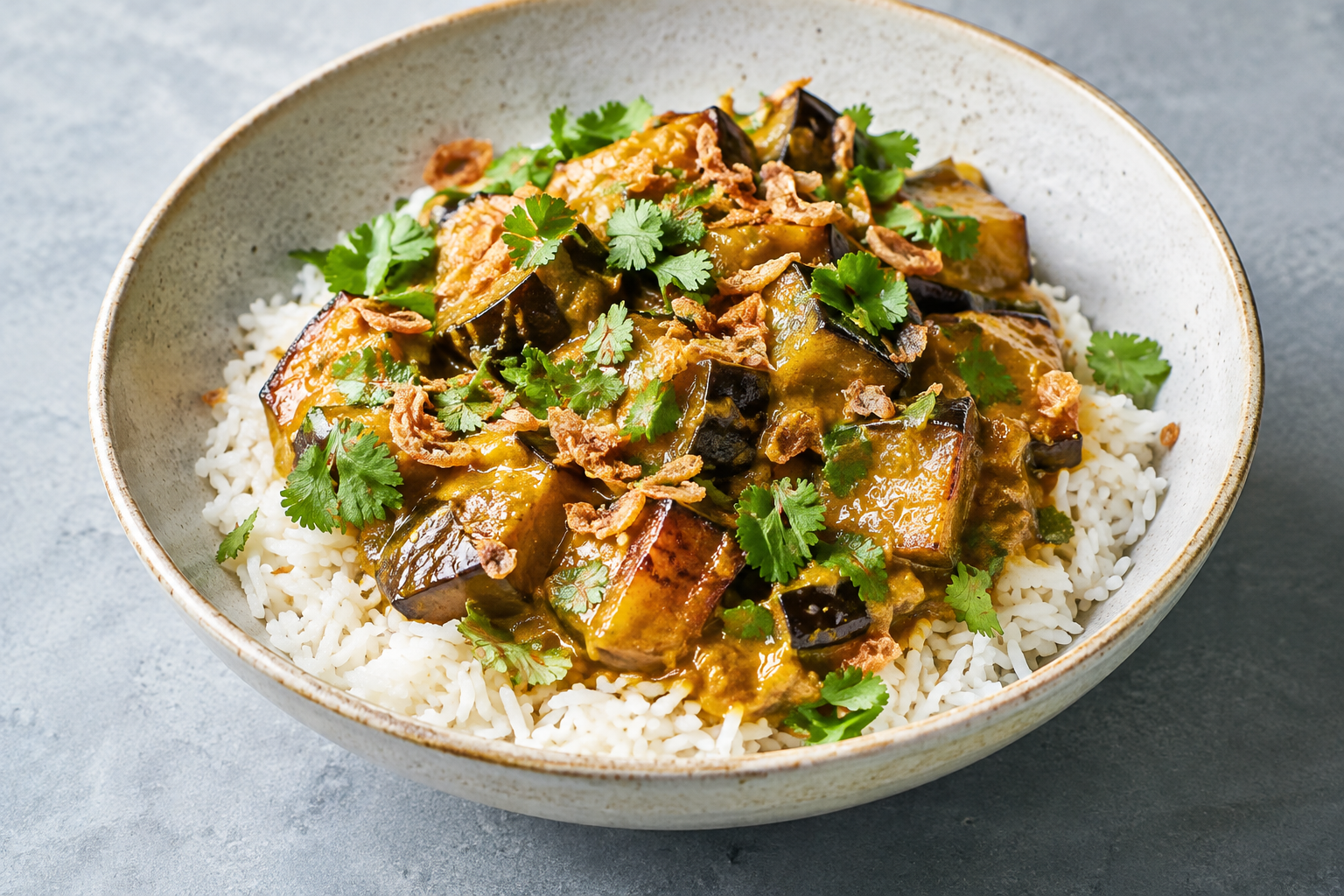
Fried aubergine soaks up a spiced coconut sauce without immediately falling apart. Tamarind keeps the sauce bright, while crispy shallots and coriander add contrast. Serve with rice for a satisfying plant-based main.
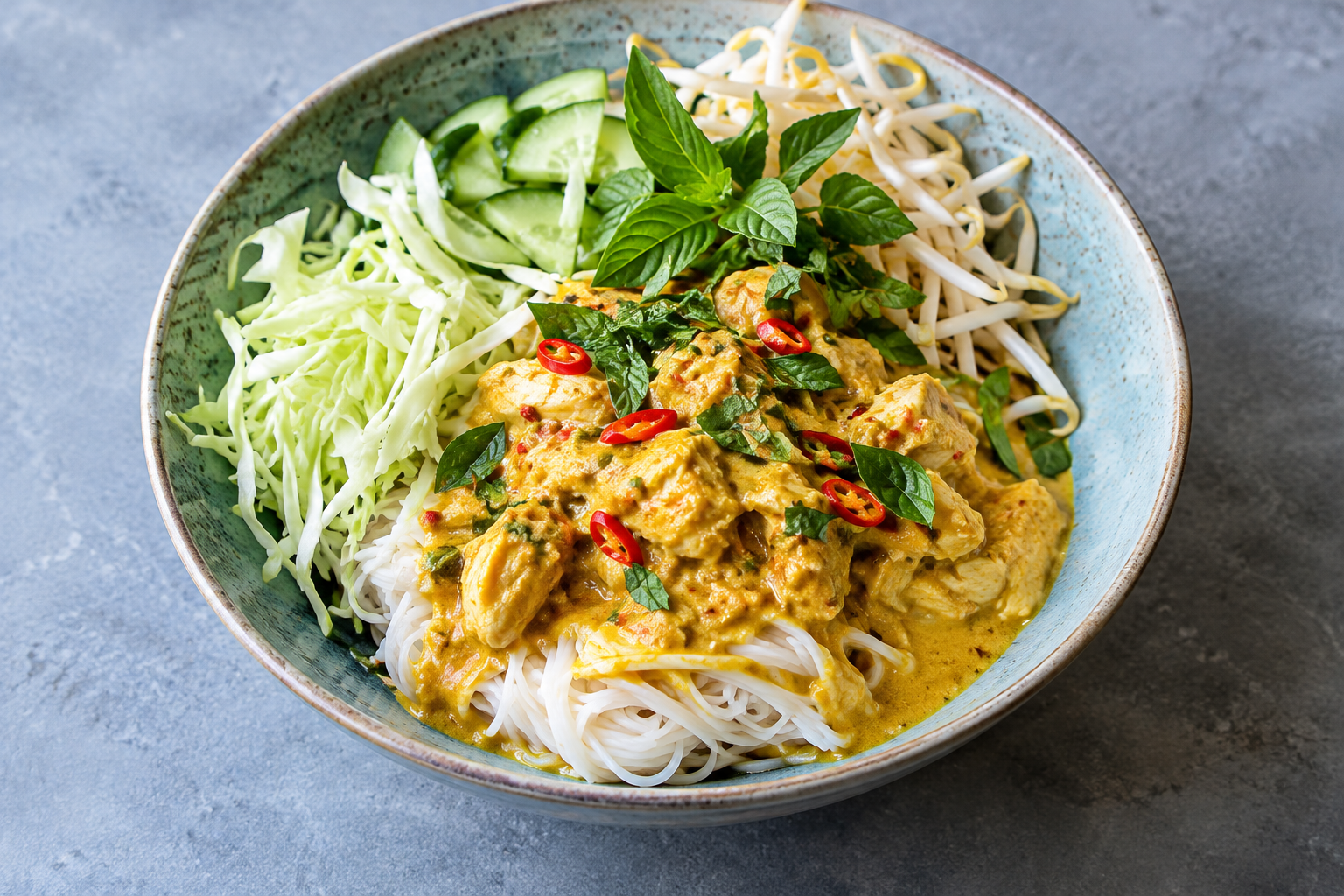
Soft rice noodles, a creamy but spicy fish curry, and a generous handful of crunchy vegetables: with kanom jeen nam ya, every bite strikes a different balance. Set the toppings out separately so everyone can mix and match.
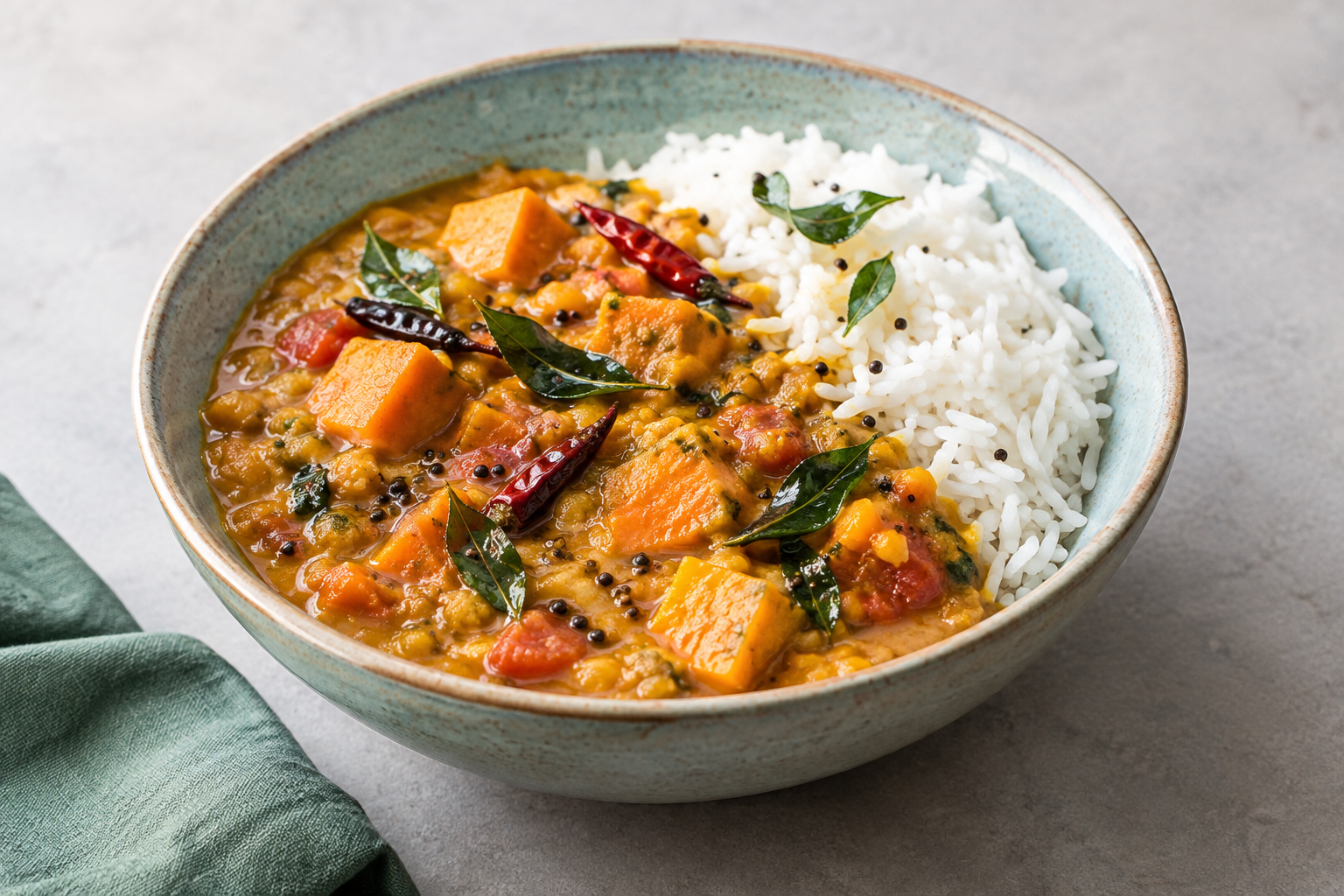
This sambar brings together tender toor dal and sweet potato in a spiced, gently tangy sauce. Mustard seeds, curry leaves and dried chilli give it its distinctive aroma; serve with rice or idli.
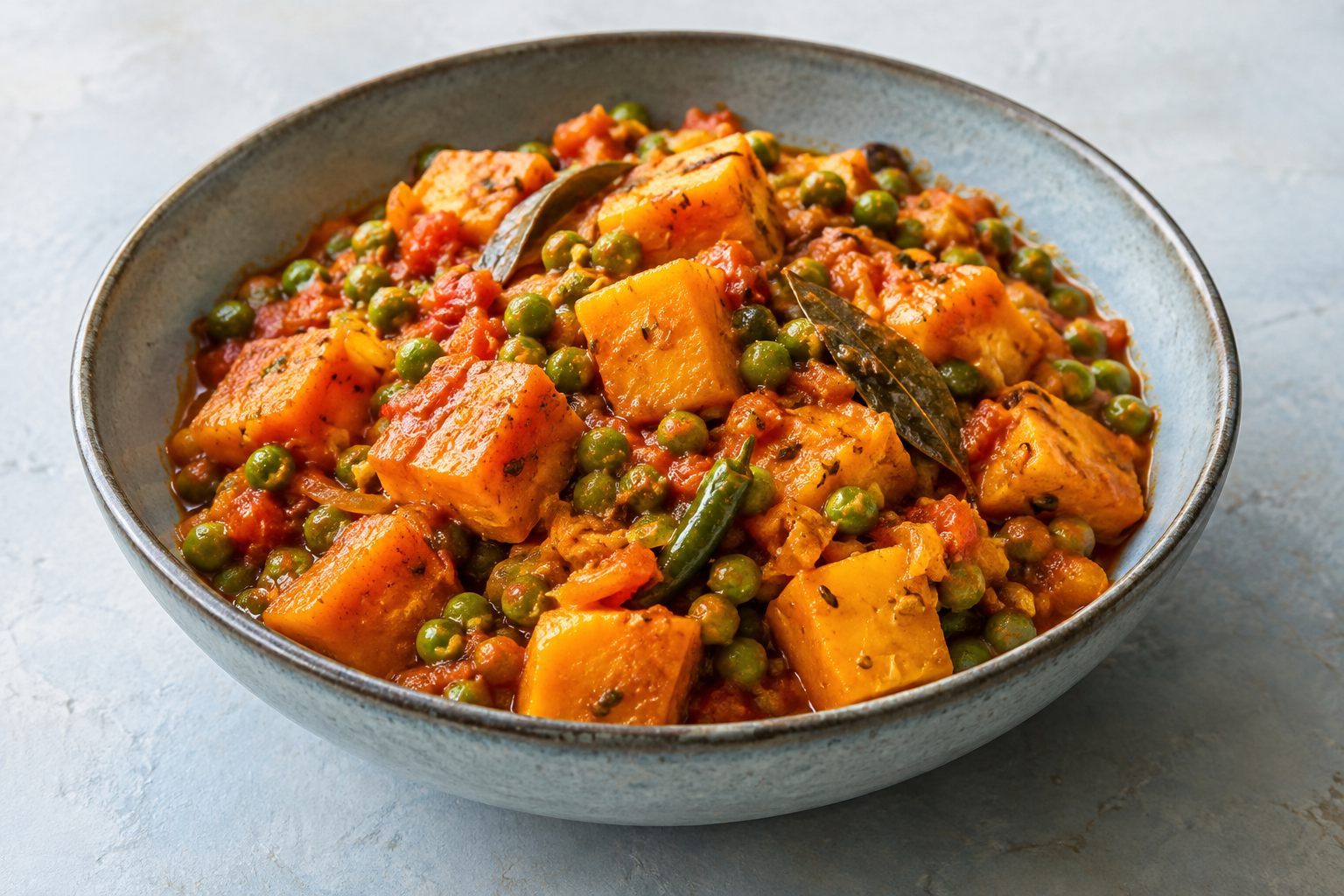
Tender chunks of sweet potato simmer in a fragrant tomato sauce with ginger, cumin and turmeric. Peas add fresh color and a little bite. This Bengali version is delicious with rice or roti.
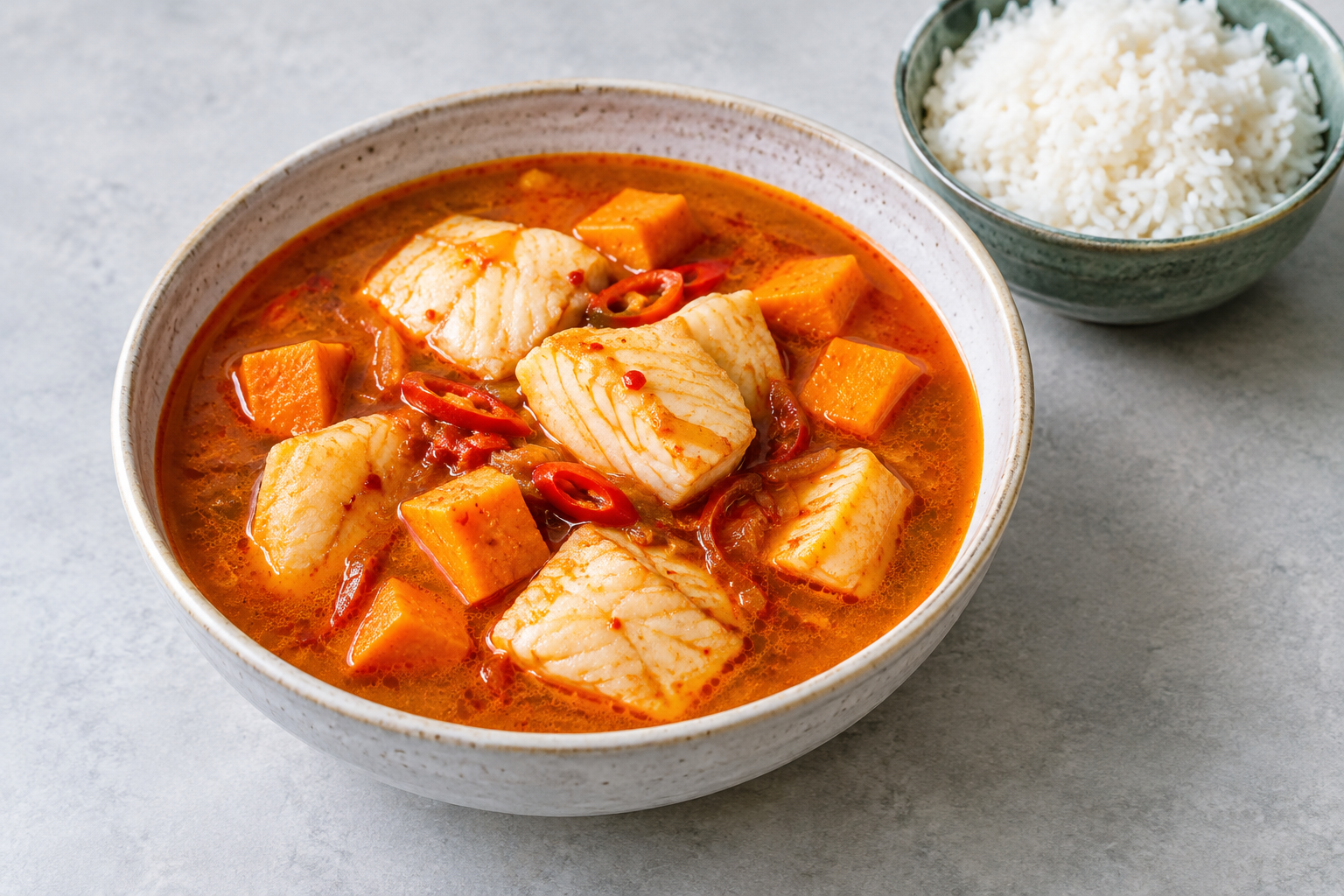
A bright Thai curry broth with tamarind, chili and garlic: sour, spicy and savory, with tender sweet potato and juicy pieces of white fish. Jasmine rice completes the dish.
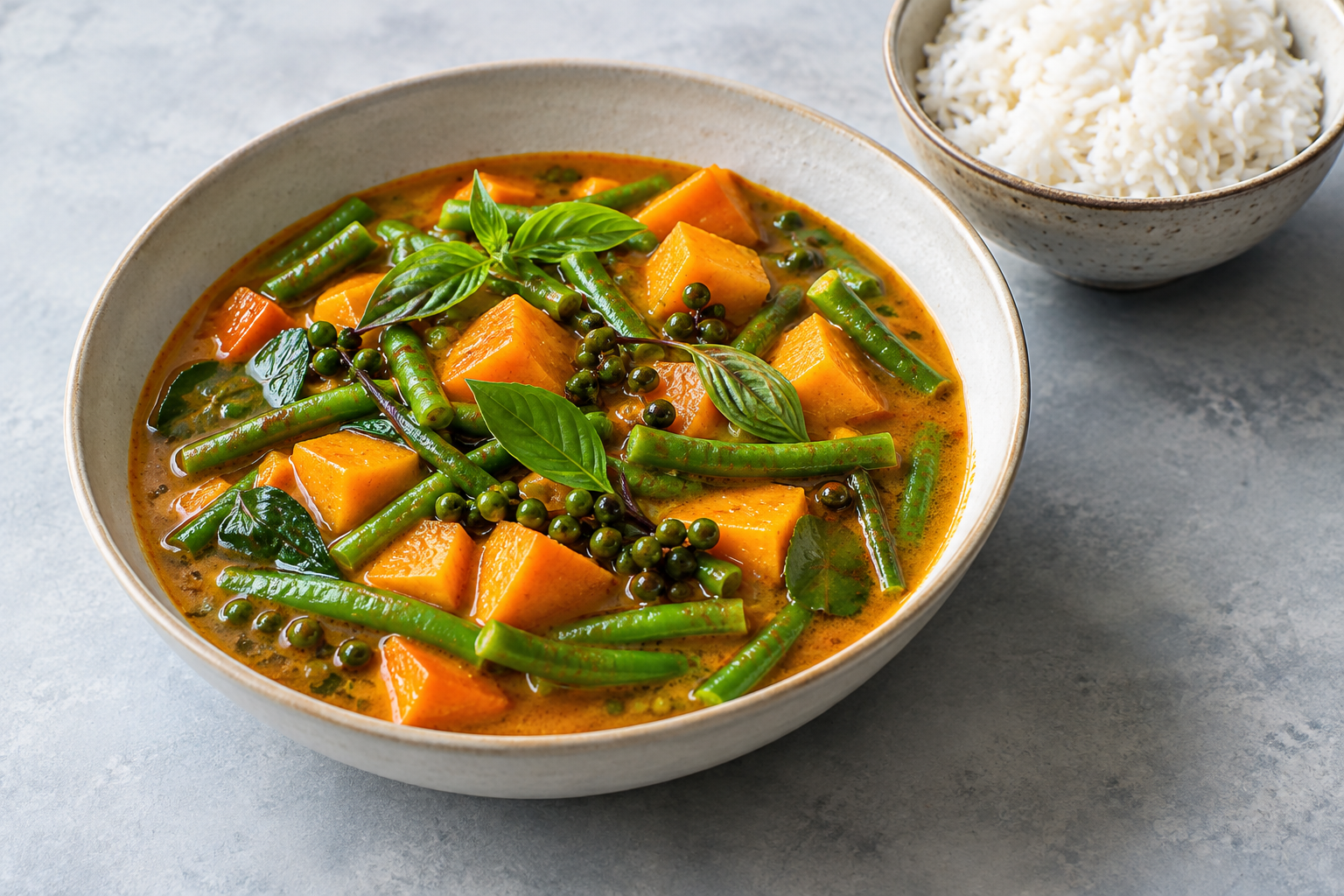
This spicy gaeng pa gets its satisfying bite from sweet potato and long beans. The curry is cooked in stock, not coconut milk, so the pepper, Thai basil and green peppercorns come through clearly. Serve with fragrant rice.
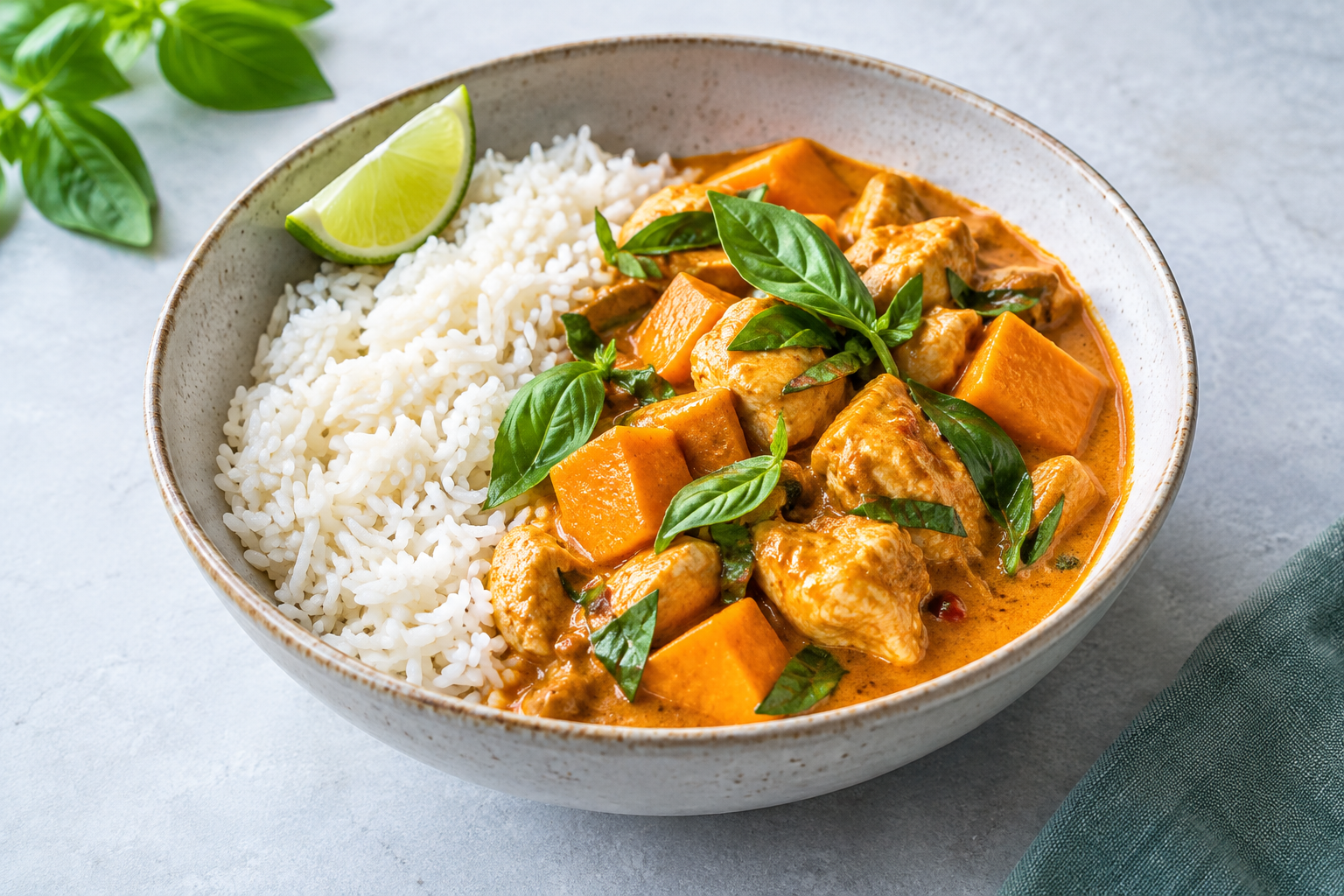
Red curry paste, coconut milk and generous chunks of sweet potato make a hearty Thai curry with fresh lime and fragrant basil. Make it with chicken thigh fillets or firm tofu, and serve with jasmine rice.
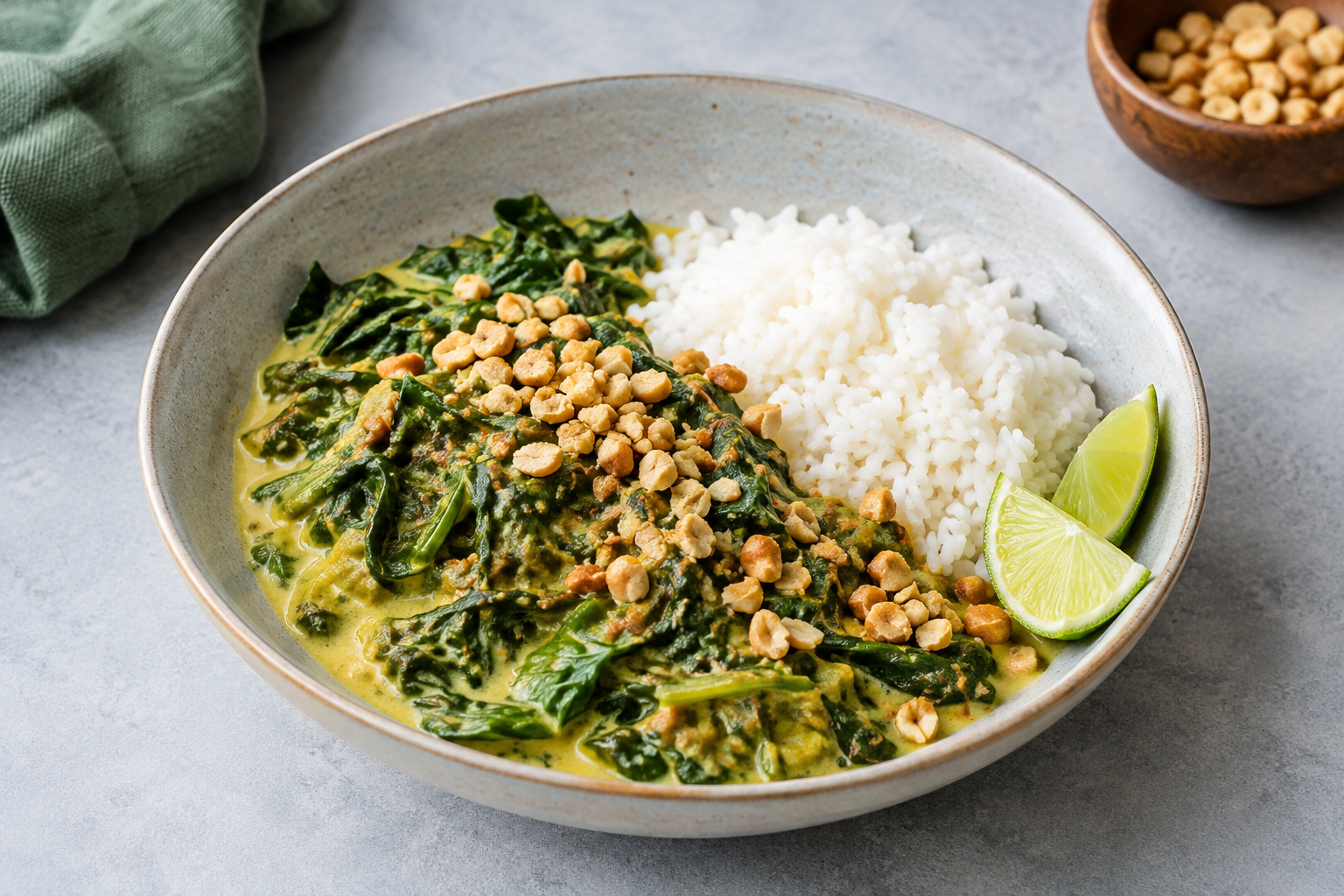
Pumpkin leaves turn soft and tender in a mild coconut curry sauce, with lime for freshness and roasted peanuts for crunch. Serve with rice to soak up the creamy sauce.
This Northern Thai curry gently braises pork shoulder in a spiced, sweet-and-sour sauce with plenty of ginger. There’s no coconut milk: the spices, tamarind and reduced sauce give the curry its full flavor. Serve with sticky rice.
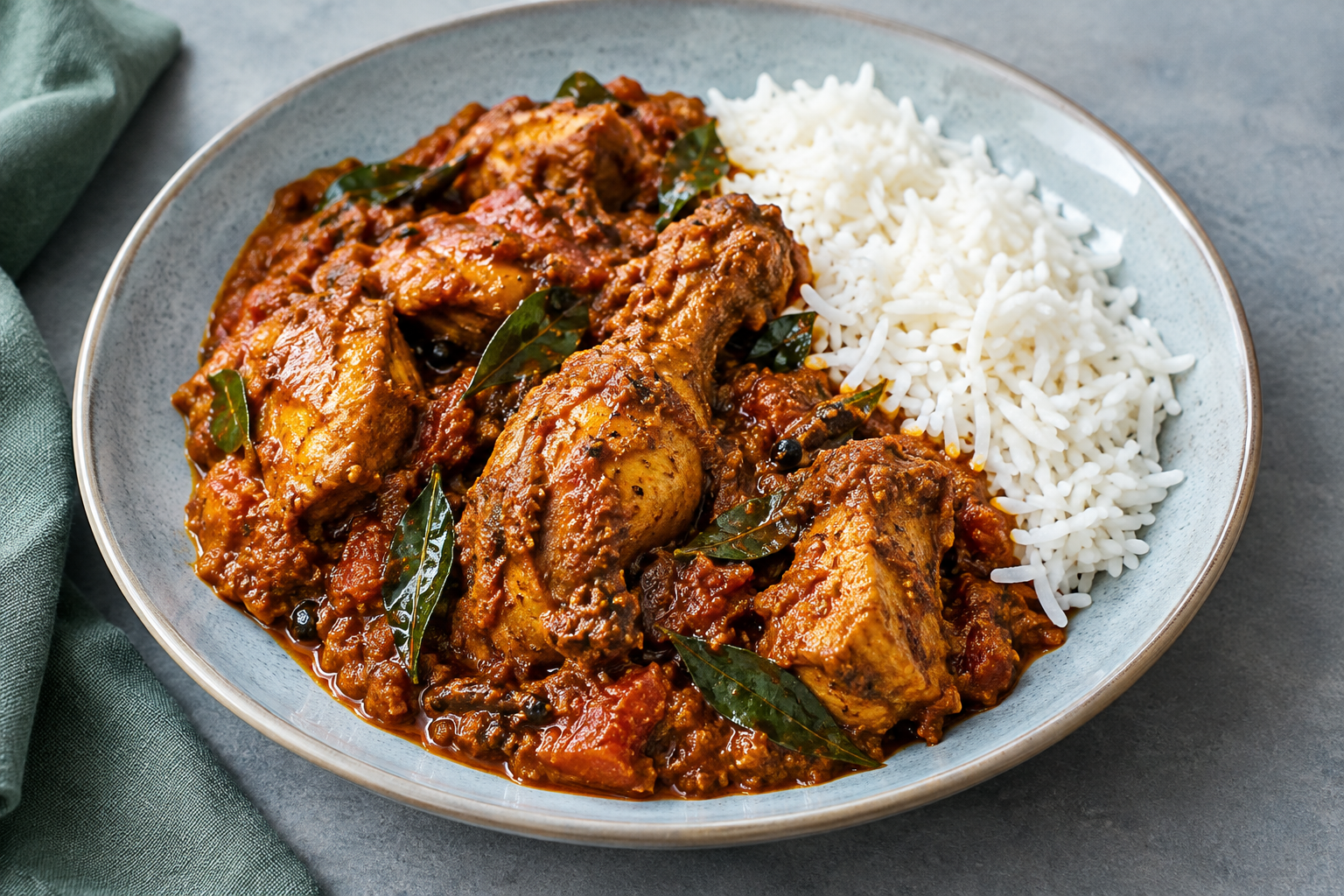
This South Indian chicken curry gets its bold flavor from toasted spices, fennel and black pepper. The sauce is thick and spicy, with tamarind adding a subtle sour note. Serve it with rice so none of the masala goes to waste.
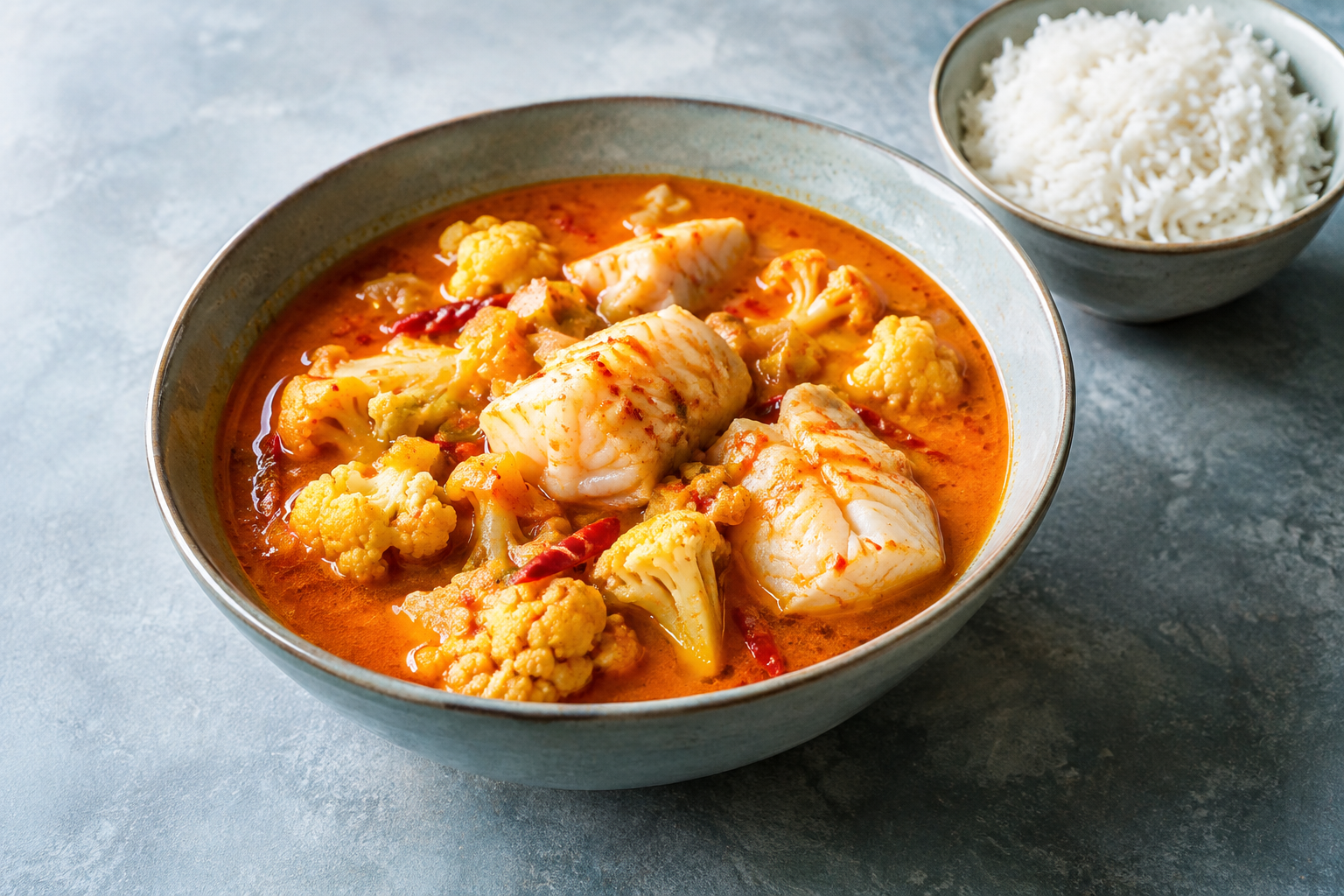
This Southern Thai curry is bright, spicy and distinctly sour, with firm pieces of white fish and cauliflower that soak up the broth. Serve it with jasmine rice; coconut milk doesn’t belong in this dish.
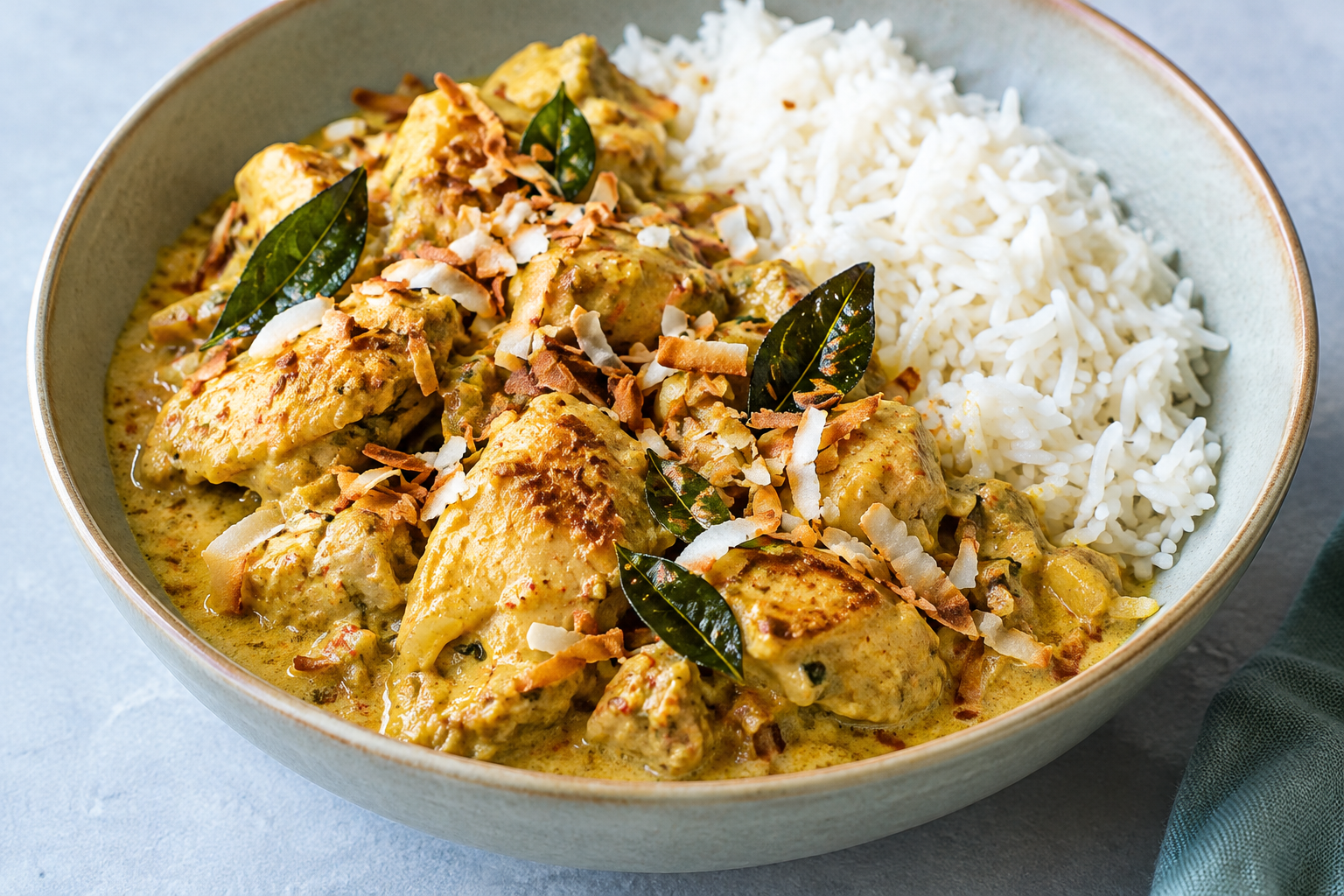
Tender chicken in a creamy coconut sauce gets depth from toasted coconut and warm spices. Tamarind keeps the sauce lively, while curry leaves add a fresh, fragrant note. Delicious with rice or appam.
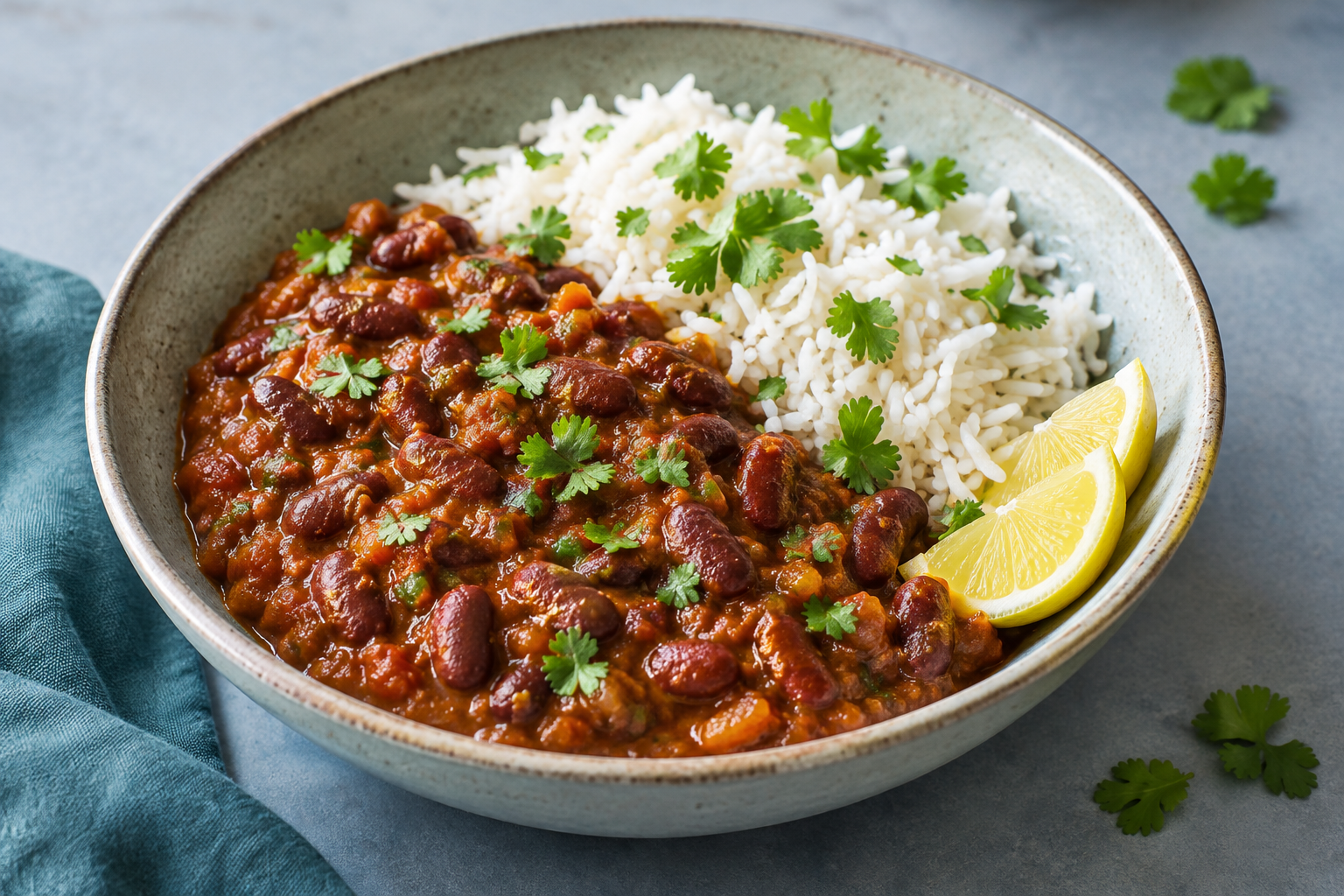
Creamy kidney beans in a spiced tomato masala, with fragrant rice on the side. By cooking the beans until tender first and then letting them simmer in the sauce, they absorb plenty of flavor without falling apart.
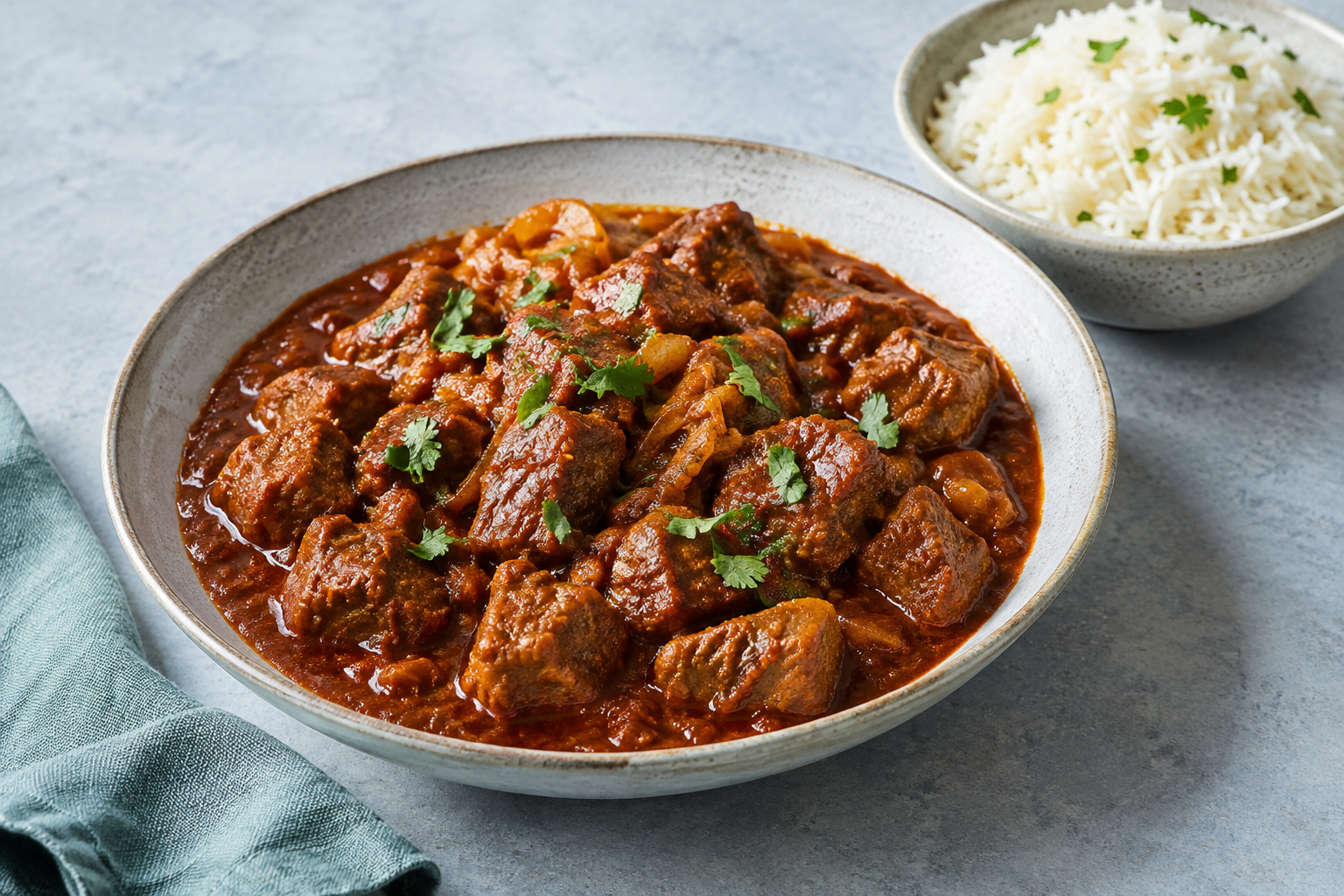
This Goan vindaloo brings together tender braised pork with garlic, chili, warming spices and the bright sharpness of vinegar. Slow cooking makes the sauce mellow and concentrated; rice soaks up the spicy, tangy gravy beautifully.
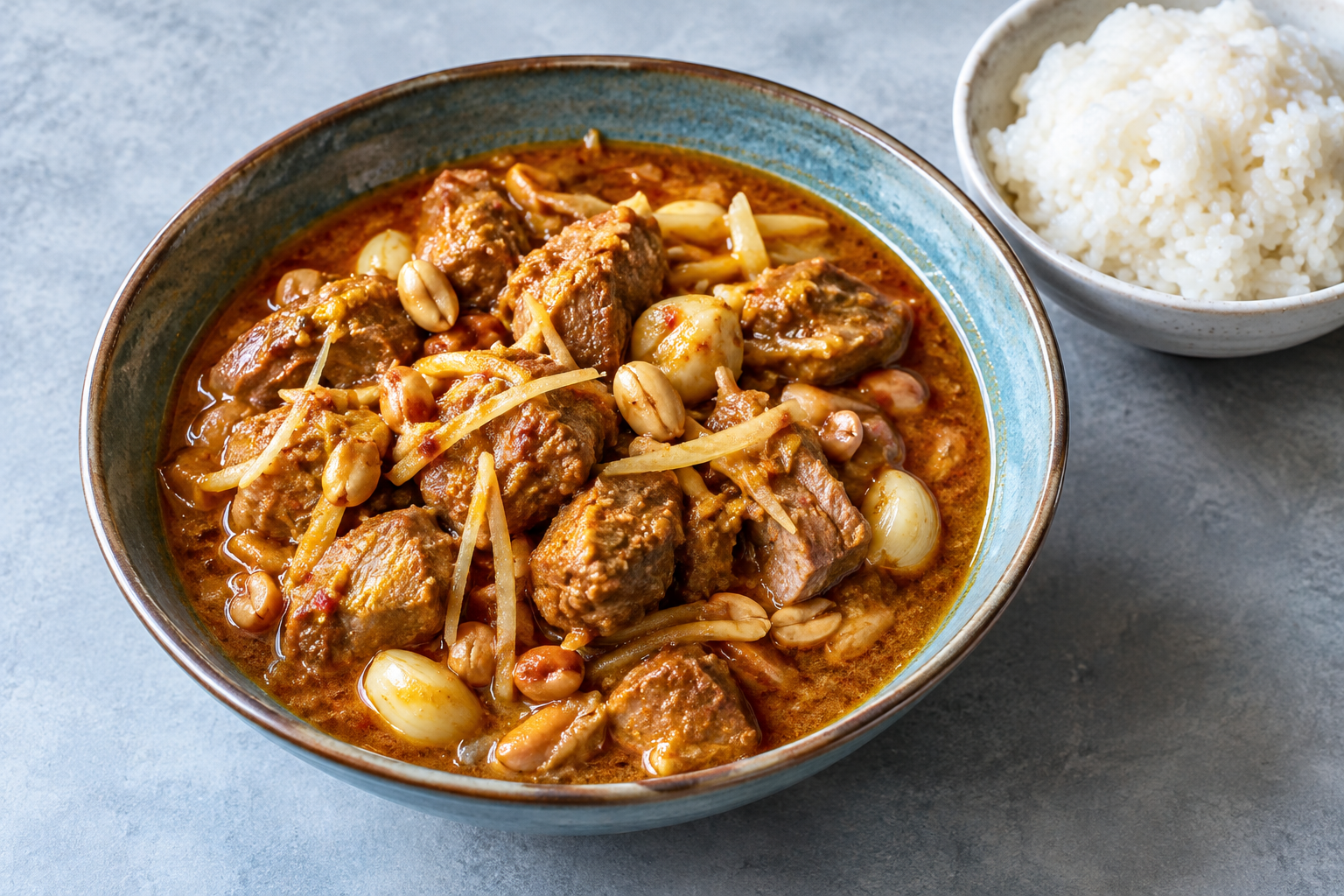
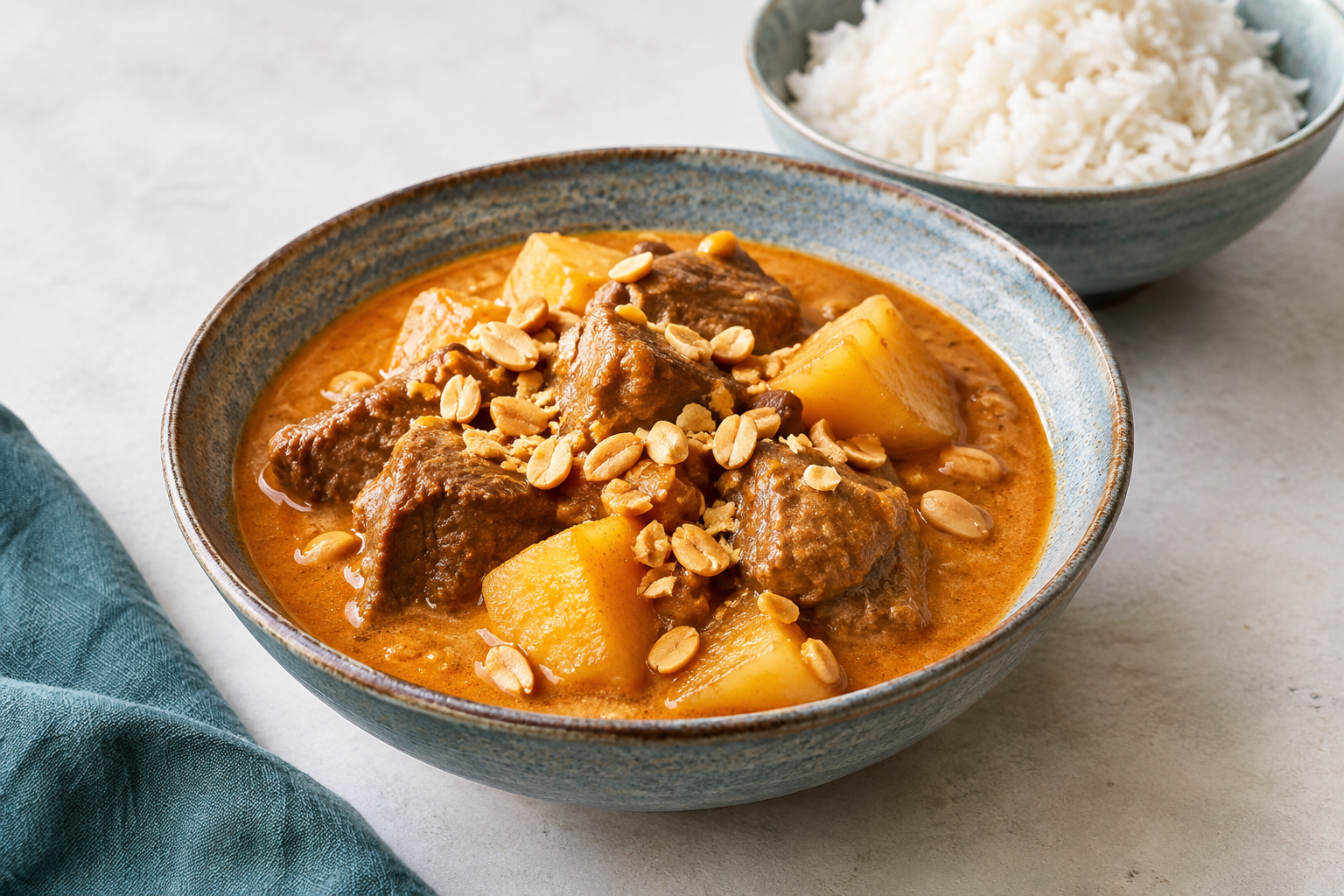
This Massaman curry slowly tenderizes beef in coconut milk with warming spices. Potato gives the sauce a richer body, while roasted peanuts add a satisfying crunch alongside the soft curry.
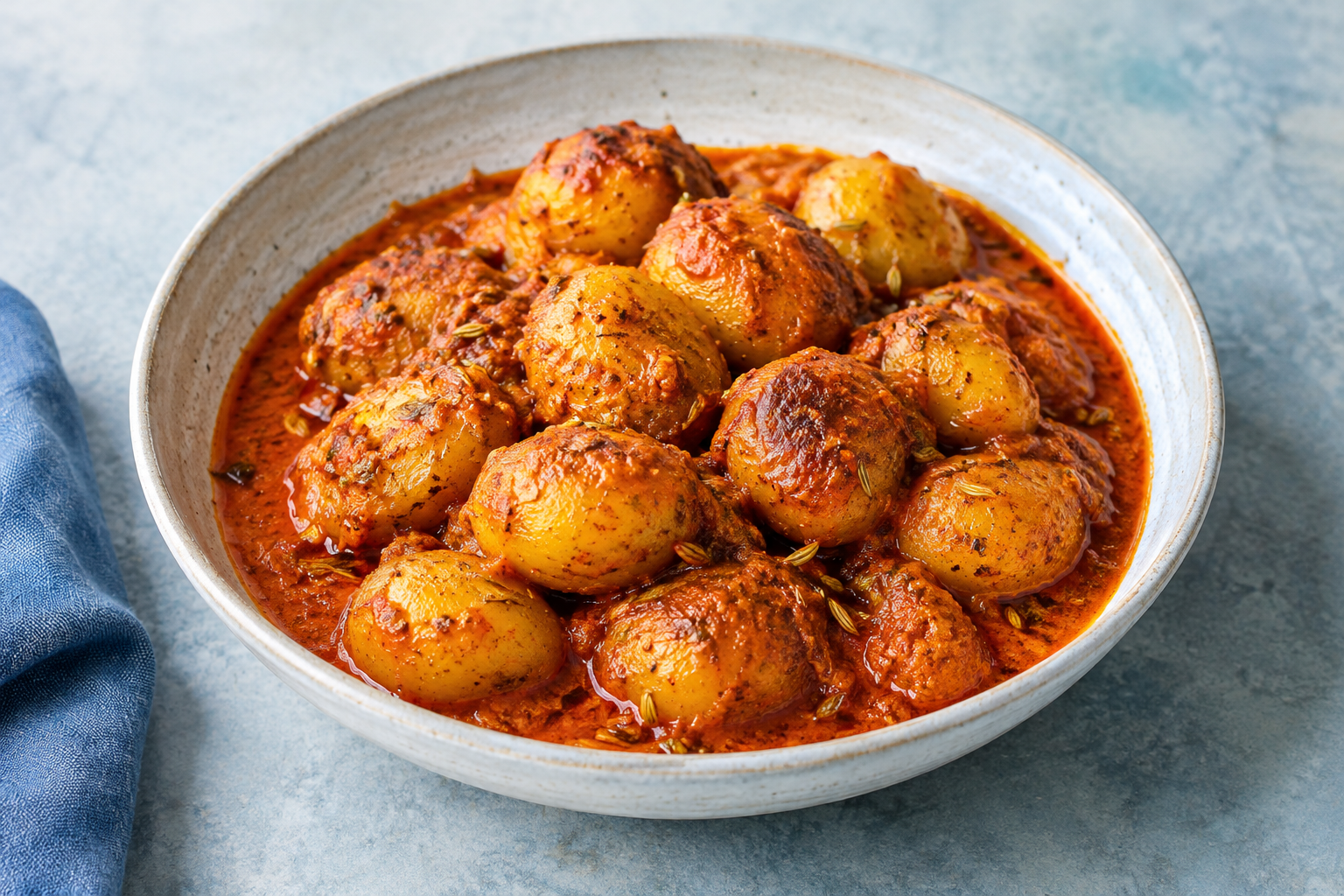
Small potatoes develop golden-brown edges, then slowly cook in a red, aromatic sauce of yogurt, fennel and Kashmiri chili. A hearty main course with tender potatoes and a gently tangy sauce, delicious with rice or flatbread.
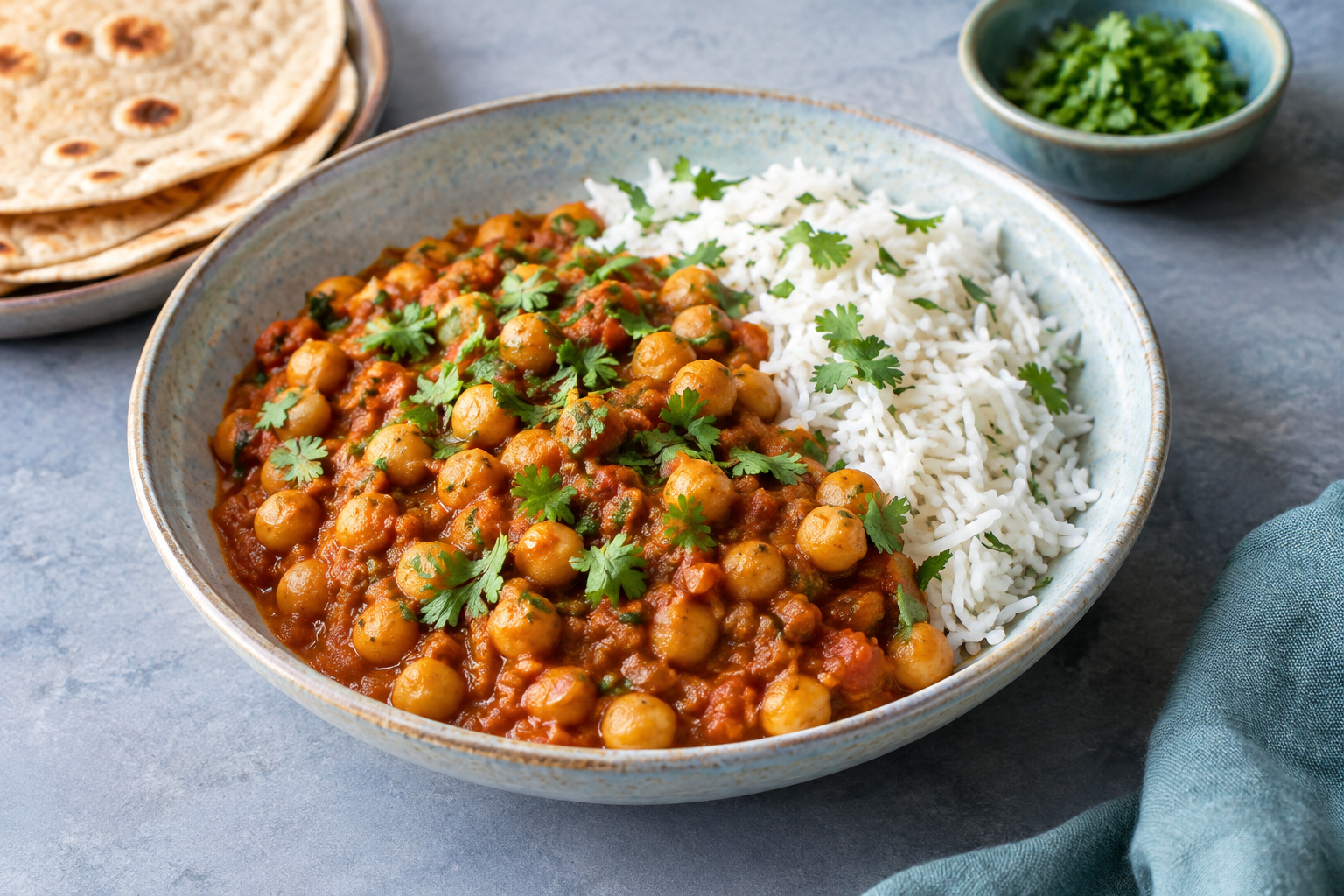
Chickpeas simmer in a spiced tomato sauce with a bright, tangy flavor from amchur. Let the sauce reduce gently: it will cling to the chickpeas, keeping the dish thick enough to serve with rice or roti.
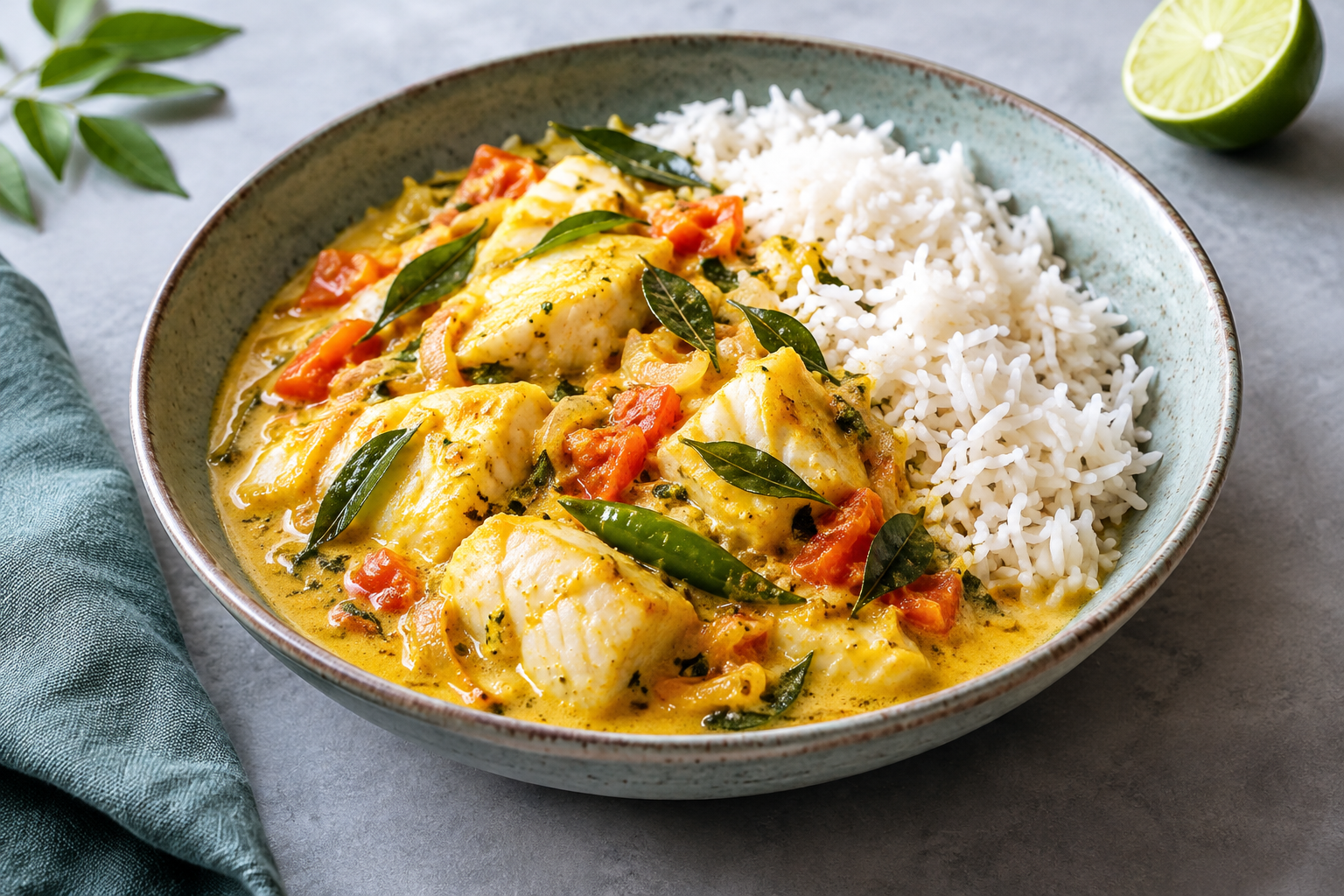
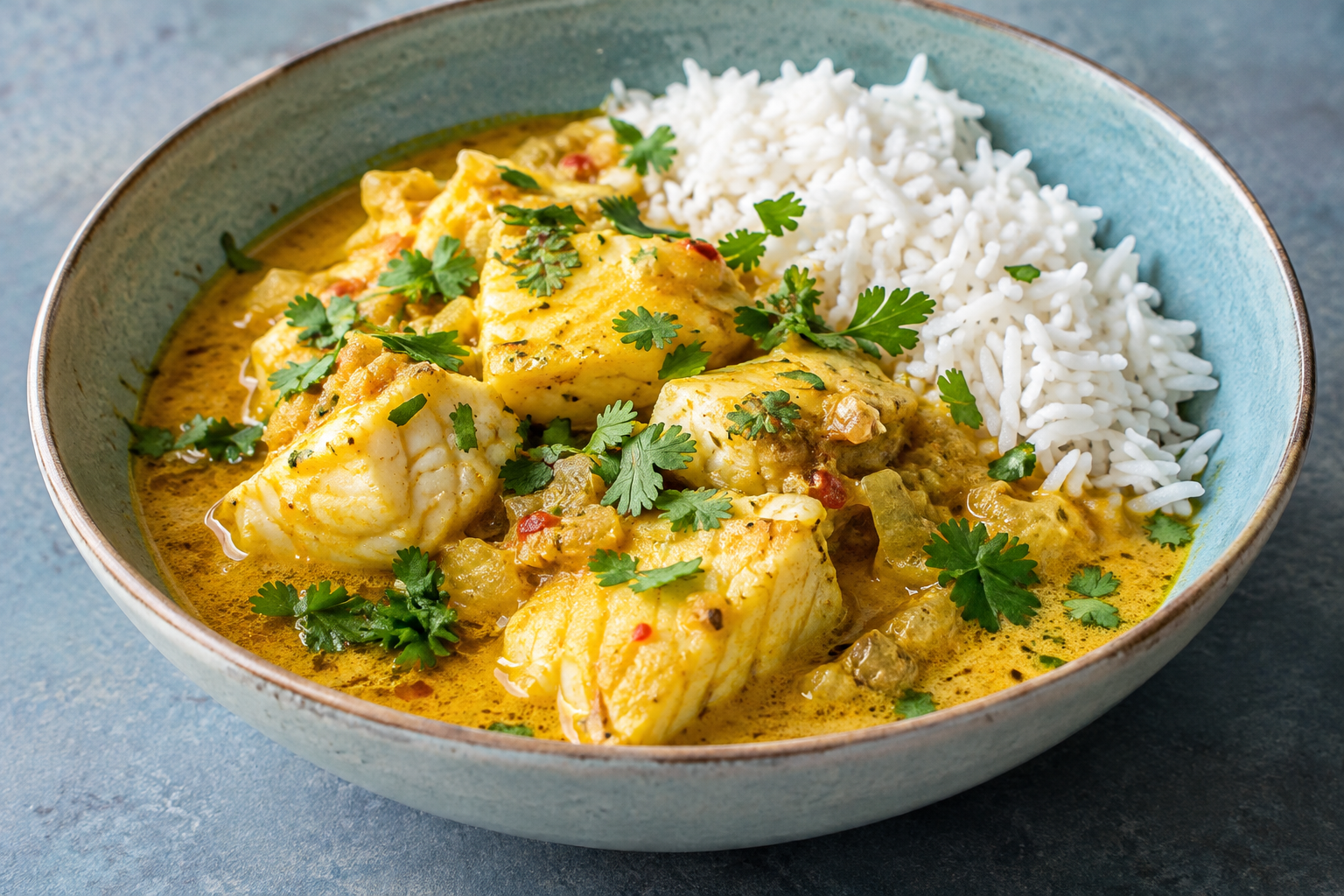
Tender white fish cooks in a light coconut sauce with ginger, green chili and fragrant curry leaves. Tomato and lime keep it fresh; serve with rice to soak up the sauce.
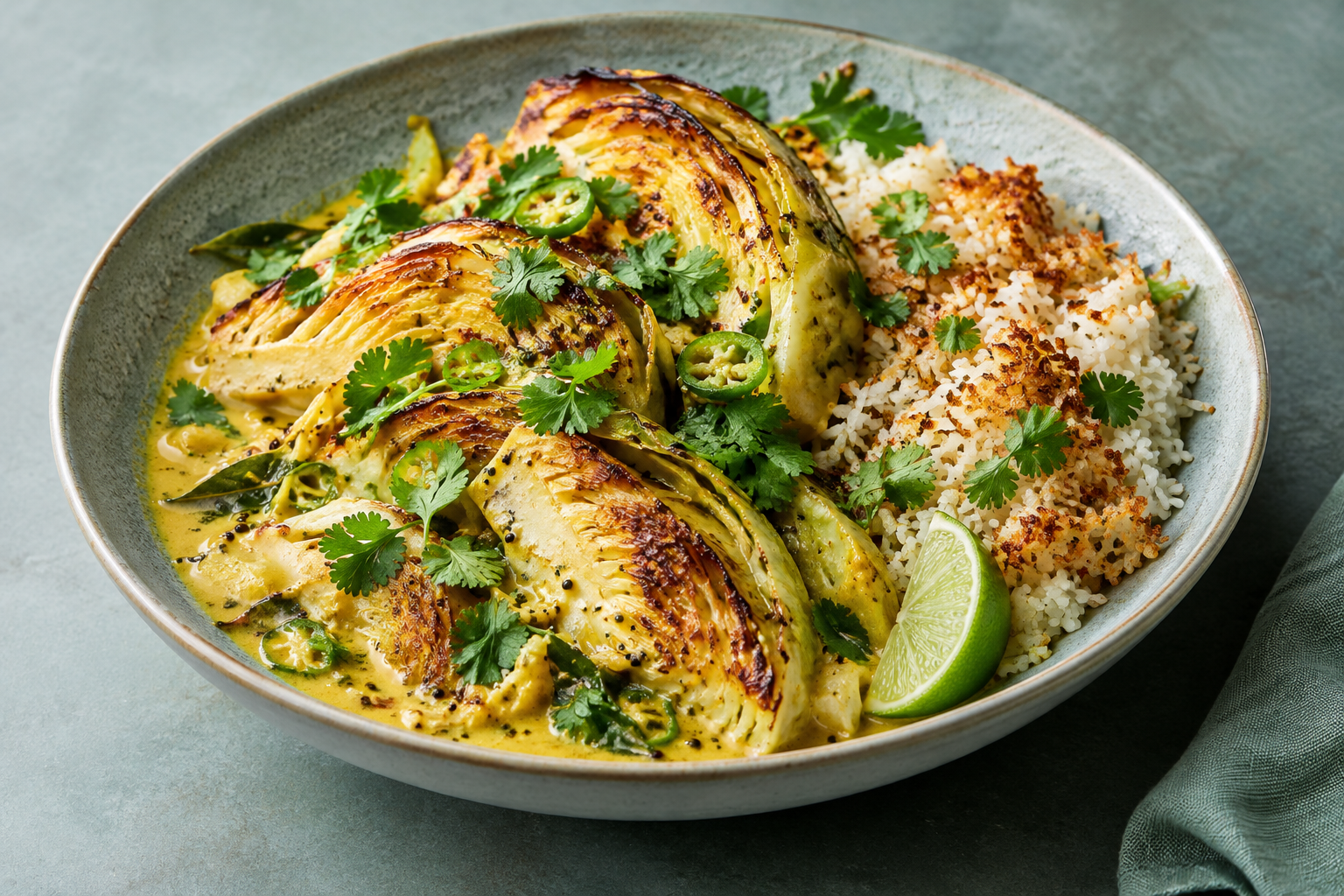
Pointed cabbage gets golden-brown edges, then simmers in a creamy coconut curry with ginger, mustard seeds and curry leaves. It’s served with rice that has crispy edges; lime and coriander keep everything fresh.
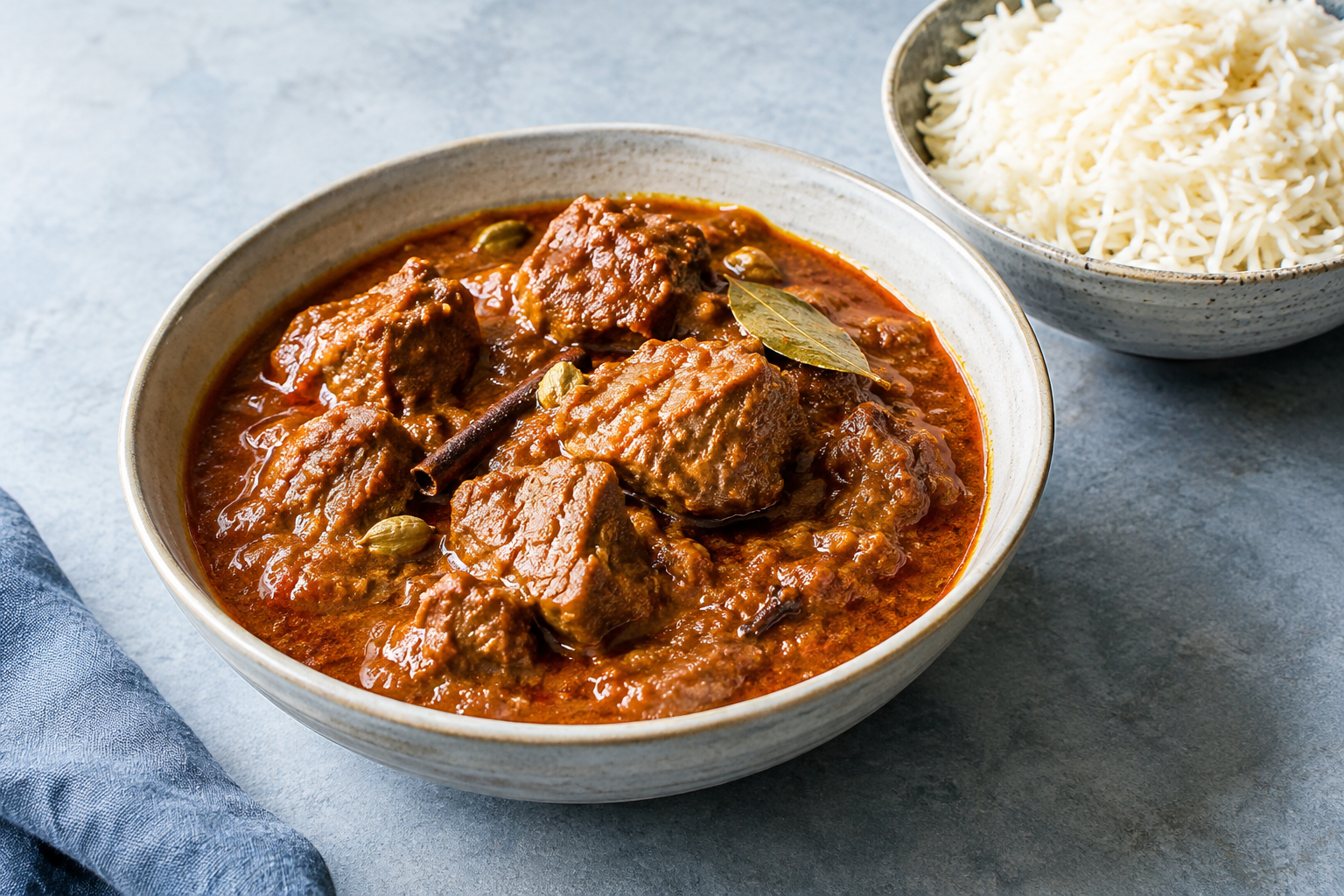
This rogan josh slowly braises lamb until tender in a fragrant sauce of yogurt, ghee, fennel and dried ginger. Serve it with basmati rice, which soaks up the light, aromatic sauce beautifully.
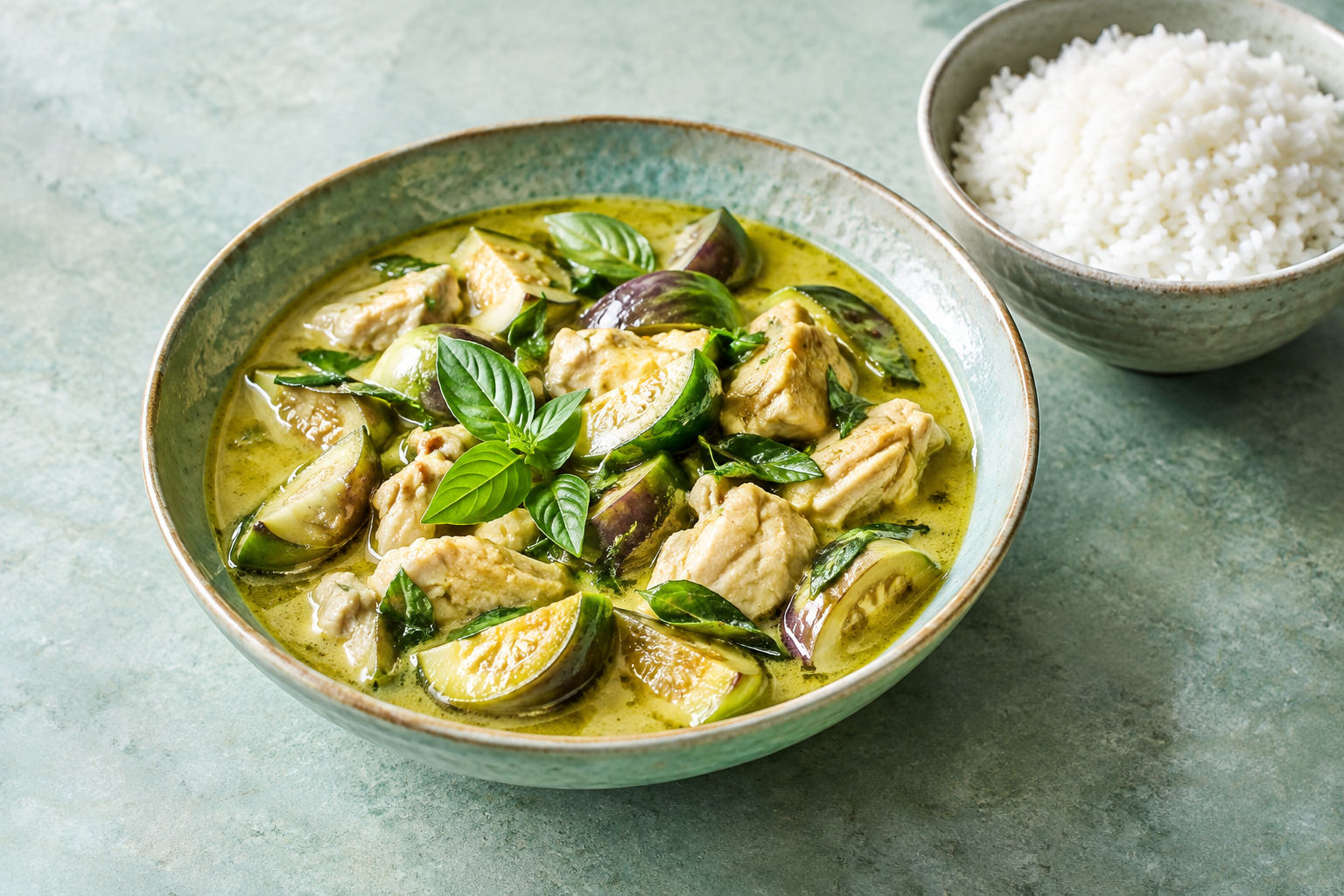
Tender chicken and firm Thai eggplants simmer in a fragrant green curry sauce with coconut milk. Thai basil and fish sauce add freshness and depth at the end; jasmine rice soaks up the thin sauce nicely.
Firm white fish cooks briefly in a light, spiced sauce of coconut, chili and spices. Tamarind adds a tangy counterpoint; rice soaks up the sauce nicely.
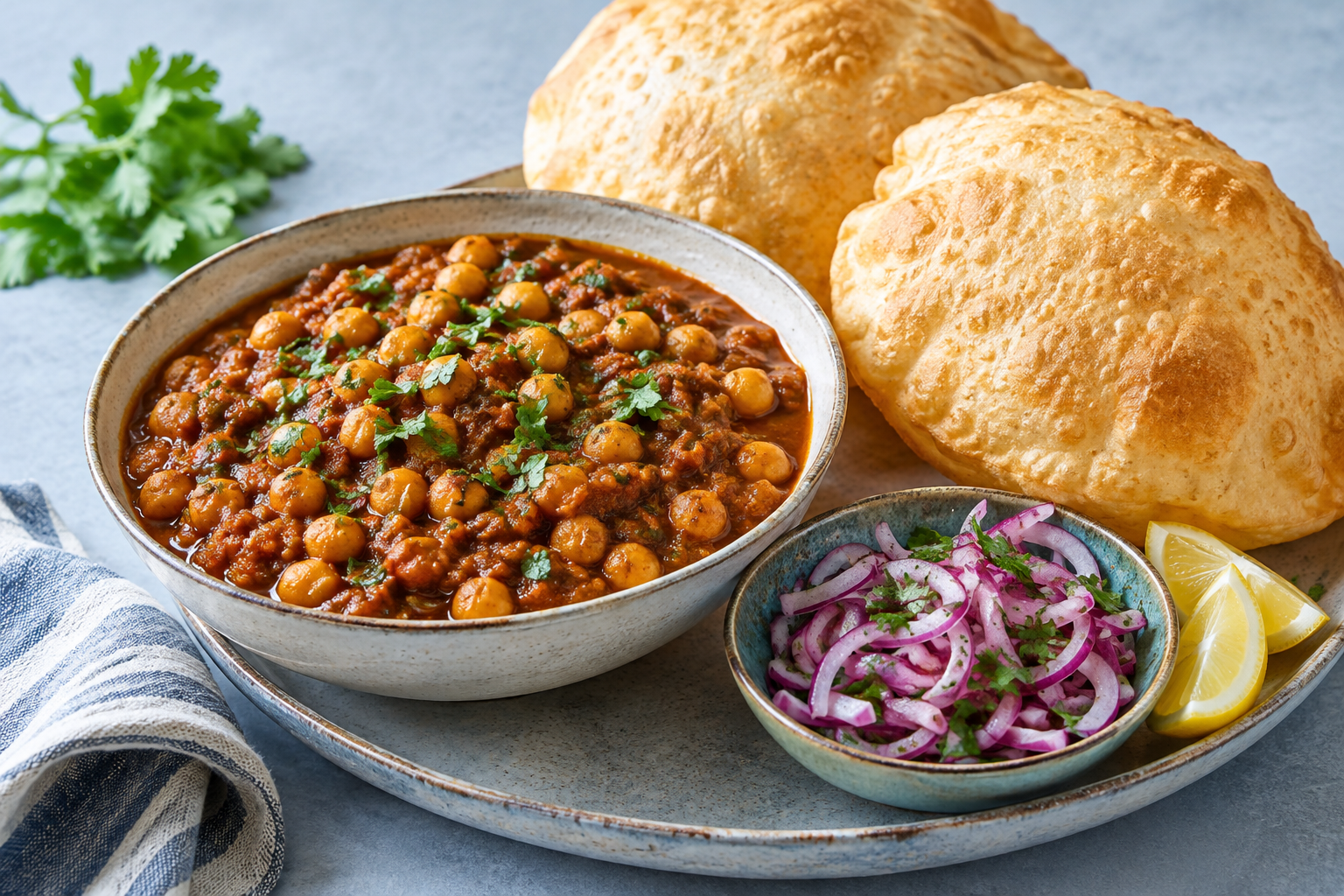
A hearty, spiced chole with tender chickpeas, served with bhature that puff up in hot oil. A fresh onion salad cuts through the rich curry and completes the meal.
The word curry covers dishes made with very different ingredients and techniques. In this selection, the flavors range from the sour and spicy Southern Thai gaeng som with fish and cauliflower to creamy, spiced massaman with beef, potato and peanuts. The differences within India are clear, too: Chettinad chicken curry is built on toasted spices and black pepper, while Punjabi rajma gets a thick tomato masala sauce around its kidney beans. Goan vindaloo, by contrast, gives vinegar a starring role. These regional names offer a guide, but no single recipe represents an entire cuisine. So look at the ingredients and cooking method to help you choose.
For many curries, the flavor starts in the pan. Briefly toasting spices makes their aroma more pronounced; gently frying a spice paste helps its raw sharpness mellow and gives the sauce a fuller base. Take your time and stir regularly so the paste doesn’t burn. In slow-braised dishes such as gaeng hung lay or rogan josh, gentle cooking tenderizes the meat and gradually thickens the liquid. Fish calls for the opposite approach: poach the pieces gently and don’t stir vigorously, so they stay intact. Vegetables also benefit from paying attention to their texture. Cauliflower and eggplant can become tender, but they’re better if they don’t fall apart completely.
For a meal that needs little prep, chana masala made with canned chickpeas or quick lentil dal are practical choices. Dried beans and lentils need more planning: kidney beans and black urad need soaking and a long cooking time, but afterward they absorb the flavors of the sauce well. If you’re after coconut, you can choose a curry with fish, tempeh, potato or vegetables; coconut milk makes the sauce rounded and creamy, while lime or tamarind provides a fresher, sour counterpoint. Adjust these sour flavors carefully at the end, since tamarind paste and citrus vary in intensity. Rice goes well with many of these dishes, but the sides differ: sticky rice is served with Northern Thai pork curry, while chole bhature comes with fried bread. Serve a spicy curry with rice or bread on the side so everyone can choose their preferred balance.