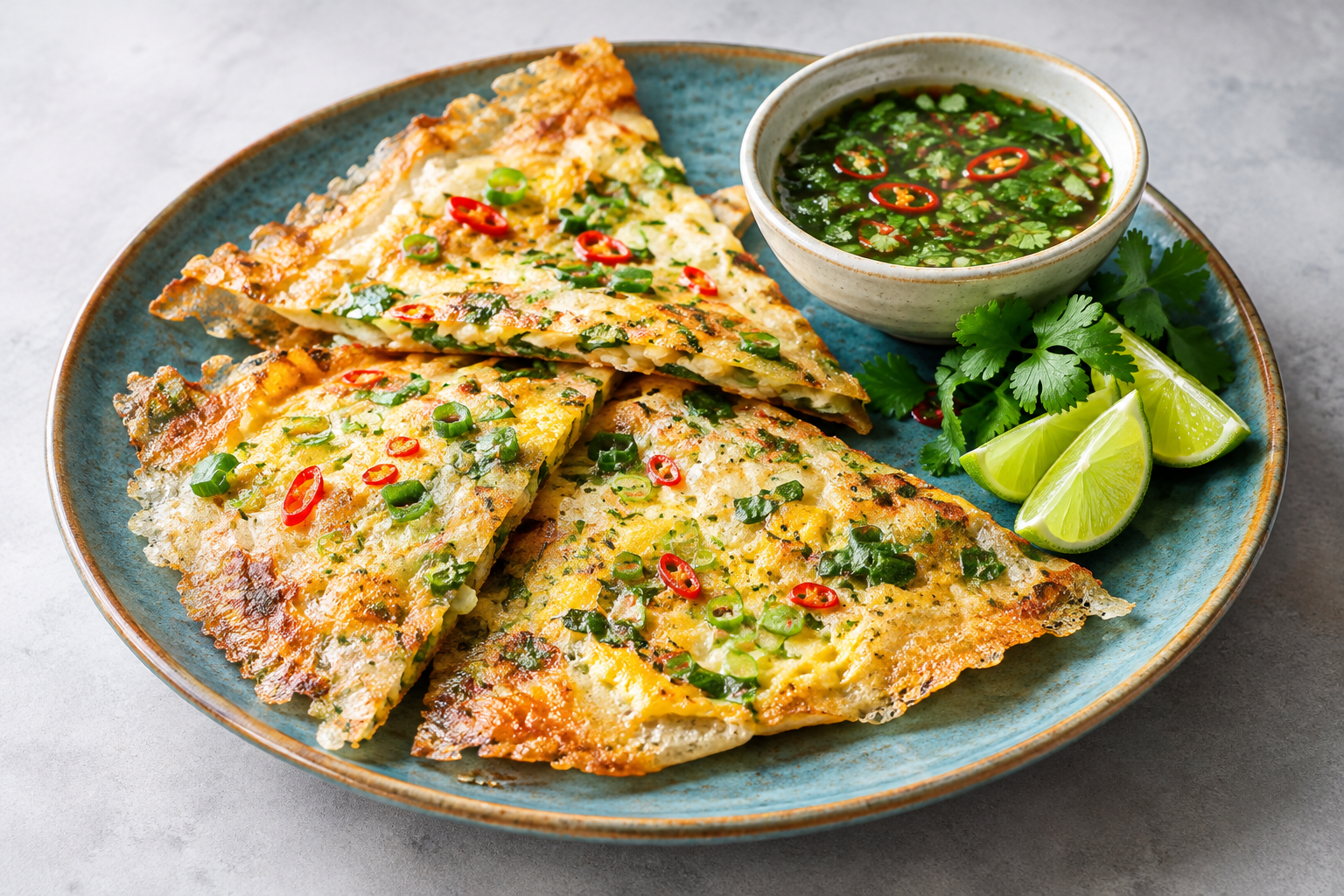
Crispy Rice Paper Omelet with Spring Onion, Chili, and Lime-Herb Sauce
A thin sheet of rice paper turns crispy in the frying pan, topped with just-set egg, spring onion, and chili. A fresh lime and herb sauce completes this quick lunch.
Vietnamese dishes often combine savory flavors with bright acidity, herbs and a variety of textures. This collection includes noodle soups, stuffed rice sheets, grilled meat and vegetable-packed sides. Choose a bowl of broth with tender noodles, or put together a meal with lettuce, pickled vegetables and a dipping sauce. These recipes show how fish sauce, lime, lemongrass and fresh herbs each play their own part.
38 recipesBrowse the recipes
A thin sheet of rice paper turns crispy in the frying pan, topped with just-set egg, spring onion, and chili. A fresh lime and herb sauce completes this quick lunch.
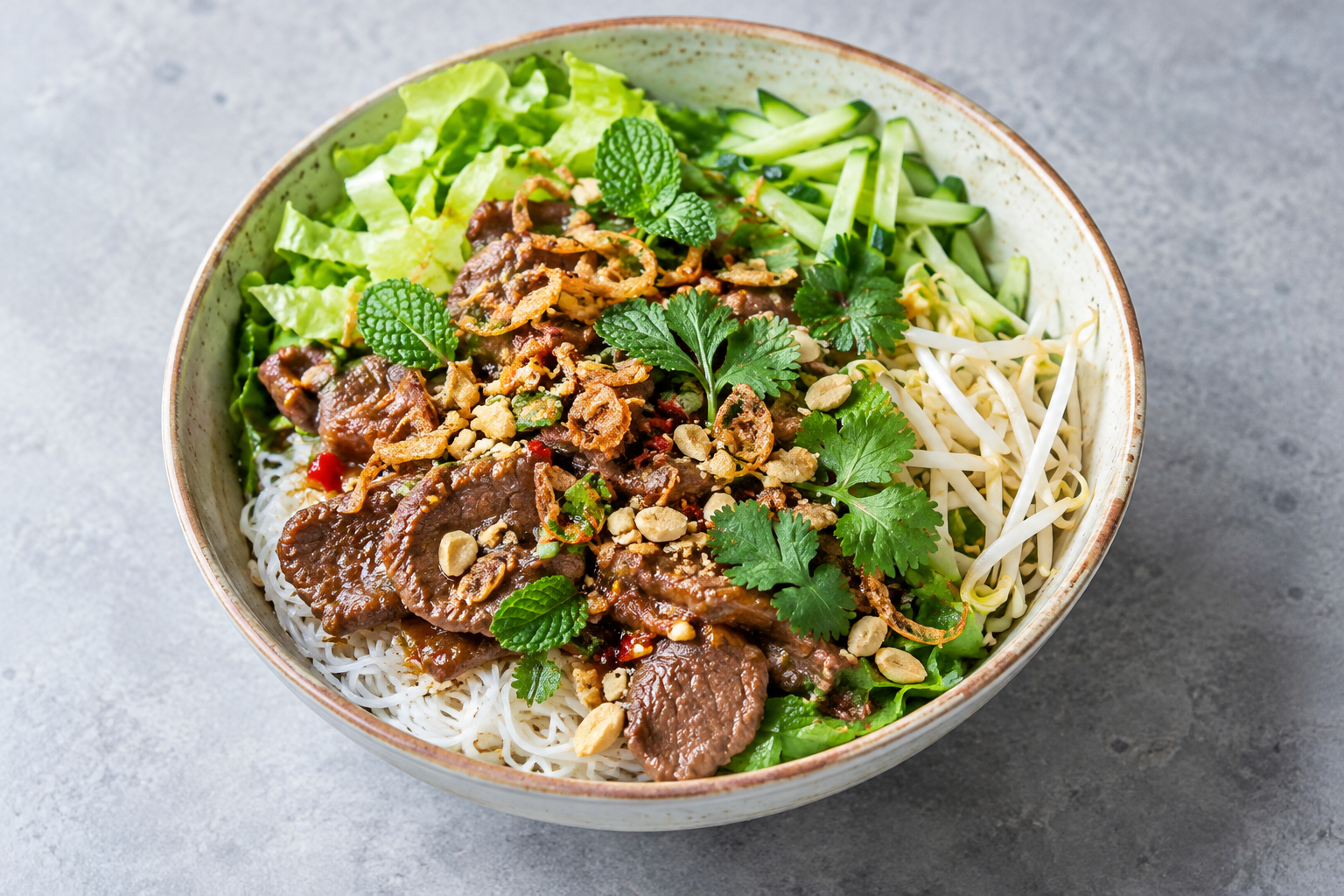
Warm rice vermicelli, quickly seared beef and fresh herbs come together with cucumber, lettuce, peanuts and crispy shallots. A light, sweet-and-sour nước chấm brings everything together without turning it into a soup.
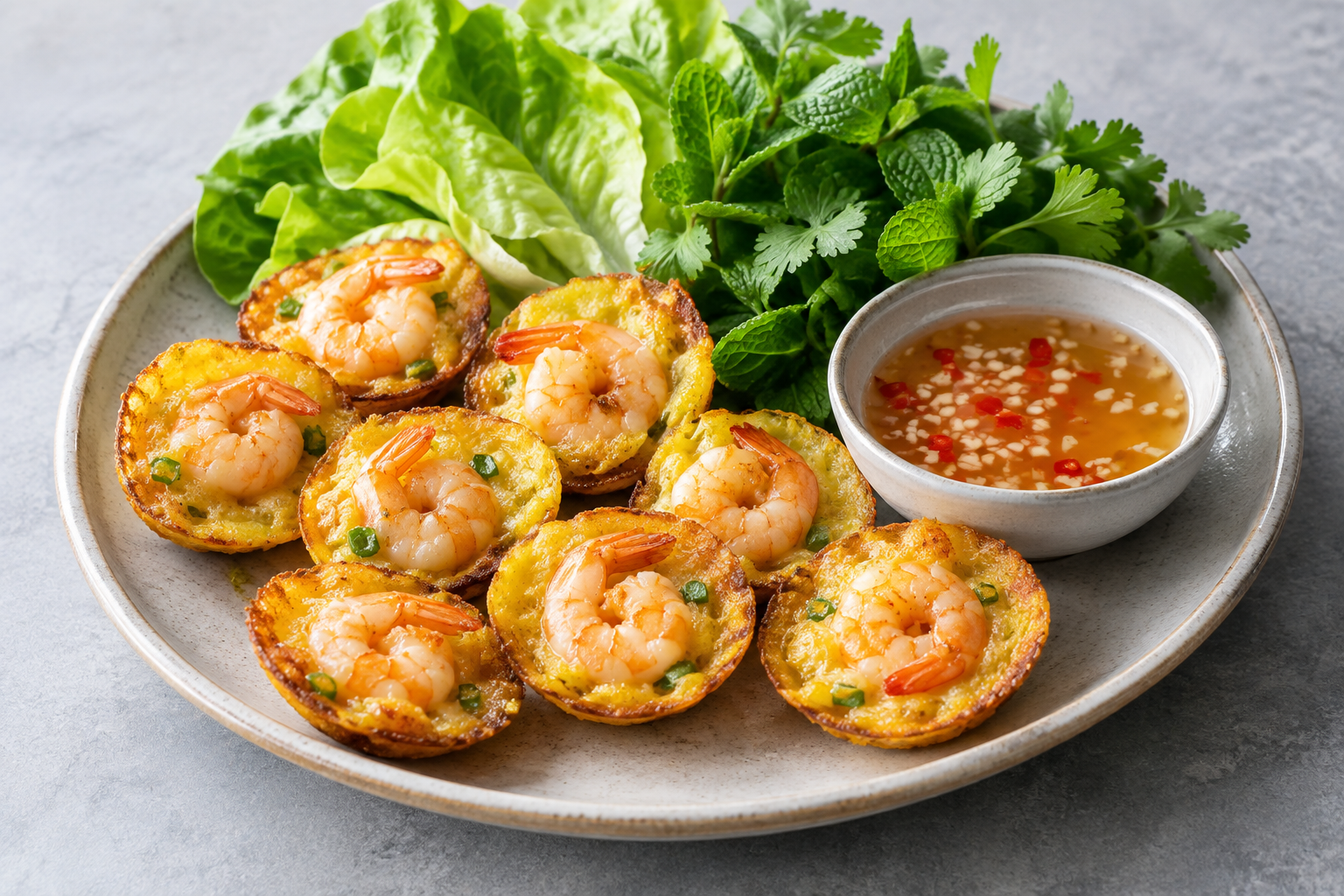
These Vietnamese mini pancakes turn golden and crisp underneath, with a soft, slightly coconutty center and a shrimp on top. Serve them with lettuce, herbs and nước chấm: dip them in the sauce, or wrap them in a lettuce leaf for a bite-sized mouthful.
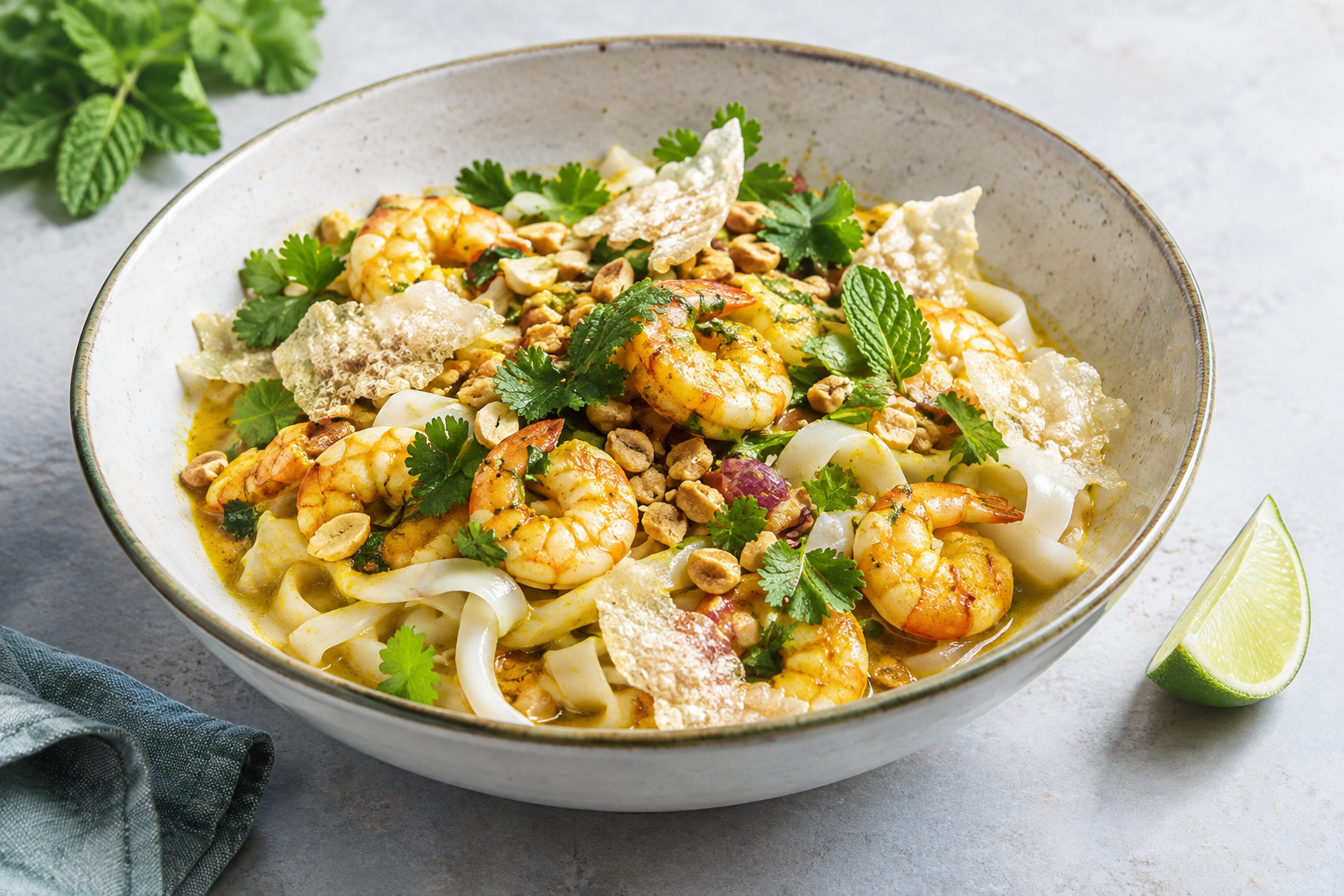
Wide rice noodles, golden shrimp and a small amount of fragrant broth: mì Quảng is meant to be eaten with its toppings and noodles, not served as a full bowl of soup. Peanuts, fresh herbs and crispy rice paper finish the dish.
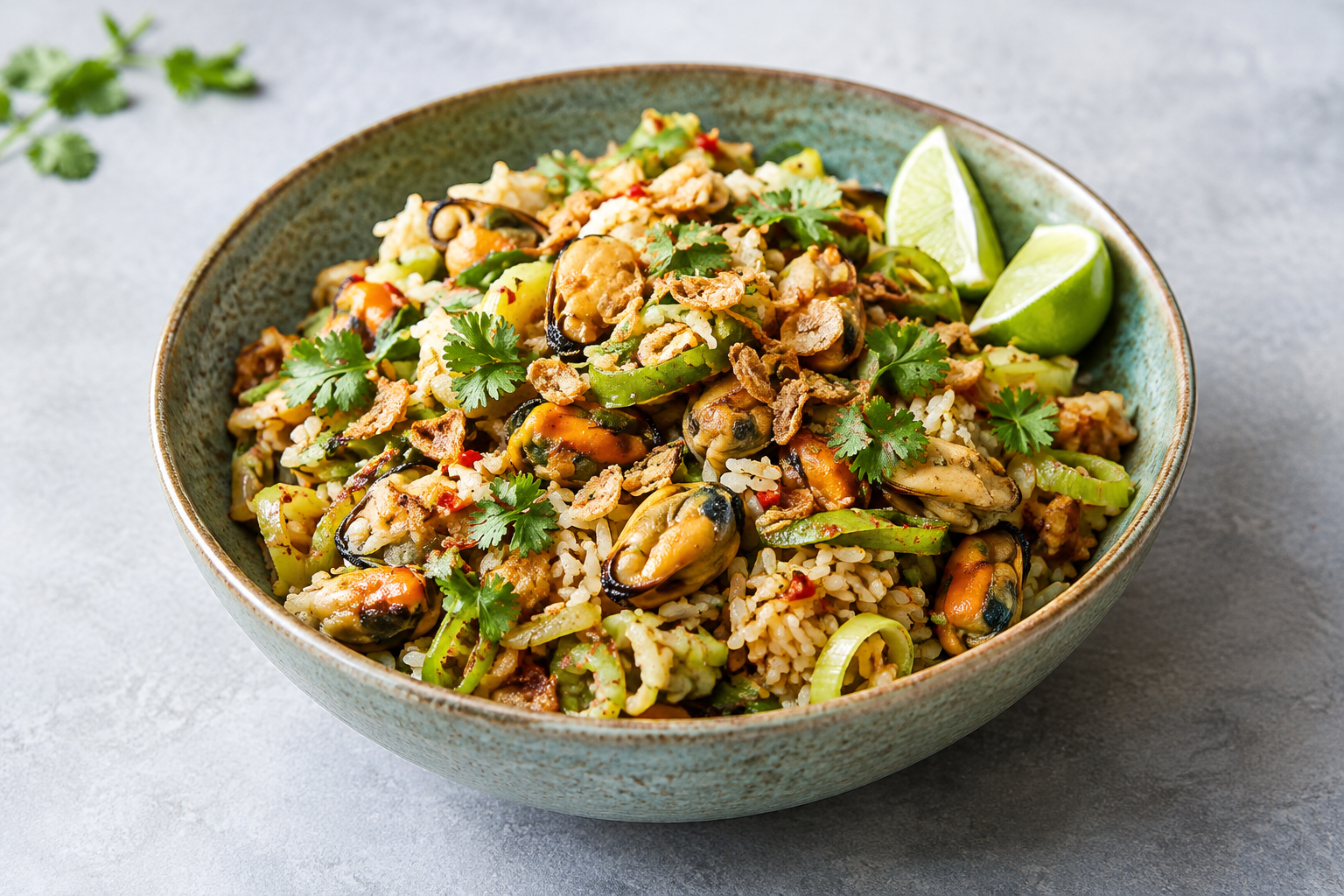
Cold rice gets crispy edges over high heat, while leek and garlic fill the wok with a mellow, savoury base. The mussels go in right at the end; lime, coriander and crispy fried onions add freshness and crunch.
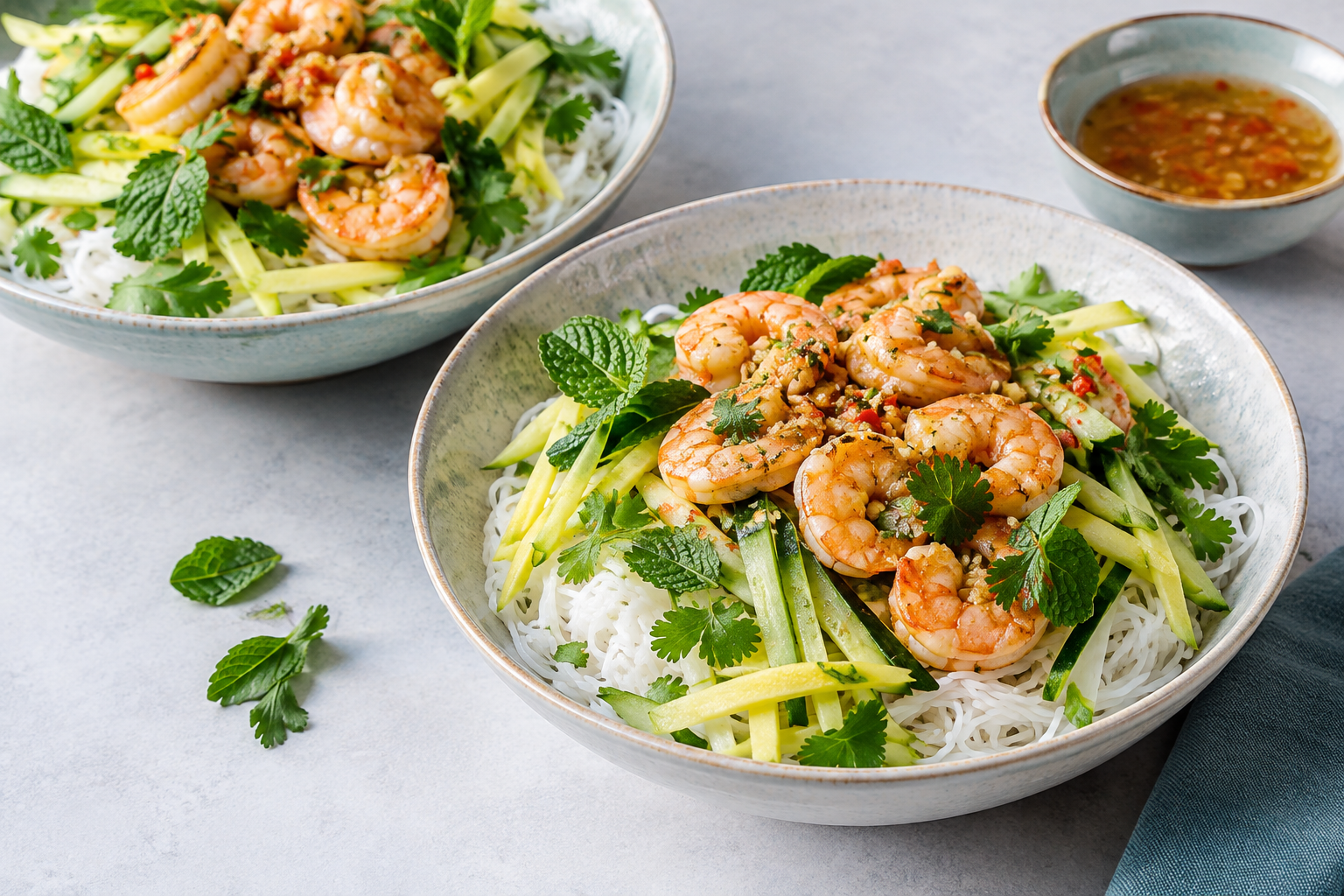
Juicy shrimp, cool rice vermicelli and crunchy green mango come together in a fresh noodle salad. The dressing of lime, fish sauce, sugar and chili balances sour, savory, sweet and spicy flavors.
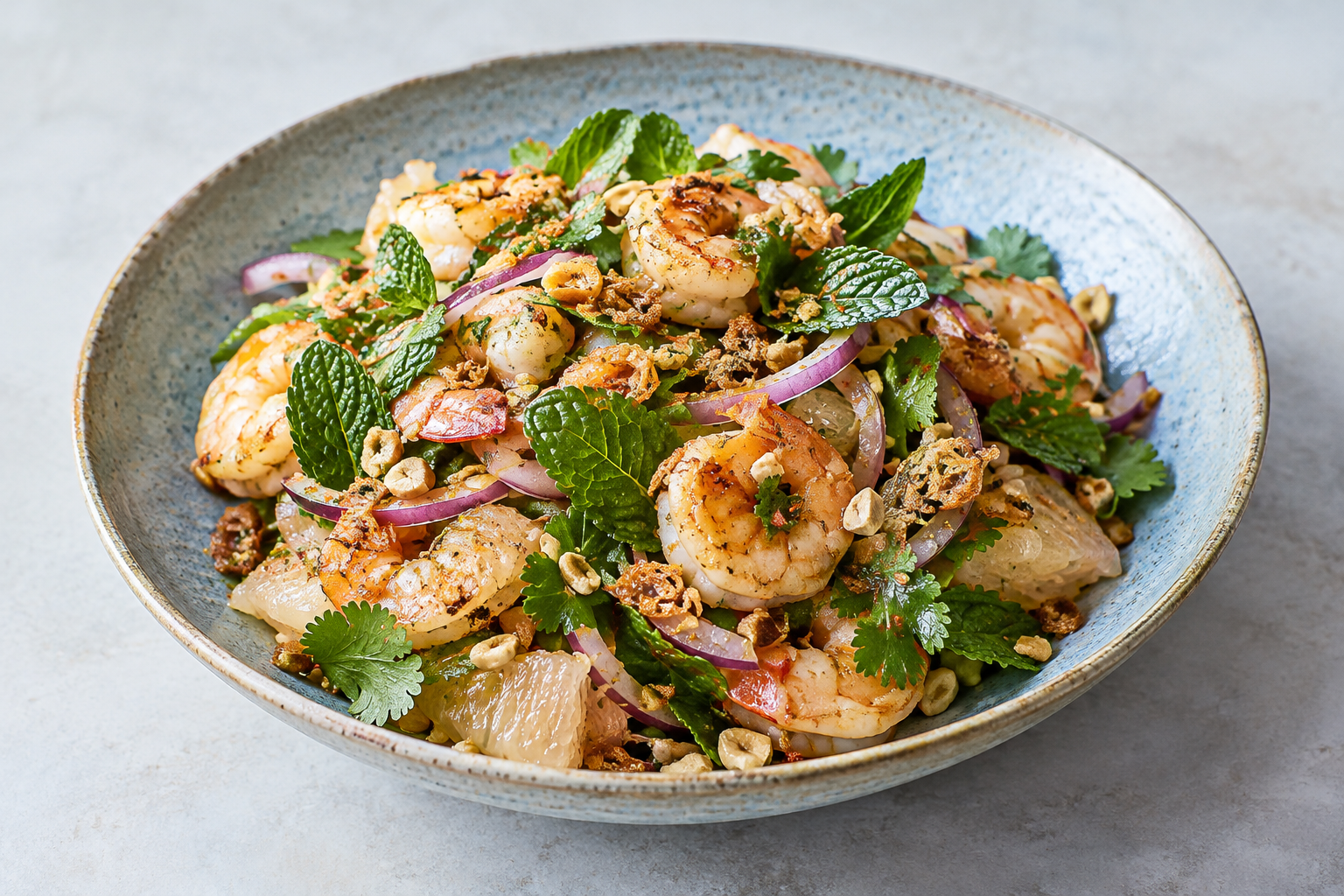
Juicy pomelo, quickly sautéed shrimp, and fresh mint and cilantro are tossed with a tangy lime and fish sauce dressing. Peanuts and fried shallots give this modern Vietnamese-inspired salad a crunchy finish.
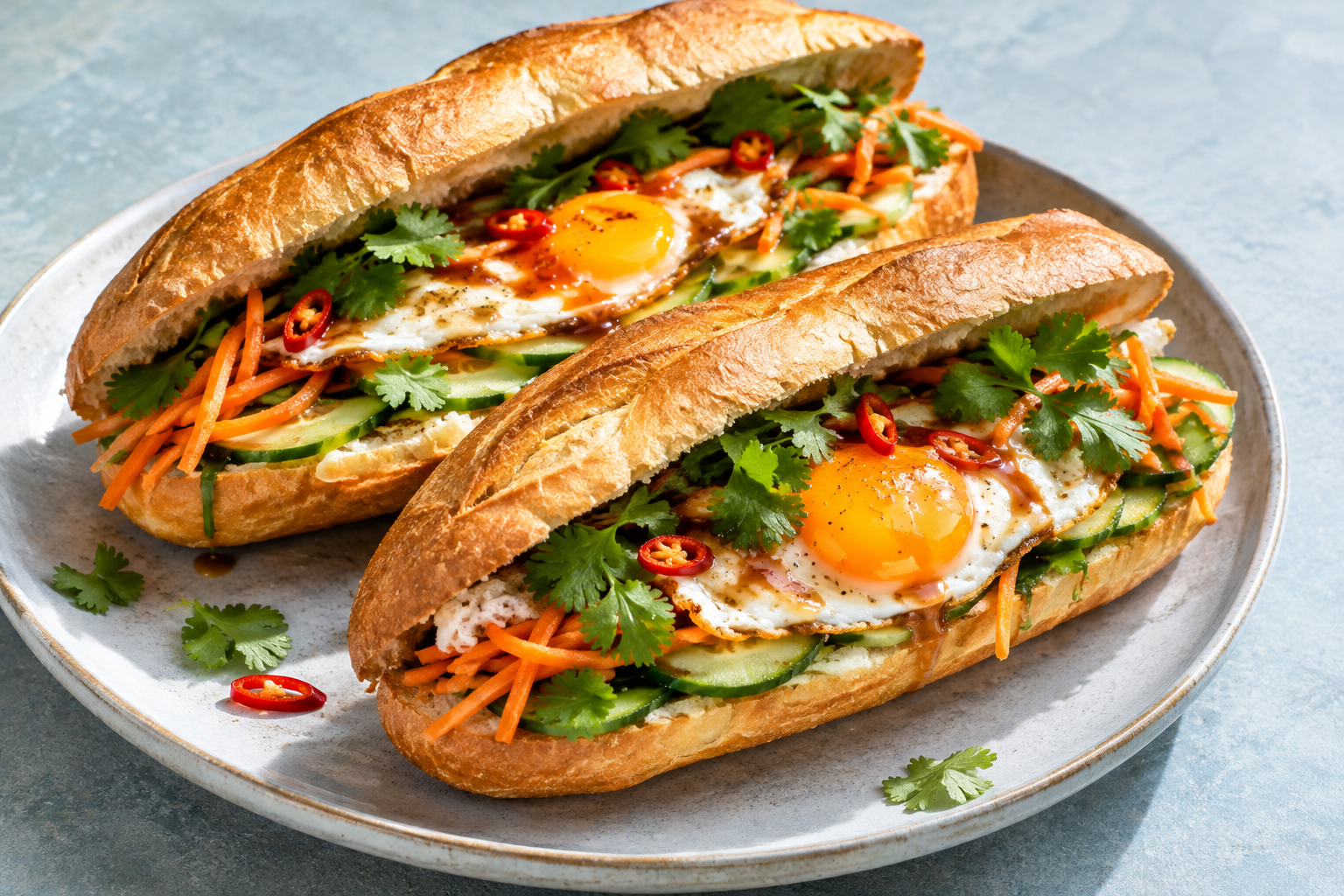
Crusty bread, a softly fried egg and fresh, quick-pickled carrot: bánh mì ốp la brings rich and tangy flavors together in a hearty Vietnamese breakfast. With cucumber, cilantro and optional chili, this sandwich is ready in no time.
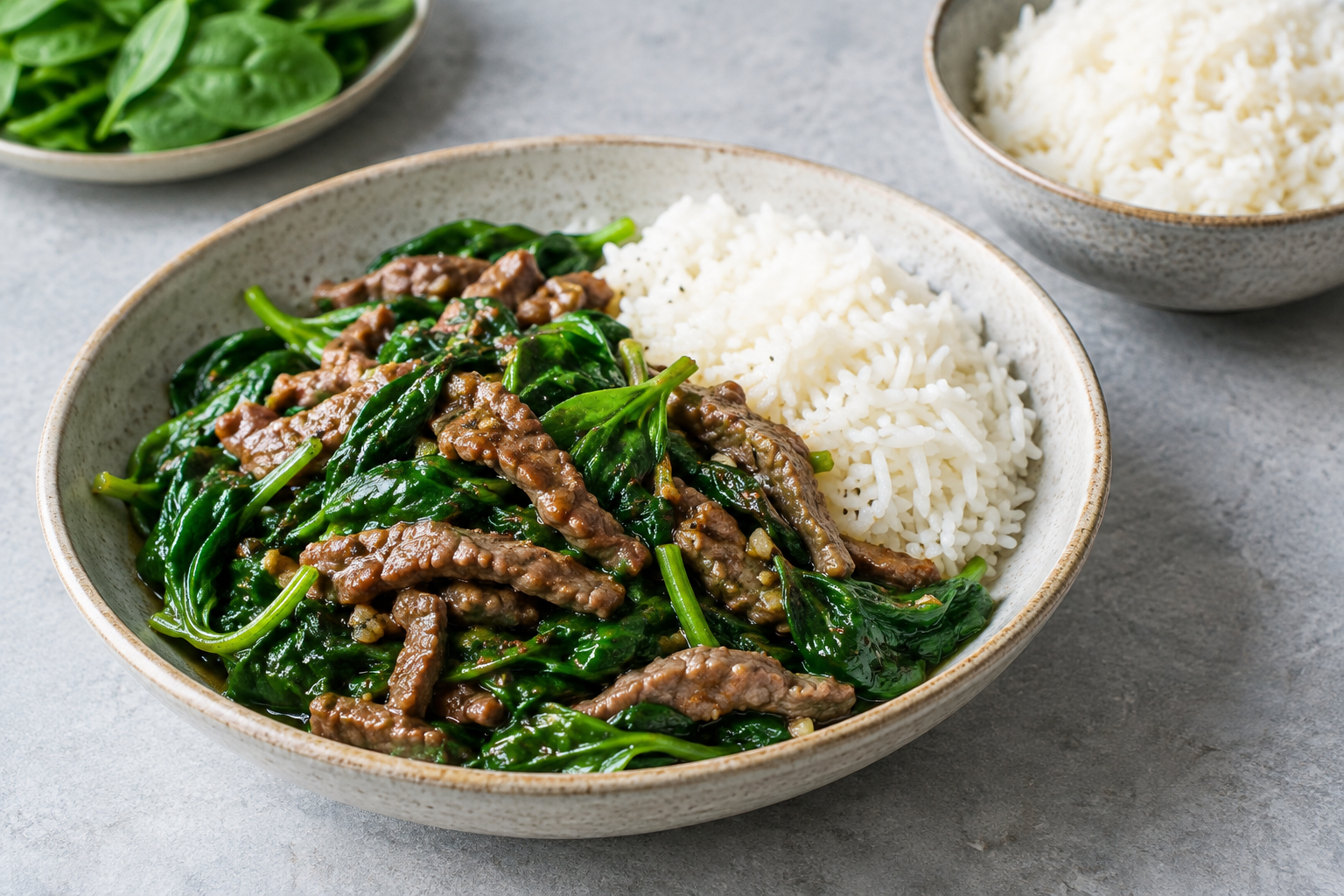
Thinly sliced beef, garlic and spinach are quickly stir-fried with fish sauce and black pepper. Serve with rice for a simple Vietnamese meal that’s ready in no time.
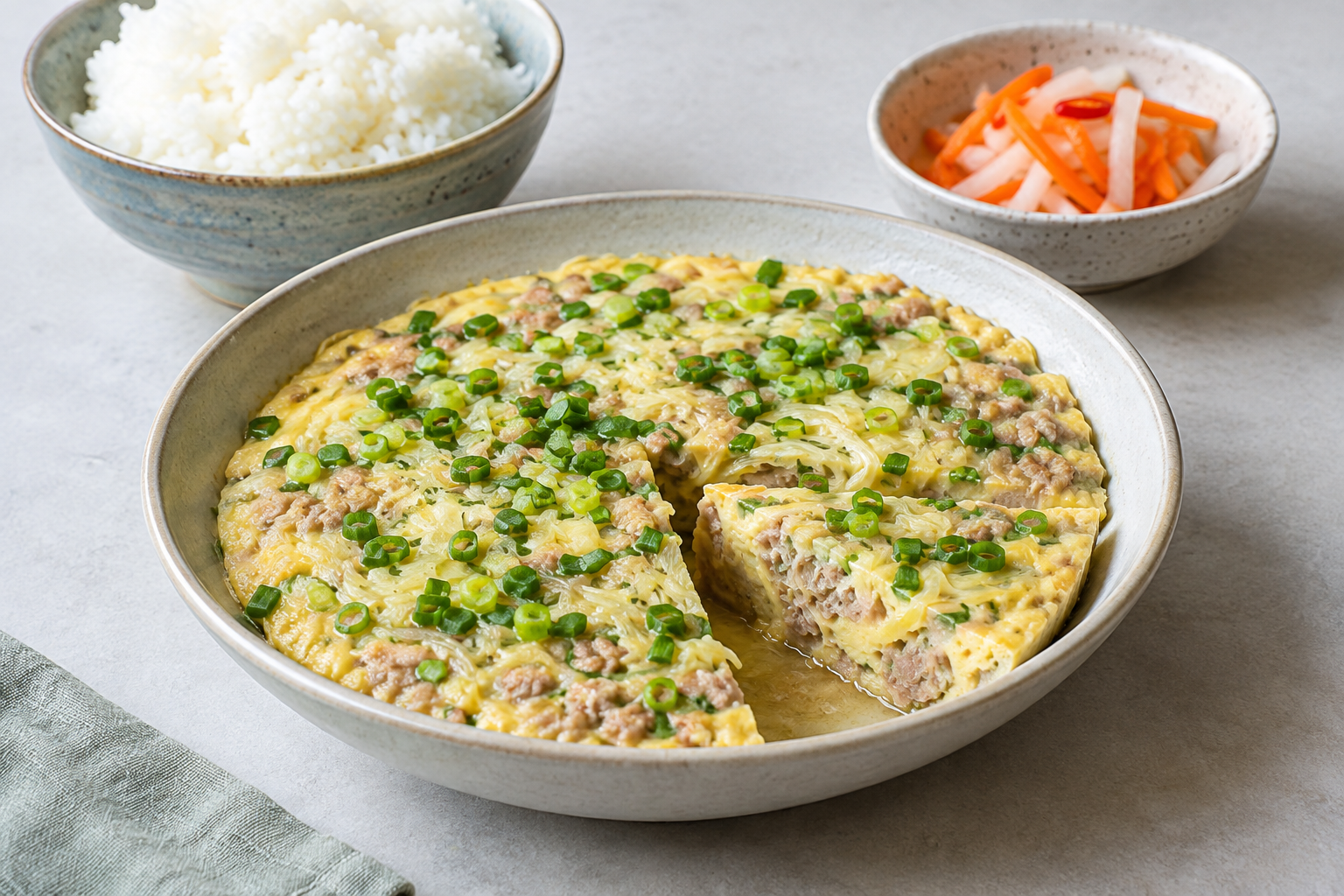
Soft steamed eggs with seasoned ground pork, spring onion and glass noodles: a savory Vietnamese main dish served with rice and something tangy and fresh.
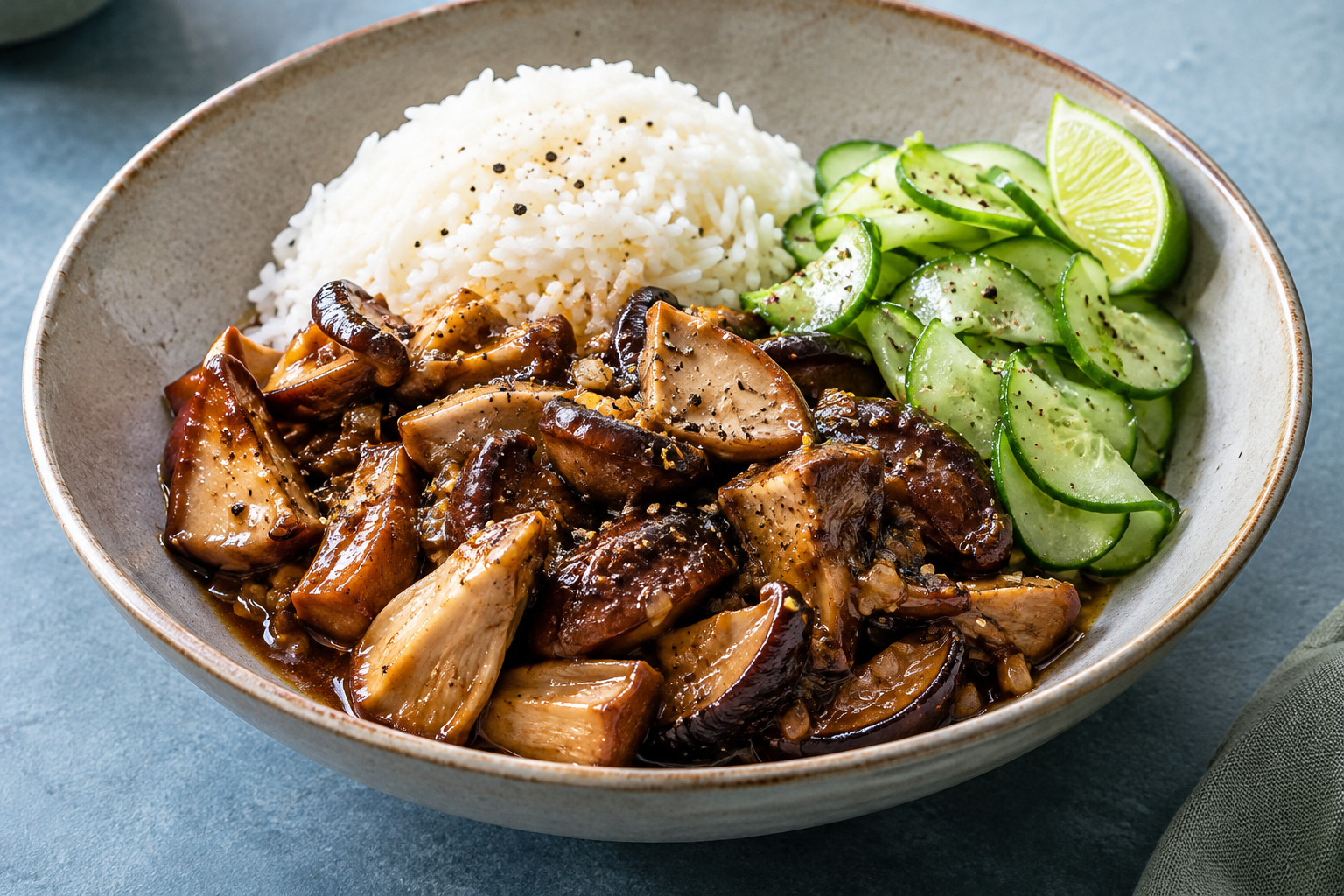
Hearty mushrooms soak up a dark, savory sauce made with caramel, soy sauce, garlic, and black pepper. Served with rice and crisp cucumber, they make a satisfying Vietnamese main course.
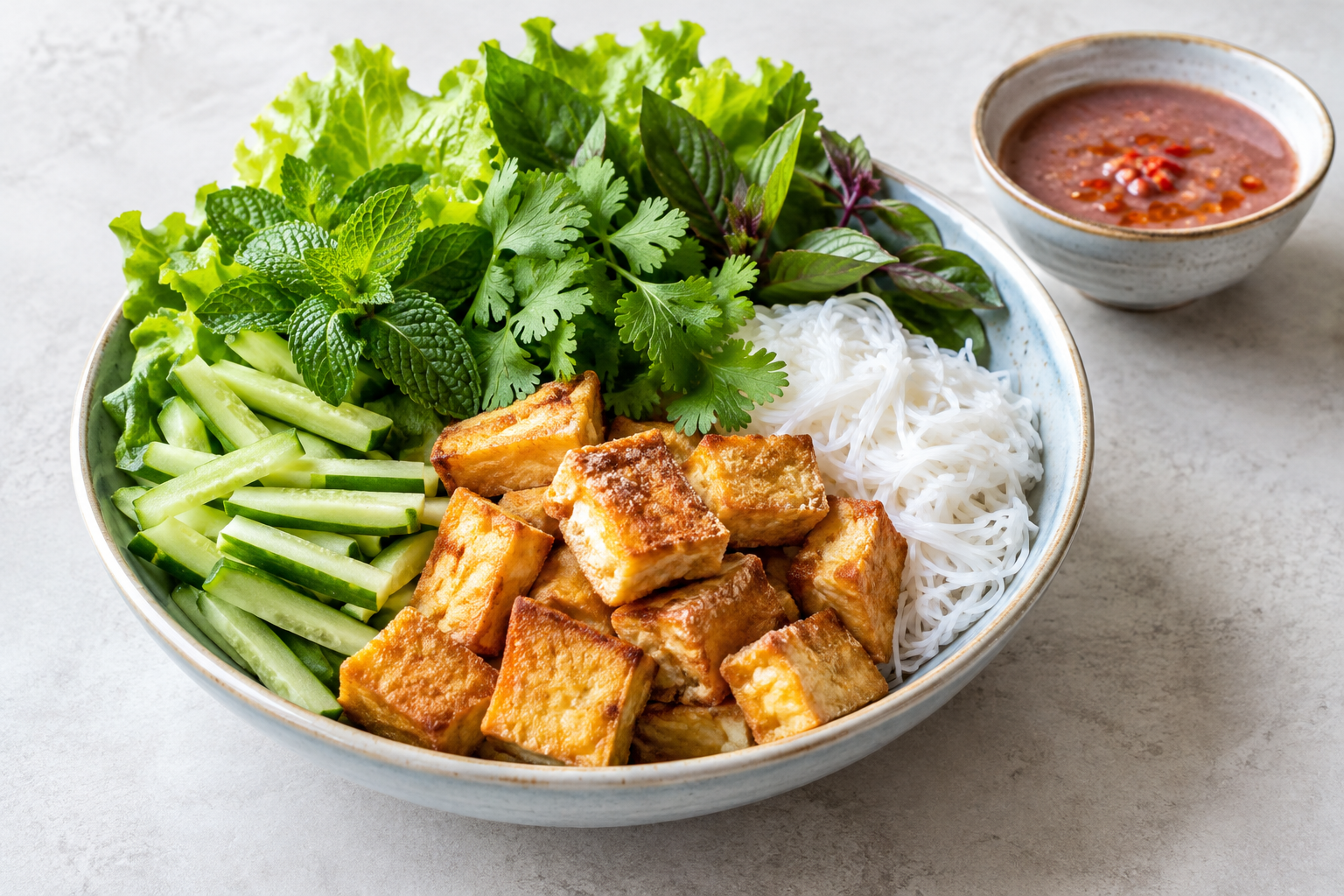
Crispy fried tofu, soft rice vermicelli, cucumber and a generous handful of fresh herbs: this Northern Vietnamese lunch dish is all about contrast. Serve it with the bold fermented shrimp dip mắm tôm, or make a milder fish sauce dip on the side.
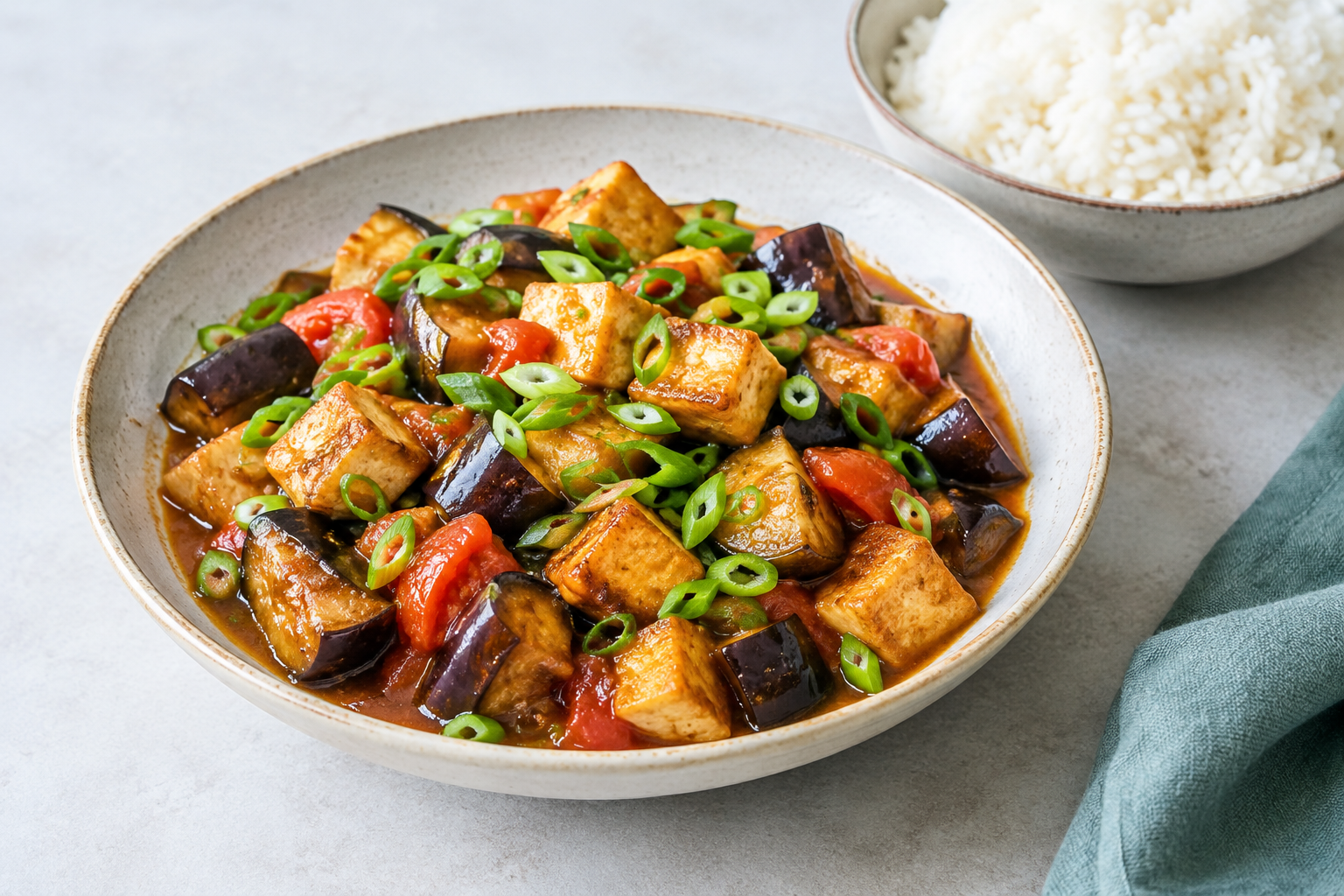
Tender eggplant, golden-browned tofu and tomato come together in a savory, lightly syrupy sauce. Serve it with rice for a satisfying Vietnamese main course.
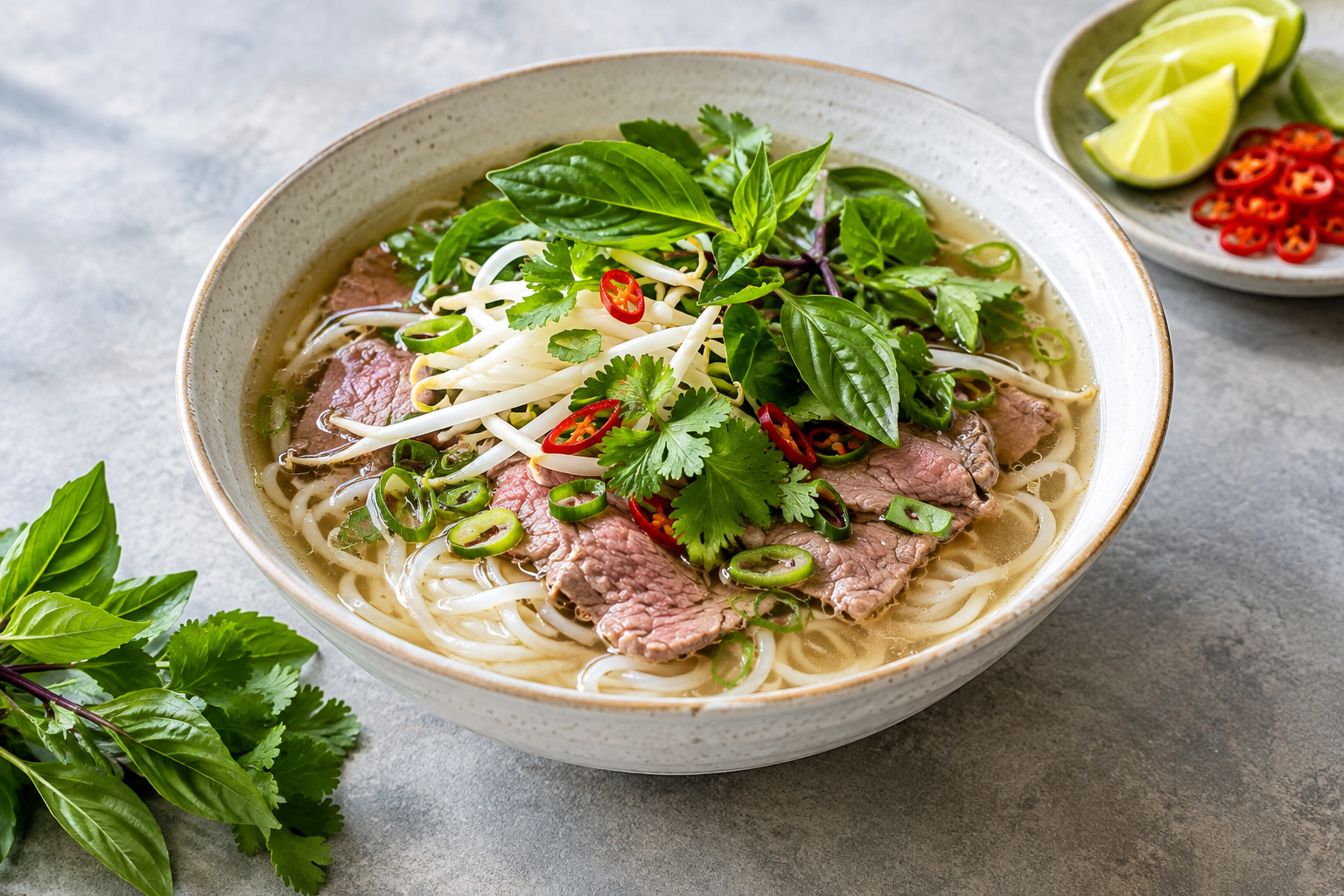
Clear, slowly simmered beef broth, rice noodles and paper-thin slices of beef are the foundation of this Vietnamese phở bò. Serve the soup with fresh herbs, lime and chili at the table so everyone can adjust the fresh and spicy flavors to their liking.
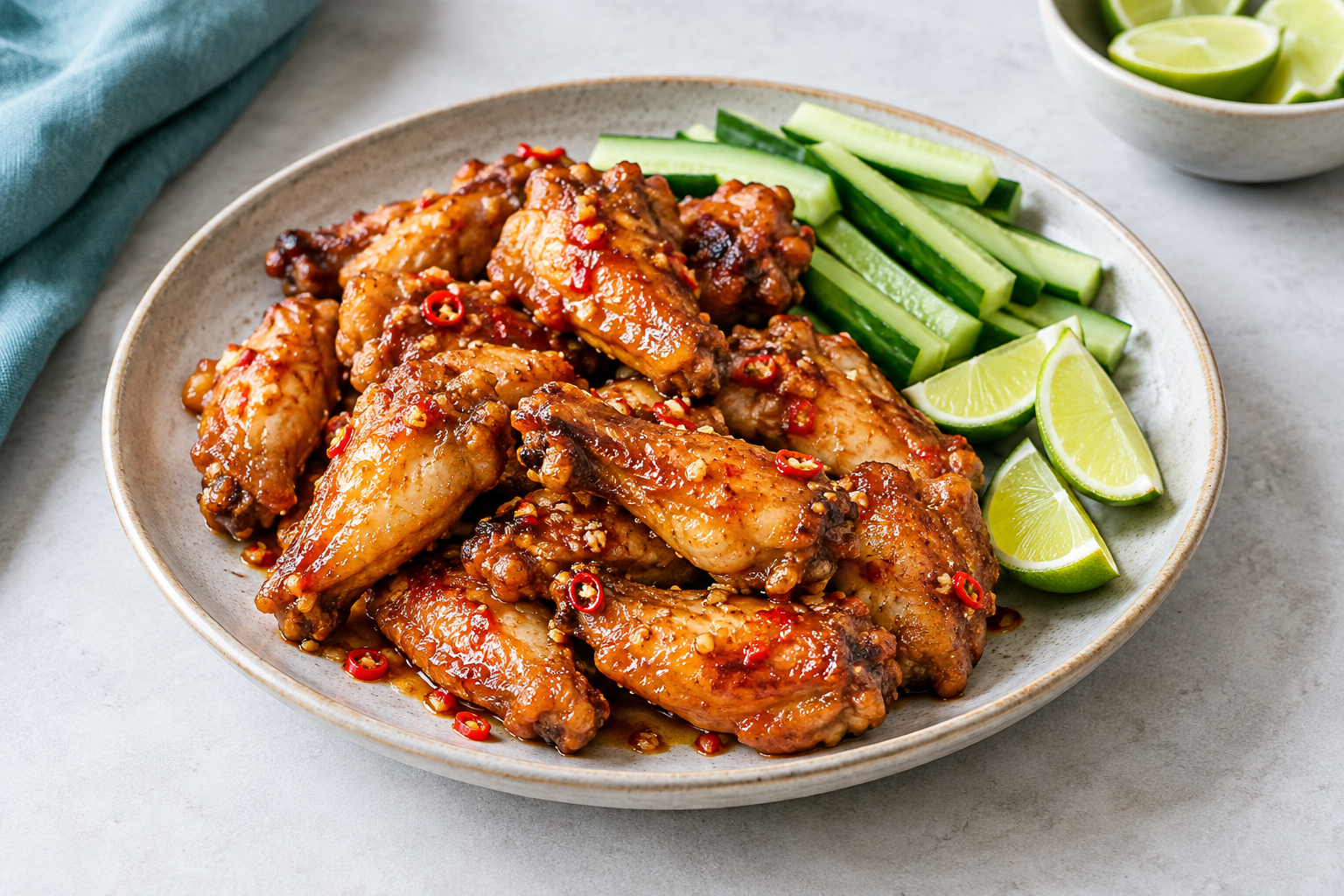
Crispy fried chicken wings get a thin, glossy coating of fish sauce, sugar, garlic and chili. Lime and cucumber bring freshness to this distinctly Vietnamese side dish.
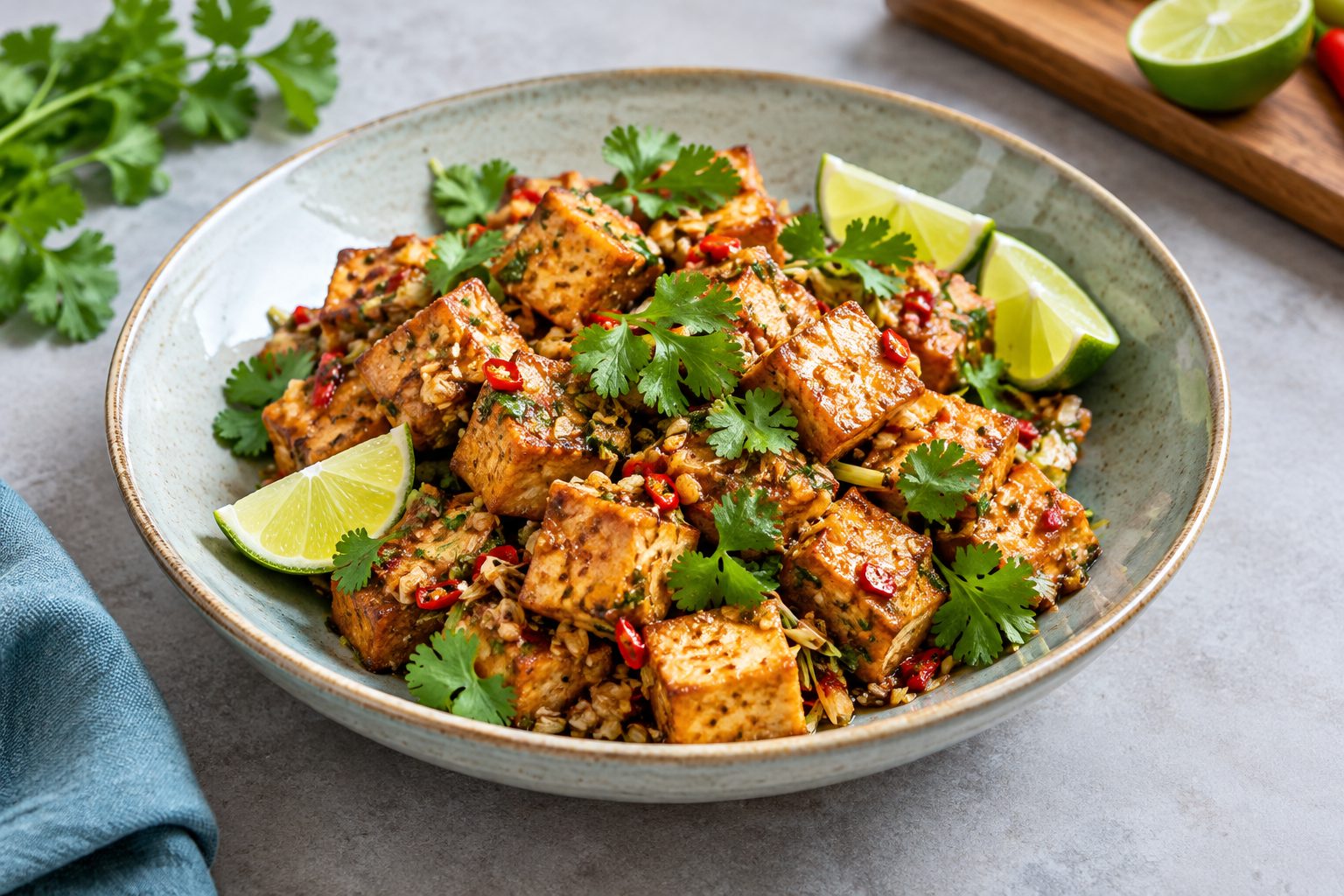
Golden-brown fried tofu gets a savory, fragrant coating of lemongrass, garlic, and chili. Serve the warm cubes with lime and fresh cilantro as a starter to share.
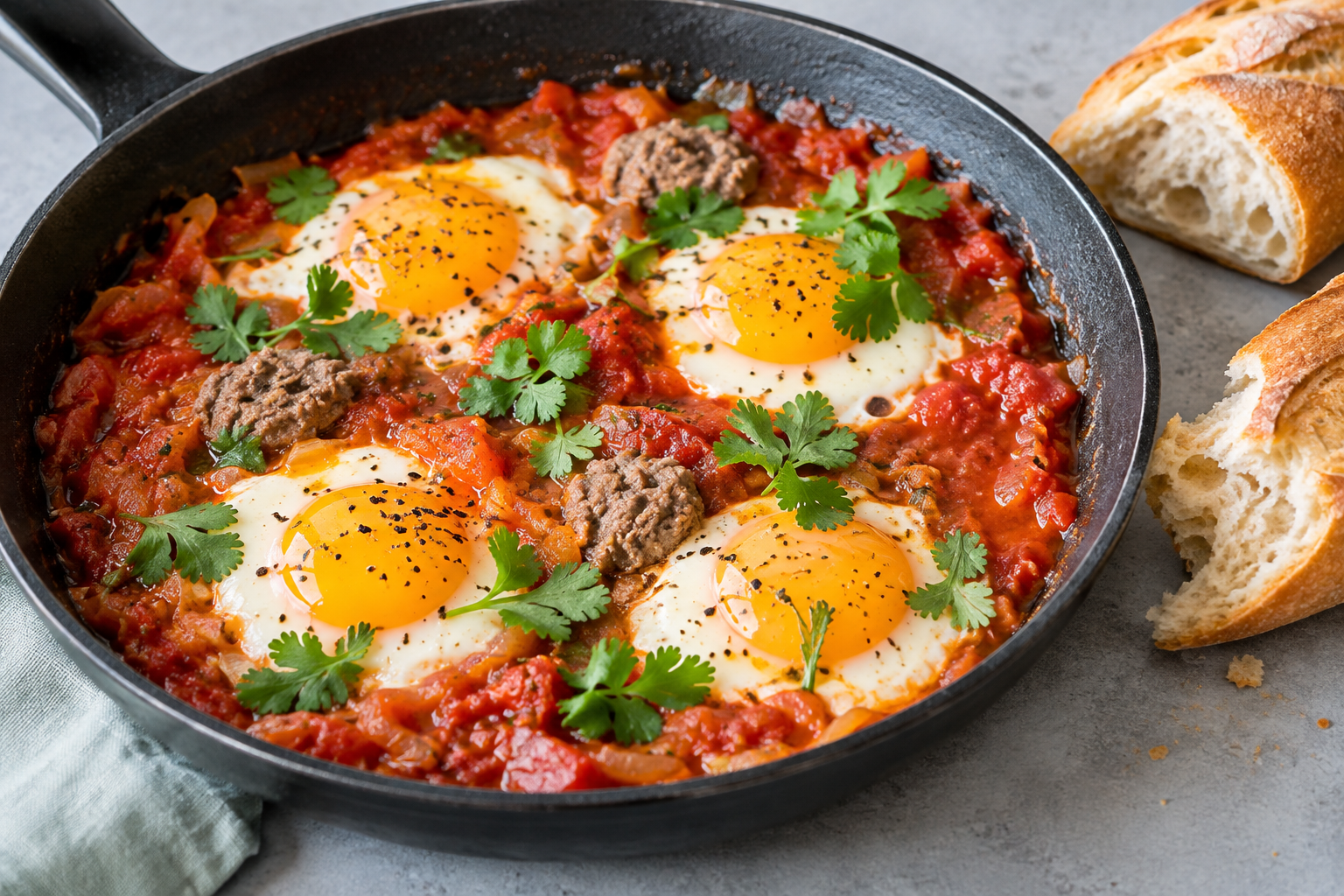
In bánh mì chảo, fried eggs cook in a small pan with tomato and onion. Add paté if you like, bring the pan to the table, and use crusty baguette to mop up the soft yolks and tomato sauce.
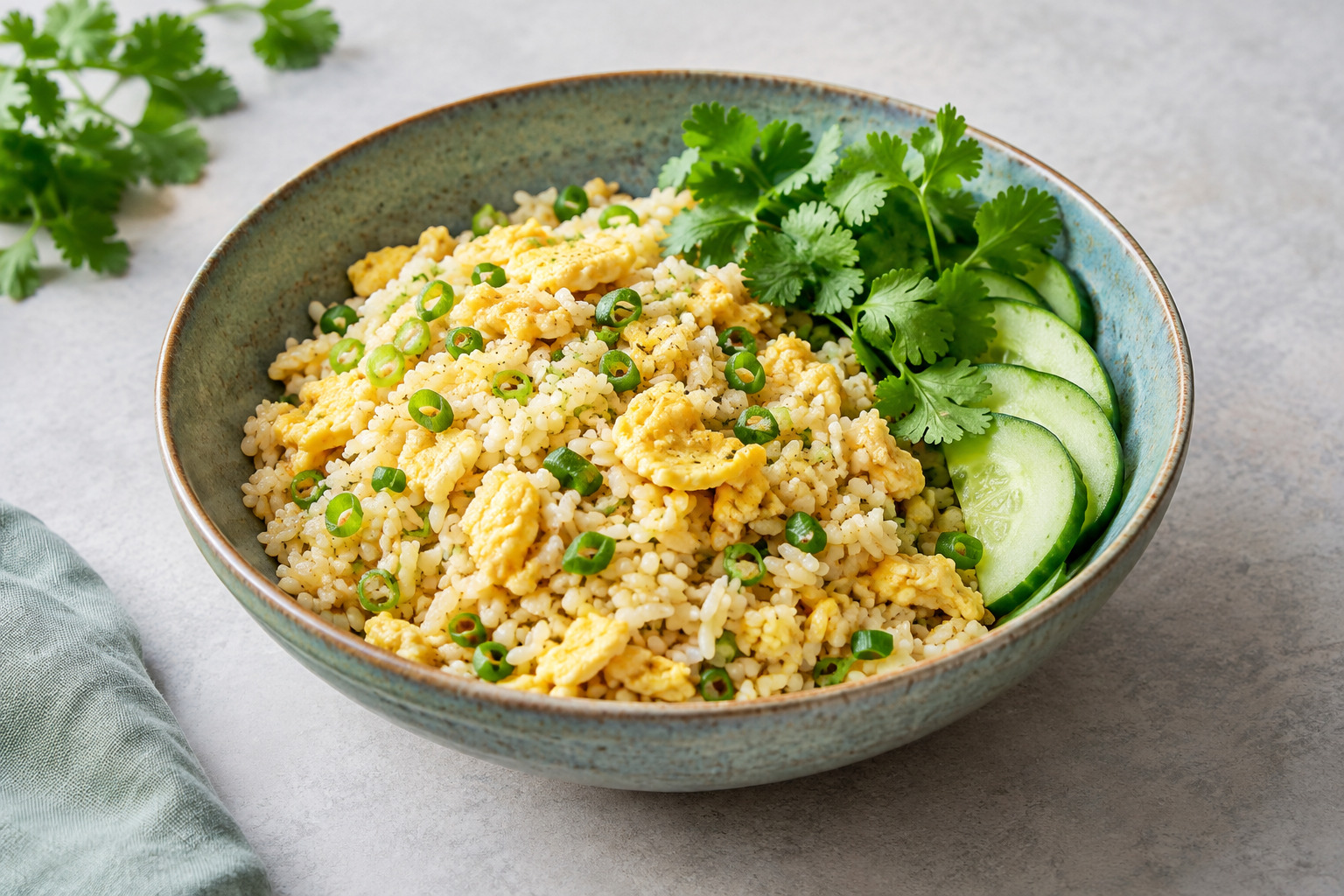
Cold rice, soft pieces of egg and spring onion are quickly stir-fried in a hot pan; fish sauce adds just enough savory depth. Cucumber and cilantro make every bite fresh.
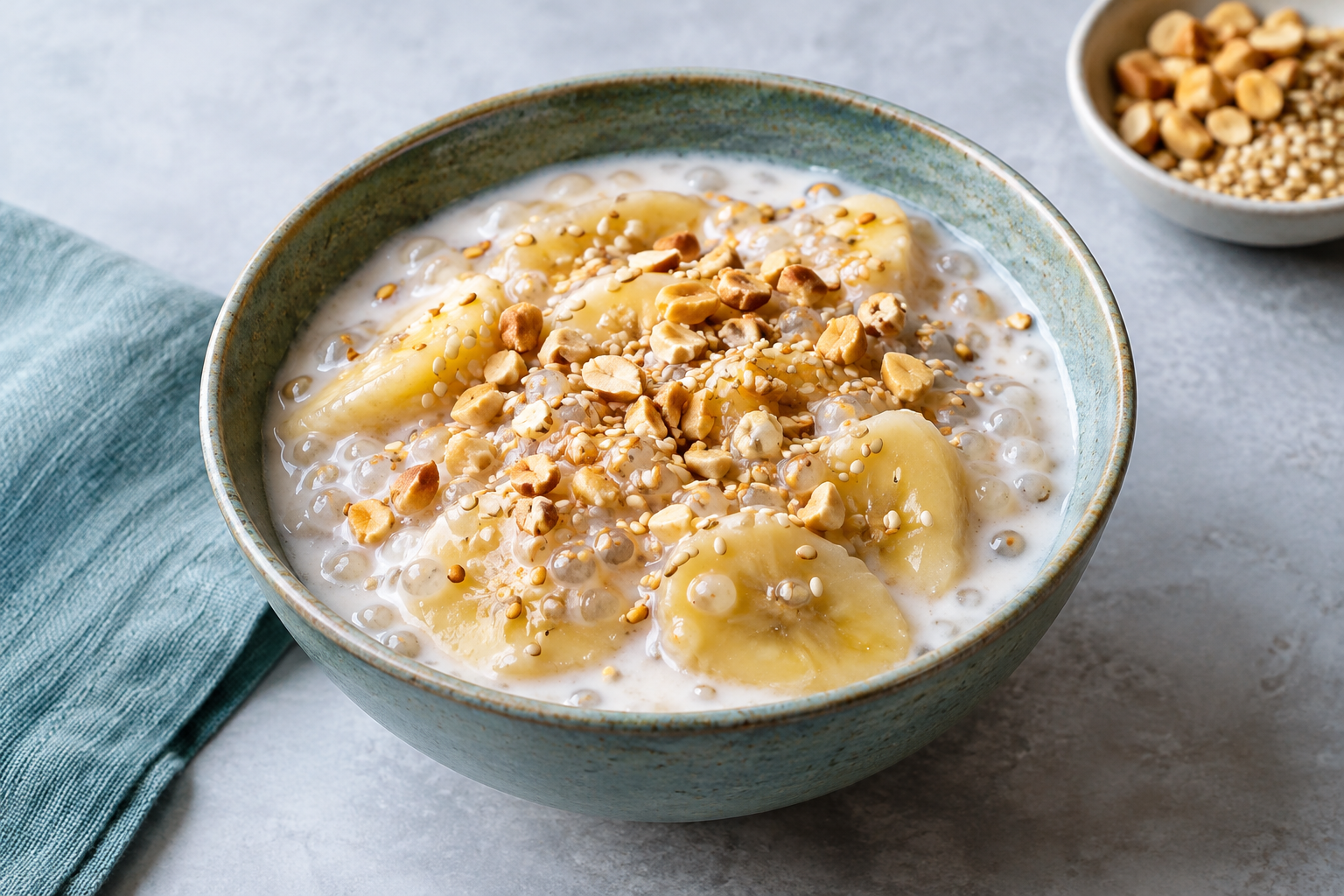
In this Vietnamese chè chuối, ripe bananas soften gently in creamy coconut milk. Small tapioca pearls lightly thicken the liquid and add a springy bite; toasted peanuts and sesame bring a nutty crunch.
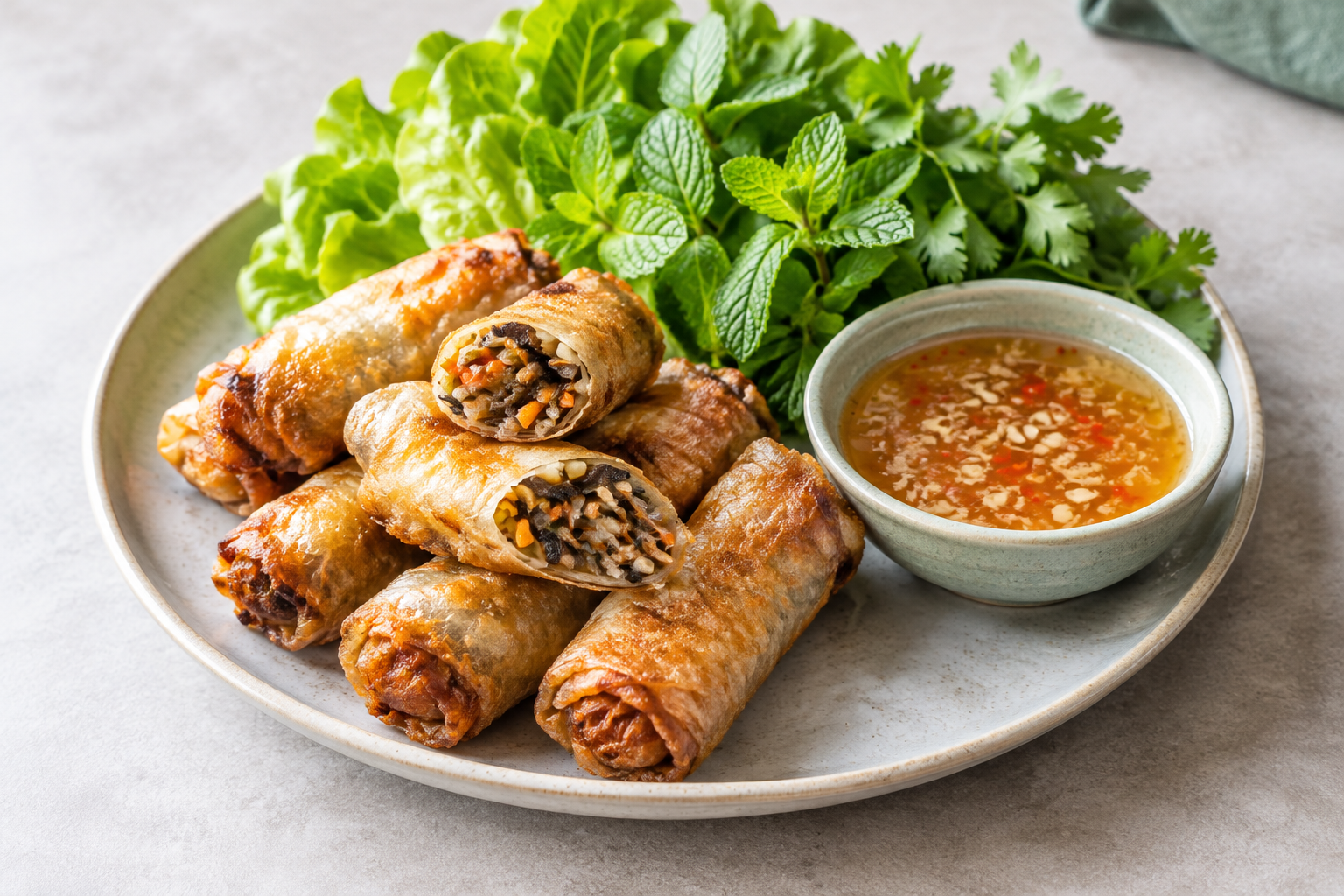
These Vietnamese fried rolls have a savory filling of mushrooms, glass noodles and carrot, wrapped in thin, crisp rice paper. Serve them with lettuce, fresh herbs and tangy nước chấm chay.
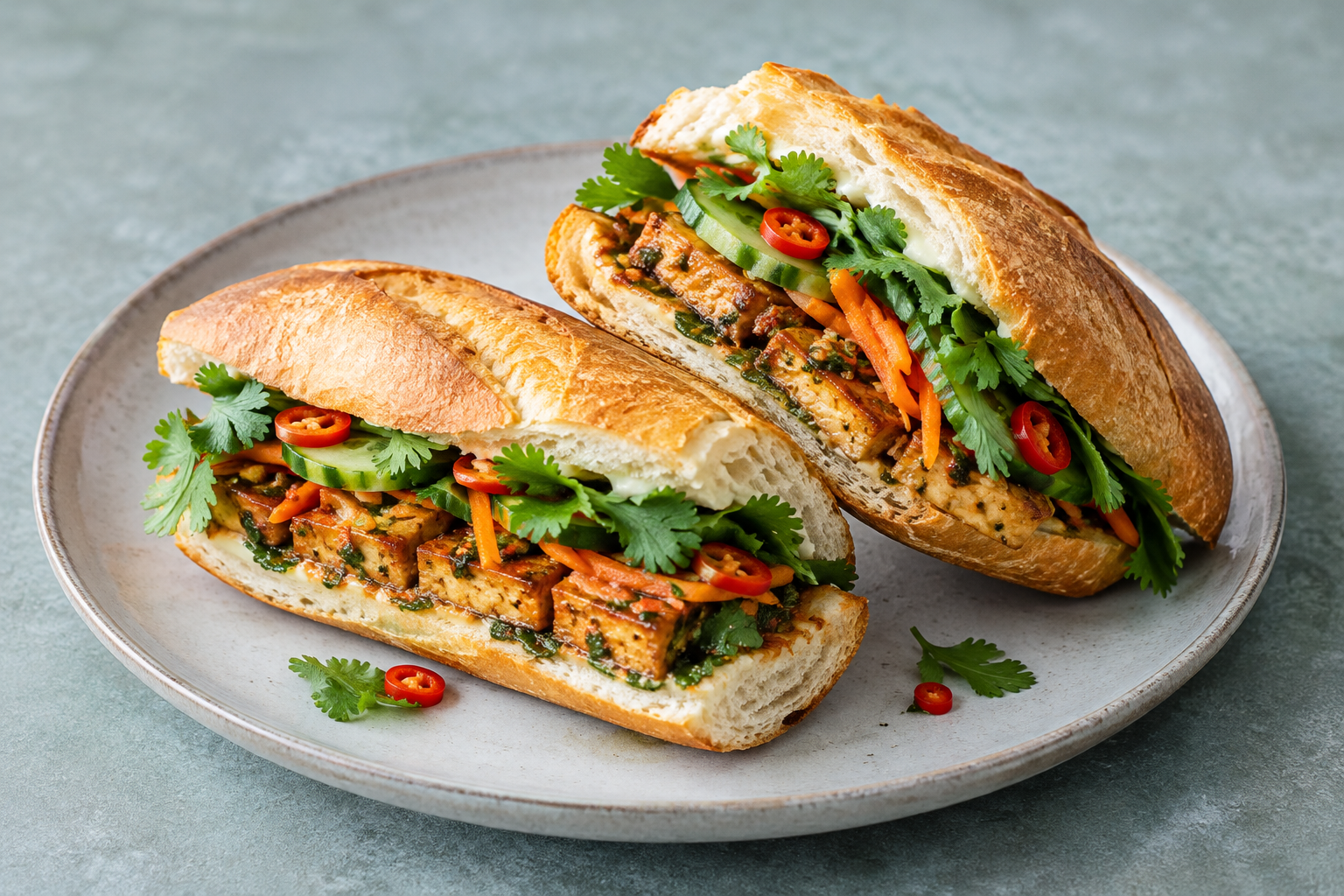
Golden-browned tofu with lemongrass and garlic is joined in a crusty baguette by fresh cucumber, tangy carrot and cilantro. A modern Vietnamese-inspired lunch, with soft tofu and a satisfyingly fresh, crisp bite.
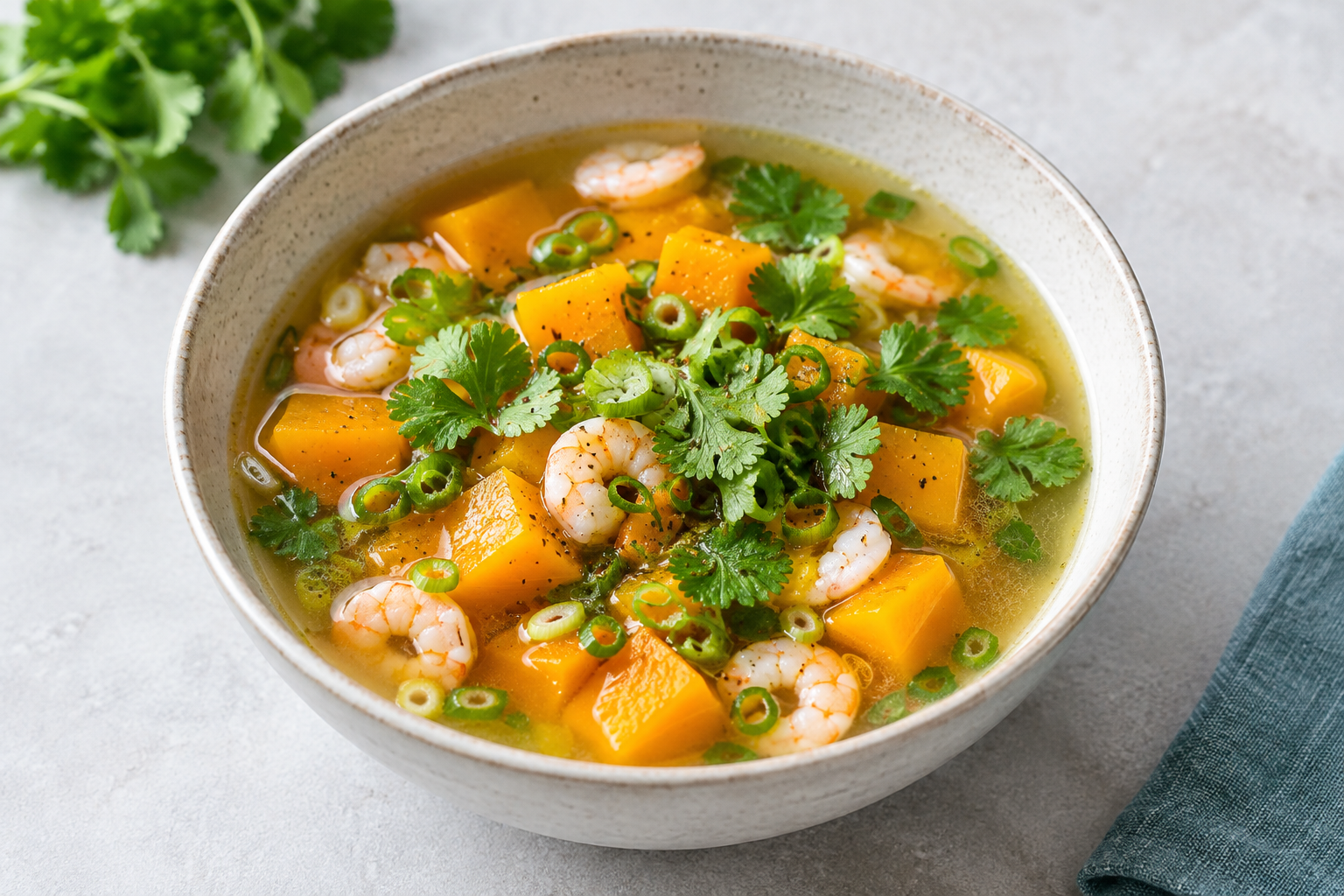
In this clear Vietnamese soup, tender pumpkin cubes hold their shape while small shrimp give the broth a savory depth. Fish sauce, shallot and black pepper keep the flavor simple and distinct.
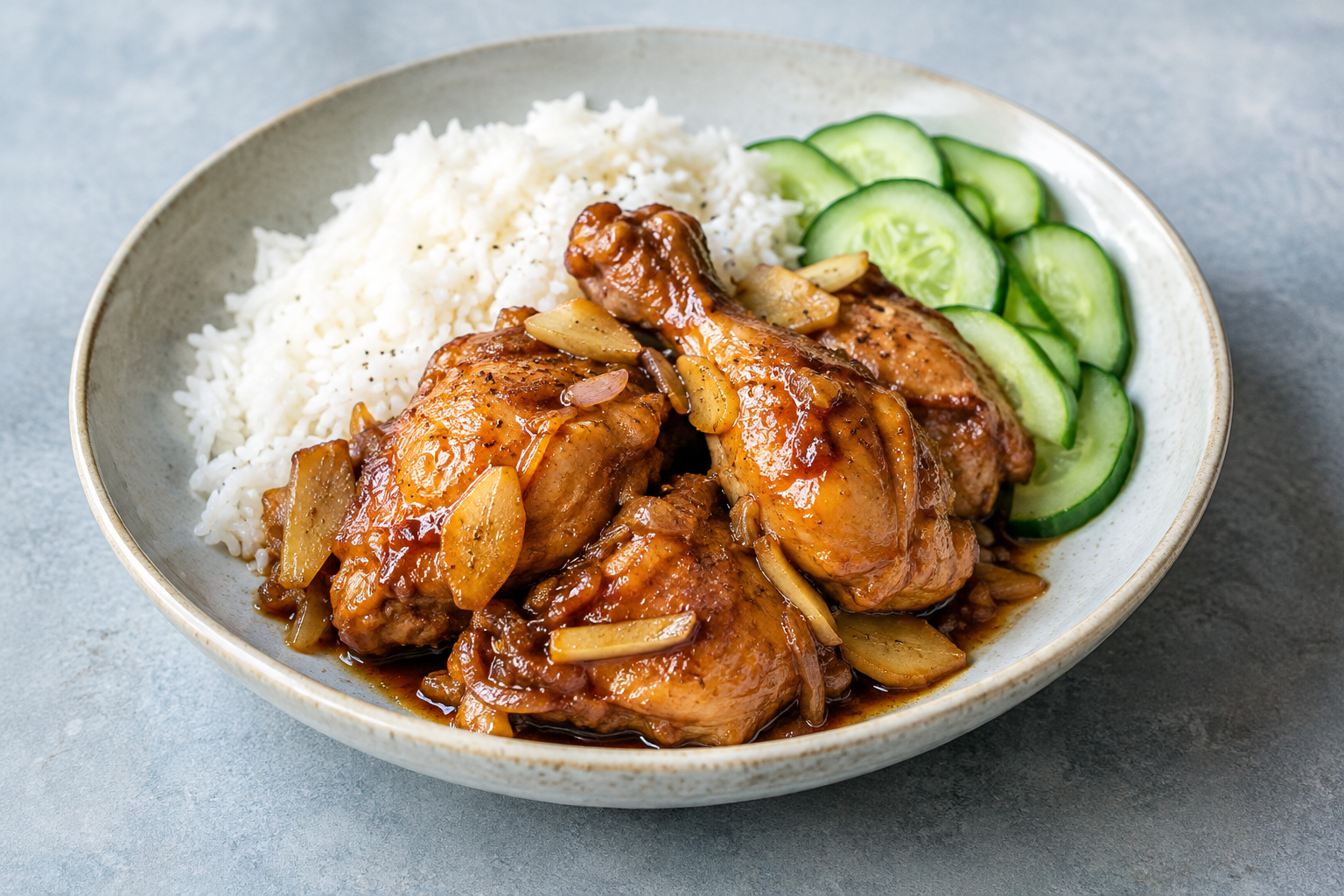
Tender chicken, plenty of fresh ginger and black pepper simmer in a light, savory caramel sauce. Serve the chicken with jasmine rice to soak up the glossy sauce, and cucumber for a fresh contrast.
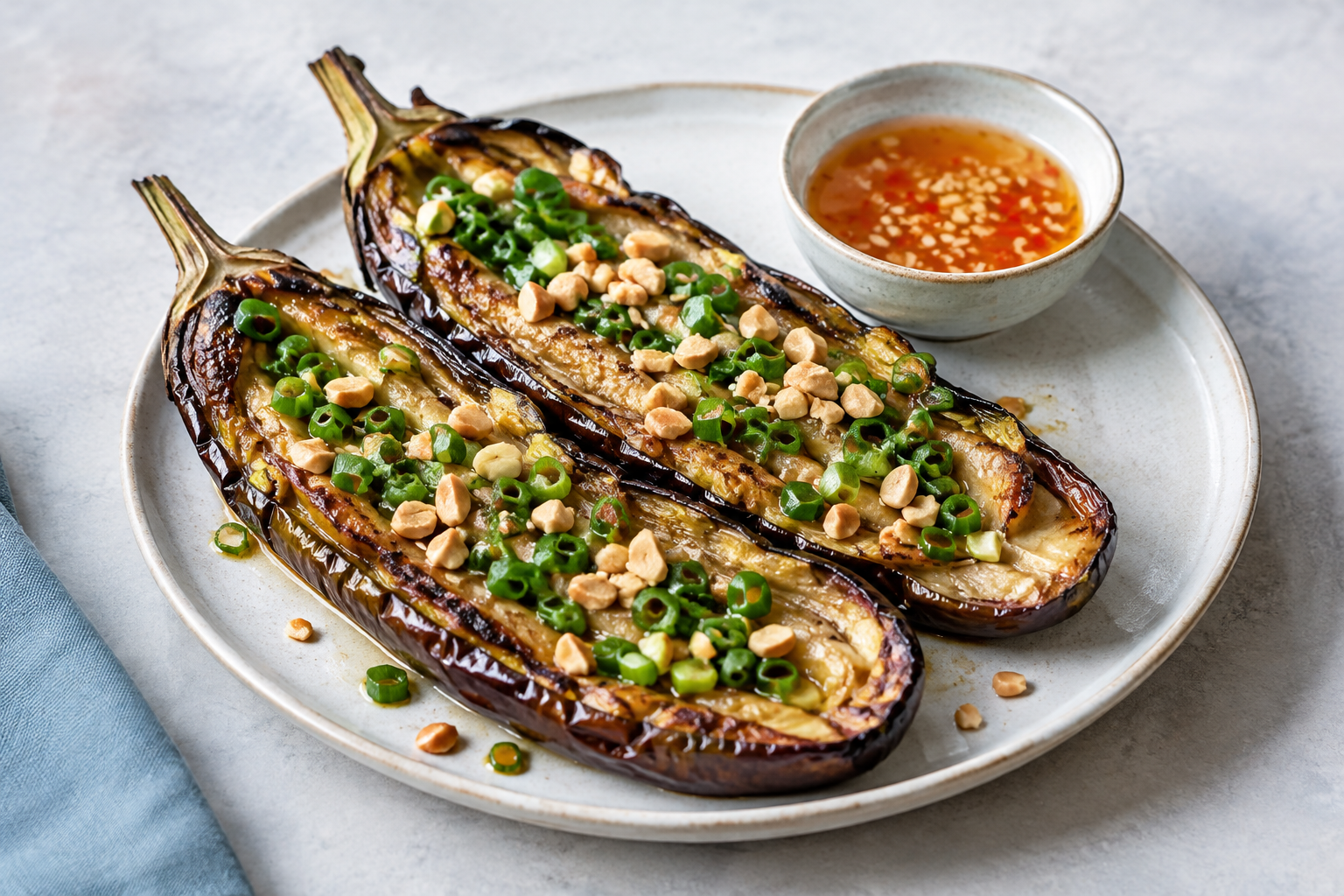
Tender, smoky eggplant gets a spoonful of fragrant scallion oil and a bright lime and fish sauce dressing. Serve the dressing on the side so everyone can adjust the salty-sour balance to their liking.
Many of these dishes center on a combination of salt, acidity and a little sweetness. Fish sauce adds depth; lime or rice vinegar brings freshness, while sugar rounds off the sharper edges. In the cucumber salad and cabbage salad, that balance comes together in a light dressing; the lettuce wraps with lemongrass mushrooms also have a separate dipping sauce. Taste a sauce like this before serving: fish sauce varies in saltiness by brand, so a splash of water or extra lime juice can help bring it into balance.
Texture matters just as much. Crispy shallots and peanuts add contrast to tender vegetables; bean sprouts and fresh herbs keep noodle soups and pancakes lively. Add those crunchy elements just before eating so they don’t go limp.
Bún riêu cua and bún bò Huế are both Vietnamese noodle soups, but their broths and toppings are quite different. In this version, bún riêu gets tomato, dried shrimp and a crab-and-shrimp topping that cooks in the hot broth. Let the broth simmer gently when you add the topping; boiling hard or stirring makes it harder to keep the pieces intact.
Bún bò Huế takes more time: beef and bones give the broth body, lemongrass brings a distinctive aroma and chili oil adds heat at the table. The soup is served with round rice noodles and herbs. For both bowls, lime, bean sprouts and fresh herbs are meant to be added to taste, not stirred into the broth ahead of time as a garnish.
The cooking method shapes the character of these dishes. For bánh cuốn, a thin batter made with rice flour and tapioca starch is steamed in a thin layer and rolled around the filling. A stable, greased heatproof plate makes the job easier to manage; stir the batter again in between, since the starch can settle to the bottom. Southern Vietnamese bánh xèo, by contrast, is an open, crispy-fried pancake, eaten with lettuce and herbs.
The way the meal is served differs too: cơm tấm sườn brings broken rice, grilled pork chop, pickled vegetables and nước chấm together on the plate. Lemongrass gives the marinade its aroma; let the pork chop rest after cooking before slicing it. Rau ram has its own distinctive, pronounced flavor. If you can’t find it, use mint and cilantro where the recipe calls for both, but expect a different flavor.