ABOUT THIS RECIPEA mild vegetable with bold flavor
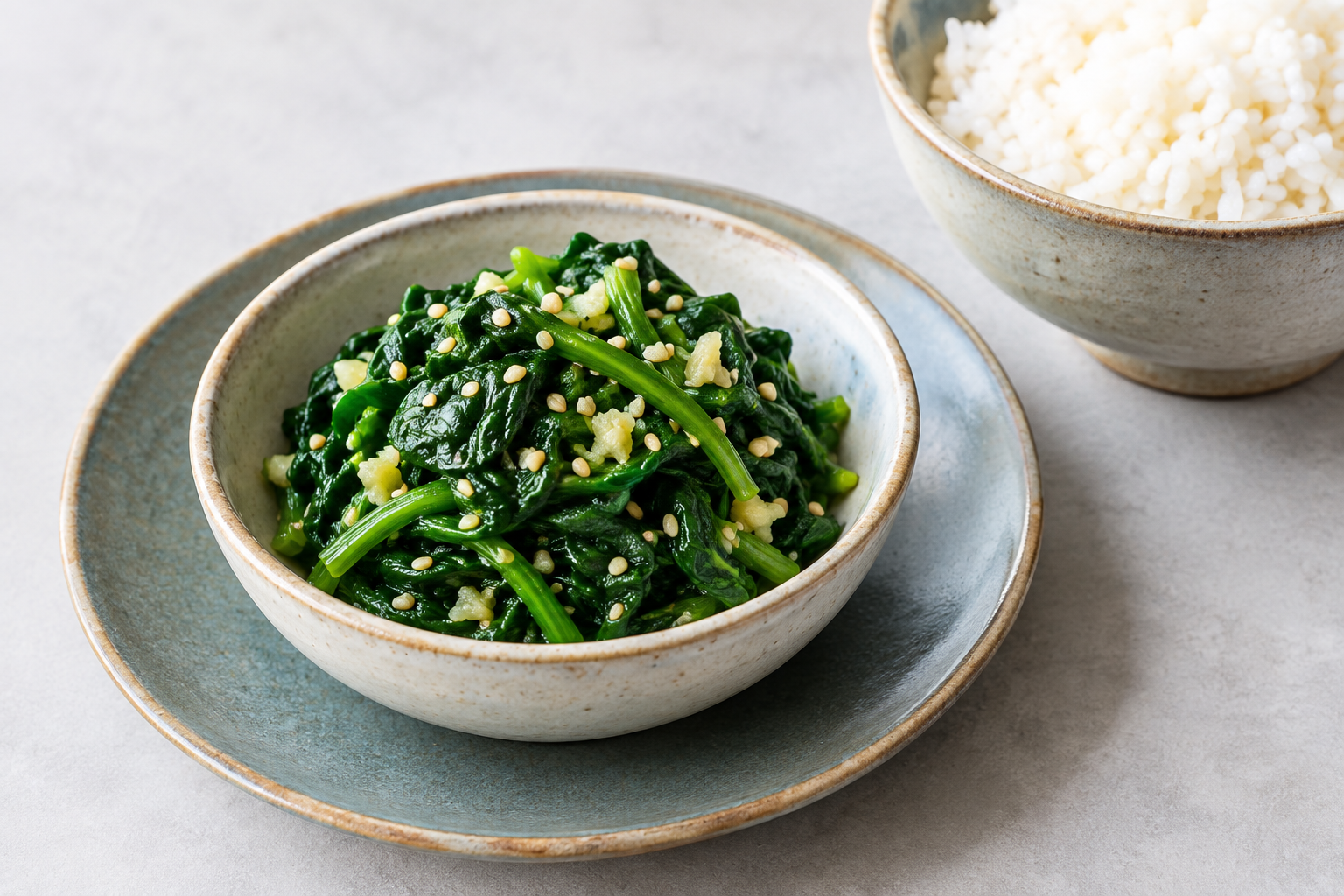
Sigeumchi namul is a Korean banchan: a small side dish served alongside rice and other dishes. The spinach isn’t meant to be a salad with a separate dressing, but a compact, seasoned vegetable dish. Its flavor stays mild and savory; garlic, soy sauce and sesame oil complement the spinach without overpowering it. That makes it a good match for a simple bowl of rice as well as a meal with several small side dishes.
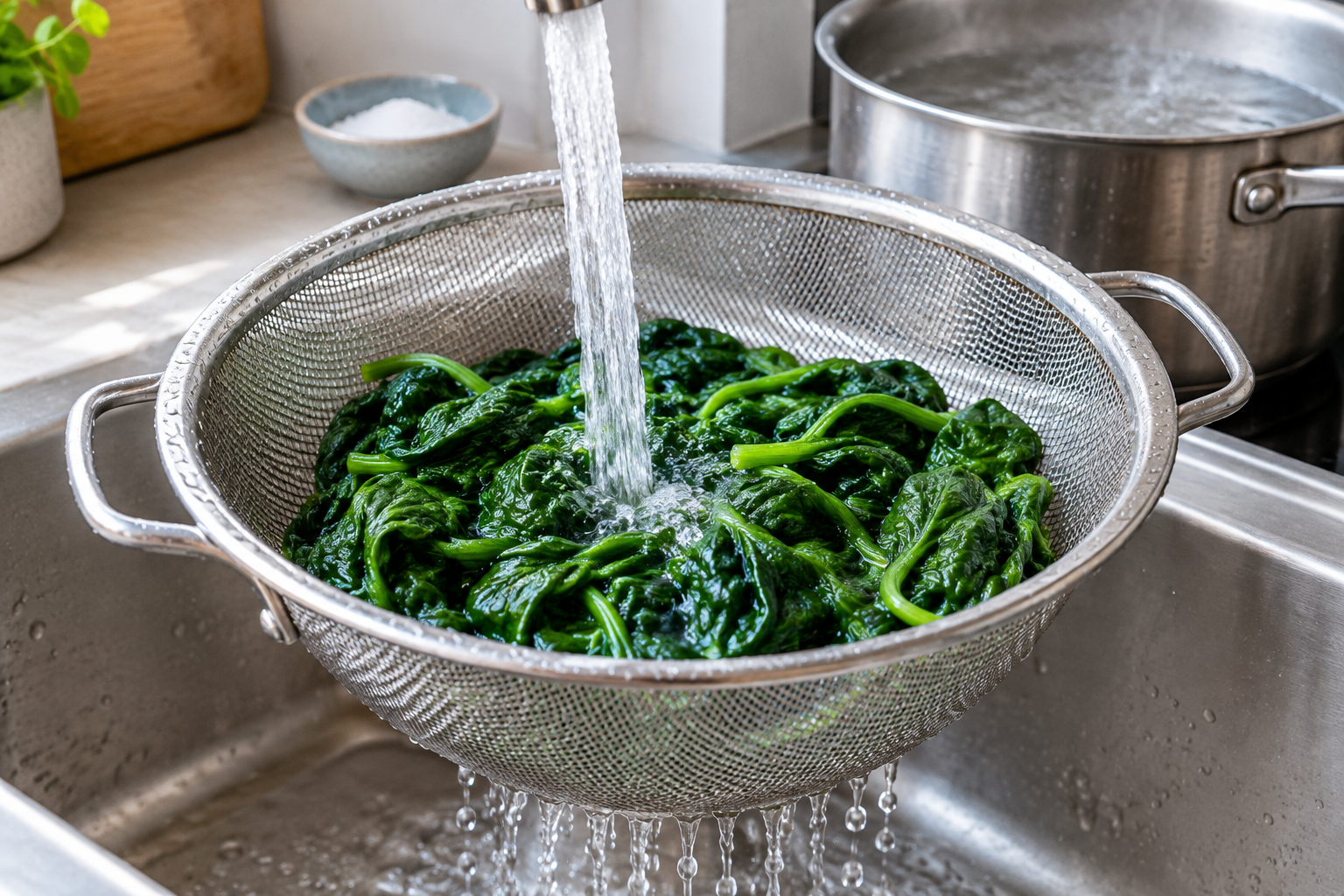
The brief blanching time is key to the texture. Spinach wilts quickly, so keep a close eye on the pan: cooking it for too long makes the leaves limp and dull. Cooling it immediately stops the cooking and helps preserve its green color. After that, it’s important to drain and squeeze it well. Spinach holds a lot of moisture; if it’s left in the bowl, it dilutes the soy sauce and makes the dish watery. Squeeze firmly, but not so hard that the leaves become a dry lump.
Fresh spinach is available year-round. Baby leaves are often a little more delicate, while larger leaves have more bite; either works well for this dish. Wash the spinach carefully, as grit can remain between the stems and leaves. Leave the stems on if they’re thin and tender. Remove thick, tough stems so the leaves and stems soften evenly. If you’re using washed spinach from a bag, still check for any remaining grit and adjust the blanching time to the size of the leaves.
Korean soup soy sauce, guk-ganjang, has a pronounced salty flavor and is often used to season namul. Regular light soy sauce also works well and is easier to find; start with a small amount and taste before adding more salt. Sesame oil adds aroma, not cooking fat, so a little is enough. Toasted sesame seeds add a light crunch. If the seeds aren’t toasted, briefly toast them in a dry frying pan and let them cool before adding.
Serve the spinach chilled or at room temperature, preferably on the same day. It makes a fresh counterpoint to rice, grilled meat, tofu or other Korean banchan and can also be part of bibimbap. Cover any leftovers and refrigerate them within two hours of preparing; use within two days. Before serving, stir any liquid at the bottom of the dish back through the leaves.
 Main course

