ABOUT THIS RECIPECrispy first, glossy next
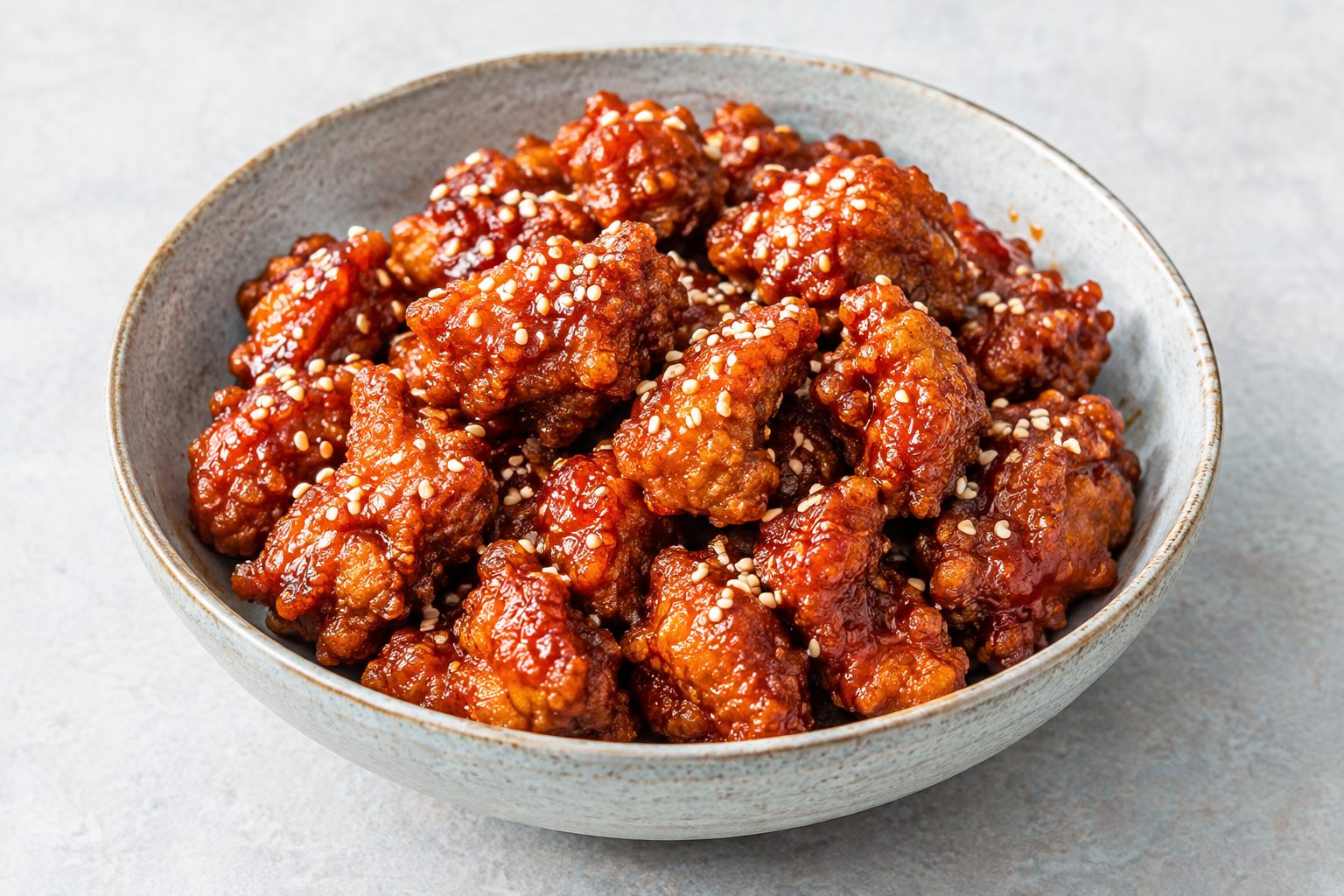
Dakgangjeong is all about the contrast between crispy chicken and a sticky, sweet-and-spicy glaze. The name refers to chicken prepared gangjeong-style; recipes vary in their sauce and sweetener. In this version, gochujang brings chili heat and savory depth, while soy sauce, garlic and a little rice vinegar round out the sauce. The vinegar is a fresh counterpoint, not a dominant flavor. Gochujang is a fermented Korean chili paste with its own deep, slightly sweet flavor, so don’t substitute chili sauce one-for-one if you want the same result.
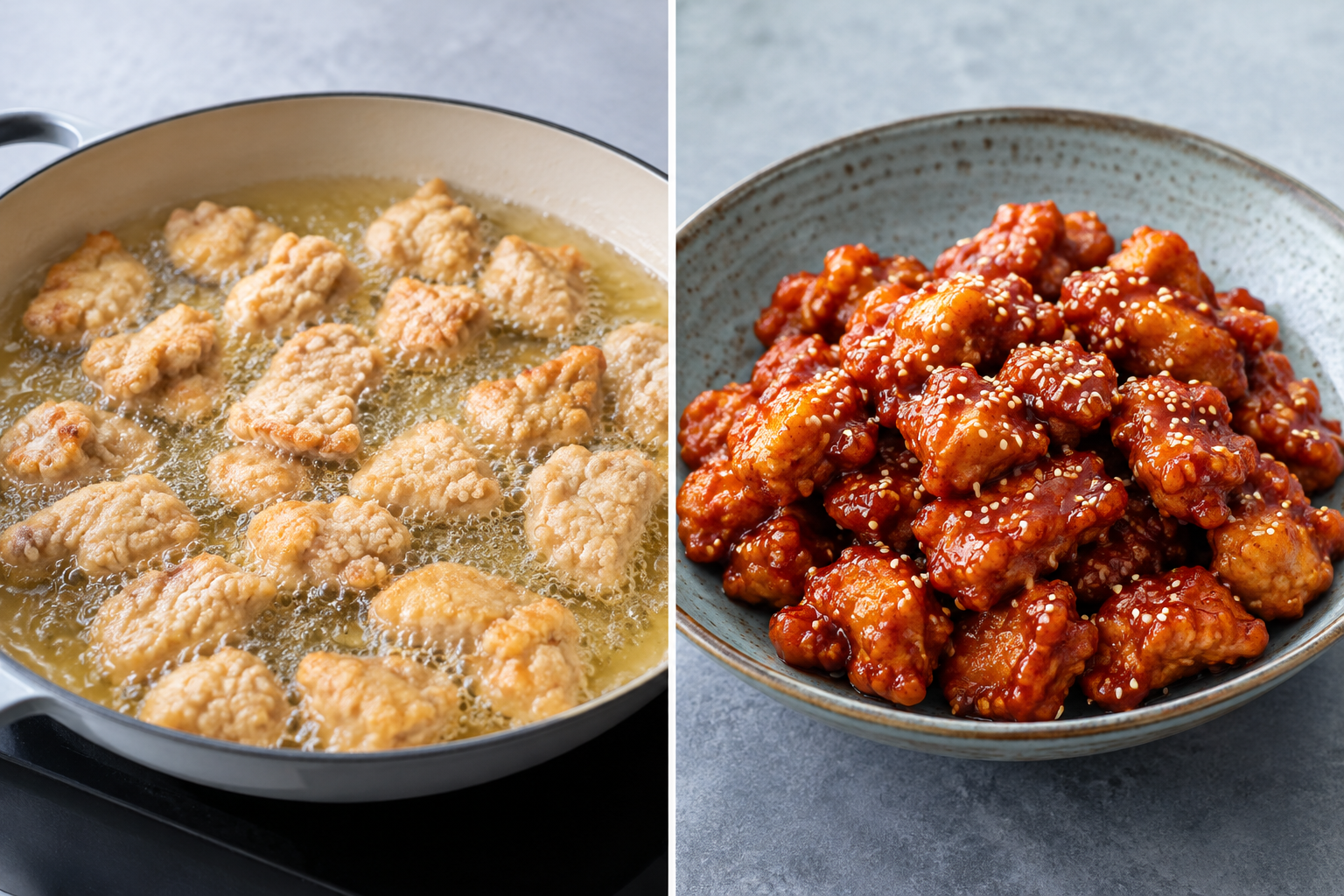
Potato starch forms a thin, dry coating around the chicken and gives it a light crust. Frying twice is important: the first fry cooks the pieces through; during the second, hotter fry, the outside becomes extra crispy. Let the chicken drain briefly in between and use a kitchen thermometer if you have one. Fry in small batches so the oil doesn’t cool too much and the pieces don’t steam against one another. Cut the chicken into roughly equal-sized pieces for more even cooking times.
Rice syrup gives the sauce a smooth, glossy texture and gentle sweetness. If it’s hard to find, honey works too; it has a slightly more pronounced flavor. Warm the sauce over low heat and toss the chicken in it just before serving. This gives every piece a thin coating without letting it sit in the sauce for long. Don’t let the sauce boil hard: a sauce that gets too thick or reduces for too long can become sticky and heavy.
Dakgangjeong is often served as a shareable snack. For something fresh and crunchy on the side, try cucumber sticks or pickled radish; these are not part of this recipe. The chicken also works well as part of a meal with steamed rice and simple vegetables. Sprinkle the sesame seeds over the top at the end, so they stay visible and don’t soften in the sauce.
Serve the chicken as soon as it’s glazed: that’s when the contrast between the crispy crust and tender inside is most pronounced. Cover any leftovers and store them in the fridge, then eat them within two days. Reheat them on a baking sheet in a hot oven until piping hot all the way through; the crust will be less crispy than when freshly made. Don’t leave chicken at room temperature for an extended time, especially after it has been mixed with the sauce.
 Main course

