ABOUT THIS RECIPEEvery topping in its place
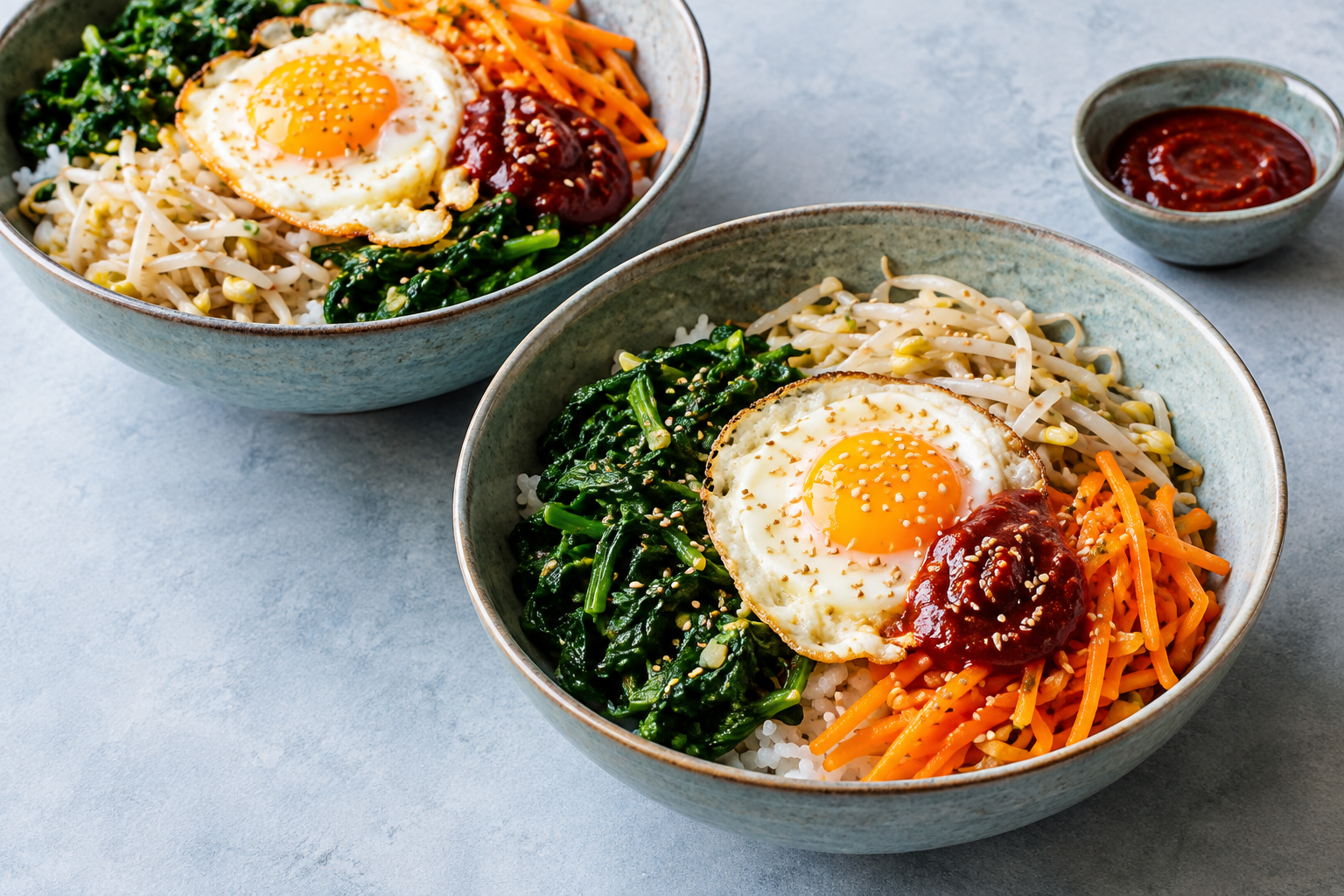
Bibimbap literally means mixed rice: the separate components are brought together in a bowl and stirred just before eating. The toppings are more than decoration. Here, the rice provides a neutral base for spinach with sesame oil and garlic, fresh bean sprouts, lightly sweet carrot and an egg with a soft yolk. Gochujang sauce adds heat, saltiness and a mild sweetness. By mixing everything together only at the table, each bite has a different balance of vegetables, rice and sauce.
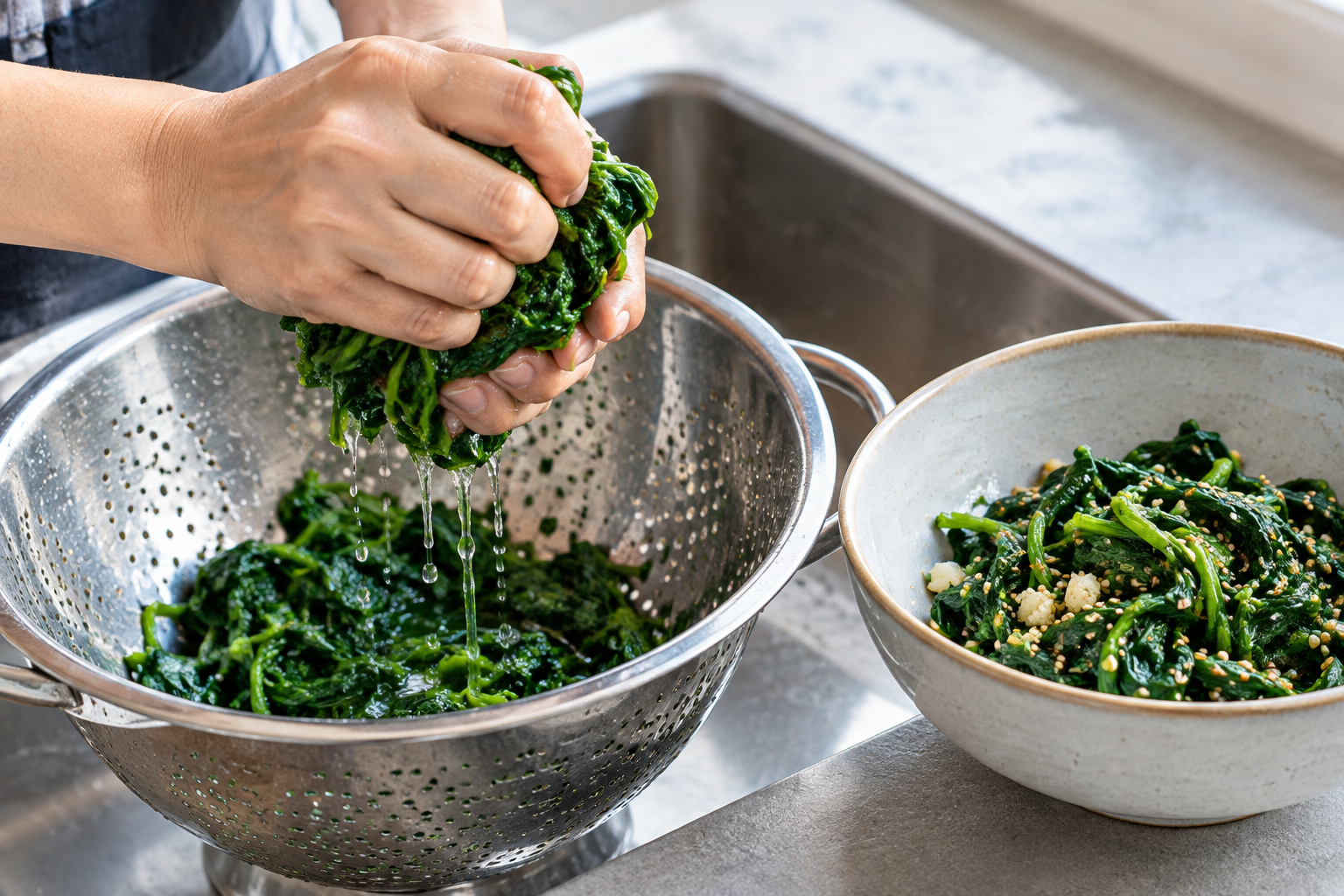
Spinach has a starring role in this dish. Brief blanching wilts the leaves without cooking them until mushy; squeezing them out well afterwards keeps water from running into the bowl and diluting the flavour. The spinach is then dressed with sesame oil and garlic, so the flavour reaches between the leaves, too. Dutch spinach is often readily available in spring and autumn, but a sturdy bunch of spinach or mature spinach leaves work all year round. Baby spinach works as well, though it wilts faster and needs very little cooking time.
The toppings are prepared separately so they retain their own bite. Blanch the bean sprouts only briefly, so they stay juicy and slightly crunchy. Cook the carrot strips just until they start to soften; thin julienne cooks quickly and retains more texture than grated carrot. The components don’t need to stay hot while you finish the rest: set them aside separately and fry the eggs last. A frying pan is all you need, along with one pan for the rice and a small pan of boiling water for the vegetables.
Gochujang is a fermented Korean chilli paste that gives the sauce its distinctive deep, savoury flavour. Thin it out with water, rice vinegar, a little sugar and sesame oil so it’s easy to stir through the rice later. The heat varies by brand, so start with the stated amount and put extra sauce on the table if you like. If gochujang isn’t available, there’s no direct substitute with the same flavour; it’s better to use another chilli paste sparingly and taste the sauce, rather than trying to imitate Korean flavours with one-to-one substitutions.
Serve the bowls straight away, with the toppings in separate sections around the egg. That way, everyone can take in the colours and textures first, then mix everything together themselves. Refrigerate any leftovers within two hours, preferably with the rice, vegetables and egg stored separately, and use within two days. Reheat the rice and vegetables thoroughly until steaming hot; a freshly fried egg tastes best, but leftover egg can be refrigerated and reheated with the rest.
 Main course

