ABOUT THIS RECIPEA light coating, plenty of mushroom flavour
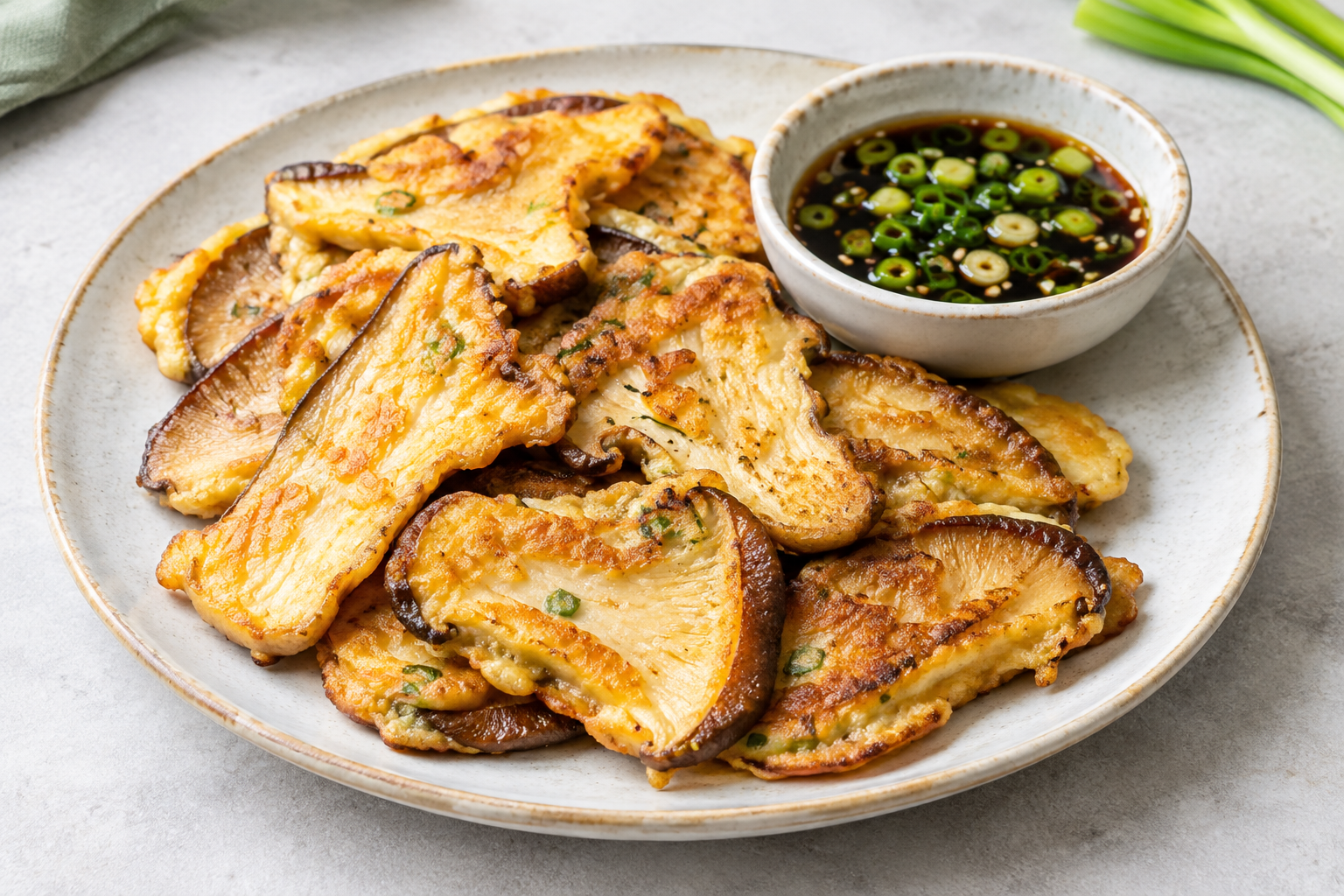
Jeon is a catch-all term for Korean snacks cooked in a pan. The ingredients and batter vary from one kind to another: some jeon are made from a loose mixture, while others are pieces of vegetables, fish or meat dipped in egg. With mushrooms, a thin coating of flour and egg works well: it clings to the slices, browns quickly and lets the mushroom’s savoury flavour and firm bite shine through. Serve them as banchan alongside rice and other small dishes, or put them on the table as part of a meal to share.
Choose mushrooms firm enough to slice. King oyster mushrooms make broad, meaty slices; shiitake has a pronounced savoury flavour and works well alongside them. If using only shiitake, slice the caps and leave out the tough stems. Clean the mushrooms with a brush or a slightly damp cloth. There’s no need to rinse them under running water: wet slices are harder to dust lightly and may steam rather than fry in the pan.
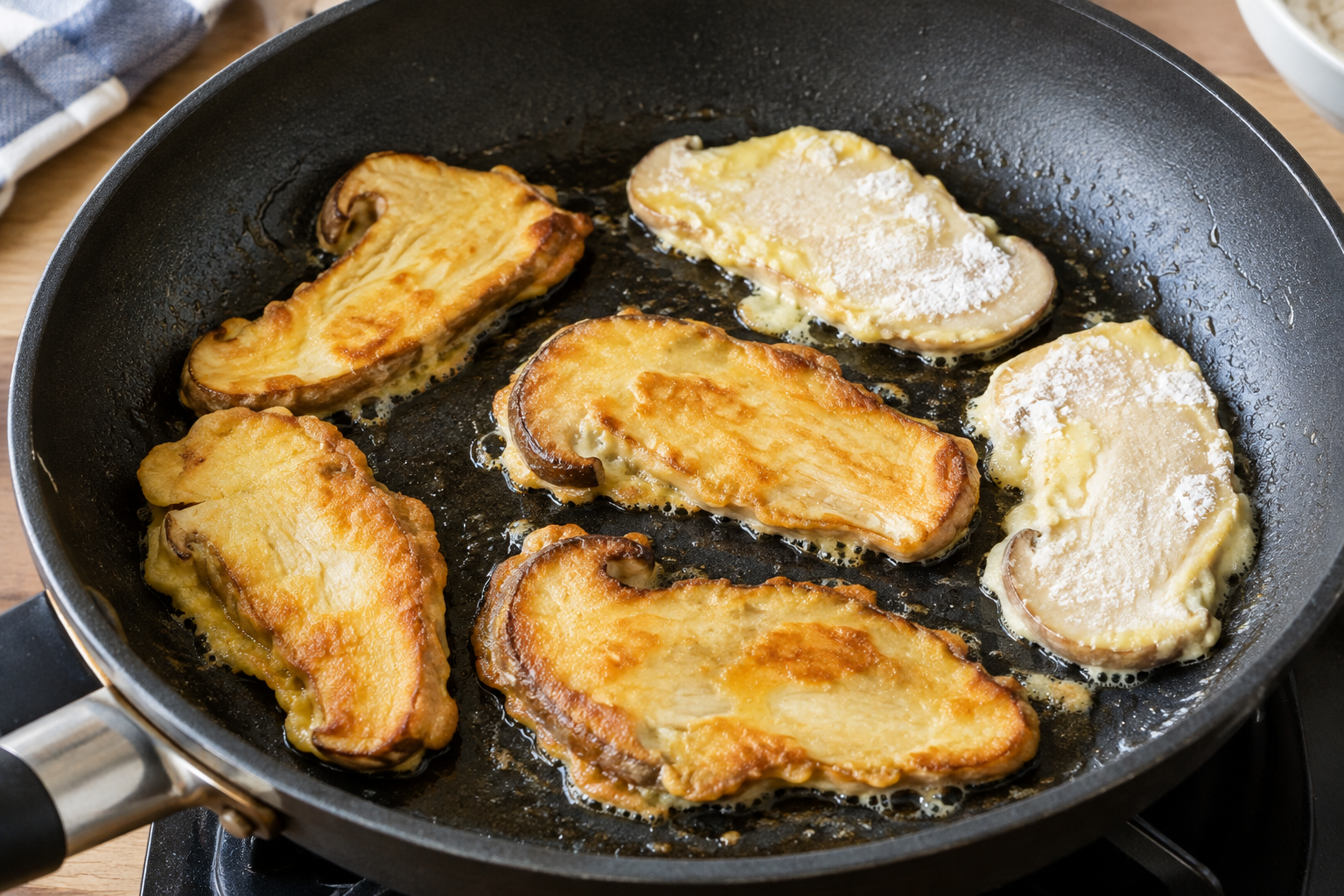
A thin layer of oil and plenty of room in the pan are key to getting a golden-brown result. Shake off any excess flour from each slice before dipping it in the egg, or the coating will be heavy. Cook in batches and leave space between the slices; an overcrowded pan cools down and makes for damp, pale jeon. Keep the heat at medium: that way, the outside can brown while the mushroom cooks through. The edges should be lightly crisp, with a soft, juicy centre. Add a small splash of oil between batches if needed.
The dipping sauce brings together saltiness, acidity and freshness. Rice vinegar is mild, but regular white vinegar works too; use a little less if you want to avoid a sharper flavour. Spring onion adds a fresh bite. Stir the sauce just before serving so the onion doesn’t sit in the vinegar for long. Jeon are best straight from the pan, while the coating is still crisp. Serve the dip alongside and add rice, or pair them with kimchi and other banchan for a varied Korean meal.
If cooking ahead, let the jeon cool first and store them covered in the fridge. Briefly reheat them in a frying pan before serving; the coating will generally turn out better that way than in the microwave. Store the dipping sauce separately and only reheat as many portions as you plan to eat.
 Main course

