 Main course
50 minutes
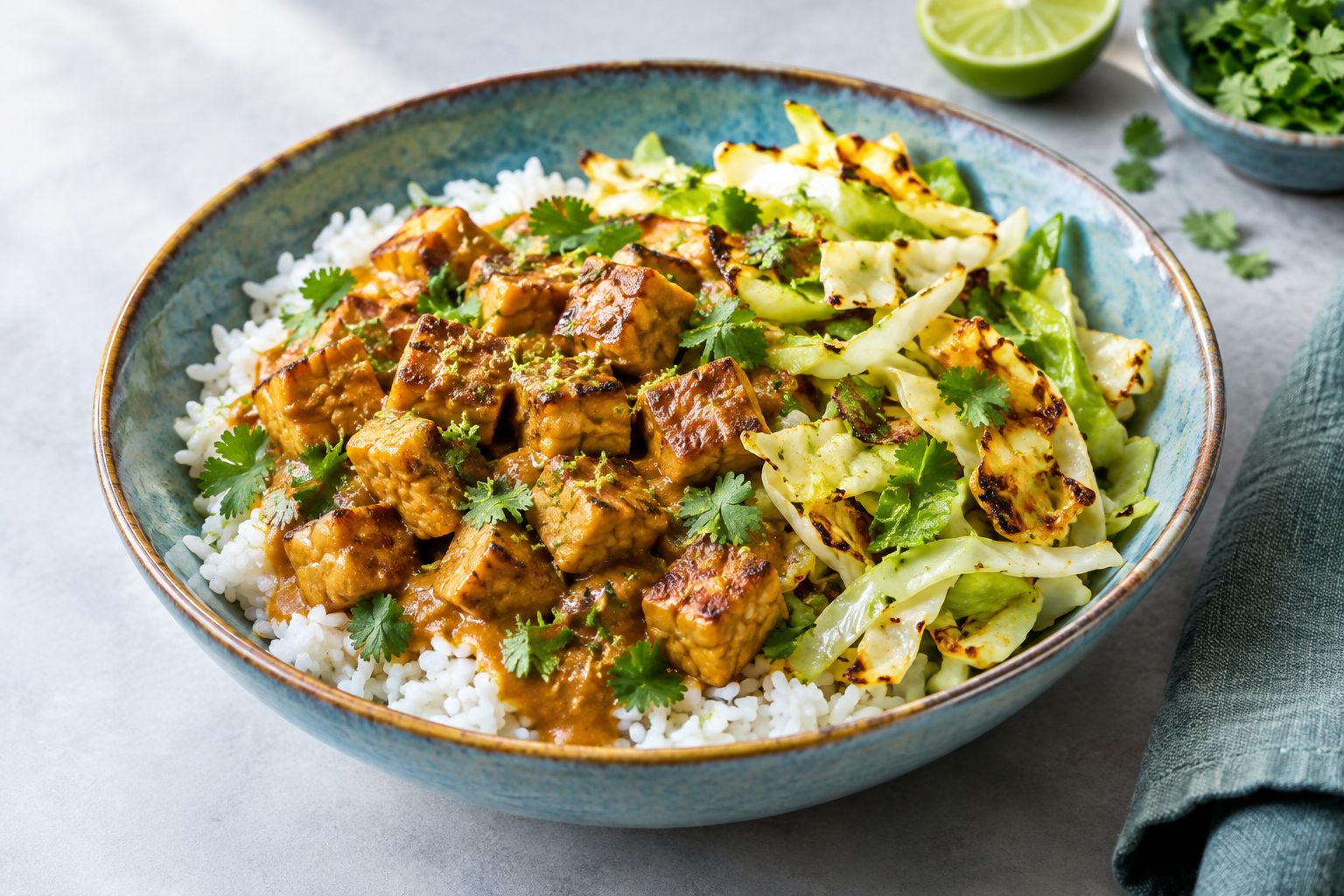
Tempeh Stew with Coconut, Lime and Crispy Pointed Cabbage
Pan-fried tempeh soaks up a mild coconut-ginger sauce, while quickly fried pointed cabbage adds bite. Lime and coriander keep it fresh; rice catches the sauce.
Tempeh can take center stage, golden and crisp, simmer gently in coconut milk, or pair with the fresh flavors of cucumber, lime and herbs. This collection brings Indonesian and Malaysian dishes together with modern bowls, wraps and lunch dishes. Choose something with a glossy kecap sauce, spicy sambal or a fresh counterpoint — and discover how the way you cut and cook tempeh changes its texture.
28 recipesBrowse the recipesMain coursePan-fried tempeh soaks up a mild coconut-ginger sauce, while quickly fried pointed cabbage adds bite. Lime and coriander keep it fresh; rice catches the sauce.
 Side dish
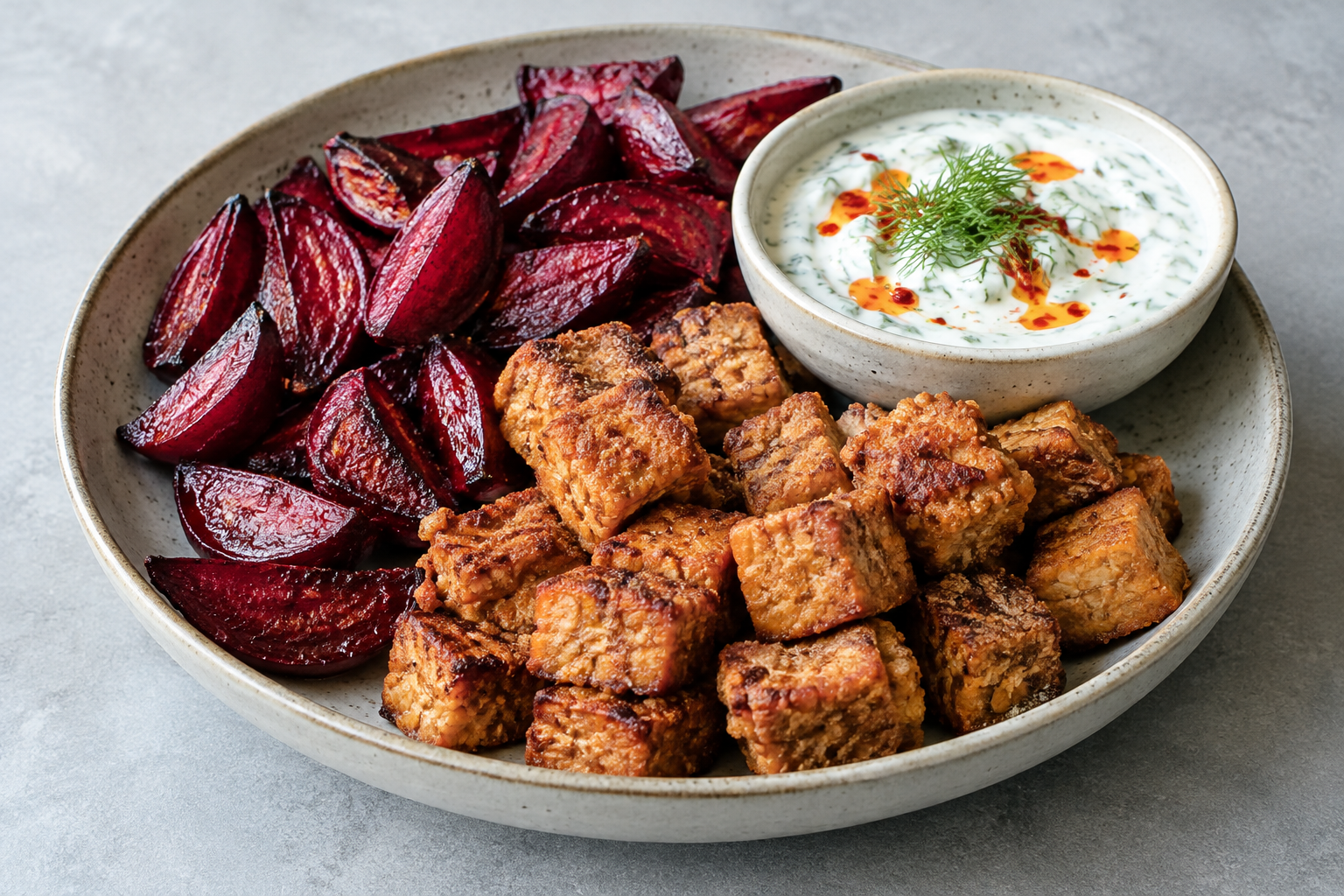
Golden-brown tempeh cubes, sweet and earthy roasted beetroot, and fresh dill yogurt come together in a colorful starter. A few drops of chili oil add a little extra heat to the creamy dip and crispy crust.
 Main course
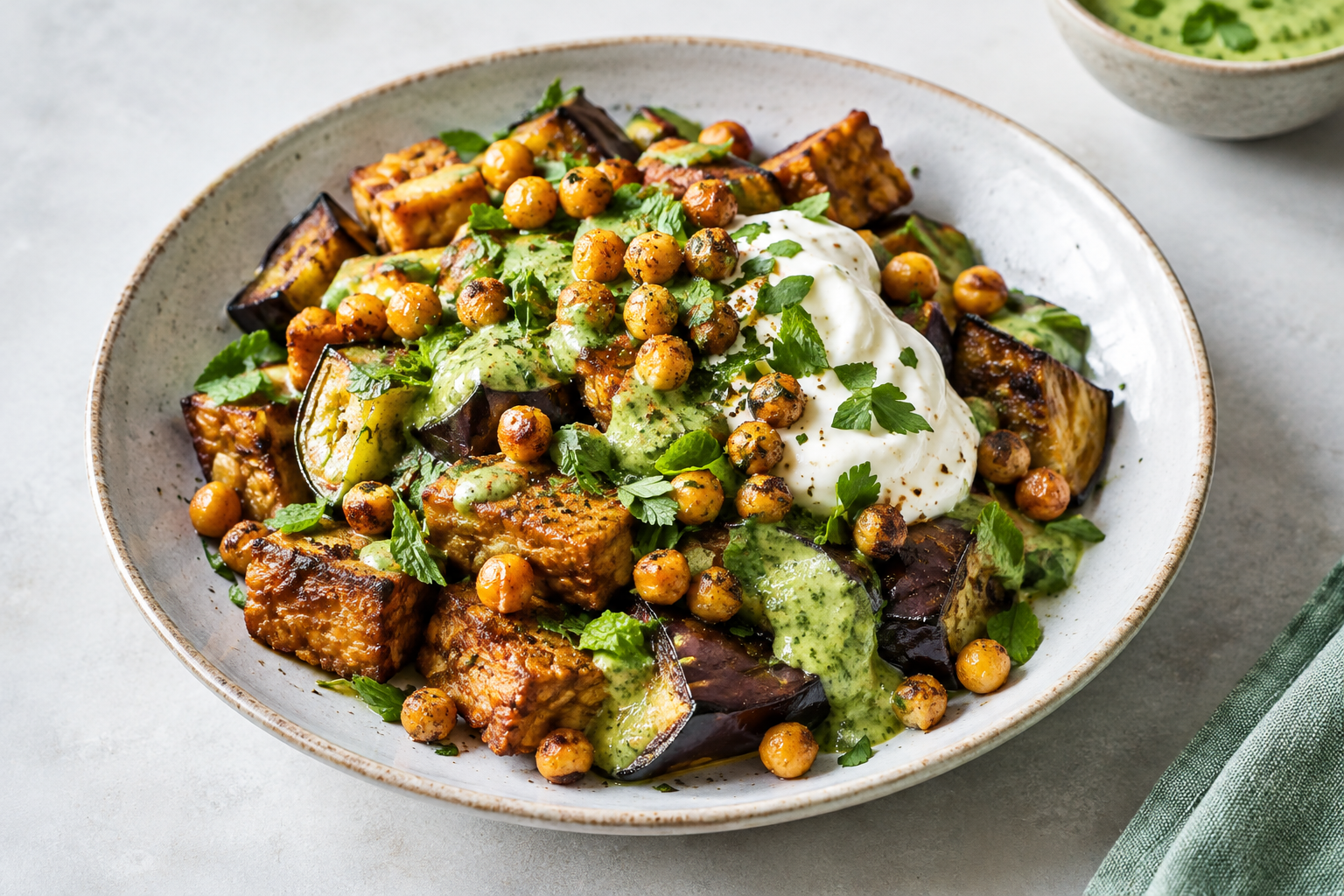
Seasoned tempeh and aubergine roast together until golden at the edges and soft inside. Green tahini sauce, fresh yogurt and crispy chickpeas make this a complete meal with contrast in every bite.
 Side dish
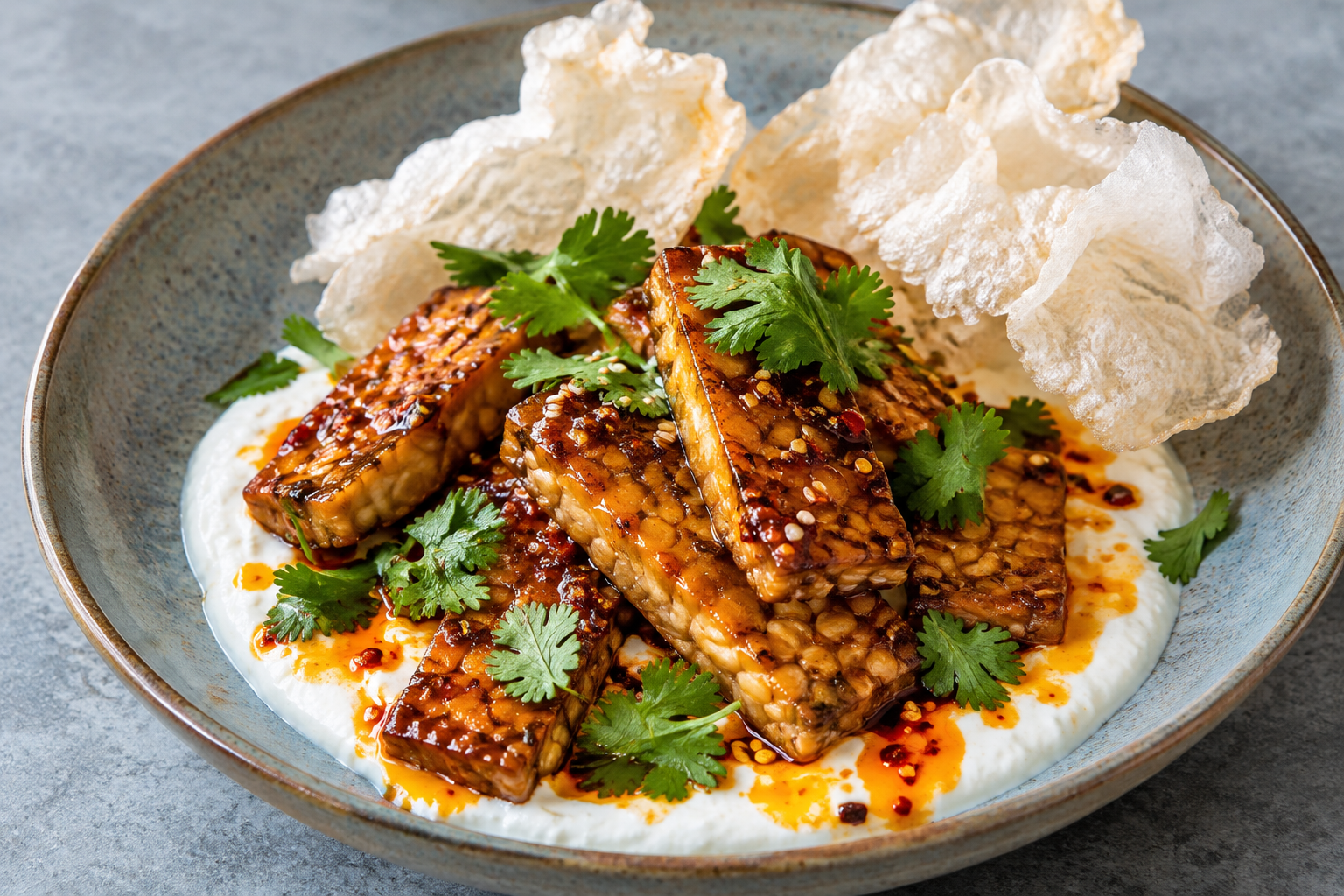
Crispy pan-fried tempeh gets a quick glaze of orange, lime and soy sauce. Serve the slices with fresh lemon yogurt, homemade chili oil and airy rice-paper crackers: a colorful starter with sweet-and-sour flavor, heat and crunch.
 Main course
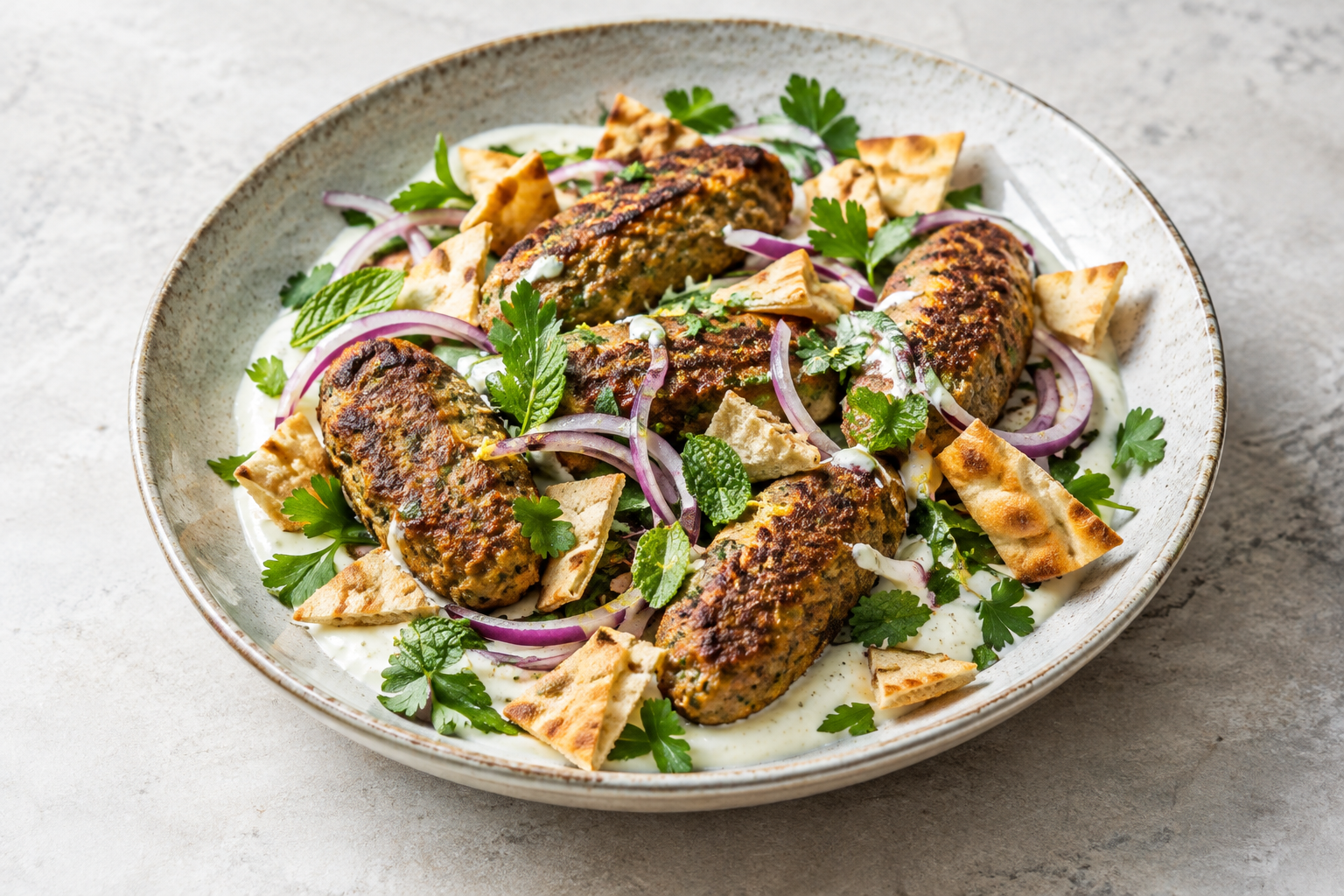
Spiced, golden-brown tempeh koftas get a fresh counterpoint from tahini yogurt, red onion and mint. Toasted pieces of pita add a crisp contrast.
 Main course
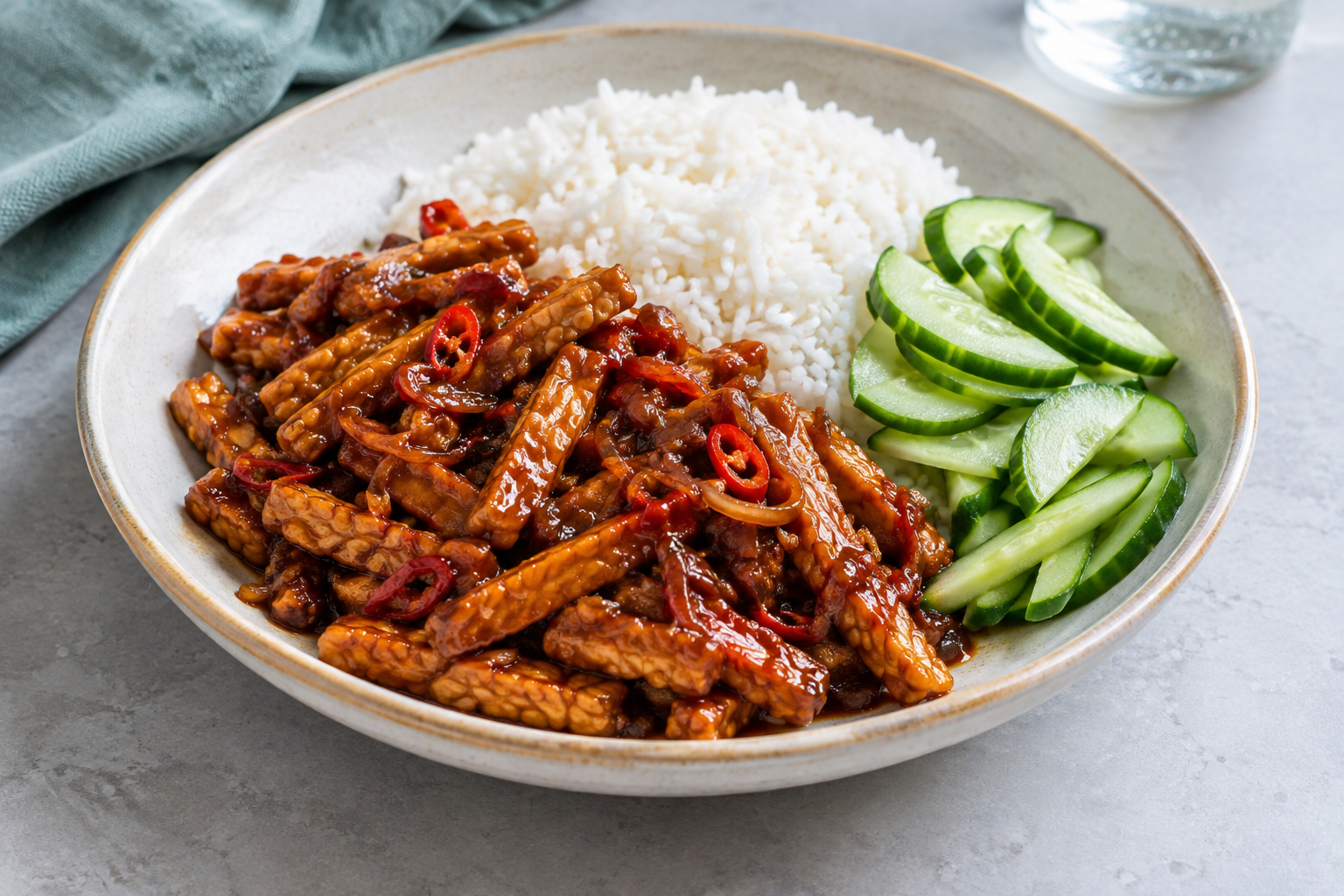
Thin strips of tempeh are fried until golden brown, then briefly simmered in a sauce of kecap manis, chili, and tamarind. Serve with rice and refreshing cucumber: the sweet, savory, and sour flavors stay nicely balanced.
 Main course
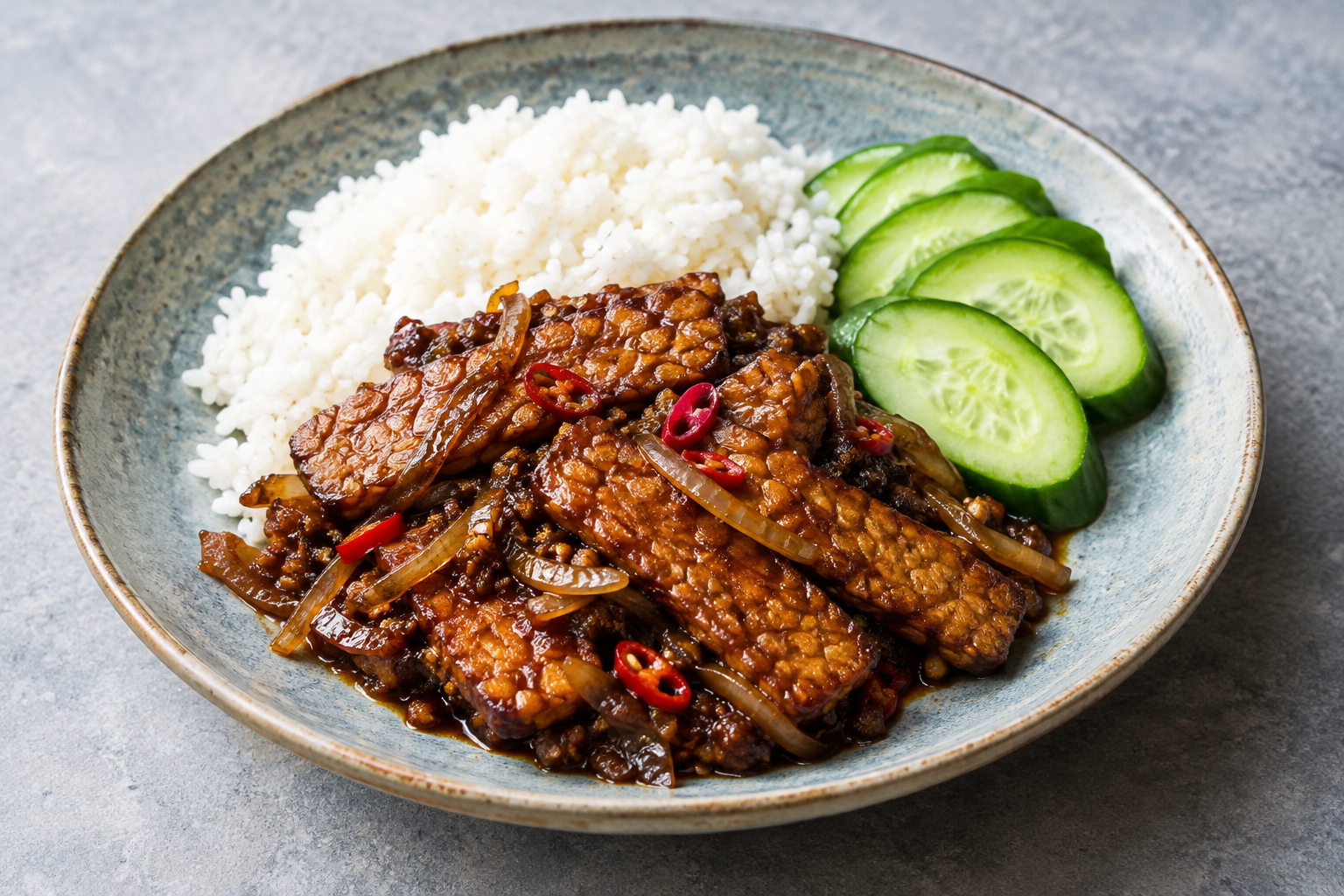
Golden-brown fried tempeh soaks up a thick, glossy sauce of kecap manis, ginger, garlic and chili. Tamarind adds just enough acidity to balance the sweet-and-savory flavors; rice and fresh cucumber make it a complete meal.
 Main course
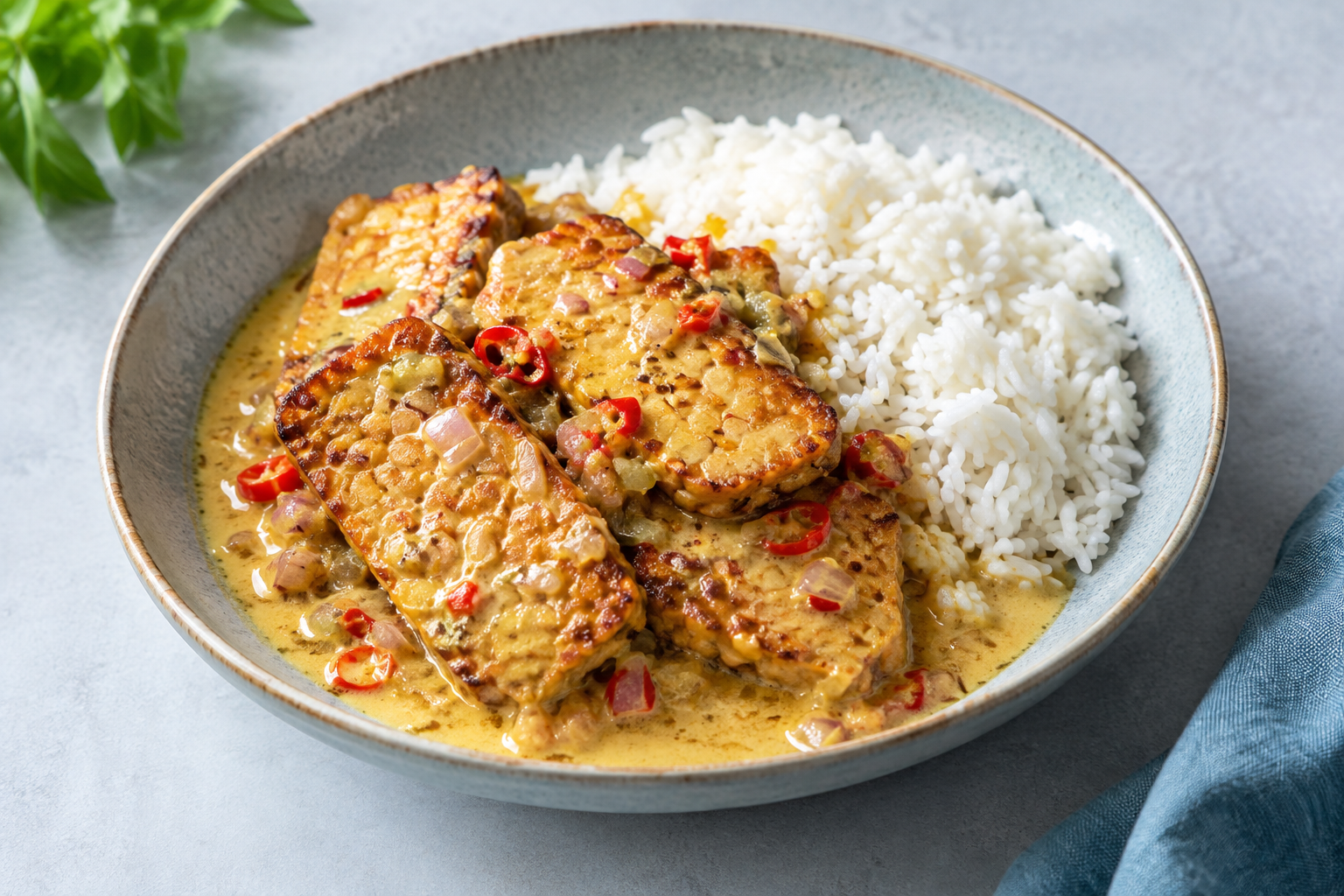
Golden-brown tempeh gets a brief simmer in coconut milk with tamarind, shallot and lemongrass. The sauce is creamy, savoury and slightly tart; white rice makes it a complete main course.
 Side dish
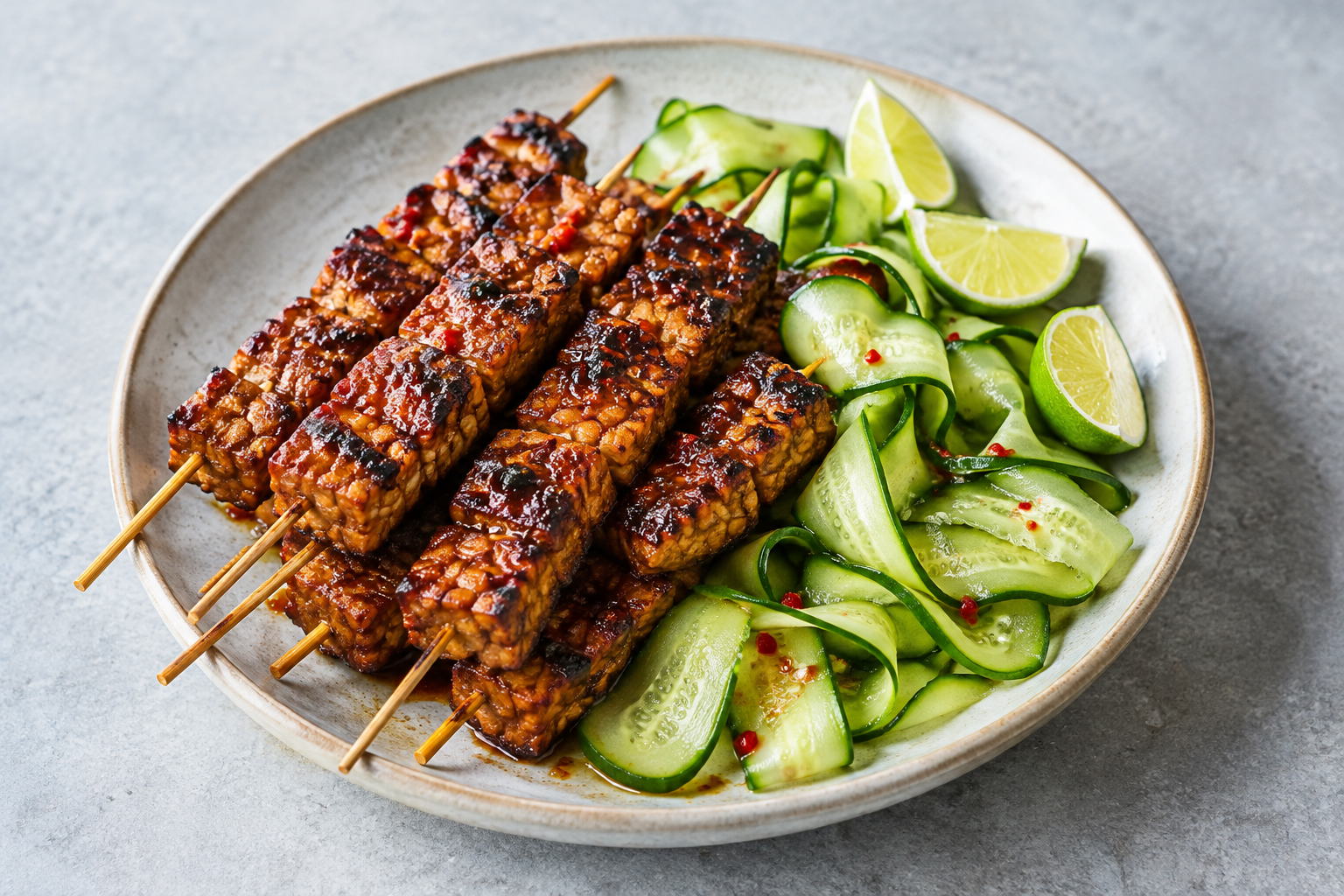
These tempeh skewers develop a dark, sticky coating of tamarind, garlic and chili on the grill. Cool cucumber ribbons and lime add crunch and a sharp contrast. Serve them as a side dish alongside rice or grilled vegetables.
 Side dish
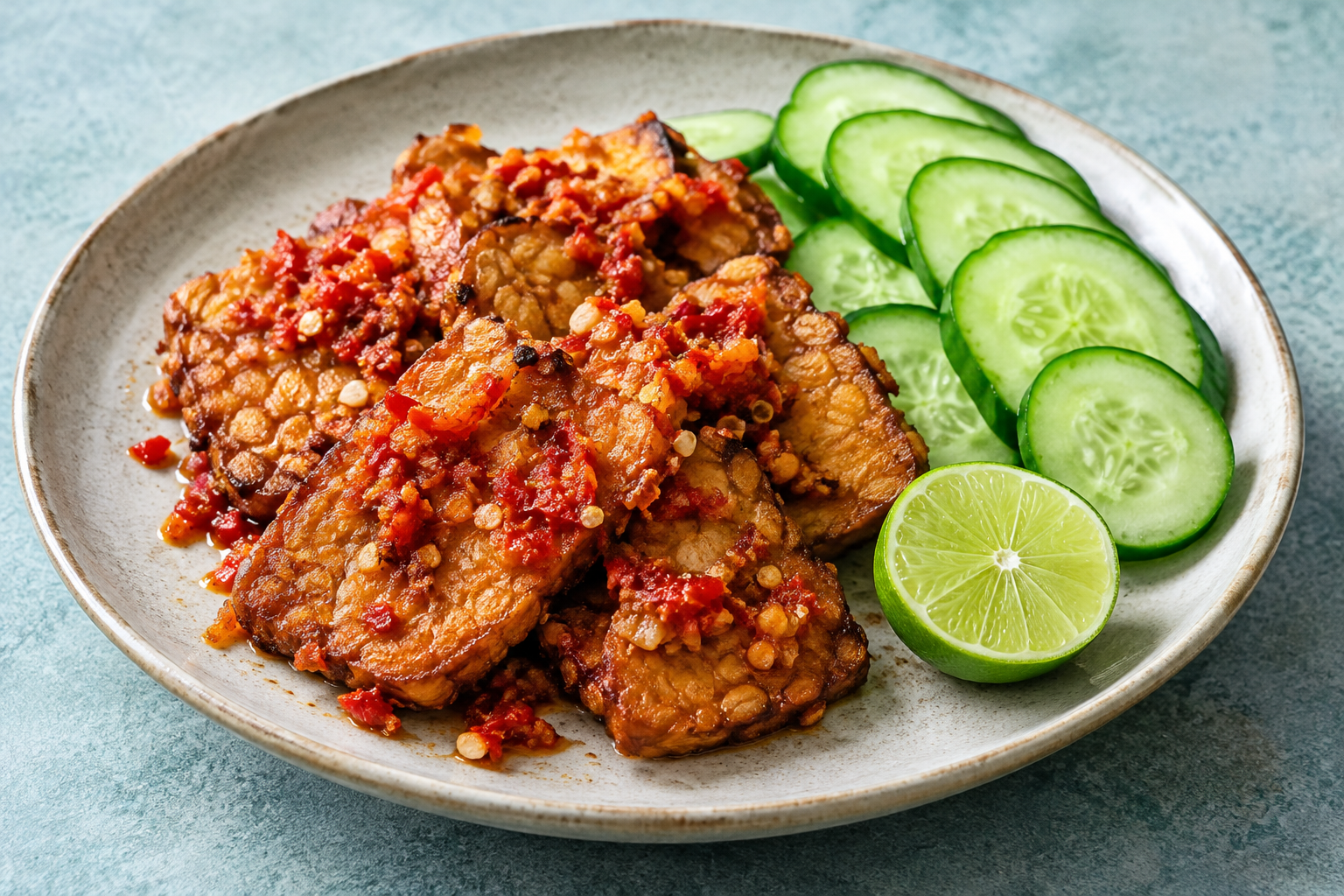
Golden-brown fried tempeh, roughly pounded sambal and cool cucumber: this East Javanese-inspired starter brings heat, freshness and crunch together in every bite.
 Main course
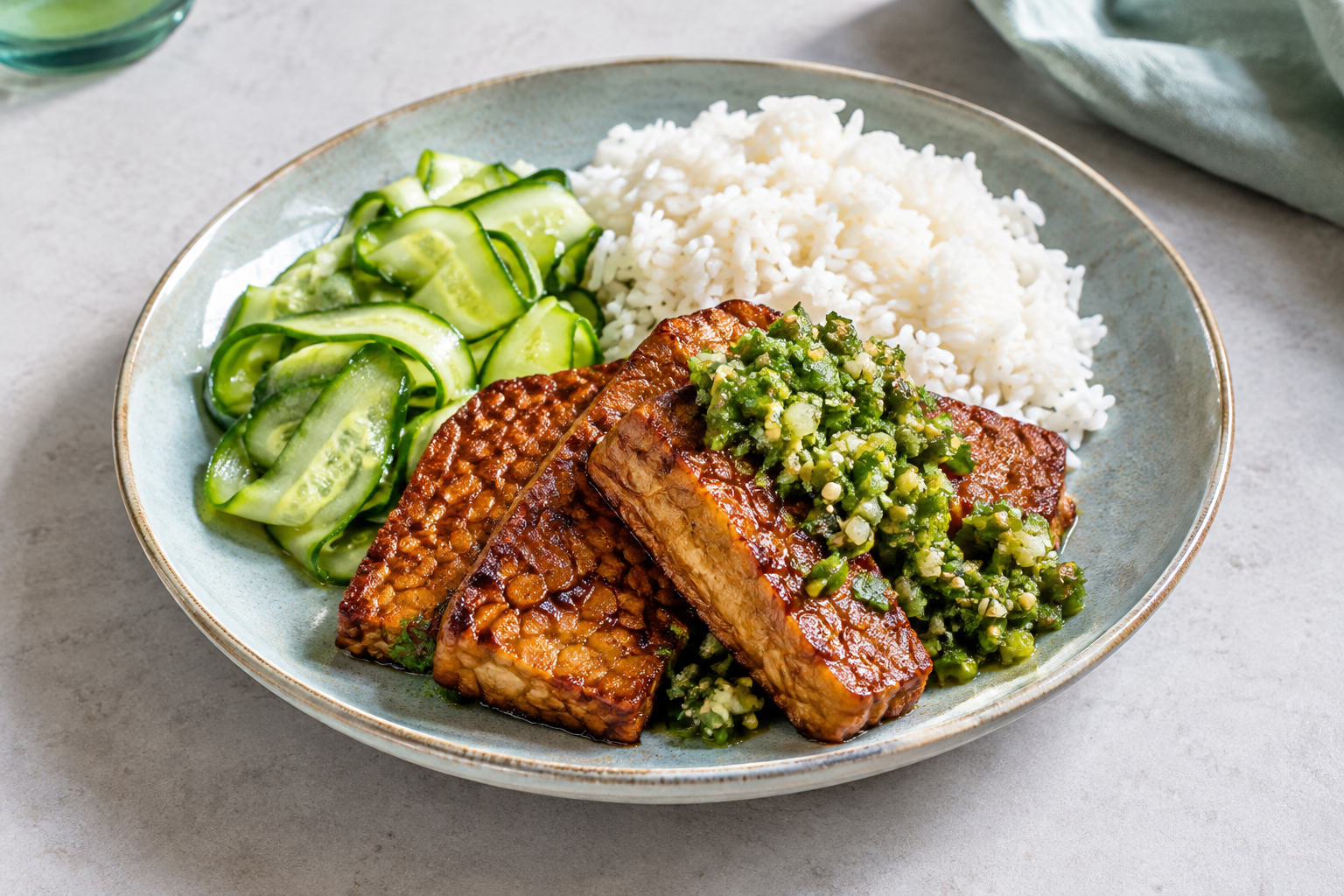
Firmly pan-fried tempeh gets a thin, sticky coating of ketjap and lime. Green sambal, fresh cucumber and rice keep the dish balanced with heat, tang and crunch.
 Side dish
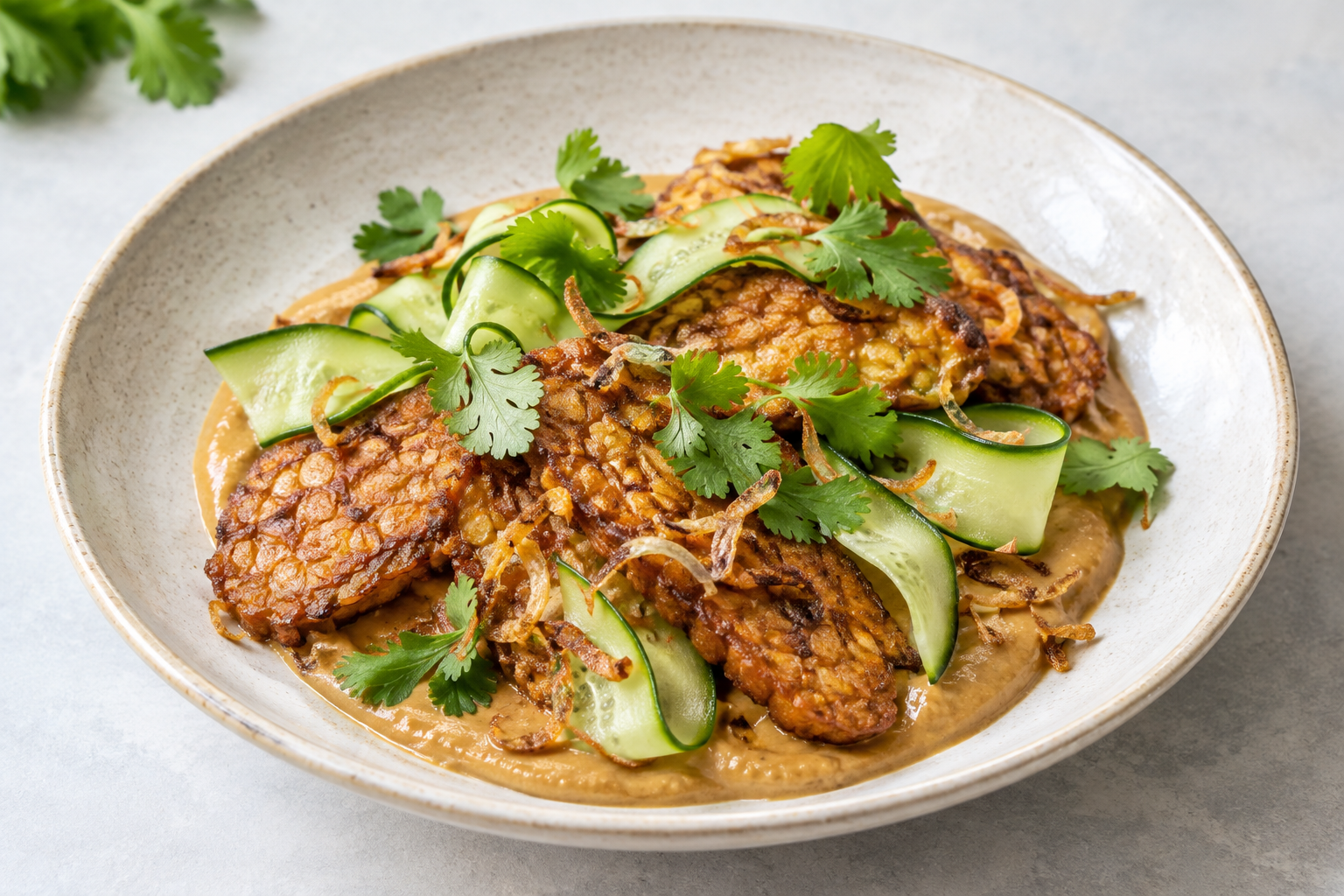
Thin slices of golden-fried tempeh are served with a smooth, lightly tangy cream of peanut, tamarind and lime. Cucumber ribbons and cilantro keep it fresh; crisp-fried shallot adds extra crunch to every bite.
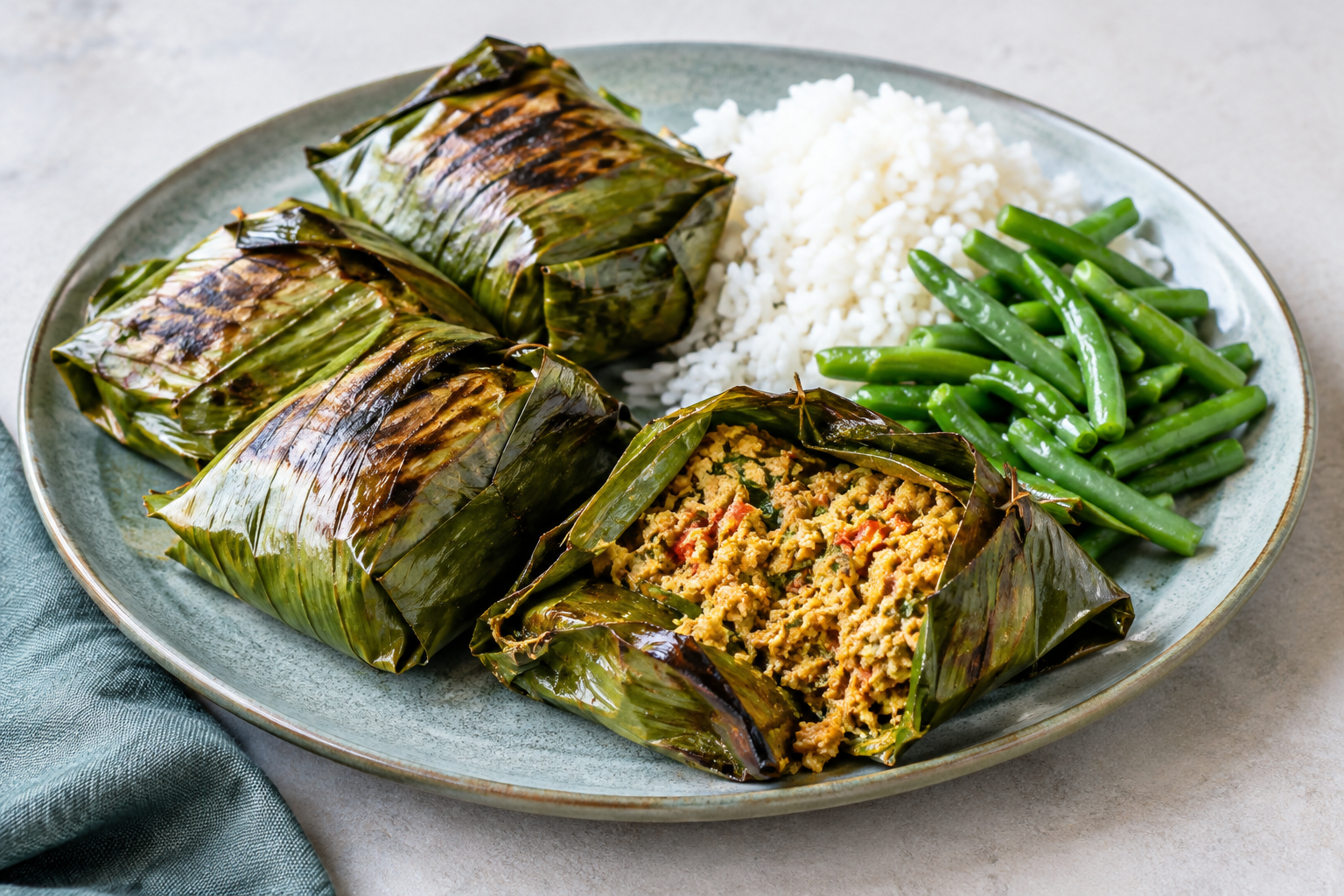 Main course
In this Java-inspired botok, crumbled tempeh is mixed with coconut, chili and fragrant spices. The banana leaf keeps the filling tender as it steams; a quick turn on the grill adds extra aroma to the wrapping. Serve with rice and green beans.
 Lunch
Crispy fried tempeh, cool cucumber and a fresh yogurt sauce turn sourdough bread into a satisfying lunch. Pickled red onion adds just enough acidity to bring everything into balance.
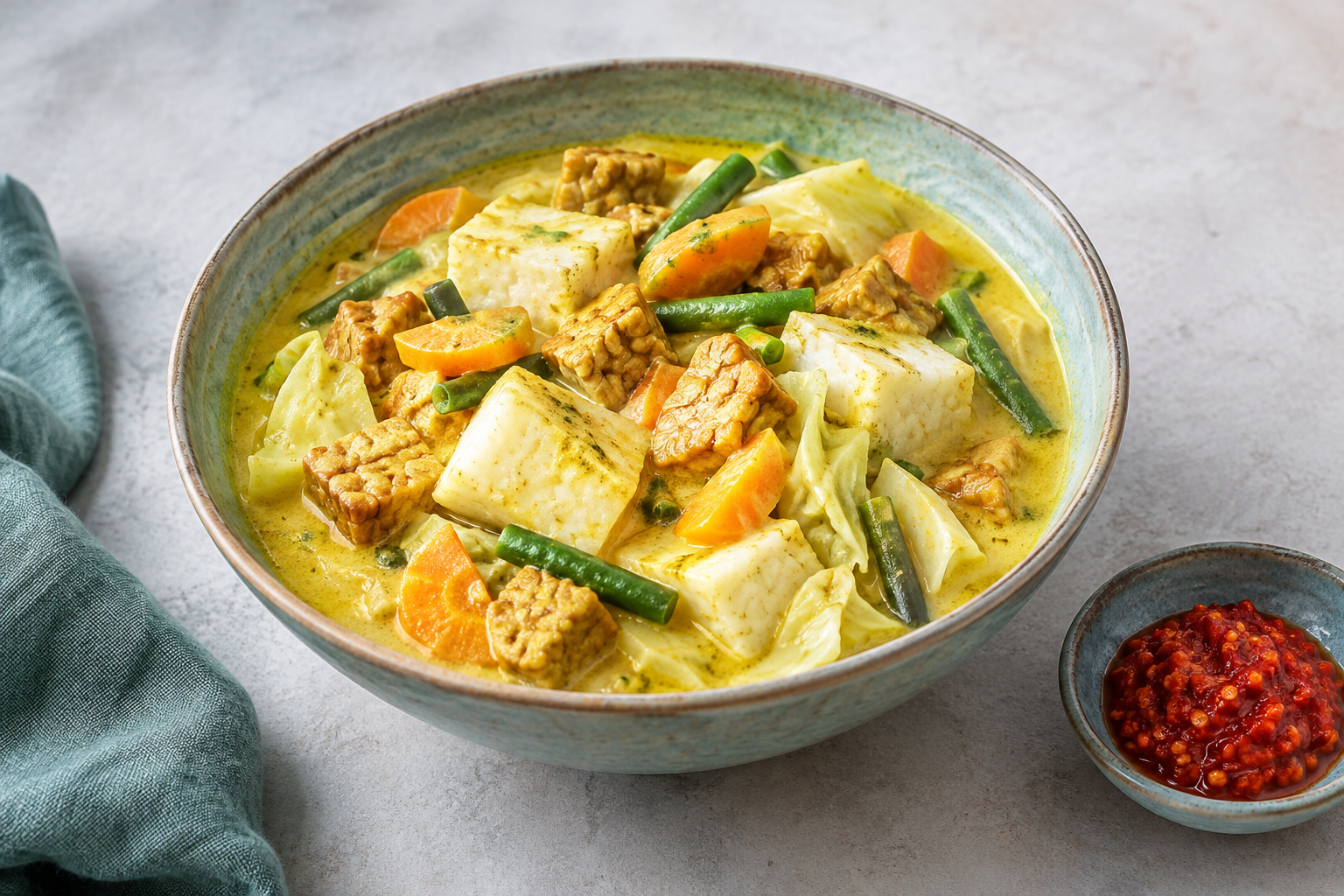 Main course
Hearty rice cakes, tempeh and vegetables in a fragrant coconut broth with turmeric, ginger and lemongrass. Serve this Malaysian lontong with sambal, so everyone can choose how much heat they want.
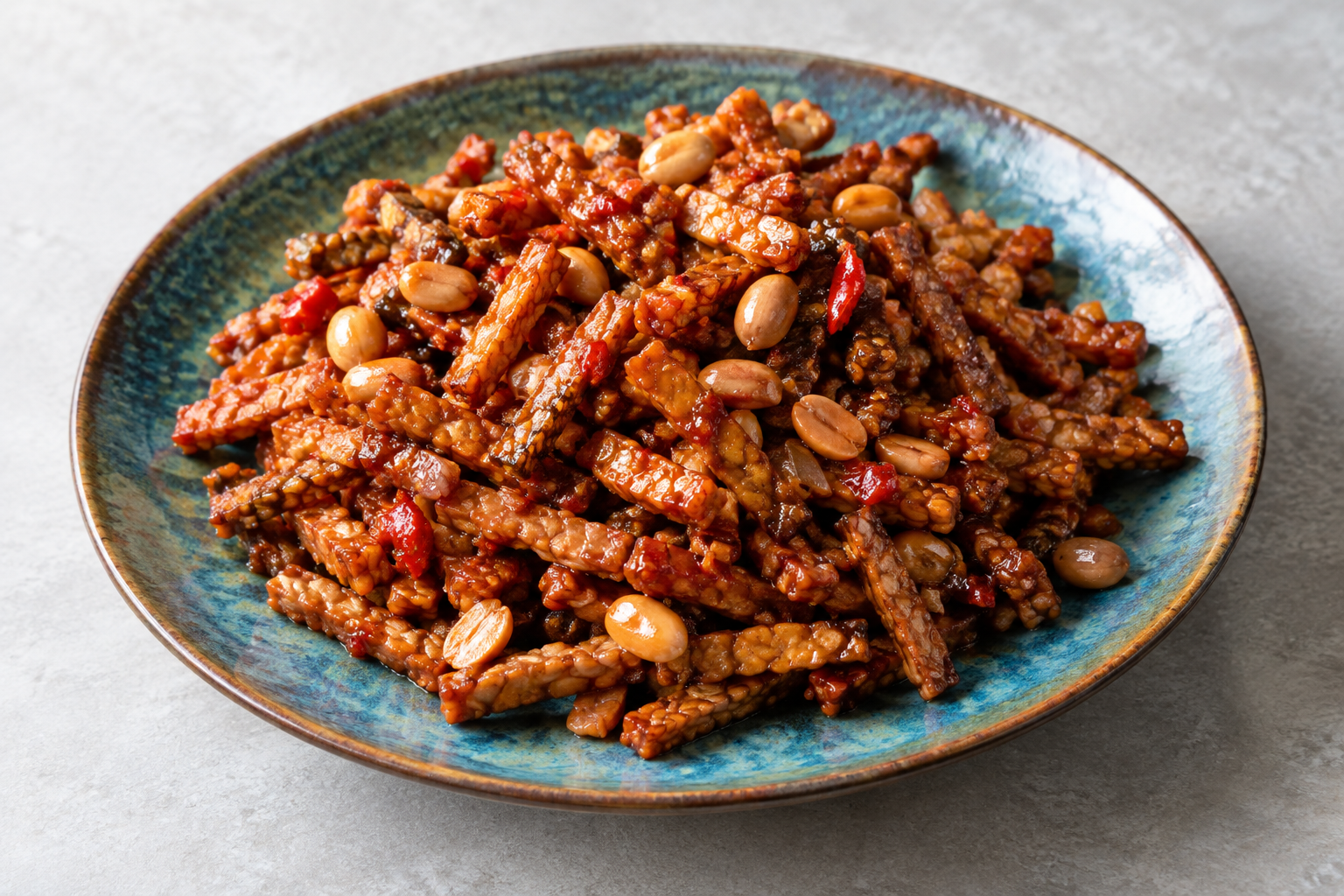 Side dish
Thin strips of tempeh are fried until crisp, then coated in a glossy tamarind, palm sugar and chili sauce. Peanuts add extra crunch. Serve this Indonesian side dish with rice and vegetable dishes, and ideally bring it straight to the table.
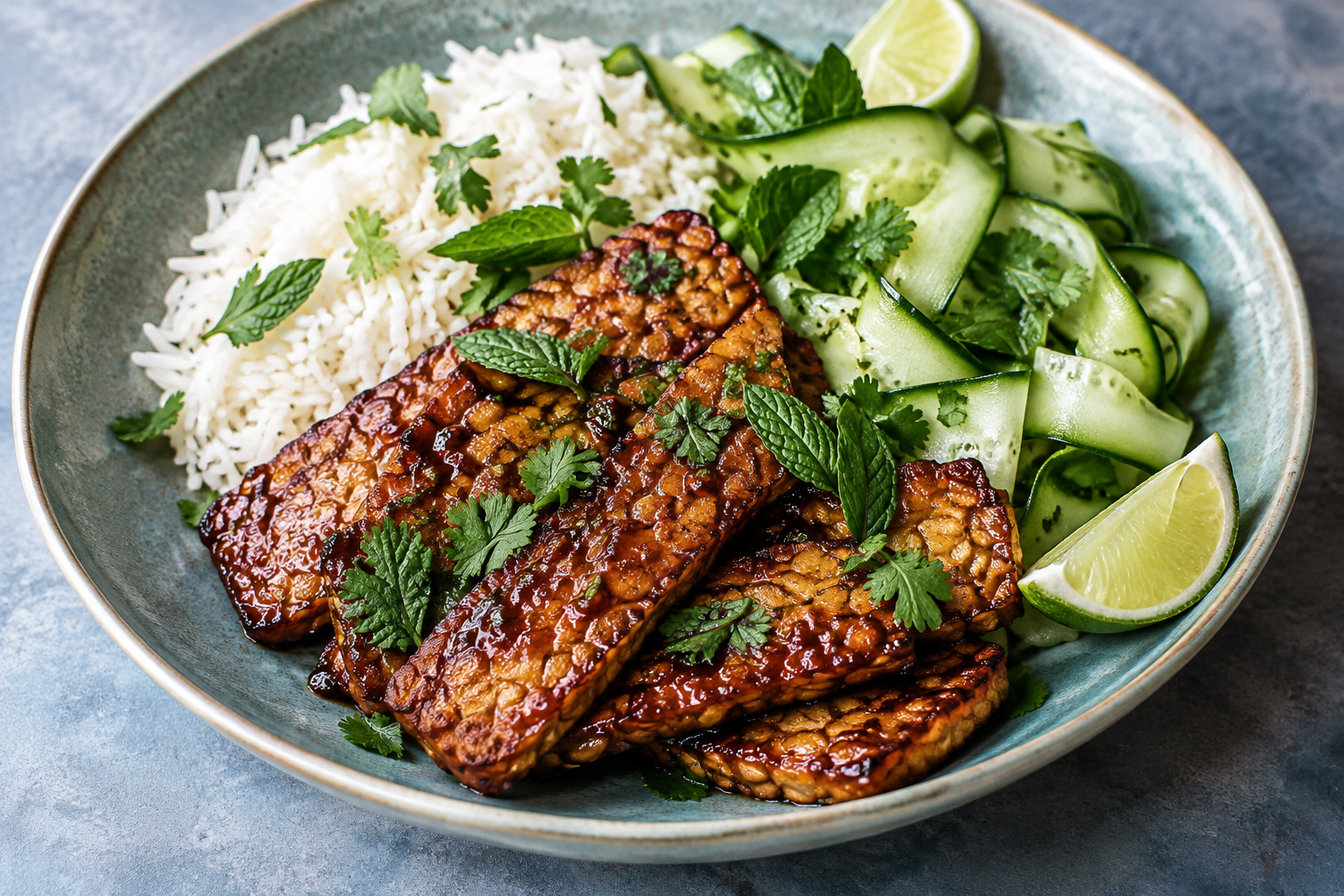 Main course
Thin slices of tempeh are fried until golden brown, then coated at the last minute in a glossy, tangy-savoury glaze of tamarind, soy sauce and honey. Served with rice, cool cucumber ribbons, coriander and mint, this main course offers plenty of contrast without many complicated steps.
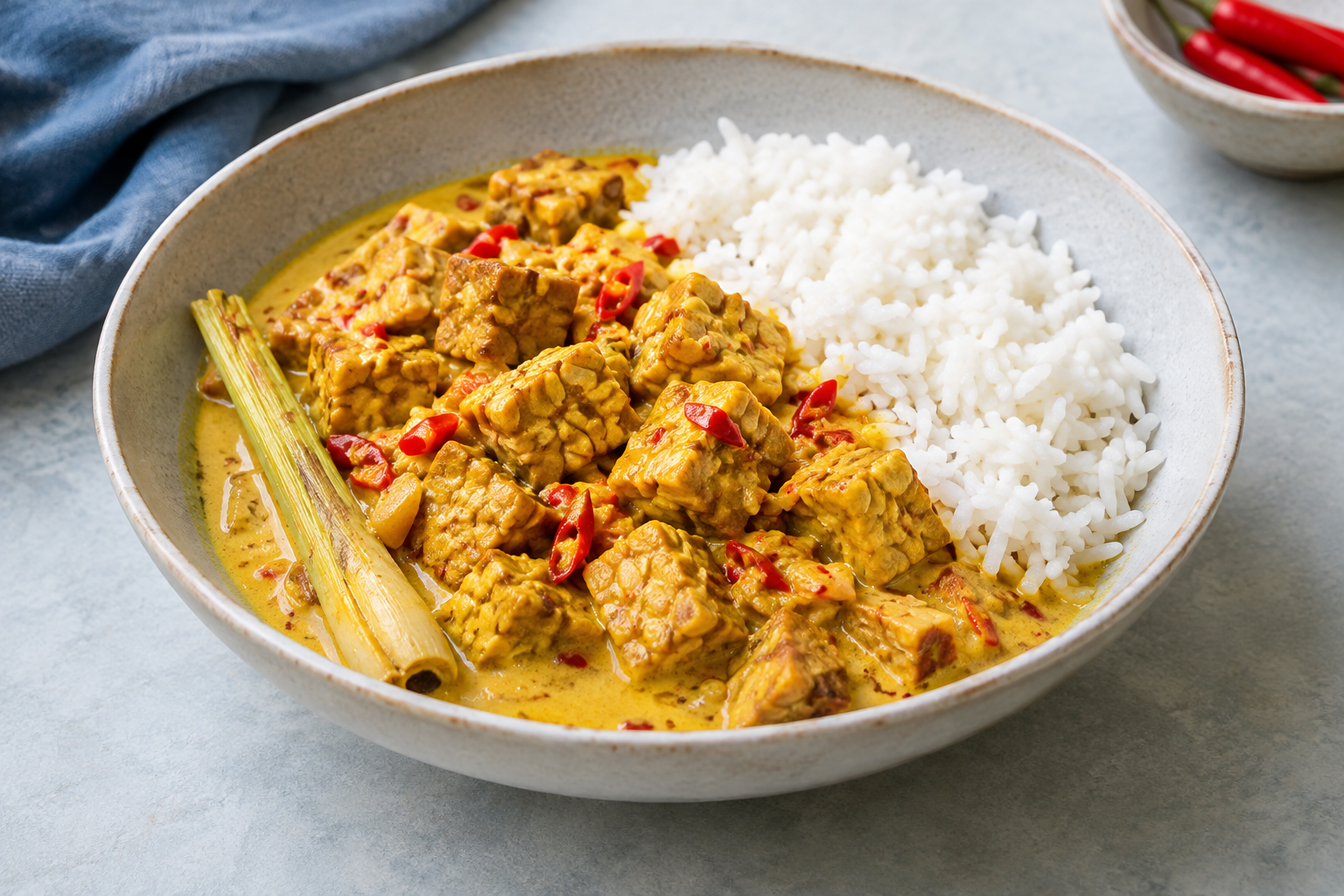 Main course
Hearty tempeh simmers in a fragrant sauce of coconut milk, turmeric, lemongrass and bird’s-eye chili. Serve this Malaysian main course with white rice, which soaks up the creamy sauce beautifully.
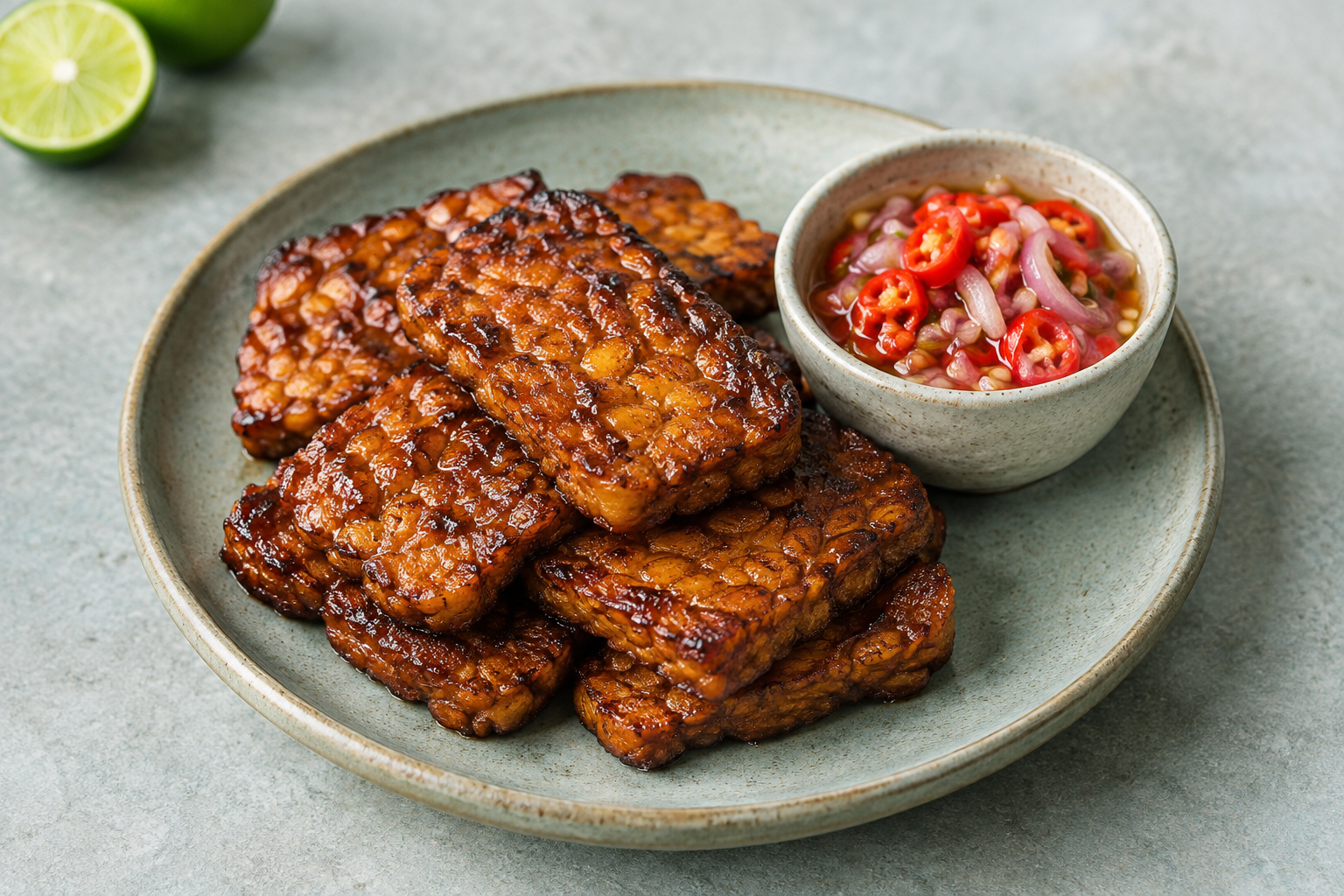 Side dish
Gently simmered tempeh takes on a spiced, sweet-savory flavor from gula jawa, ketjap manis, galangal and coriander. Briefly fry the slices afterward for a sticky exterior. Served with a sharp lime sambal, this makes a distinctly Indonesian starter or a dish for a rijsttafel.
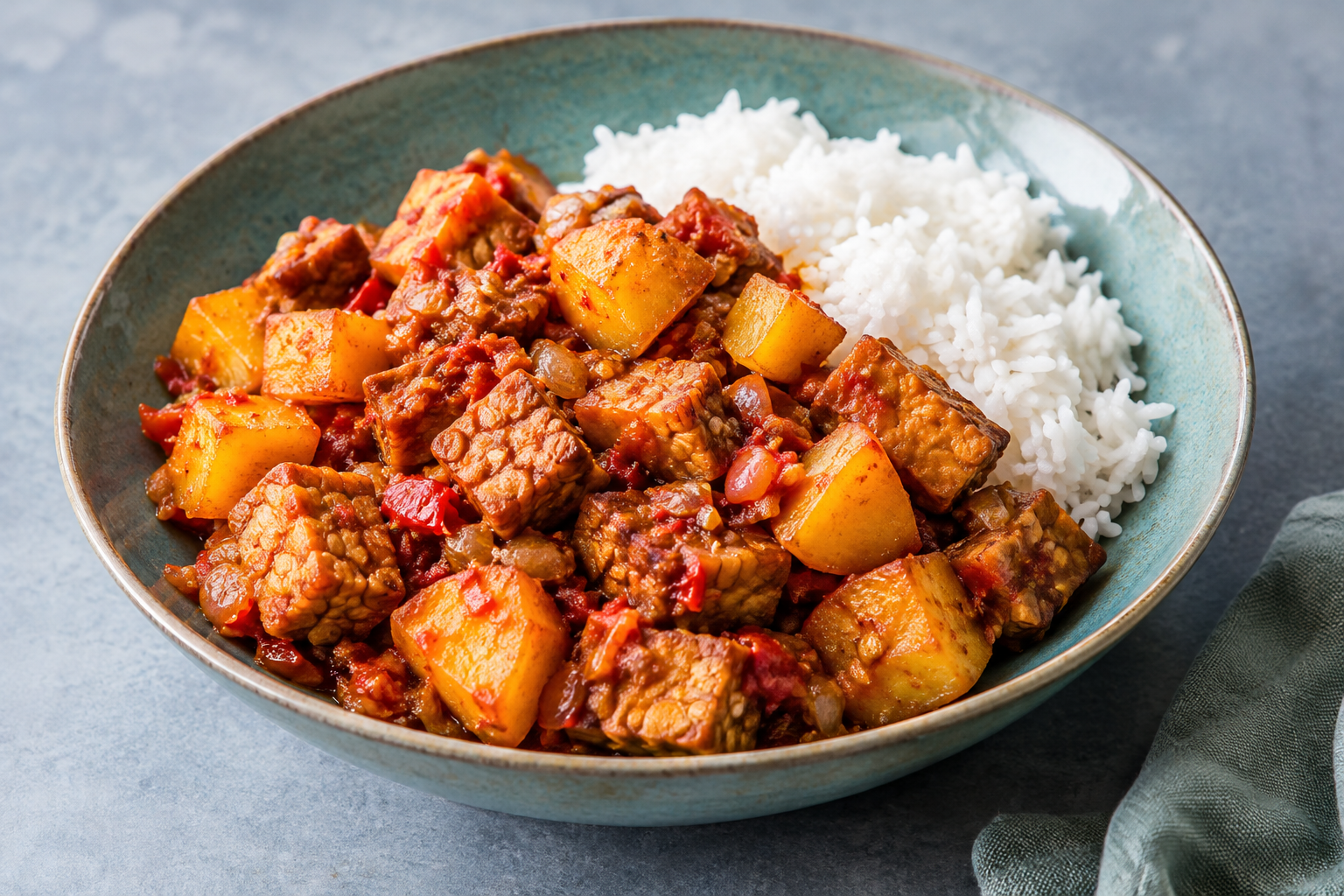 Main course
Golden-brown tempeh and potato are coated in a spicy, savory sauce made with shallot, garlic and chili. A little tamarind and kecap manis balance the flavors; served with rice, this makes a hearty main course.
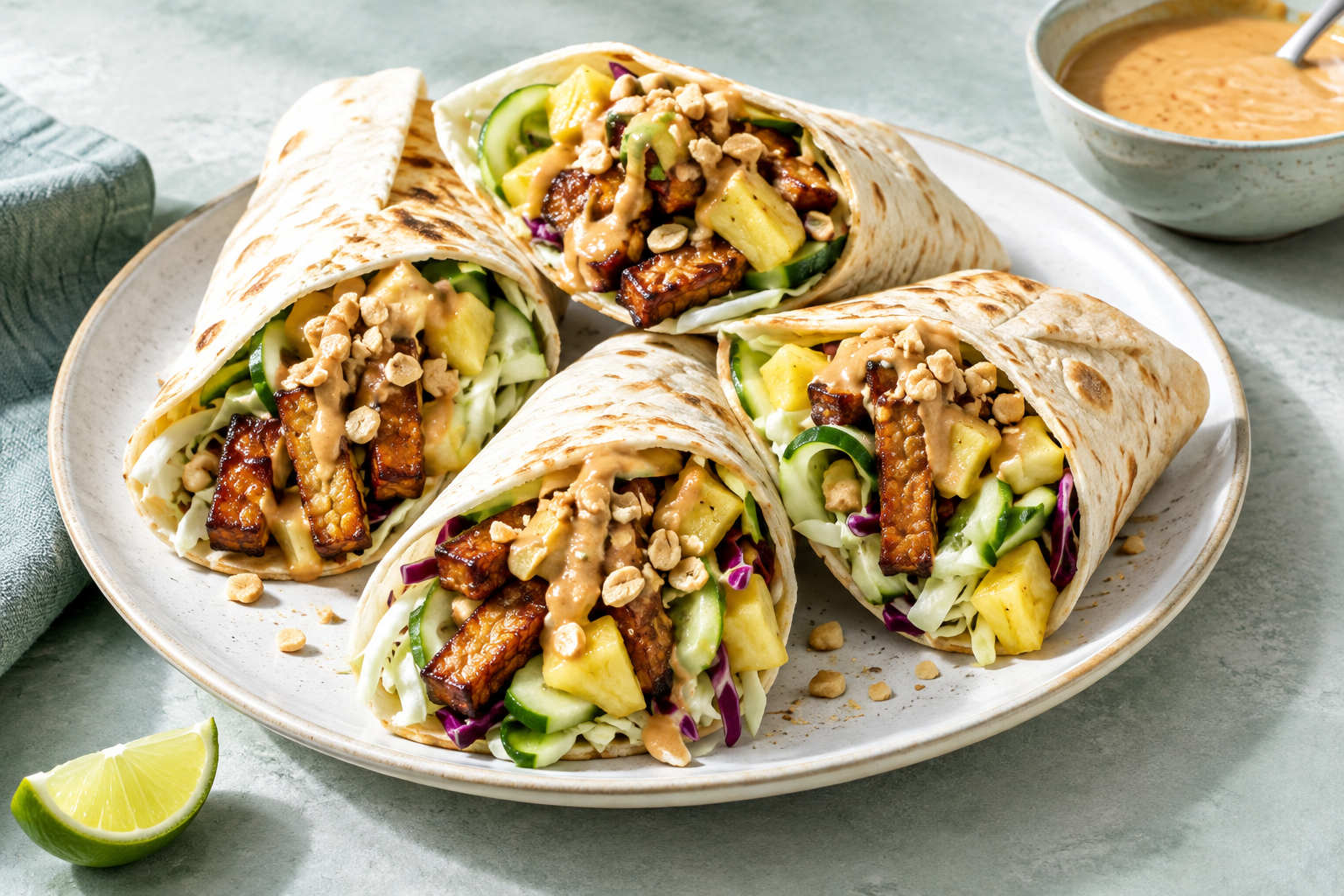 Lunch
Crisp-fried tempeh, juicy pineapple and crunchy cabbage come together in soft wraps. The creamy peanut dressing with lime and sambal balances sweetness, savoriness, acidity and heat.
 Main course
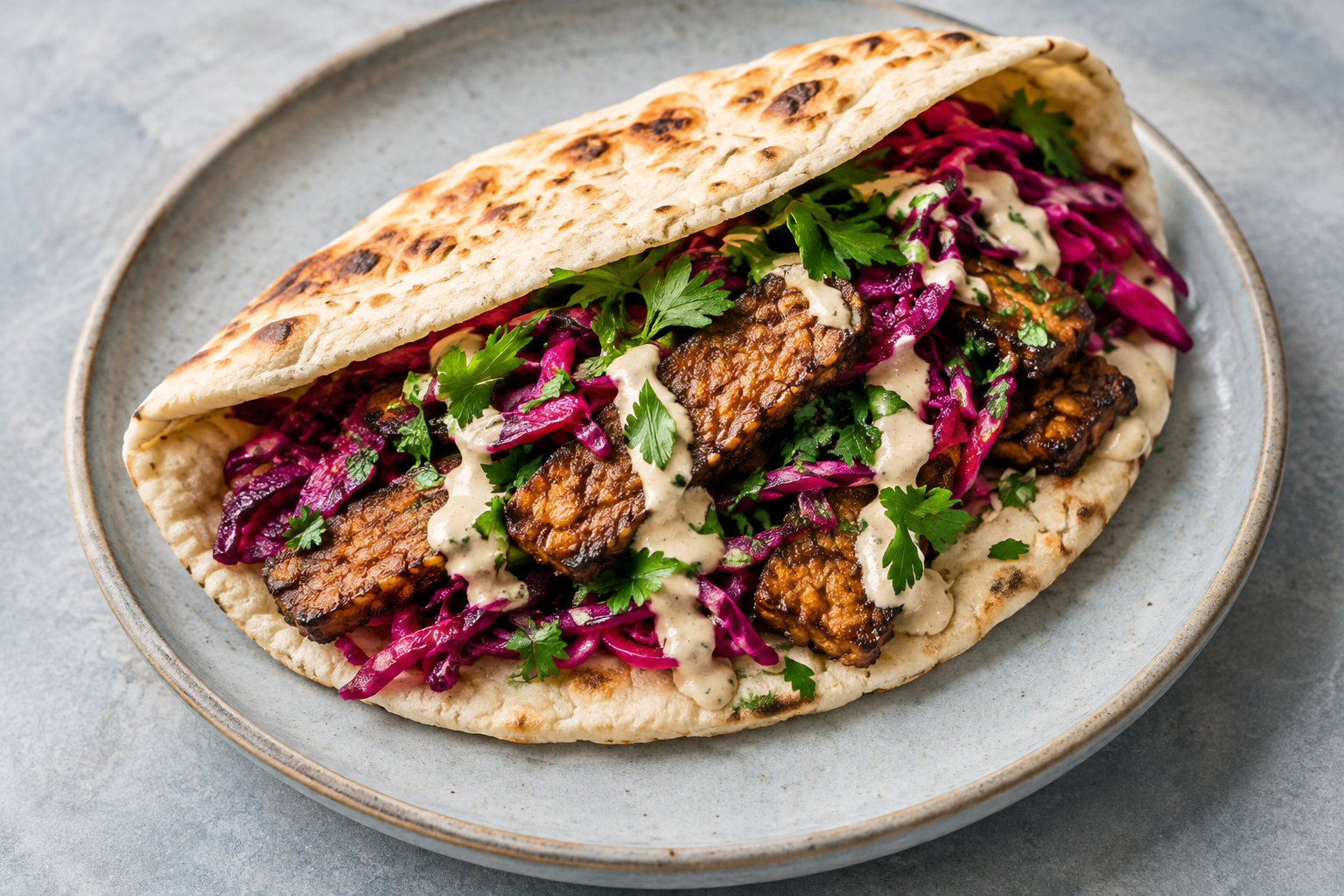
Thinly sliced tempeh with cumin, coriander and lemon cooks up golden brown, with firm, crisp edges. Tucked into warm flatbread, it pairs with creamy tahini sauce, tangy red cabbage and fresh parsley.
 Lunch
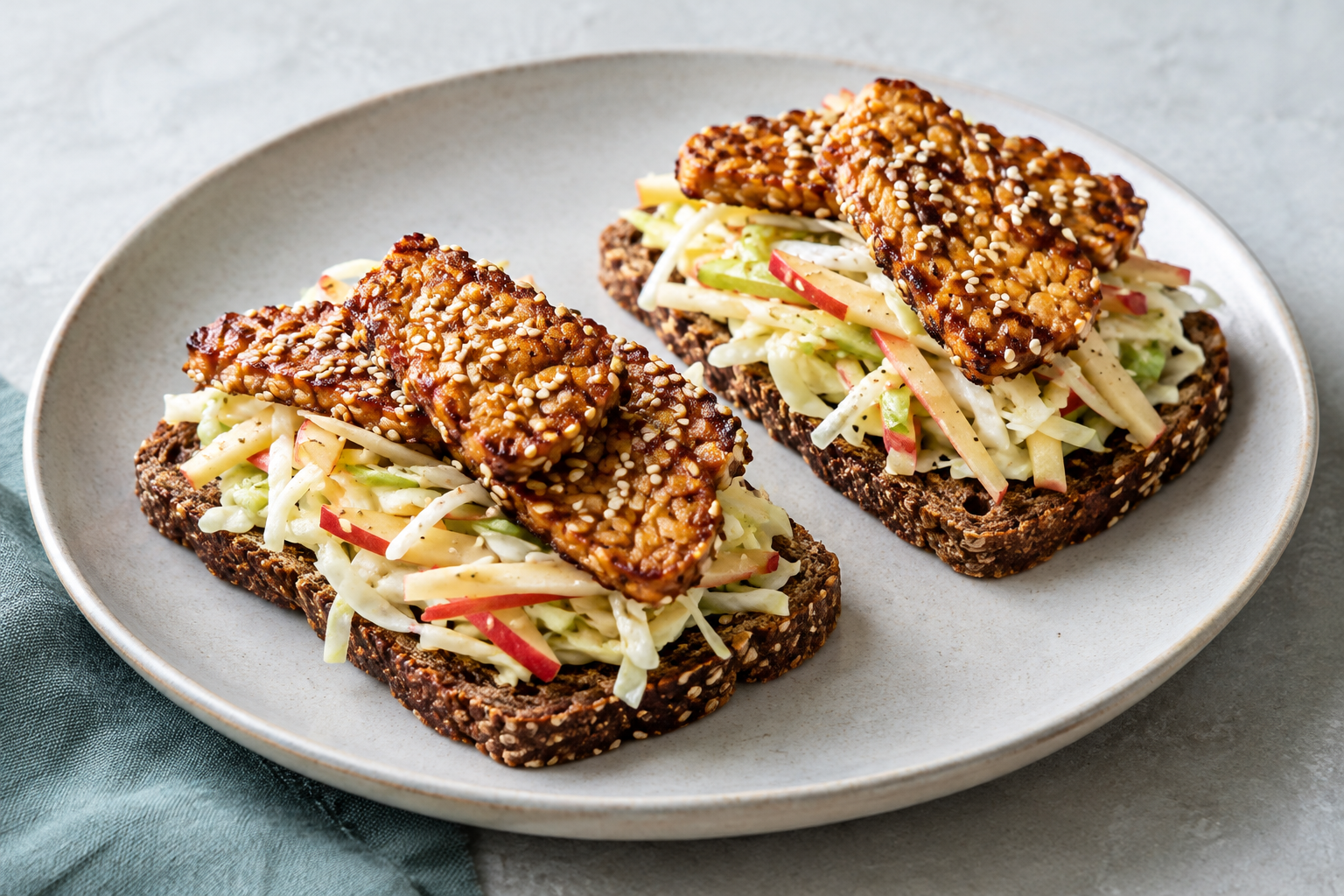
Crispy fried tempeh with ginger, lime and sesame gets a fresh counterpoint from apple and cabbage. Served on hearty rye bread, it makes a lunch full of savory, nutty flavors and plenty of crunch.
 Side dish
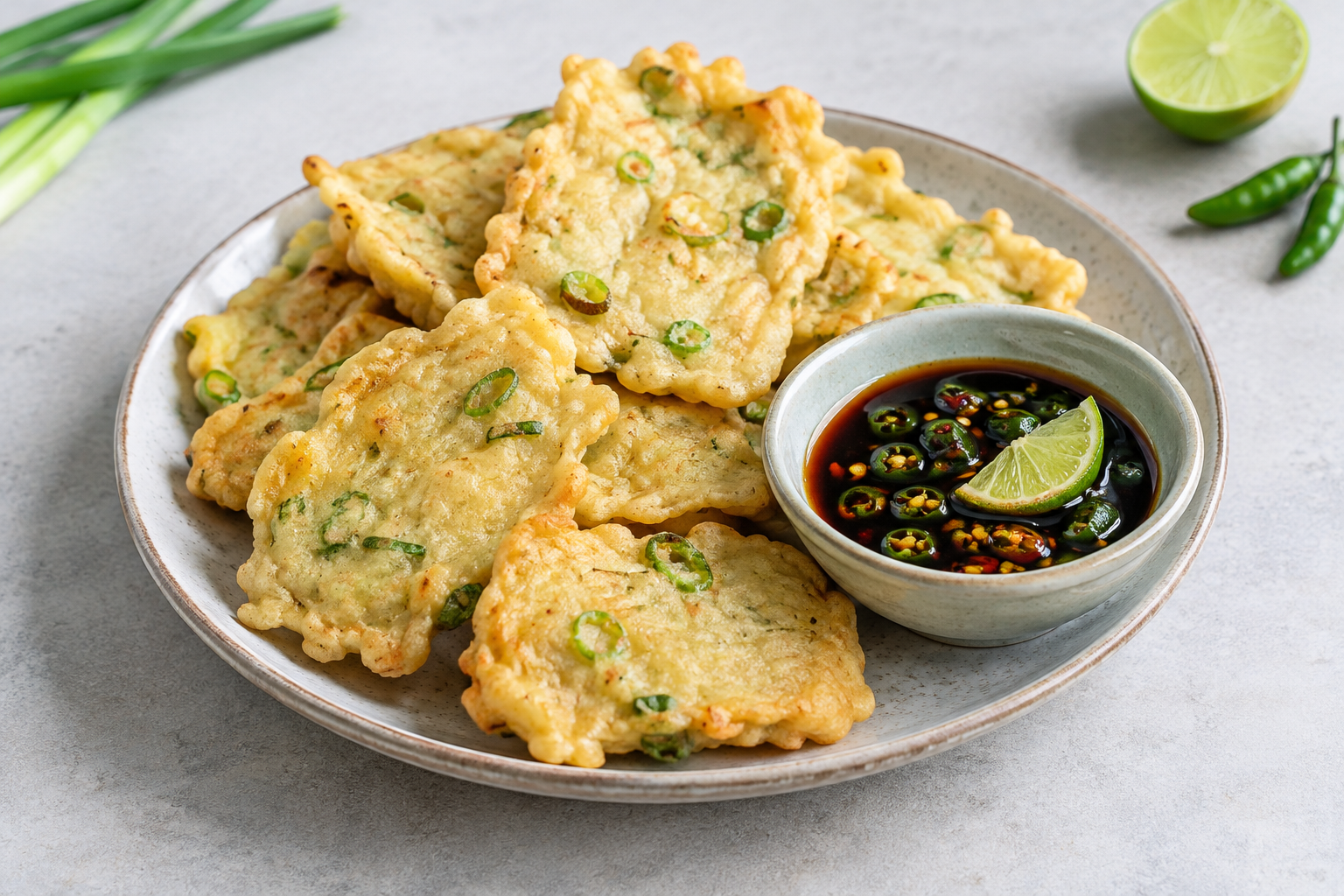
Thin slices of tempeh in a seasoned, light batter: mendoan is fried only briefly, so the outside is just cooked and the tempeh stays soft. Serve warm with kecap manis, lime and green rawit chilies.
Tempeh naturally has a firm, dense texture. Thin slices or strips turn golden quickly in a pan; cubes hold their shape in a stew. Pat the tempeh dry before frying and leave plenty of room between the pieces in the pan. If they’re too close together, they won’t brown as well. In Kering tempeh with peanuts and tamarind, that crisp exterior is important: the strips are fried before being briefly tossed in a syrupy sauce. Orek tempeh basah with kecap and chili takes a different approach, with a glossy, soft sauce that clings to the fried strips. Let a sauce like this reduce gently; boiling it hard can make it too thick or sticky.
Kecap manis gives tempeh a dark, sweet and savory coating. In Malaysian tempeh masak kicap, the sauce is front and center, with tamarind for acidity and ginger for aromatic heat. Indonesian dishes in this collection also use kecap, pairing it, for example, with lime, chili or a separate sambal. Tamarind brightens rich or sweet flavors; start with a little and taste before adding more. For a milder, creamier direction, try Malaysian tempeh masak lemak with chili and coconut or Malaysian tempeh with tamarind and coconut. Keep the coconut milk just below a simmer rather than letting it boil hard, so the sauce can come together gently.
With fried or glazed tempeh, something fresh does more than add color. Cucumber, pickled onion, lime and herb sauces bring acidity and juiciness to balance the firm, savory tempeh. The tempeh bowl with roasted beet, dill and pickled onion combines warm roasted edges with bulgur and a cool yogurt sauce. For a crunchier plate, the cucumber ribbons served with crispy tempeh and peanut-tamarind cream make a natural contrast; the fried shallots add another crisp layer. If you’re putting together a dish to eat by hand, tempeh wraps with pineapple, lime and peanuts bring sweet, sour, spicy and crunchy flavors together in one bite. Serve fresh toppings on the side or add them just before eating so they keep their crunch.