ABOUT THIS RECIPESomewhere Between Custard and Steamed Eggs
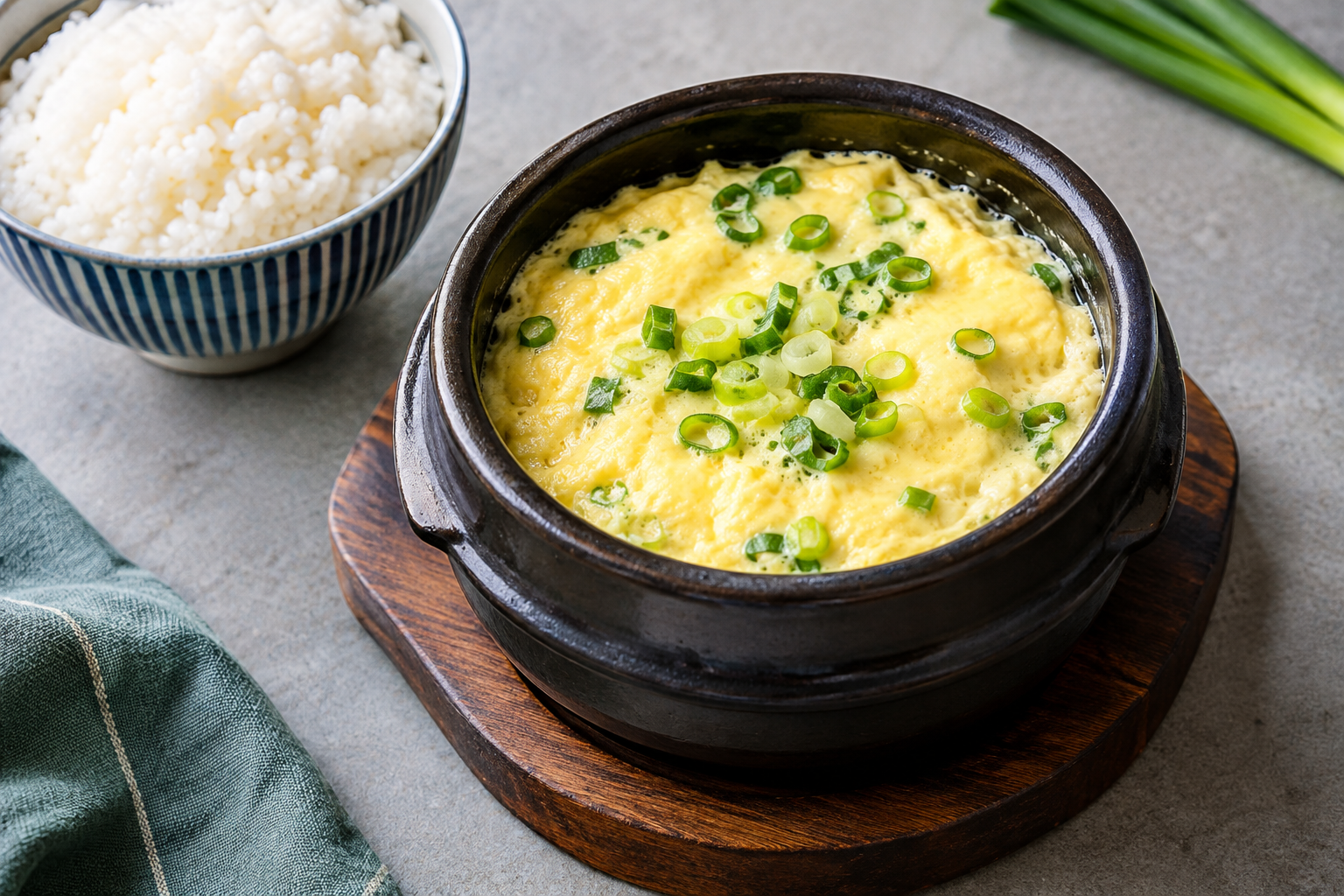
Gyeran jjim means steamed egg, and in Korea it’s eaten both as a side dish and as part of a meal. The base is simple: beaten eggs, liquid and salt. The ratio determines the texture. With about 250 milliliters of broth for four eggs, the custard is soft and spoonable, but still firm enough to serve in portions. Spring onion adds a mild onion flavor and a fresh green note; chop it finely so it can be evenly distributed through the egg mixture.
A mild anchovy-dashima broth adds depth without overpowering the eggs. Dashima is dried kelp, and anchovies are used in Korean cooking to make a clear, savory broth. Use an unsalted or lightly salted broth so you can control the salt yourself. Don’t have Korean broth on hand? Water works too; just add a little extra salt. A few drops of fish sauce can add to the savory flavor, but they’re not essential.
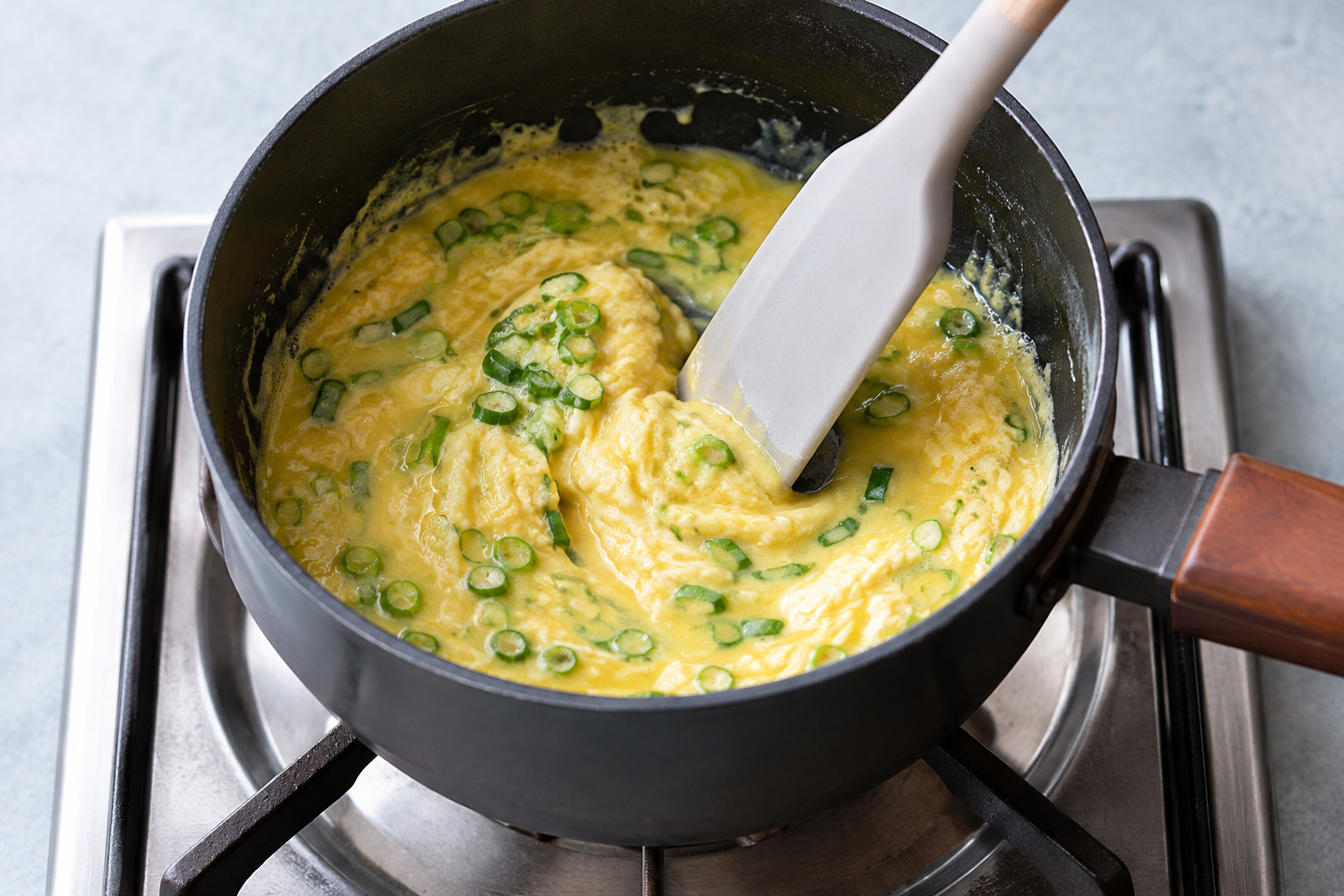
The pan and the heat matter more than complicated ingredients. A small, heavy-based pan distributes the heat more evenly than a wide, thin pan. Stir gently across the bottom and around the sides at first: this creates small, soft curds instead of a tough layer on the bottom. Once the mixture thickens, stop stirring and let it steam further over low heat with the lid on. Take the pan off the heat when the center has just set; the residual heat will finish cooking the custard. Cooking it for too long makes it firmer and can cause liquid to seep out.
For an extra-smooth texture, you can strain the egg mixture through a fine sieve before adding it to the pan. This isn’t necessary for good gyeran jjim, but it helps if you want a silky-smooth custard. If you don’t have a lid that fits the pan well, cover the pan with a piece of parchment paper or foil and put the lid on top; keep the material away from an open flame. A small heatproof bowl can also work, as long as it’s suitable for the cooking method you choose and sits securely.
Serve the custard right away while it’s fluffy and warm, with steamed rice and, for example, kimchi or other banchan. The soft, mild eggs make a pleasant contrast to something sour, spicy or crunchy. Gyeran jjim is best fresh; don’t leave leftovers out of the fridge for more than two hours, store them covered in the fridge and eat them within two days. Reheat gently until piping hot throughout. The custard may become a little firmer.
 Main course

