ABOUT THIS RECIPEFrom steamer basket to flavorful banchan
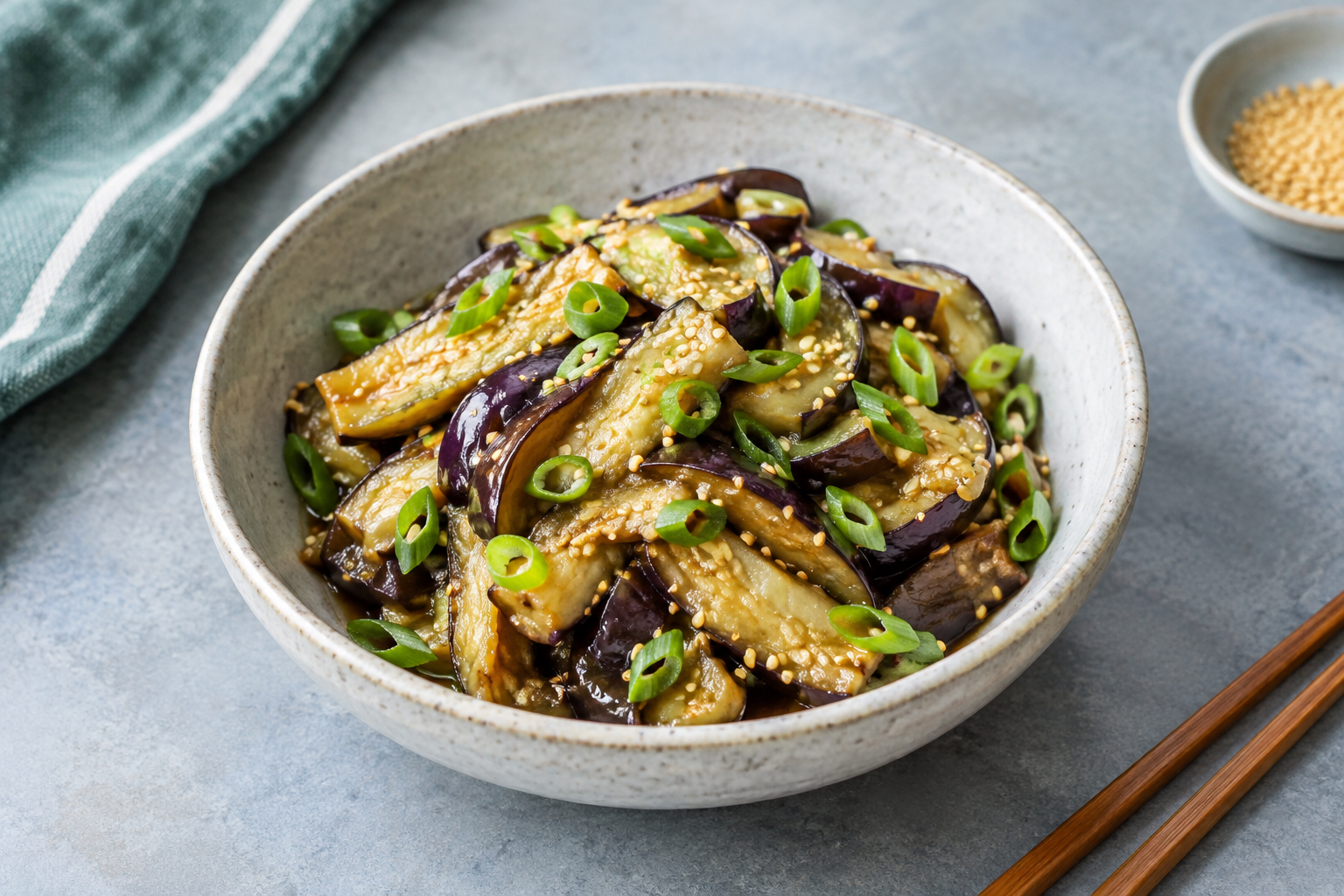
Gaji namul is a Korean vegetable banchan: a side dish that can be part of a meal with rice and several small dishes. The eggplant is steamed and then torn into strips, so the tender vegetable holds on to the seasonings. The result is mild and savory, with the warm aroma of sesame oil and a slight bite from the scallion and sesame seeds. Eggplant is the main ingredient here; the seasonings complement it without hiding the vegetable.
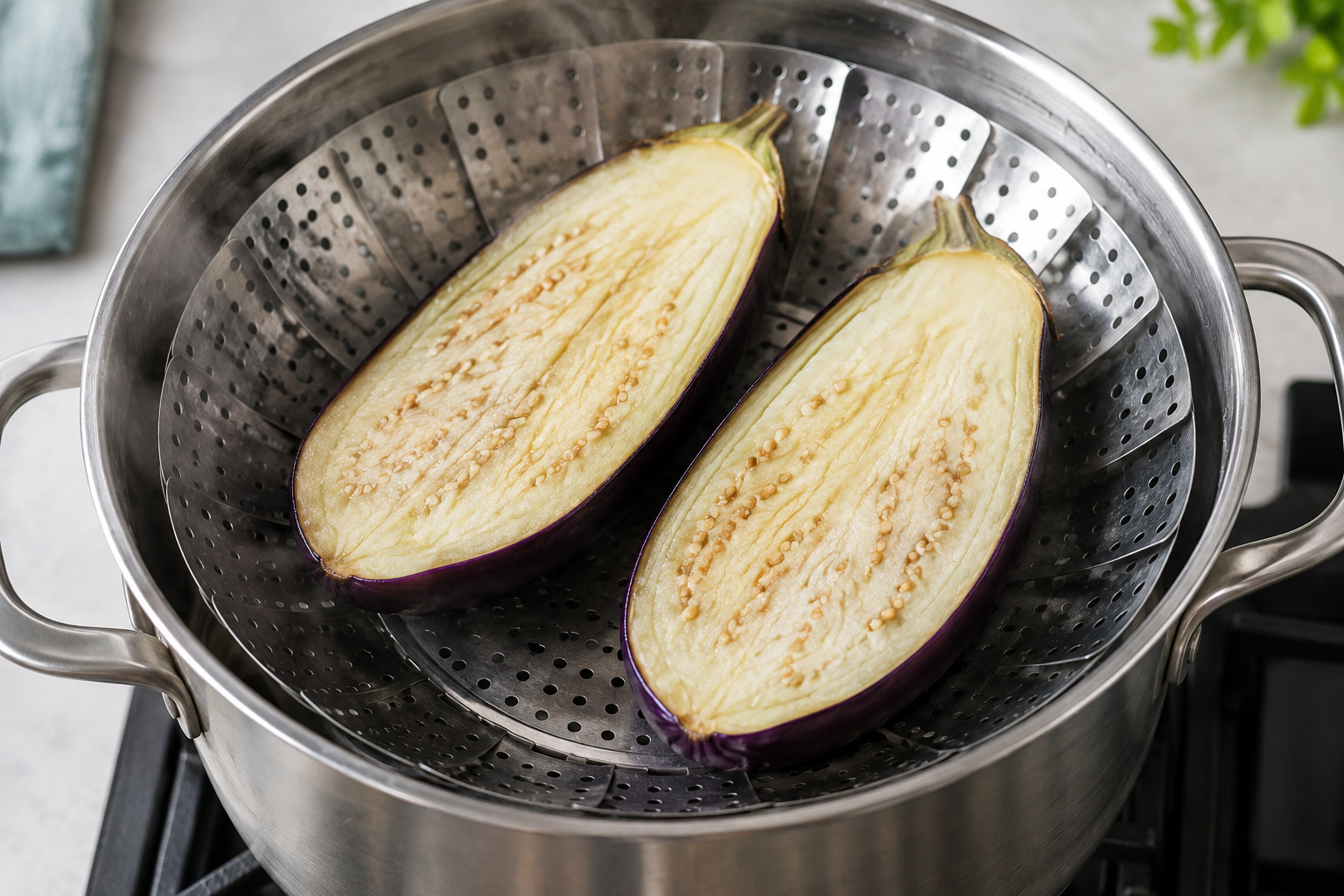
Eggplant is available year-round in the Netherlands and is often at its best in the warmer months, when more locally grown options are also available. Choose firm eggplants with smooth, glossy skin and no soft spots. Large eggplants work just fine: halve them lengthwise before putting them in the steamer basket. Leaving the skin on while steaming makes the halves easier to handle. The cooking time depends on their thickness; the eggplant is ready when a knife slides in easily, but the flesh has not yet fallen apart.
Steaming gives the eggplant a different texture from frying or grilling. It does not develop browned edges, and the flesh stays juicy and tender. Let the cooked halves cool and drain briefly first. Then tear them into long strips with your fingers: this creates irregular pieces with plenty of surface area for the dressing. Do not squeeze out all the moisture; a little helps the soy sauce and sesame oil spread, but too much would dilute the flavor. Mix gently so the strips stay intact.
Use light Korean soy sauce if possible, but regular soy sauce works too. It can taste a little saltier, so taste before adding extra salt. Use toasted sesame oil for its distinctive nutty aroma; neutral oil will give a different result. If you do not have scallions, you can use a little finely chopped chives, although it is not an exact substitute. Toasted sesame seeds add a subtle crunch. If using untoasted seeds, briefly warm them in a dry pan until fragrant, then remove them from the pan straight away.
Serve gaji namul alongside warm rice, soup, grilled fish or other Korean banchan; its mild, non-spicy flavor makes a pleasant counterpoint to stronger or spicier dishes. This side dish can be served chilled or at room temperature. Store leftovers covered in the refrigerator and use them within two days. Before serving, stir gently so the dressing that has settled at the bottom is redistributed over the eggplant.
 Main course

