ABOUT THIS RECIPERice infused with mushrooms
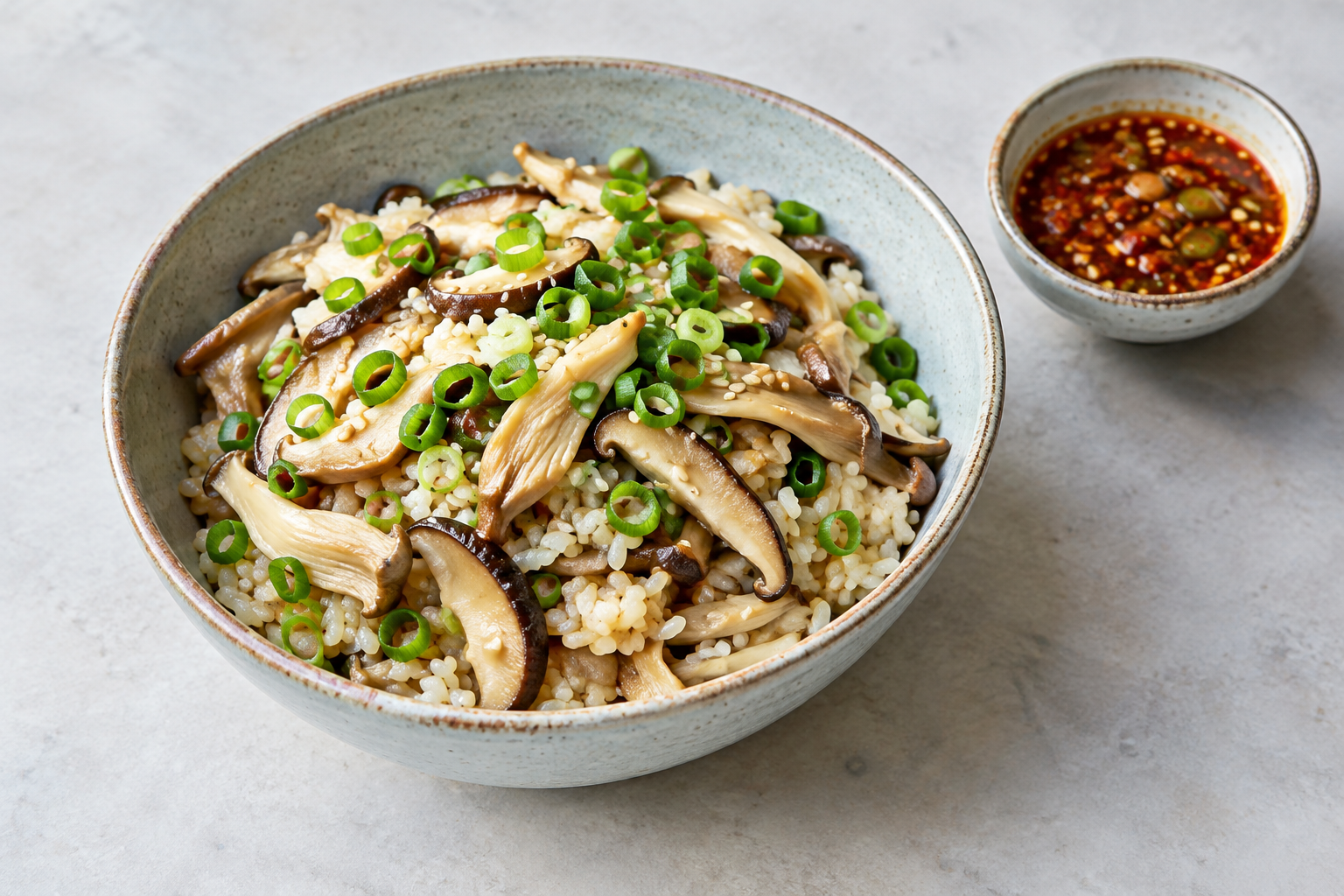
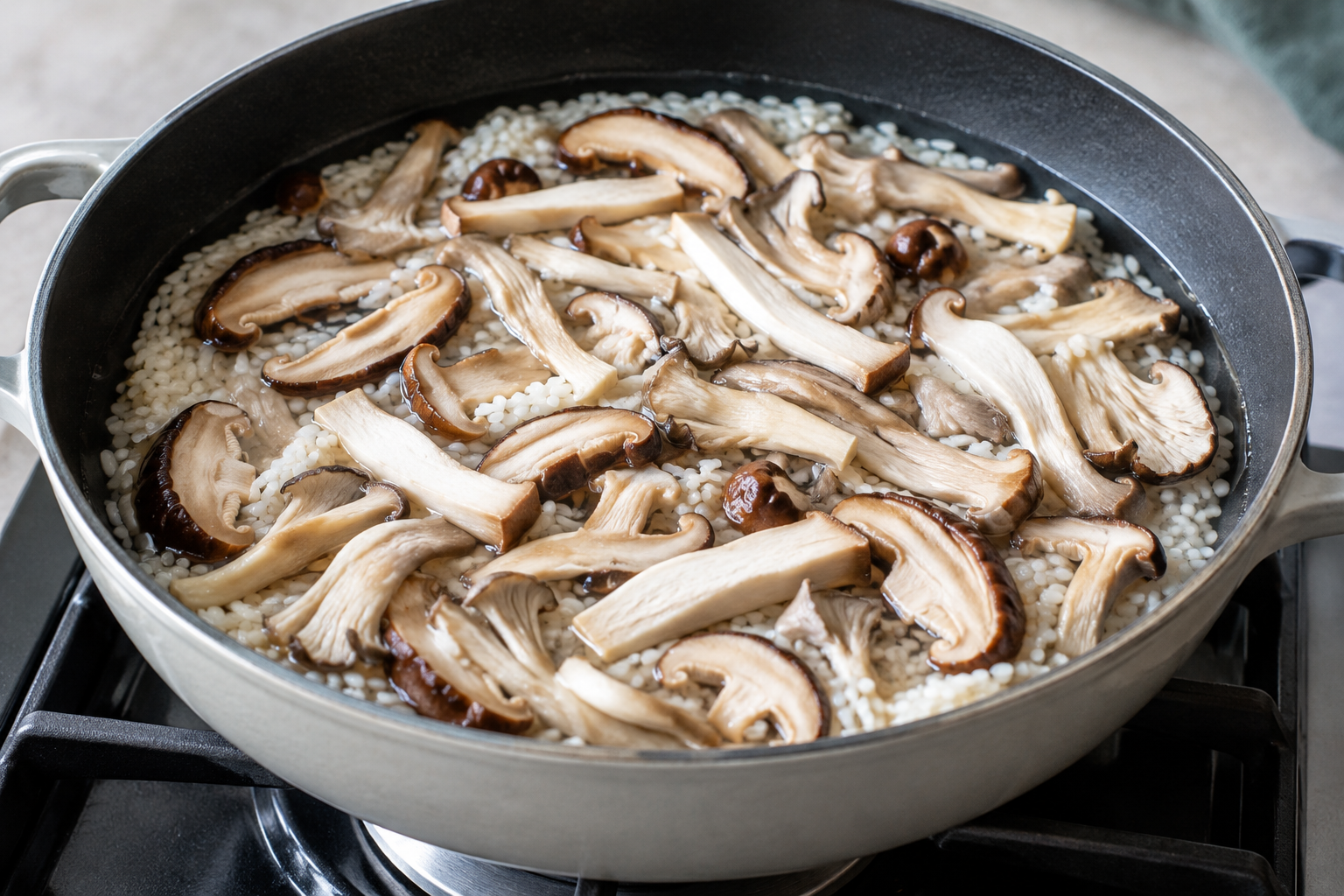
Beoseot-bap means mushroom rice: beoseot means mushroom and bap means cooked rice. It’s a Korean way to flavor a simple bowl of rice with mushrooms, not a dish with one fixed combination that’s the same everywhere. Shiitake brings a deep, savory aroma; oyster mushrooms and king oyster mushrooms stay firm enough to make distinct pieces. In this recipe, they cook on top of the rice, so their moisture and aroma seep into the grains as they cook.
Korean short-grain rice works well here: once cooked, it’s soft and slightly sticky, so the rice and mushrooms come easily together on a spoon. Japanese short-grain rice is a good alternative. Rinse the rice until the water is less cloudy, then soak it. This helps the grains cook more evenly. Drain the soaked rice well before adding the measured cooking water; extra water can make the rice mushy, especially since the mushrooms release moisture too.
There’s no need to brown the mushrooms first. Adding them directly on top of the rice keeps the dish mild and lets the grains take on their earthy flavor without browned edges taking over. Slice the shiitake and cut larger, firm mushrooms into thin strips so everything cooks in the same amount of time. If you don’t have king oyster mushrooms, use extra shiitake or oyster mushrooms. Regular cremini mushrooms also work, though they’re softer and less pronounced in flavor.
Yangnyeomjang is a seasoned Korean sauce that you add to taste, rather than a dressing meant to coat all the rice. Soy sauce brings salt and umami, sesame oil adds a nutty aroma, and gochugaru gives it mild to moderate heat. Spring onion keeps the sauce fresh; garlic and sesame seeds make it a little fuller. Gochugaru is Korean chili flakes; if you don’t have any, use a small amount of another mild chili flake and adjust the heat carefully. Taste the sauce before serving.
Serve the rice straight after it has rested, with the sauce on the side and extra spring onion from the measured amount scattered over the top. A bowl of kimchi or a simple vegetable banchan goes well with it, but isn’t needed to make this a filling lunch. Refrigerate leftovers in a sealed container within two hours and eat them within two days. Reheat the rice until piping hot with a small splash of water, covered in a pan or in the microwave; serve the sauce alongside afterward.
 Main course

