ABOUT THIS RECIPEGreen Curry Paste for Flavor
Green curry gets its distinctive flavor from more than just coconut milk. Green curry paste typically contains green chilies and aromatic ingredients such as lemongrass, galangal, garlic and shallot; the exact blend varies by brand and recipe. That means the heat level can vary a lot, too. Taste a little paste before you start, or use a smaller amount if you’re not sure how hot it is. You can always stir in more paste later and let it simmer briefly in the sauce.
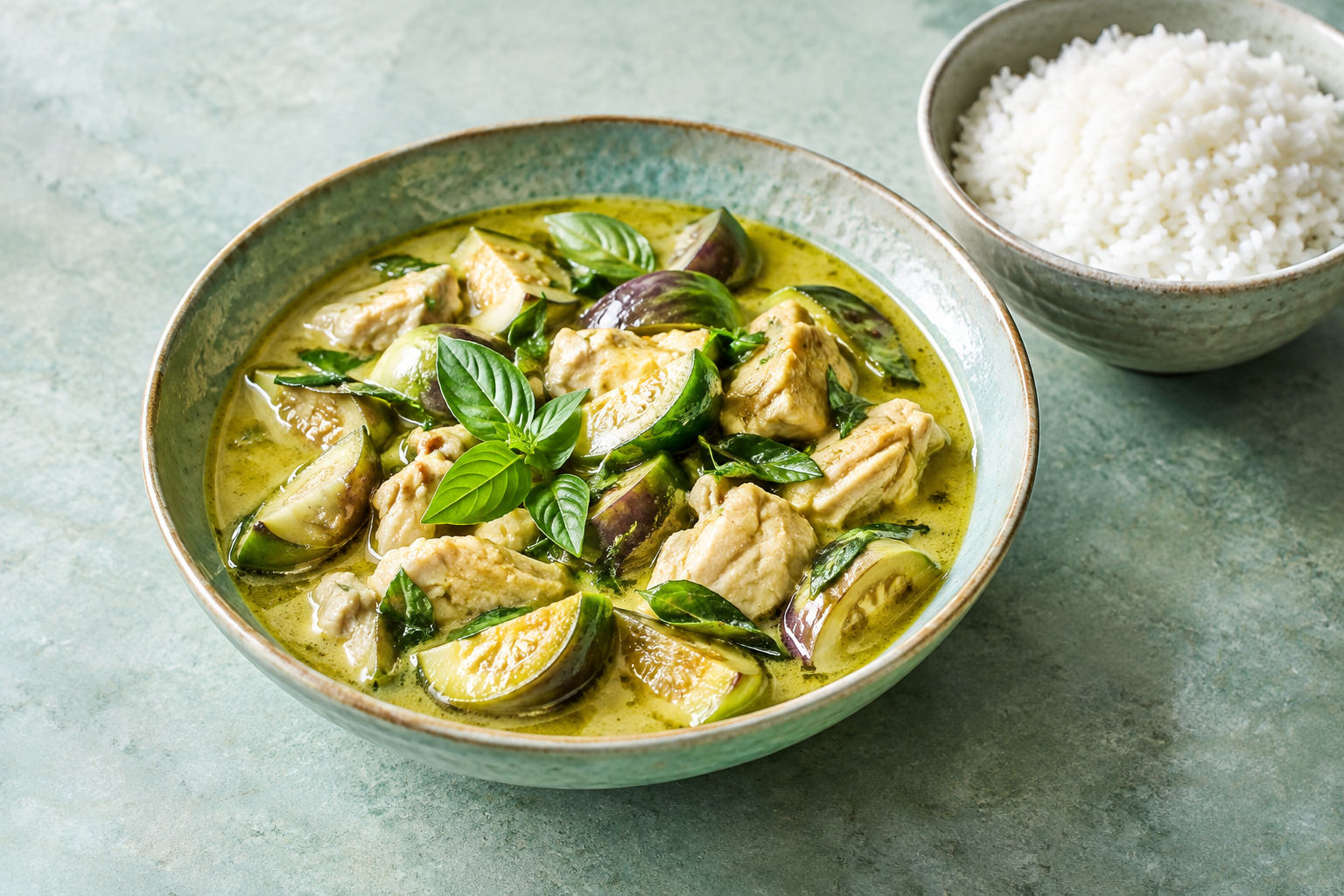
Thai eggplants are small, round and firmer than the large purple eggplants commonly found in Dutch shops. They hold their shape when simmered briefly while still soaking up flavor. Cut them into quarters so the pieces cook at roughly the same rate. If Thai eggplants aren’t available, you can use small purple eggplants; cut them into large chunks and check sooner to see if they’re done. They usually turn softer and may fall apart more easily.
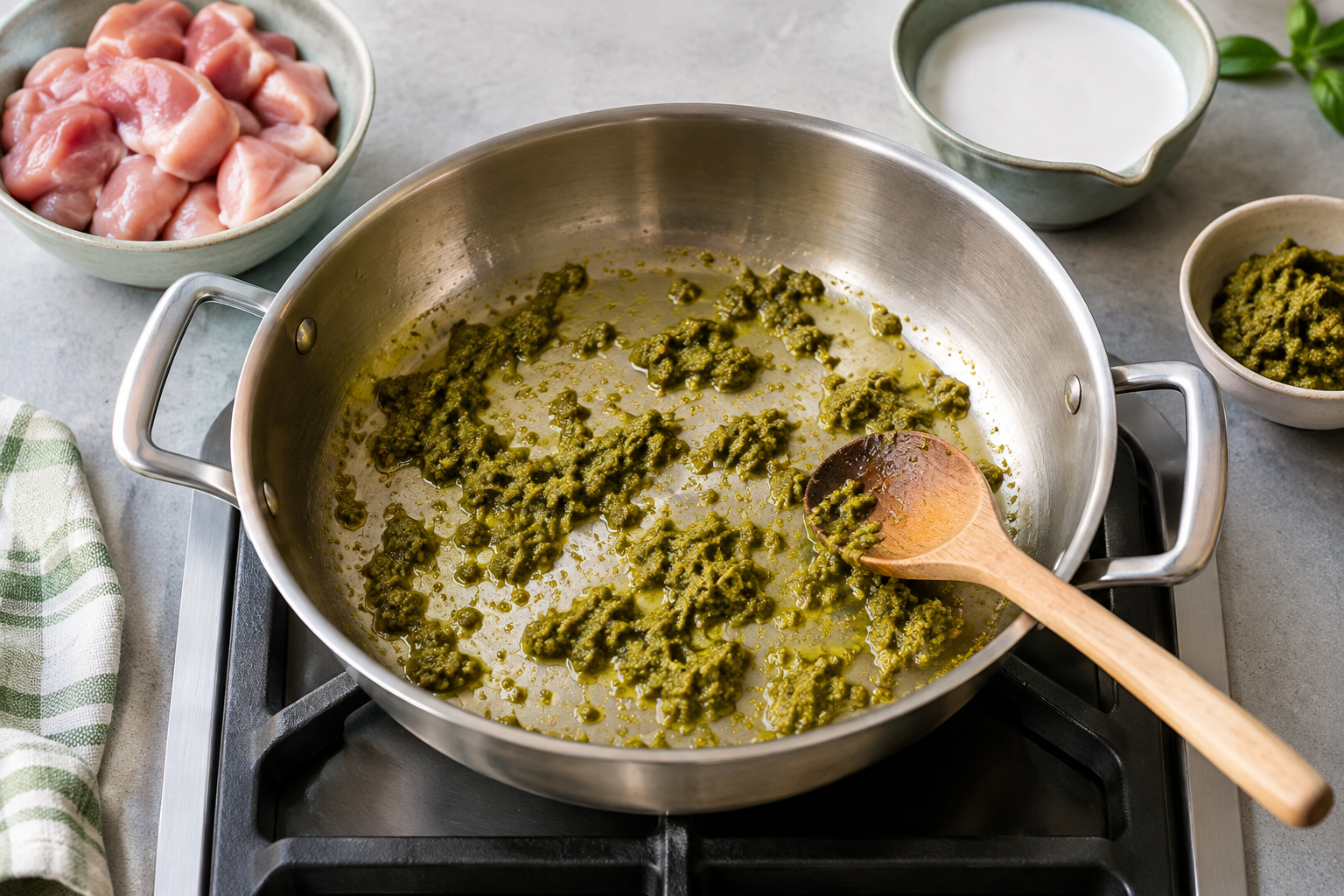
Frying the curry paste briefly in oil helps release the aromatic ingredients before adding the liquid. Keep the heat moderate: paste with chili and garlic can burn quickly and turn bitter. A combination of coconut milk and broth keeps the sauce fluid enough to coat the chicken and eggplant without making it heavy and thick. Let the curry simmer gently rather than boil hard; this keeps the chicken tender and helps the eggplant hold its shape.
Fish sauce adds salt and savory depth, while a little palm sugar rounds out the sharp edges of the chili and salt. Add Thai basil at the end so the leaves retain their fresh, anise-like aroma. Makrut lime leaves add a citrusy aroma; remove them from the pan before serving, as their tough veins aren’t pleasant to eat. Serve with fragrant jasmine rice and spoon some sauce over the rice, too. Store leftovers covered in the refrigerator and heat them through thoroughly later; stir gently while reheating so the eggplant stays intact.
 Main course

