ABOUT THIS RECIPEGinger, spices and a sauce that thickens
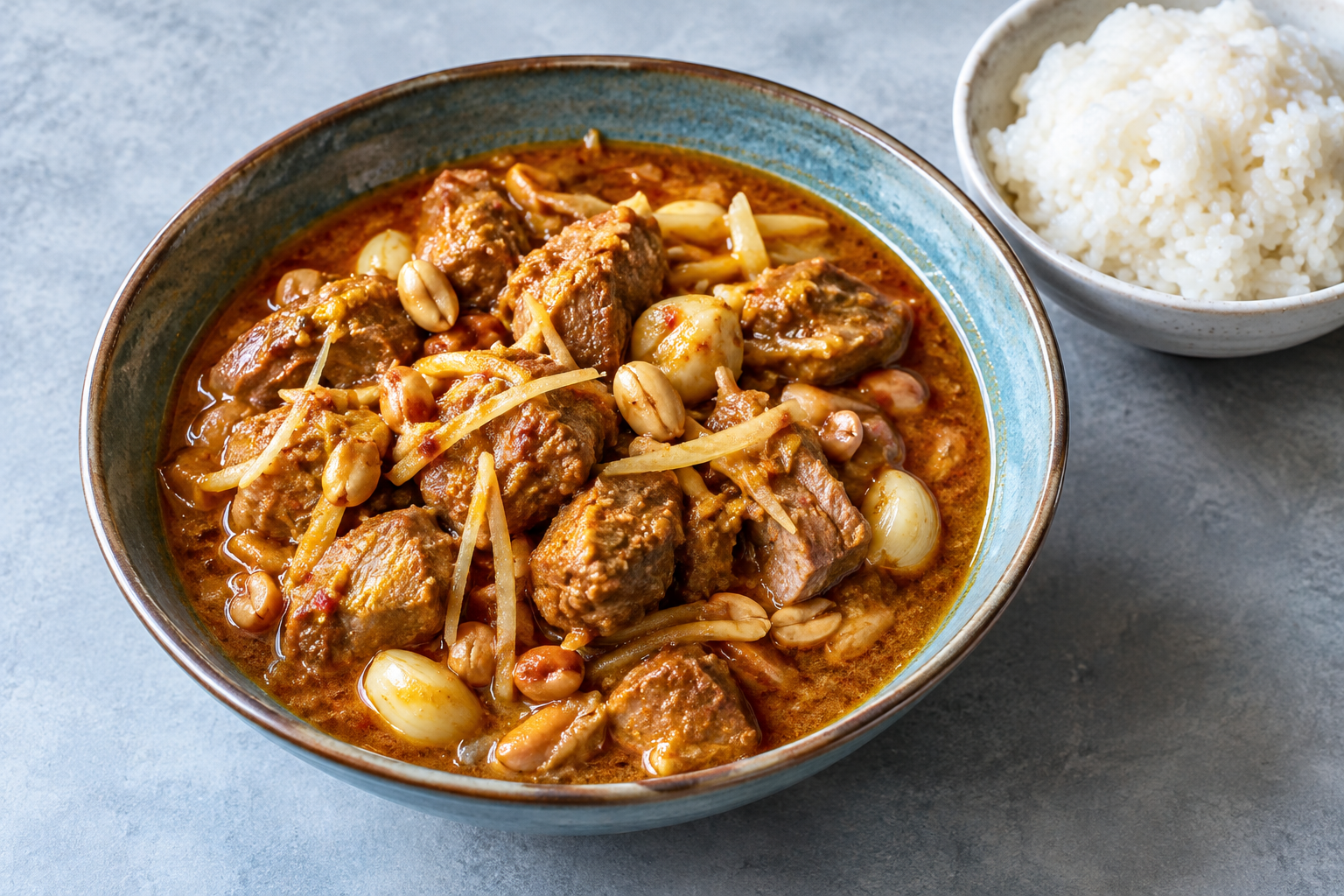
Gaeng hung lay is a Northern Thai pork curry in which ginger and warm spices play a starring role. It has a full flavor, is slightly sweet and pleasantly sour from the tamarind, and the sauce is concentrated as it simmers rather than made creamy with coconut milk. Recipes vary by cook and region. Some versions include peanuts or whole cloves of garlic, as this one does. The combination of aromatic curry paste, pork and a pronounced sweet-and-sour profile matters more here than sticking to one set list of ingredients.
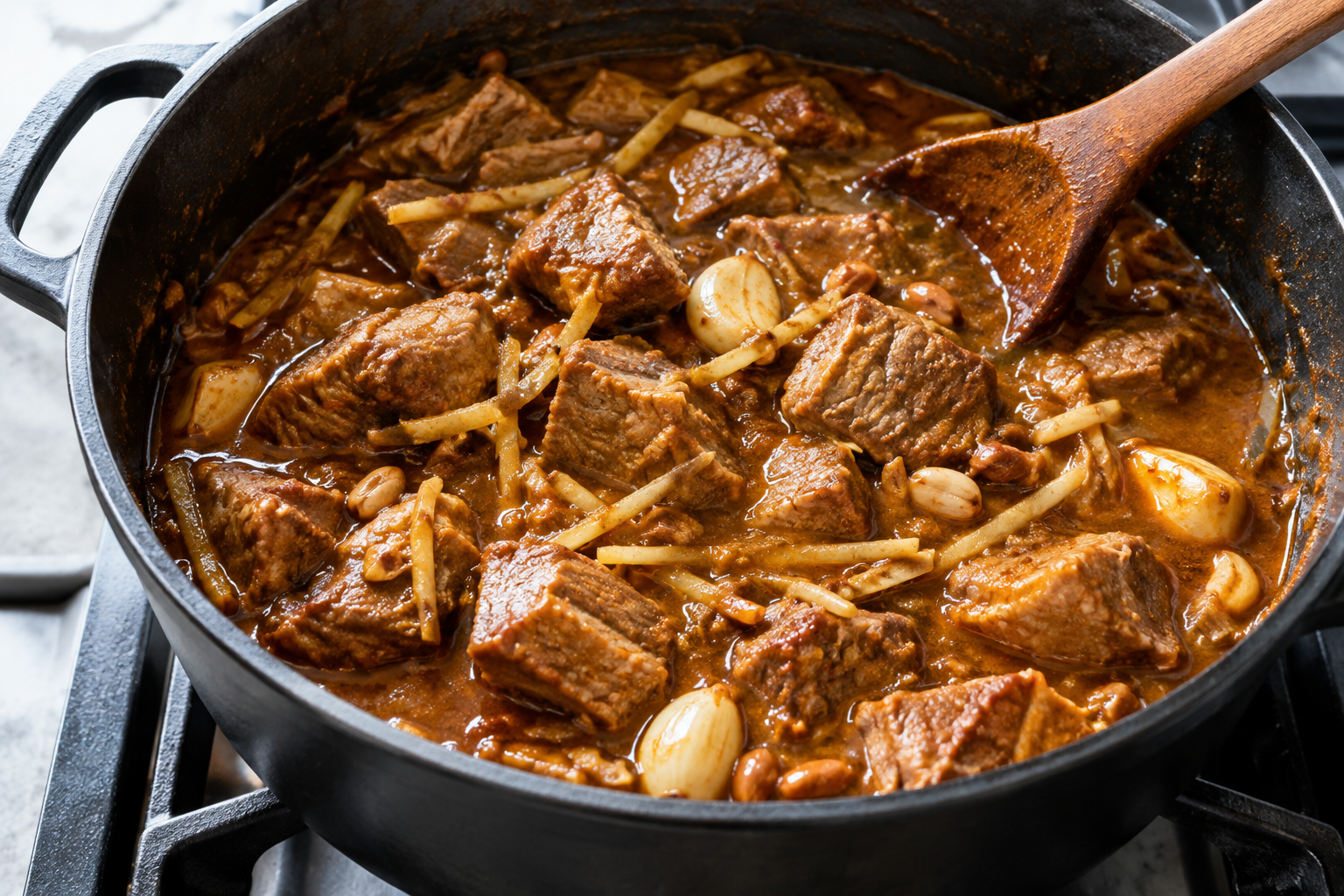
Pork shoulder is well suited to slow braising: it has enough connective tissue to become tender with a longer cook and give the sauce body. Cut it into substantial chunks so it doesn’t fall apart before the sauce has thickened. You can replace some of the shoulder with pork belly for a richer, fattier curry. If you use only lean pork, shorten the cooking time and check for tenderness sooner; cooking a lean cut for a long time won’t make it juicier.
The curry paste gets its depth from dried chili, lemongrass, galangal, shallot, garlic and toasted spices. A mortar and pestle makes a coarse paste that dissolves nicely into the sauce, but a small food processor works too; add a teaspoon of water if needed to get the blades moving. Galangal is sharper and fresher than ginger. If you can’t find it, use extra ginger, keeping in mind that the aroma will change slightly. Shrimp paste adds savory depth; leave it out for a different balance of flavors, and taste the curry carefully at the end.
A generous amount of ginger goes into the braise, and its flavor remains distinct in the sauce. Tamari? No: tamarind provides the sour counterpart to palm sugar, while fish sauce and a little dark soy sauce add saltiness and savoriness. You can replace palm sugar with brown sugar; add it gradually, as the sweetness also depends on the tamarind. The sauce should cling to a spoon like syrup, but shouldn’t turn sticky-sweet. So wait until the liquid has reduced before tasting and adjusting the seasoning.
Sticky rice goes well with the rich sauce and soaks it up easily. Soak the rice ahead of time and steam it until tender; regular steamed rice is a practical substitute if you don’t have a steamer basket. You can put extra tamarind water or fish sauce on the table so everyone can adjust their portion of curry. Refrigerate leftovers promptly in a sealed container and reheat them thoroughly later, adding a splash of water if the sauce has become very thick in the fridge.
 Main course

