ABOUT THIS RECIPEA coconut-free curry with heat and bite
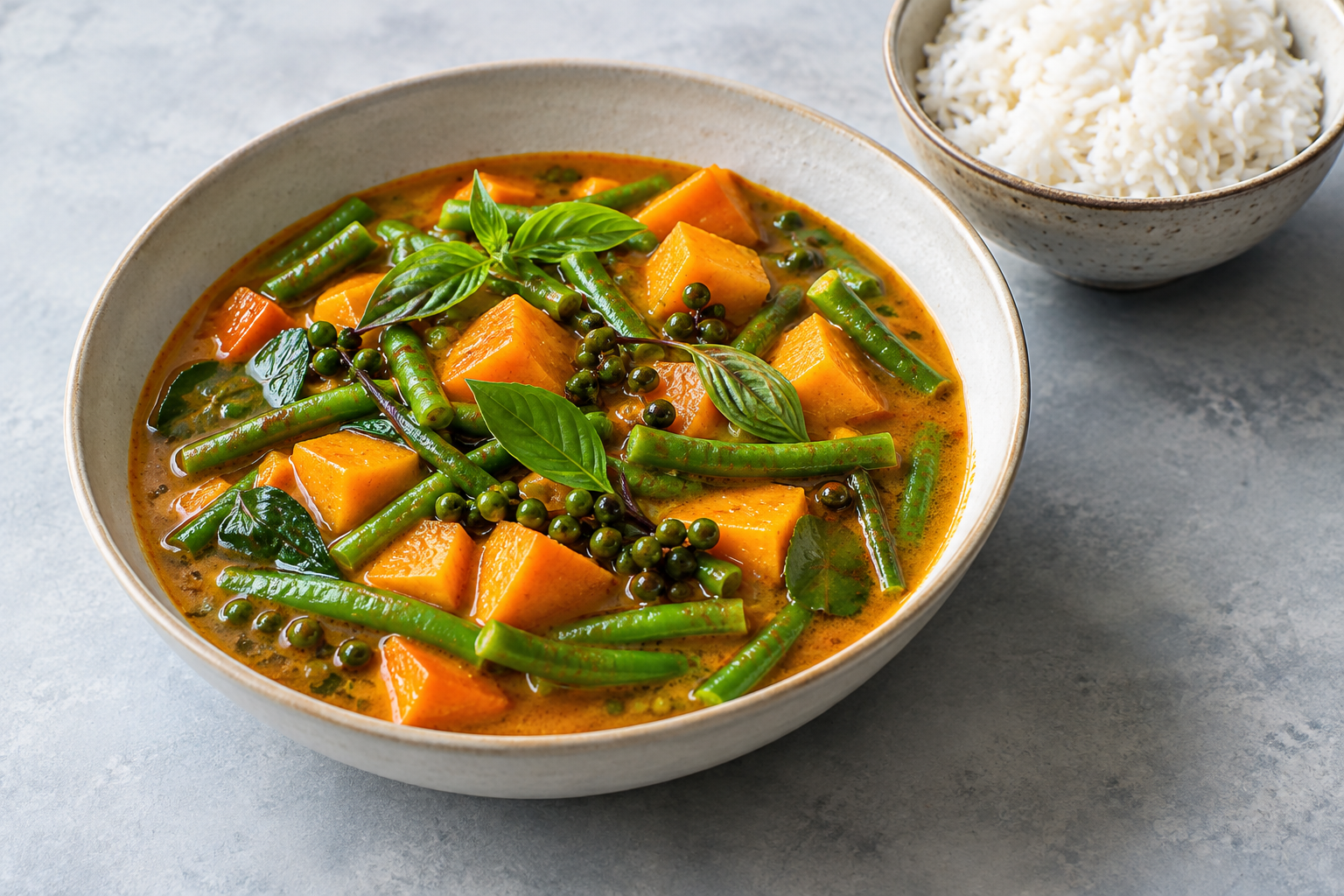
Gaeng pa is often called jungle curry. A defining feature of this Thai curry is that its sauce is made with stock and contains no coconut milk. This keeps it relatively thin and lets the aromas of the curry paste, pepper and herbs come straight through. The curry is usually spicy, but the heat varies from recipe to recipe and from one curry paste to another. In this version, sweet potato takes centre stage: it makes the meal hearty and adds a mild sweetness that balances the chillies.
Sweet potatoes are readily available all year round. Choose firm ones without soft spots and cut them into evenly sized cubes so they cook at about the same time. Long beans add a juicy, firm bite; cut them into pieces that are easy to scoop up with rice. Green peppercorns are not the same as dried black pepper: fresh clusters or peppercorns from brine add a fragrant, slightly fruity heat. Briefly rinse brined peppercorns and drain them.
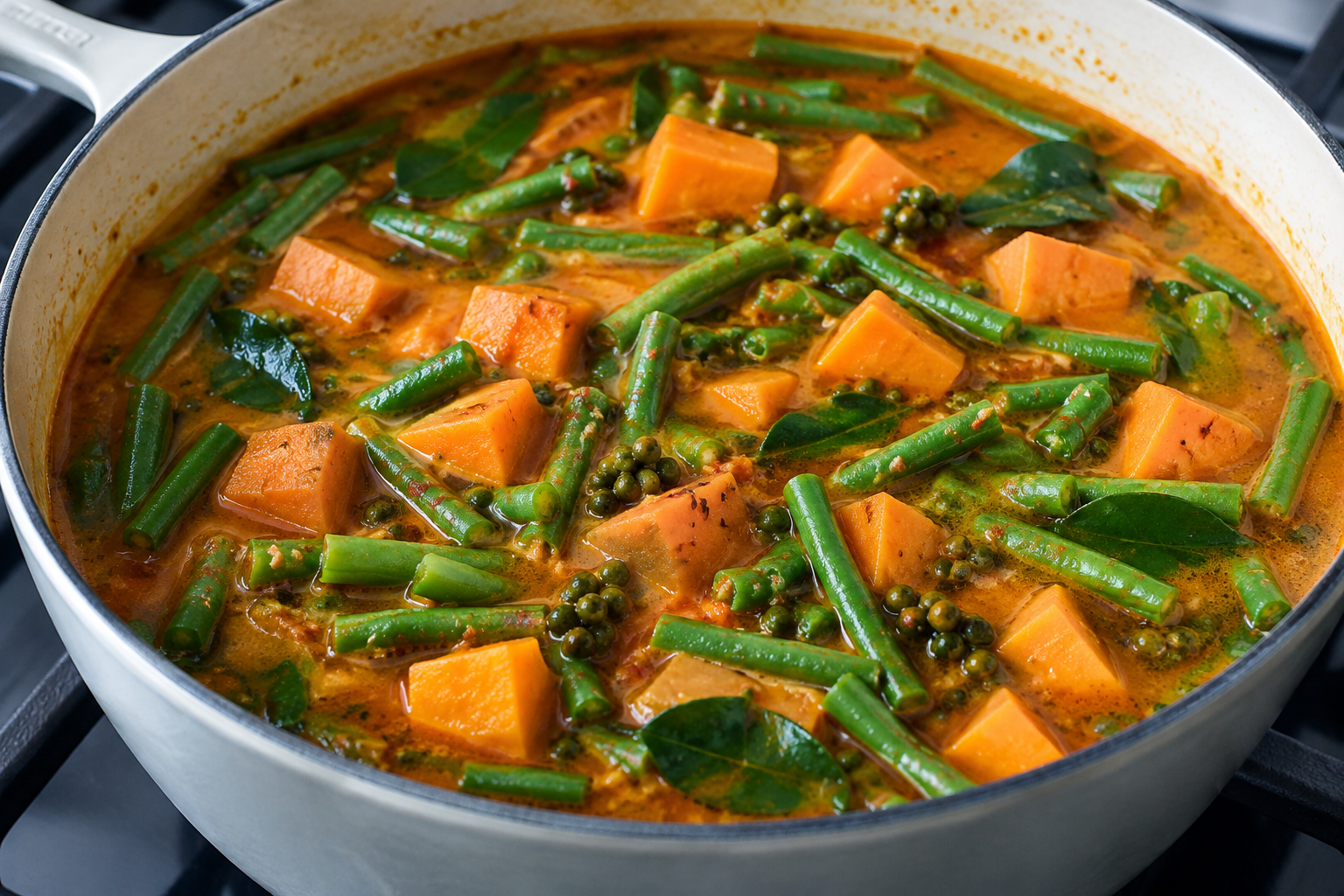
Fry the curry paste briefly in oil before adding the stock. This releases its aroma and helps it blend more evenly into the sauce. Keep the heat at medium and keep stirring, as curry paste can stick to the bottom of the pan. Then let the sweet potato simmer gently rather than boiling it hard. This keeps the cubes intact while they flavour the stock. Add the long beans later; they need less time and taste better with a little bite left in them.
Jungle curry varies from recipe to recipe. Ready-made Thai curry paste is convenient, but it can be quite salty and spicy; start with a modest amount and taste before adding extra fish sauce. Use chicken stock for a savoury base, or vegetable stock and a vegetarian curry paste if you want to make the curry vegetarian. Check the ingredients in the curry paste, as some varieties contain shrimp paste. Thai basil is best stirred into the curry right at the end; regular basil can be used instead, although its anise-like flavour will be less pronounced.
Serve the curry straight away with jasmine rice, which soaks up the spicy stock well. You can put extra rice on the table for anyone who wants the curry to taste milder. Refrigerate leftovers in a sealed container within two hours and eat them within three to four days. Cool the rice quickly and separately, and store it covered in the fridge too. Reheat the curry and rice until piping hot; add a splash of water or stock when reheating if the sauce has become too thick.
 Main course

