ABOUT THIS RECIPEVinegar for flavour and balance
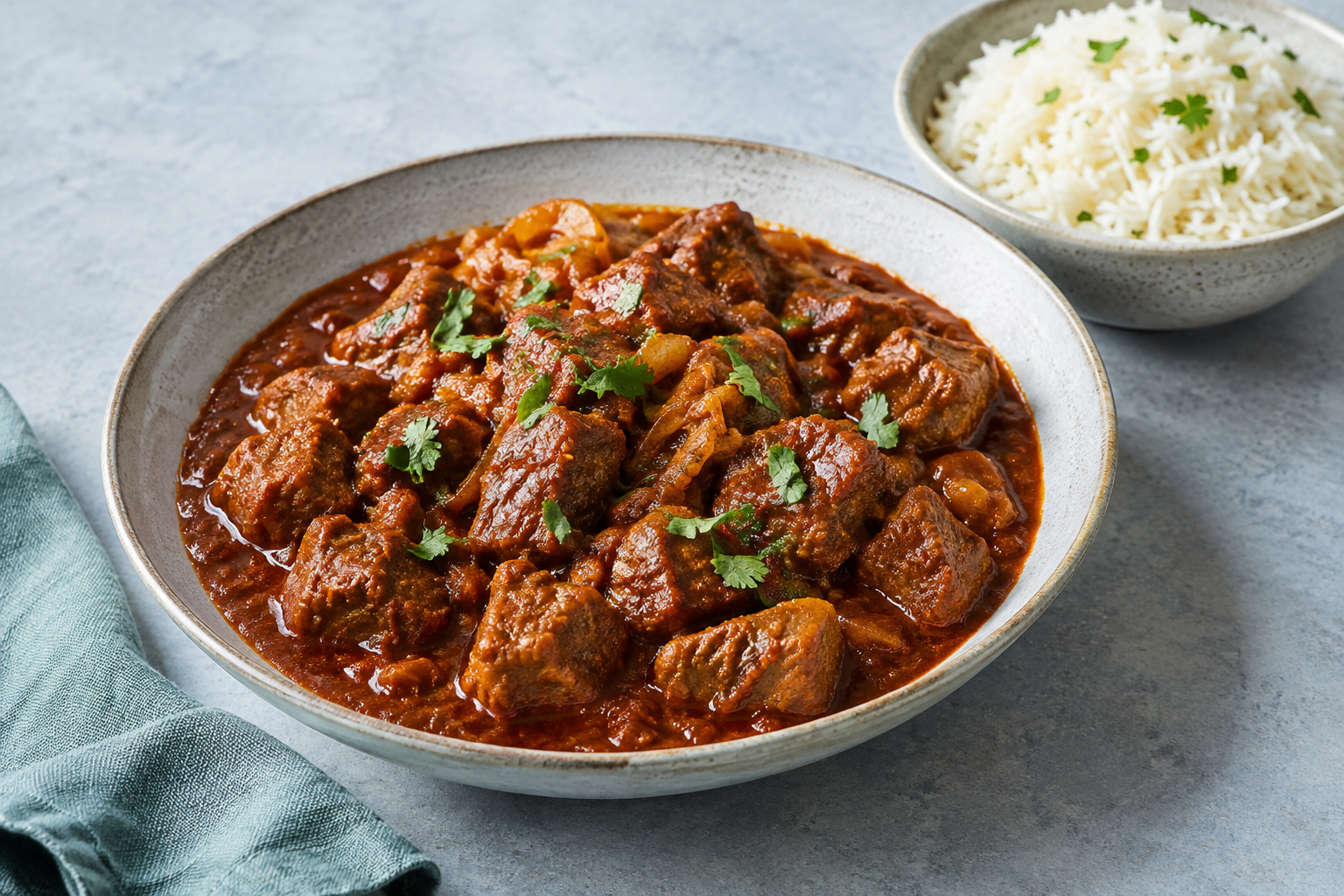
Vindaloo developed its own character in Goa, shaped by Portuguese culinary influences and ingredients available in the region. The name is often linked to the Portuguese dish carne de vinha d’alhos, meat marinated with wine and garlic. In Goan cooking, vinegar plays a clear role alongside garlic and spices. So the result is not simply a curry where chili takes centre stage: sour, aromatic and spicy flavours should all be in balance.
Pork shoulder is a practical choice for this version. It has enough connective tissue to become tender during a gentle braise and add flavour to the sauce. White wine vinegar gives a clean acidity; mild apple cider vinegar also works, although it makes the flavour a little fruitier. Don’t use balsamic vinegar: it’s sweeter and has a distinctive flavour that overwhelms the spices. The chili determines the heat. Kashmiri chili powder gives mostly colour and a milder warmth; cayenne makes the dish hotter, so start with a little.
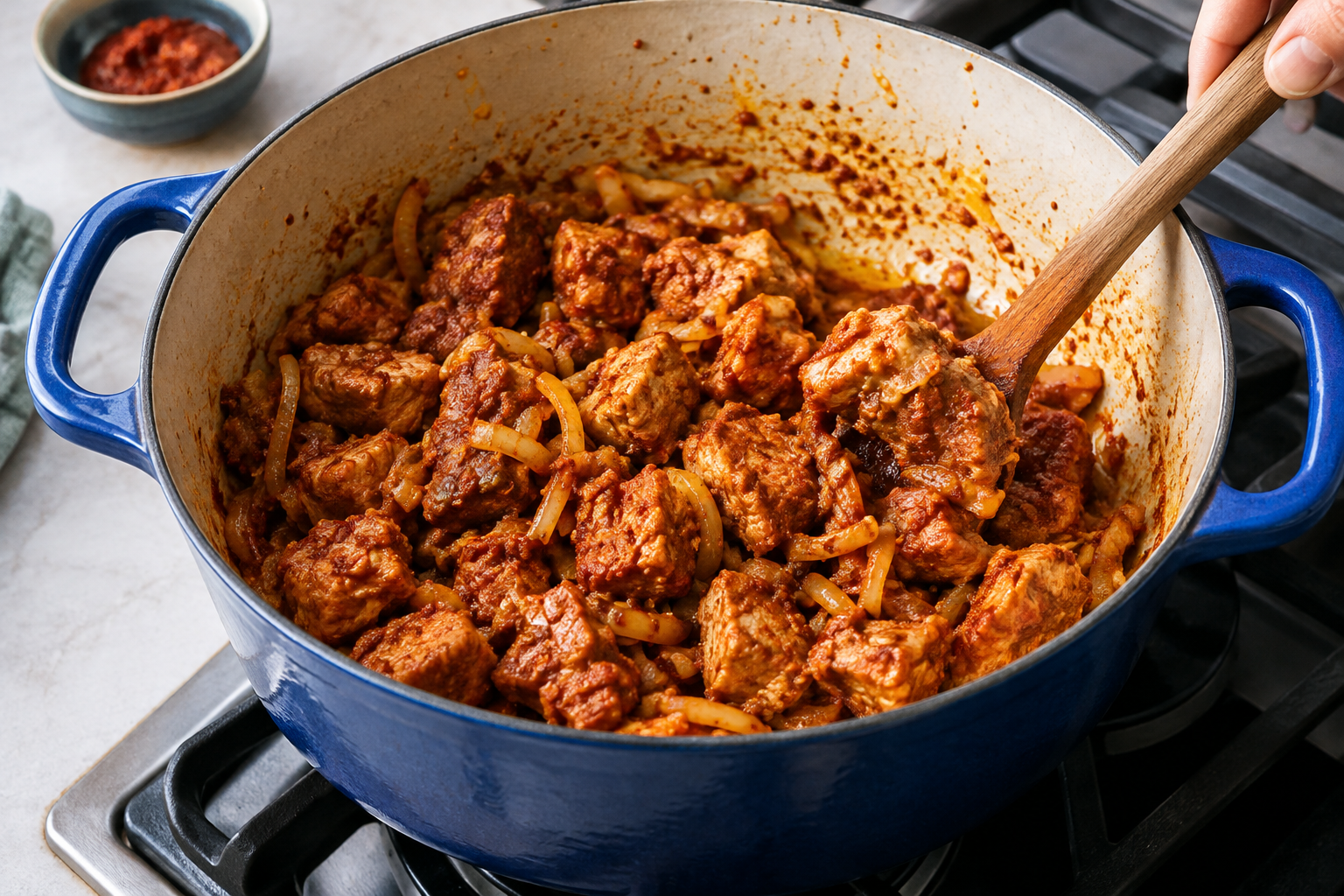
Cumin, coriander seeds, black pepper, cloves and cinnamon add depth without letting any one spice take over. Briefly toasting the spices releases their aromas, but don’t let them darken: burnt spices taste bitter. Vinegar in the marinade doesn’t penetrate in the same way as salt, but it immediately brings a sharp, fresh note. As the dish braises, that sharpness softens and blends with the cooking juices. Keep the lid mostly on the pan so the meat becomes tender; if needed, reduce the sauce uncovered at the end.
Vindaloo is often presented as exceptionally hot, but more chili isn’t automatically better. Taste the sauce towards the end and add extra acidity or chili only if the balance calls for it. A small amount of sugar isn’t needed when the sauce has reduced properly; this keeps its tangy, savoury flavour clear. Serve with plain rice to soak up the sauce, or with sturdy bread. A simple cucumber raita can be served alongside as a cool contrast, but it isn’t part of this recipe.
If you make the vindaloo ahead, cool the pan promptly and refrigerate the dish covered within two hours. Keep it there for up to three days. Reheat it gently in a pan until piping hot throughout; add a splash of water if the sauce has become very thick during storage. Store the rice separately and reheat it until piping hot throughout as well.
 Main course

