ABOUT THIS RECIPESweet, sour and a fragrant tempering
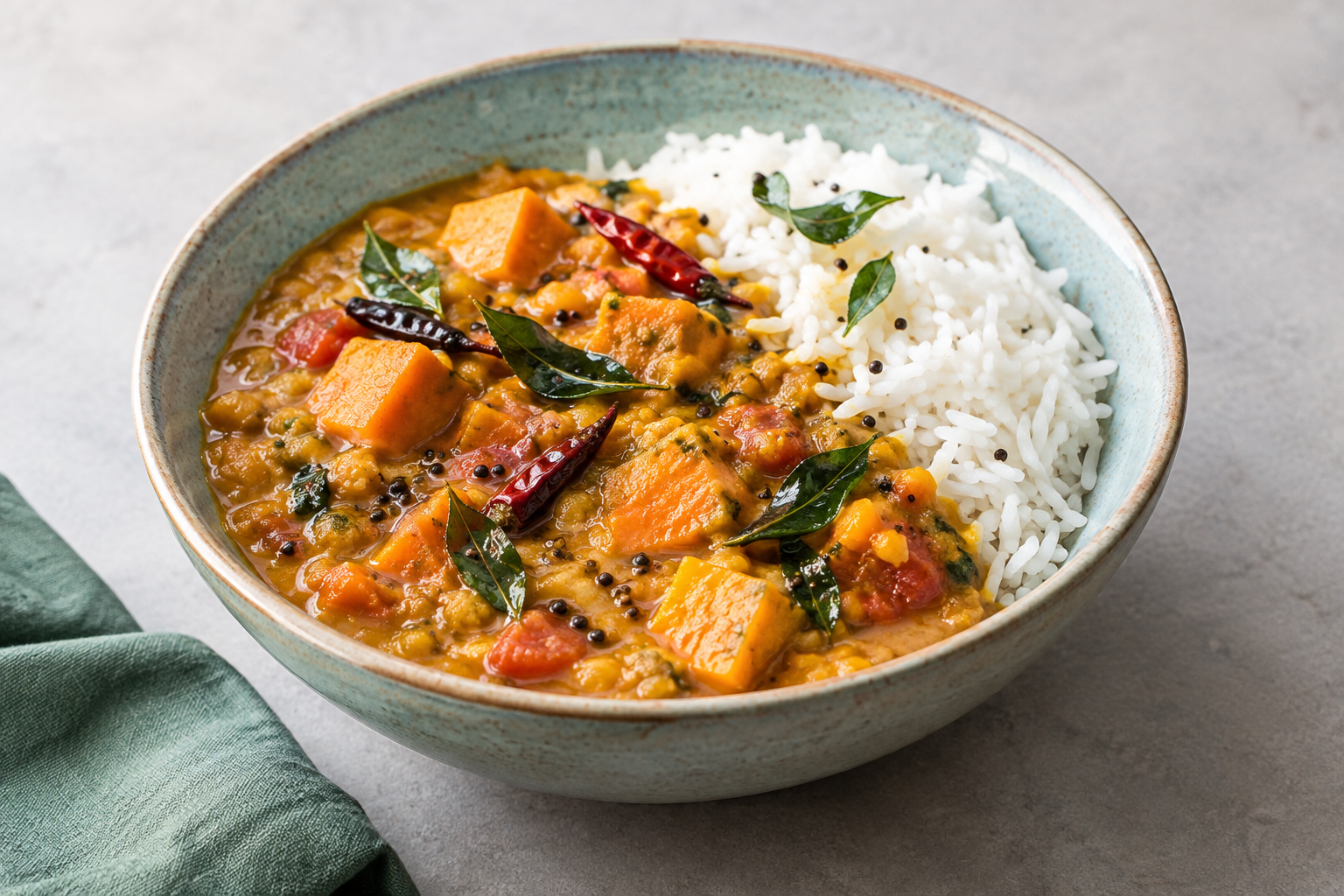
Sambar is a South Indian lentil dish that brings together soft dal, vegetables, tamarind and sambar powder. The exact vegetables and proportions vary from recipe to recipe and region to region, so there is no single fixed vegetable mix. In this version, sweet potato is deliberately the main vegetable, not an unnoticed substitute for a traditional combination. The potato turns soft and creamy inside, while tamarind and spices keep the sauce savoury and tangy.
Toor dal, also known as pigeon peas or yellow split peas, thickens the sambar as the pulses cook and are partly mashed. Rinse the dal first, until the water is less cloudy. Cooking it until tender on the stovetop usually takes around 35 to 45 minutes; the exact time depends on how old the pulses are and on your pan. They are ready when they fall apart easily between your fingers. A pressure cooker can shorten the cooking time; follow the appliance instructions.
Sambar powder is a roasted spice blend made especially for dishes like this. Its heat and saltiness vary by brand, so taste before adding extra salt. Ordinary curry powder does not give the same aroma. Tamarind paste is convenient and consistent in flavour; if you use concentrated tamarind extract, start with less and add more to taste. The acidic base can slow the cooking of vegetables, so it’s practical to first simmer the sweet potato until tender in water and add the tamarind afterwards.
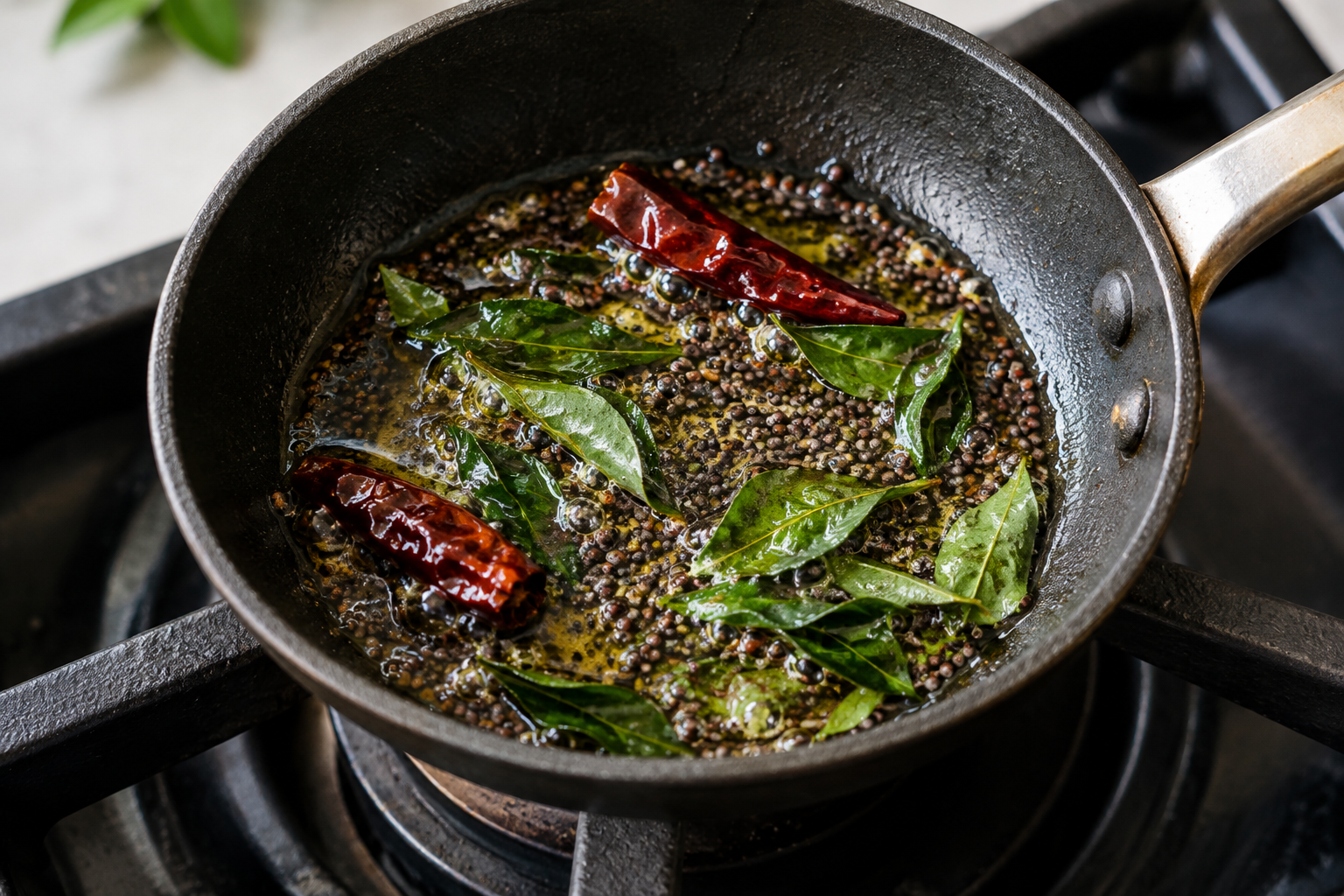
The tempering — hot oil with mustard seeds, dried chilli and curry leaves — is what makes the difference between simply spiced and fragrantly spiced. Let the mustard seeds pop in the oil, then add the curry leaves so they release their aroma without burning for too long. Curry leaves are available fresh or frozen at Asian grocery stores; dried leaves are less aromatic. Without curry leaves, the result will be different, but the sambar will still work.
Serve the sambar with rice for a complete meal, or with idli if you have some on hand. The sauce can be thick, but it should still run easily off a spoon: stir in a little water when reheating if it has become too thick. Store leftovers covered in the fridge and use within three to four days; reheat until piping hot throughout. This keeps the flavour of the tamarind and spices distinct, even as the dal continues to thicken.
 Main course

