ABOUT THIS RECIPEA broth with a sharp edge
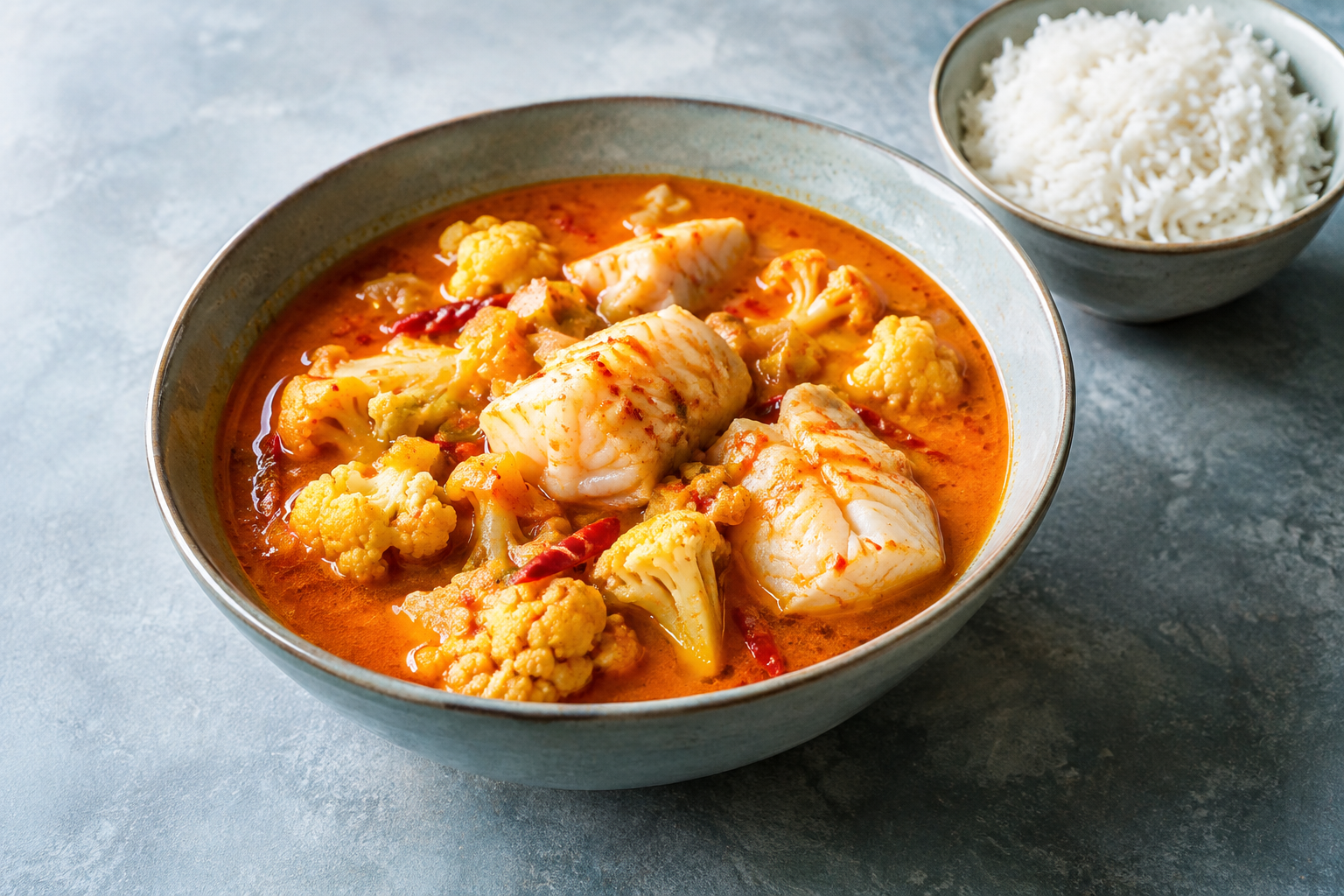
Gaeng som broadly means sour curry, but the name is used for several different curries. This version is Southern Thai: a thin, robust broth with chili, turmeric and tamarind, not the creamy coconut version that many people first associate with Thai curry. The exact ingredients and proportions vary from cook to cook and region to region. In this recipe, a small amount of shrimp paste adds savory depth; it doesn’t make the broth creamy and shouldn’t be a pronounced flavor in the foreground.
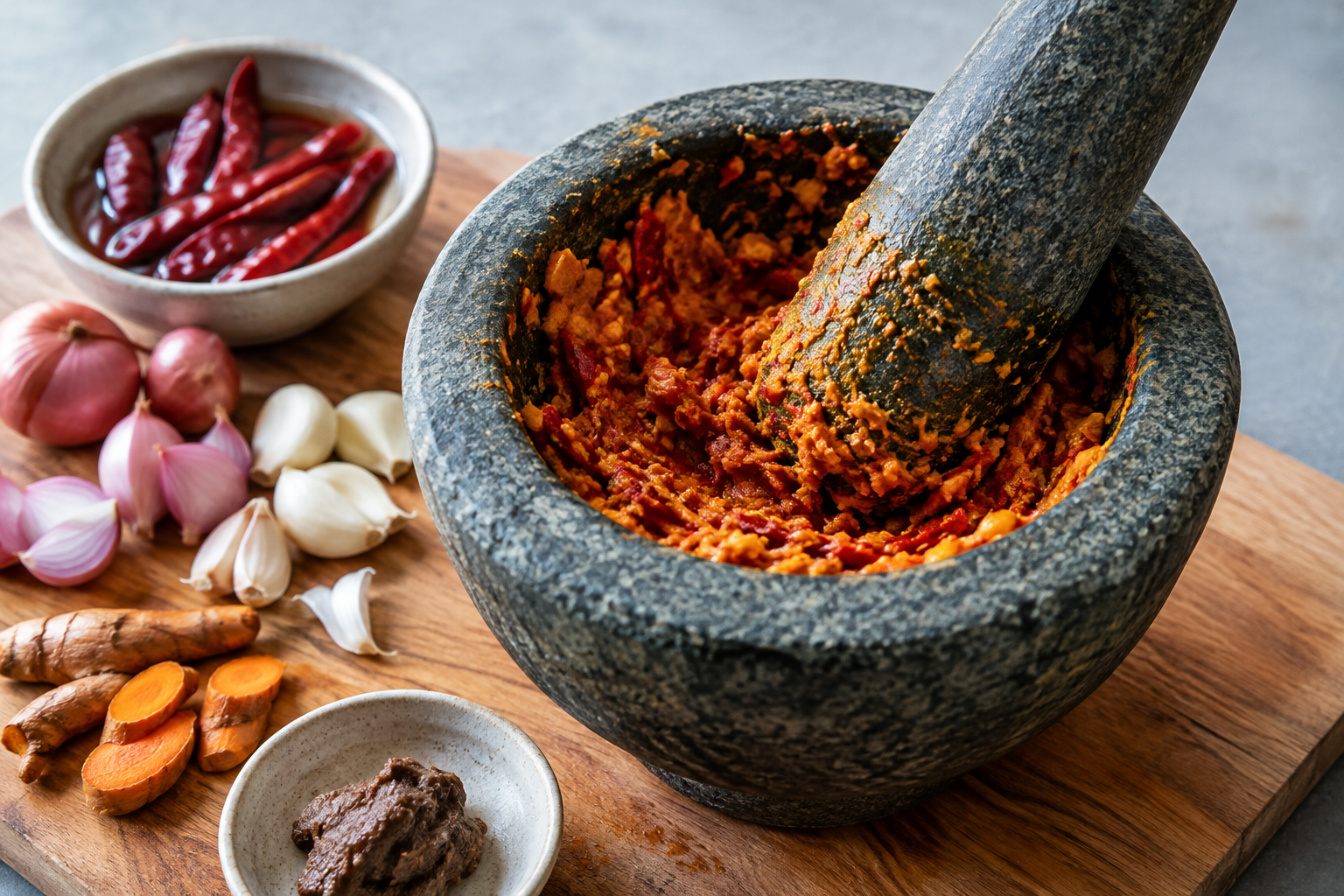
The curry paste is pounded in a mortar so the dried chili, shallot, garlic and turmeric come together in a coarse, cohesive paste. It takes a little work, but gives you control over the texture and distributes the aromatics evenly through the broth. Soak the chilies first until pliable, then drain them well. For less heat, you can remove the ribs and seeds from some of them. Fresh turmeric has an earthy, fresh aroma; ground turmeric can be used as a practical substitute, but gives a slightly different aroma.
Tamarind provides the characteristic sour flavor. Use unsweetened tamarind paste if available; concentrated products vary in strength, so taste the broth before adding more. Fish sauce brings salt and umami, while a little palm sugar rounds out the sharpness without making the curry sweet. The flavor should remain distinctly sour and spicy. So adjust the balance with small amounts of tamarind, fish sauce or sugar, not coconut milk.
Cauliflower is a practical vegetable for this version: the florets hold their shape and soak up the broth. Green papaya is a suitable substitute if you can find it; cut it into bite-size pieces and allow for a similar cooking time. Choose a firm-fleshed white fish, such as cod or pollock. Add the fish only when the cauliflower is almost tender, and poach the pieces gently. Boiling hard or stirring a lot makes them more likely to dry out or break apart.
Serve the curry right away with jasmine rice, so the rice catches the thin broth and balances the heat. You can put extra rice on the table if you like; this dish is meant to be a boldly flavored main course, not a sauce poured over a mound of rice. Cool leftovers quickly and store them covered in the refrigerator, but the fish will be more delicate when reheated. Reheat the curry gently until piping hot throughout, without letting it boil or stirring it vigorously.
 Main course

