ABOUT THIS RECIPEA pan made for dipping
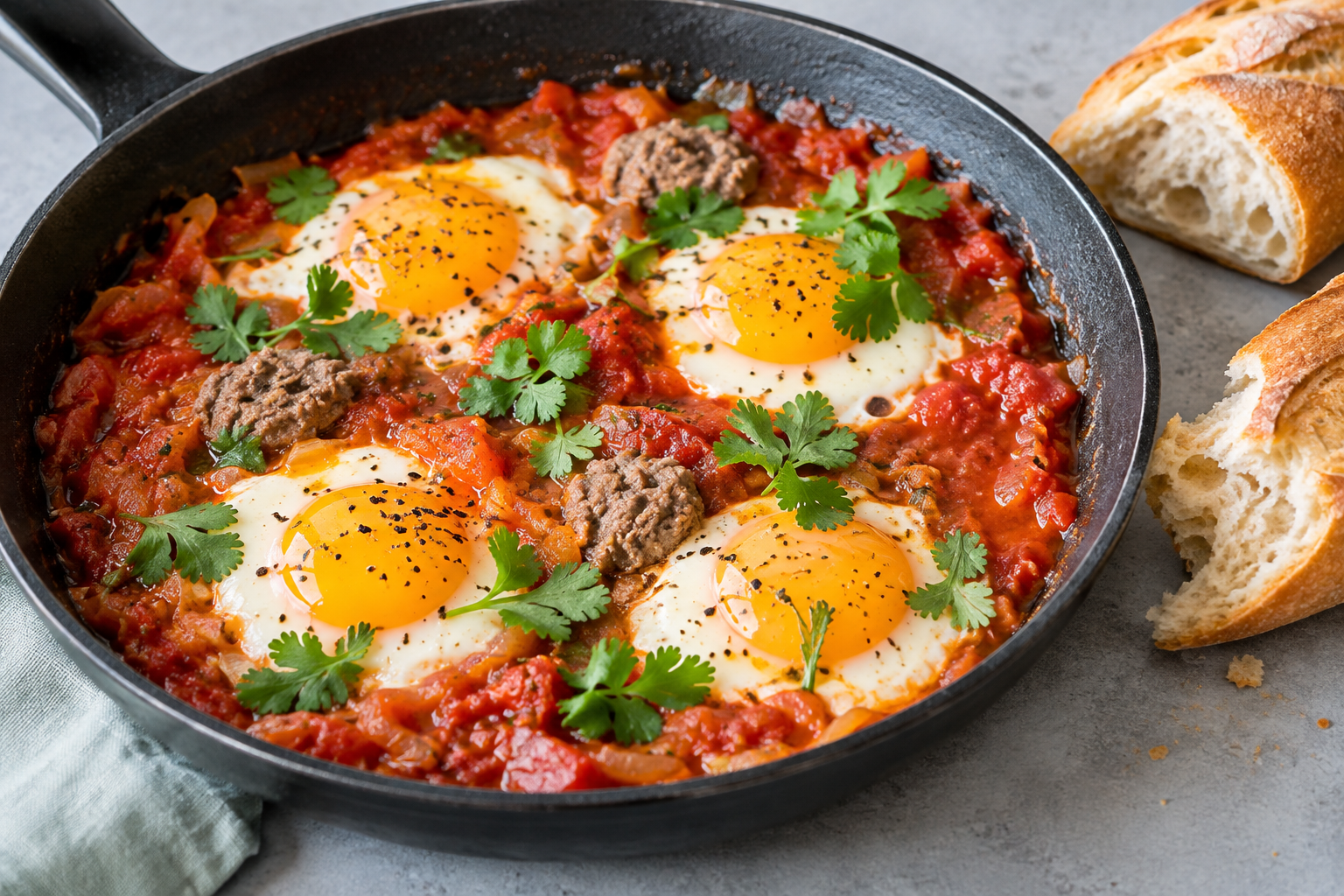
Bánh mì chảo literally means something like “baguette pan”: chảo refers to the pan in which the dish is cooked and served. It’s a familiar meal in Vietnamese cafés and eateries, but there’s no single, fixed recipe everyone follows. Eggs are at the heart of it; tomato, onion and bread make it a complete meal. Some versions include paté or Vietnamese sausage. Here, we add a little paté, but you can leave it out without making any other changes.
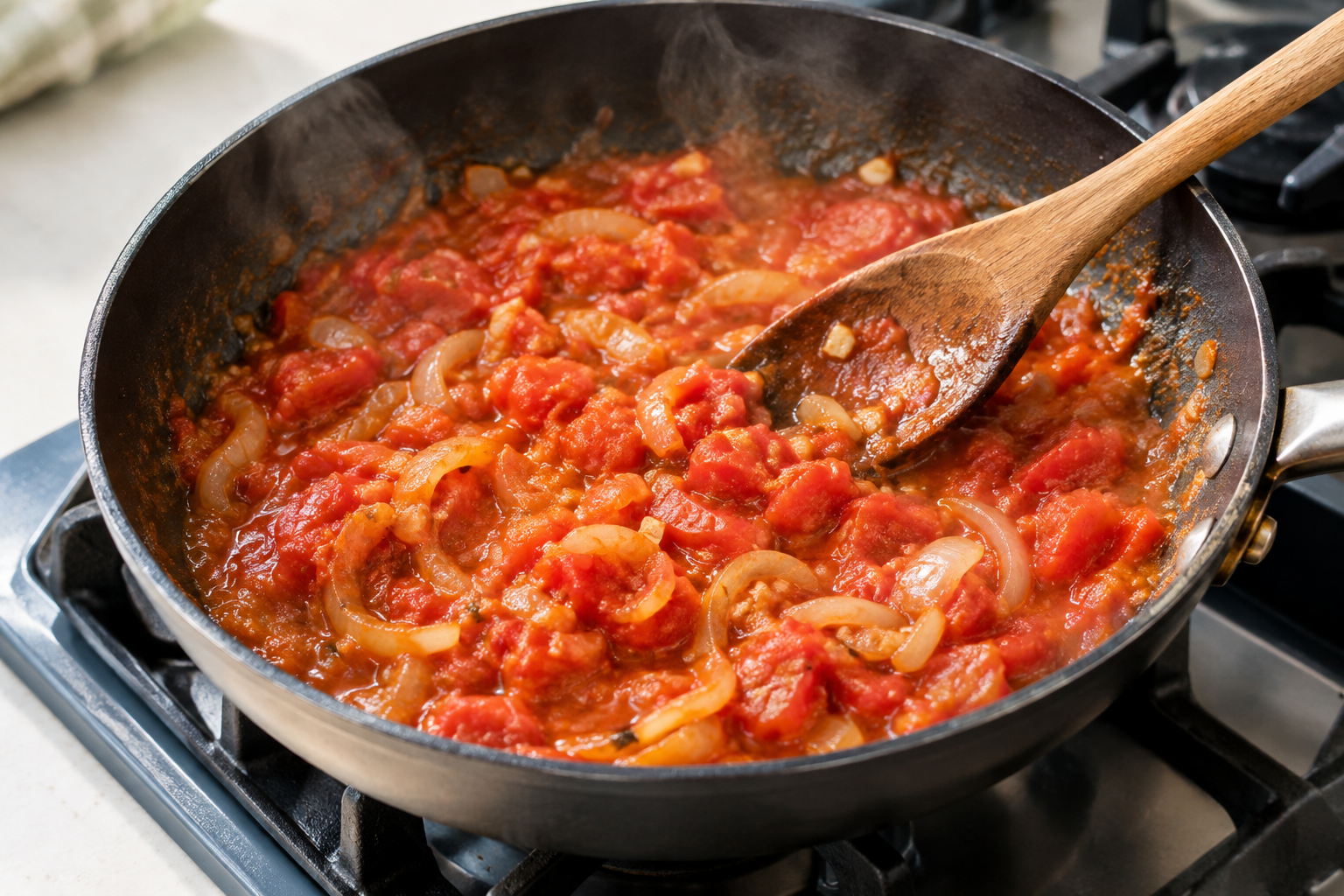
The tomatoes provide moisture and a gently sweet-and-sour flavor that goes well with the rich yolks. Chop them small so they soften quickly, but leave some pieces intact for texture. Onion and garlic add depth to the sauce; fish sauce brings savoriness, and a little sugar rounds out the tomato flavor. Taste the sauce before adding the eggs: tomatoes vary in ripeness, so you can adjust the fish sauce or sugar by a pinch if needed.
A wide skillet is useful because it gives the eggs room to sit side by side. First cook the onion and tomato until the mixture is juicy, not watery. Then make room for the eggs and cover the pan. This helps the whites set evenly while the yolks stay soft. Check after a few minutes: take the pan off the heat as soon as the whites are no longer translucent. The pan will stay hot for a little while, so don’t wait until the yolks are firm.
For best results, use a baguette with a thin, crisp crust and an airy interior; it soaks up the sauce without falling apart straight away. A regular baguette works just fine. If paté isn’t available or you’d rather go without it, leave it out; don’t add extra salt before tasting the sauce, since fish sauce is already salty. Vietnamese sausage is another possible addition, but it isn’t included in every version and is deliberately left out of this recipe.
Serve the pan straight away with the baguette and cilantro. Tear the bread at the table and dip it into the yolk and tomato sauce. This dish is best eaten fresh from the pan: the eggs continue cooking as they sit, and their yolks lose their softness. So don’t leave leftovers at room temperature; cool them quickly and store them covered in the refrigerator. Reheat them gently, though the texture of the eggs will become firmer.
 Main course

