ABOUT THIS RECIPEBroth for flavor, not as soup
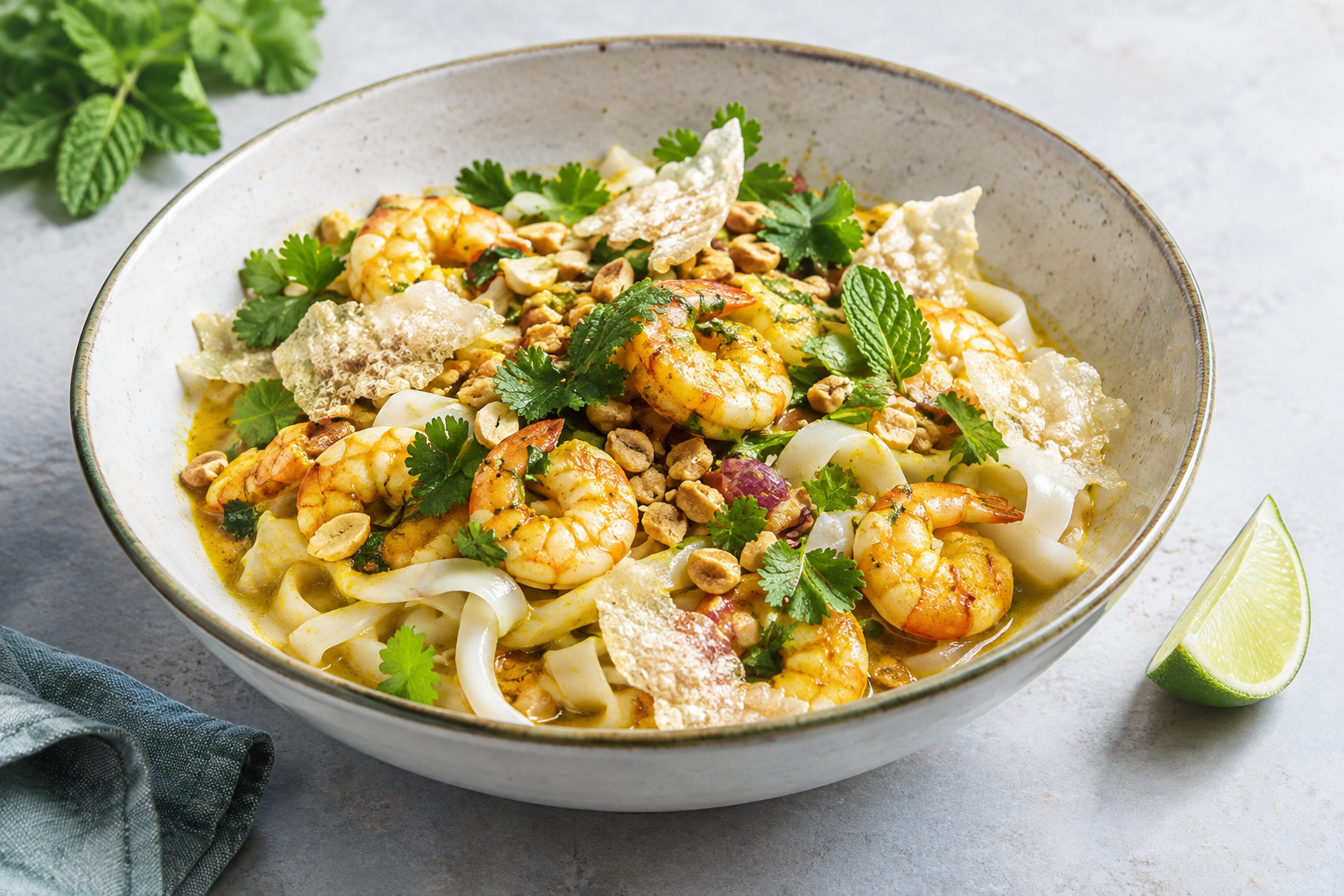
Mì Quảng comes from central Vietnam, from Quảng Nam province and the area around Đà Nẵng. The name refers to Quảng, while mì here means noodles. There are several versions: shrimp and pork often appear together, but chicken or other ingredients can also take center stage. This version uses shrimp. What sets it apart from a bowl of noodle soup is the ratio: wide rice noodles and toppings fill the bowl, with just a layer of rich broth at the bottom.
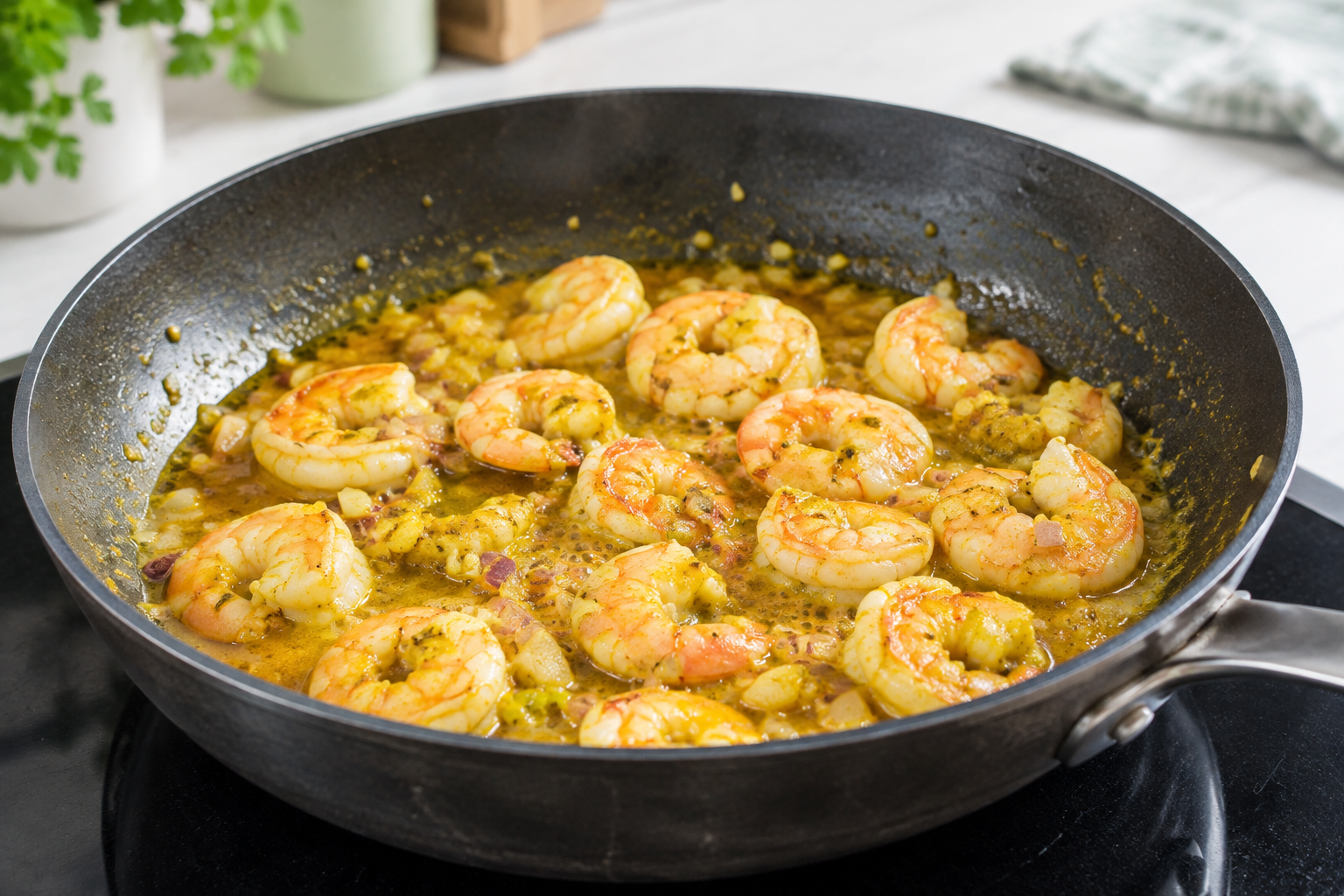
Turmeric gives the broth its warm yellow color and earthy aroma. Let the spice cook briefly in the oil with the garlic and shallot; this helps it spread evenly and taste less raw. The broth doesn’t need to simmer for long. Good chicken broth is a practical choice and lets the shrimp shine; preferably use a low-sodium variety, since fish sauce is salty on its own. Add a modest amount of broth and taste before adding extra salt.
Wide rice noodles give the dish the right soft, slightly firm base. Dried rice noodles are widely available; follow the package instructions and cook them just until tender, so they don’t turn mushy when the hot broth is poured over them. Fresh herbs add brightness alongside the rich, savory sauce. Cilantro and mint make an easy-to-find combination here. If Vietnamese coriander is available, you can use some in place of regular cilantro; leave out the mint for a different fresh accent.
Shrimp cook quickly, so keep a close eye on them in the pan. They’re ready as soon as they turn opaque and pink; cooking them longer will make them firm. Peanuts add a toasted crunch, while crispy rice paper offers a light, crisp contrast. Toast the rice paper just before serving so it stays crisp. If you don’t have rice paper, you can leave it out; the peanuts already provide some texture.
Serve mì Quảng in wide bowls, with the noodles underneath and the shrimp and broth on top. Put extra herbs and lime wedges on the table so everyone can adjust the fresh flavor to their liking. Stir only at the table: that way, every bite gets some noodles, broth and toppings. Refrigerate leftovers promptly in a sealed container and eat within two days. If possible, store the noodles and broth separately; heat the broth through and add the noodles afterward.
 Main course

