ABOUT THIS RECIPECoconut, tang and fried tempeh
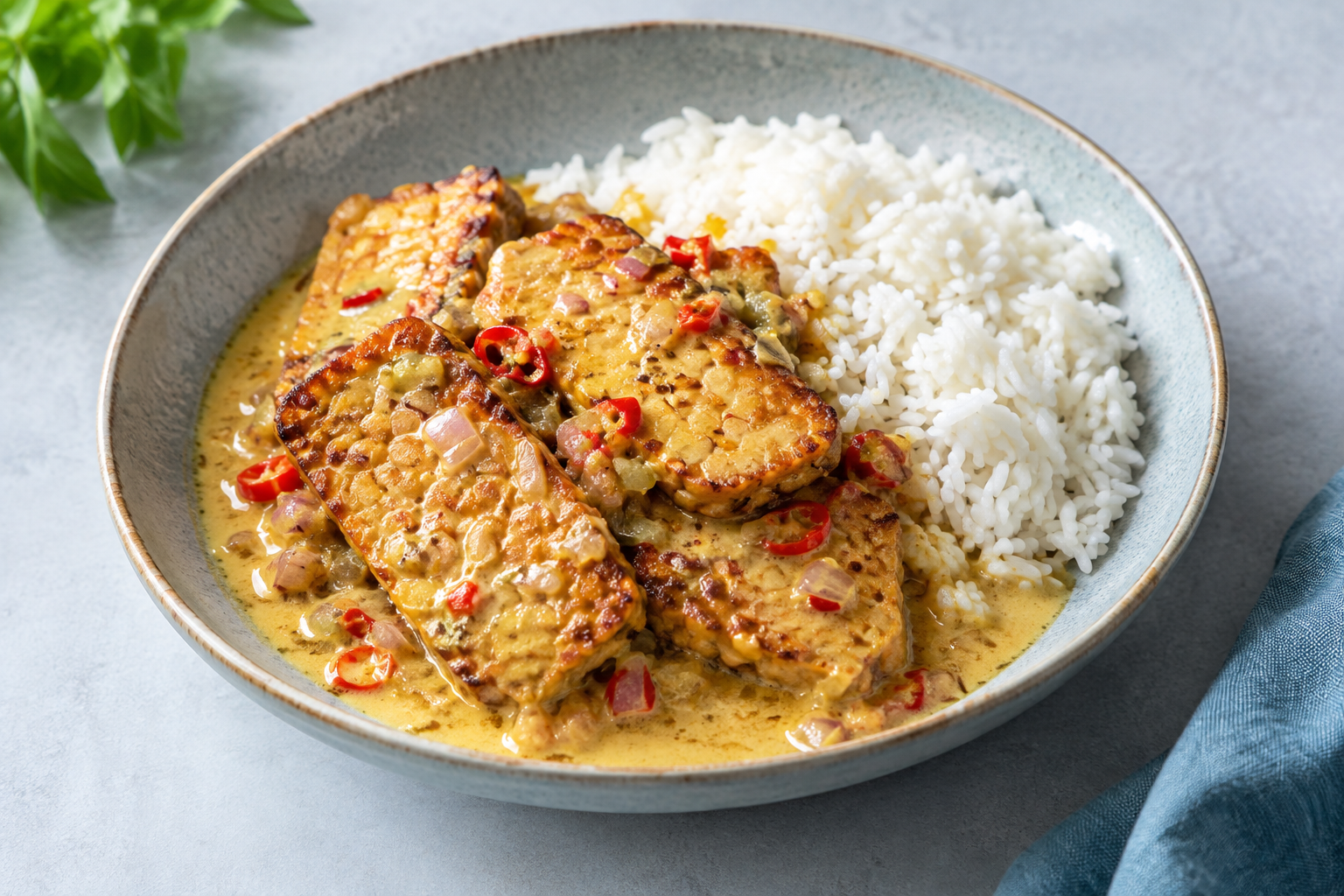
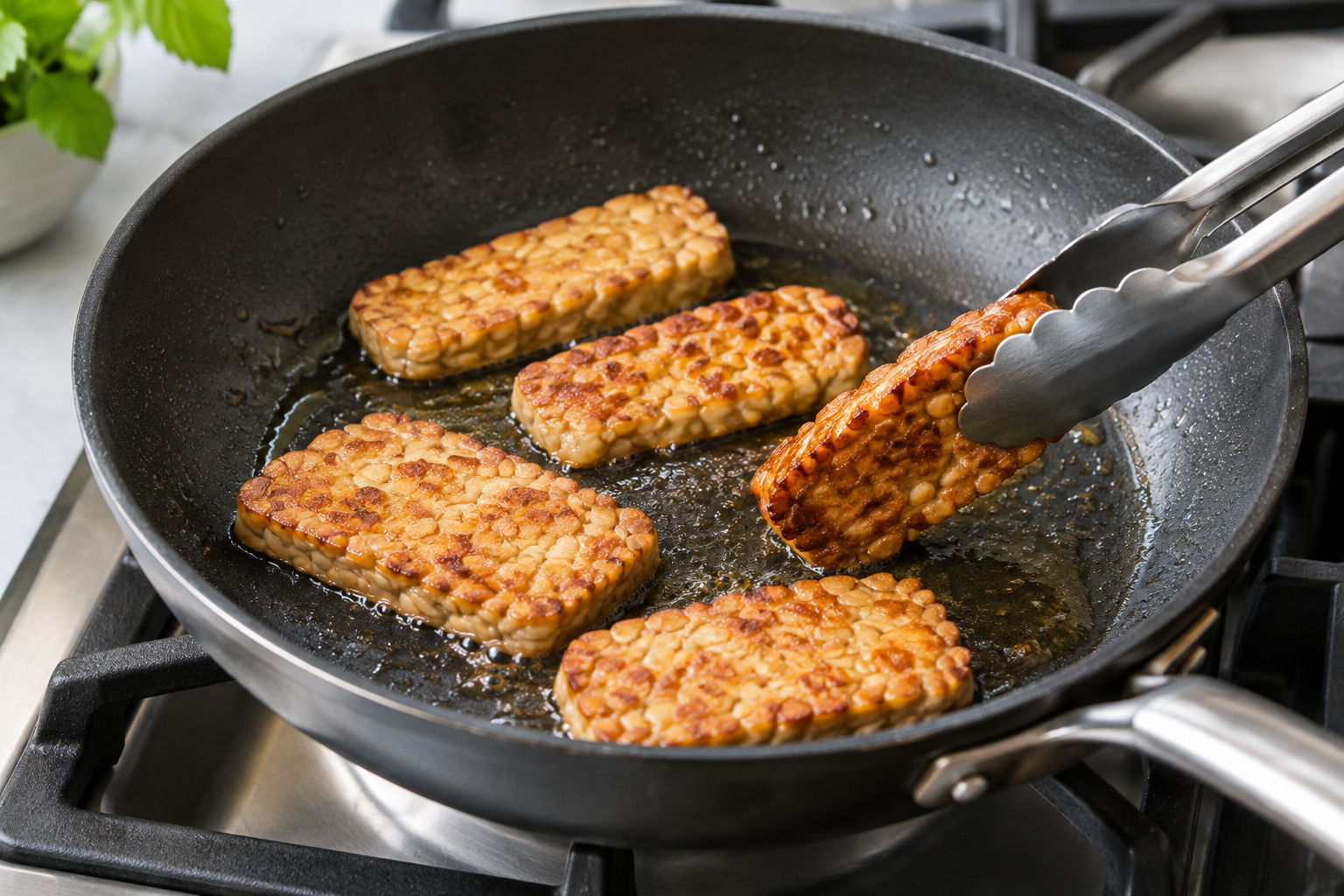
This dish is all about the contrast between firm tempeh and a smooth coconut sauce. Frying the slices until golden-brown first gives them a toasted exterior and helps them hold their shape when they briefly simmer in the sauce later. Tempeh absorbs flavour, but is less likely to break apart than soft tofu. Don’t slice it too thinly: about one centimetre thick gives it enough surface area to brown while keeping the centre firm.
Coconut milk adds richness, while tamarind provides a distinct tart counterpoint. Tamarind paste varies in strength and saltiness by brand, so start with the amount given and taste the sauce before adding more. The aim is a light, fresh tartness, not a sharply sour sauce. A pinch of salt and a small amount of soy sauce add savouriness without making the dish taste like a sweet kecap glaze. The sauce should remain loose enough to mix with the rice.
Shallot, garlic, chilli and bruised lemongrass create an aromatic base. Bruise the lemongrass with the side of a knife to release its aroma; leave the stalk whole and remove it from the pan before serving. Adjust the chilli to your preference. A red chilli with the seeds removed gives milder heat, while a smaller or hotter chilli can add more kick. Fresh lemongrass is best here; if you can’t get any, it’s better to leave it out than to use a large amount of lemon zest.
Spiced coconut dishes come in many forms in Malaysia, varying in spices, souring agents and sauce thickness. This recipe is a Malaysian-inspired home-style version, not an attempt to pin down one regional classic exactly. The combination of coconut and tamarind suits the balance we’re after, but the exact flavour also depends on the paste and coconut milk you use. Choose unsweetened coconut milk if possible; coconut cream can make the sauce very heavy.
Serve the tempeh with steamed white rice to soak up the sauce. Cucumber or a simple vegetable on the side adds freshness, but isn’t needed to make the dish complete. Refrigerate leftovers promptly in a sealed container and eat them within two days. Reheat them thoroughly in a saucepan over low heat; add a splash of water if the coconut milk sauce has become too thick after chilling.
 Main course

