ABOUT THIS RECIPEA balance of sweet, savory and spicy
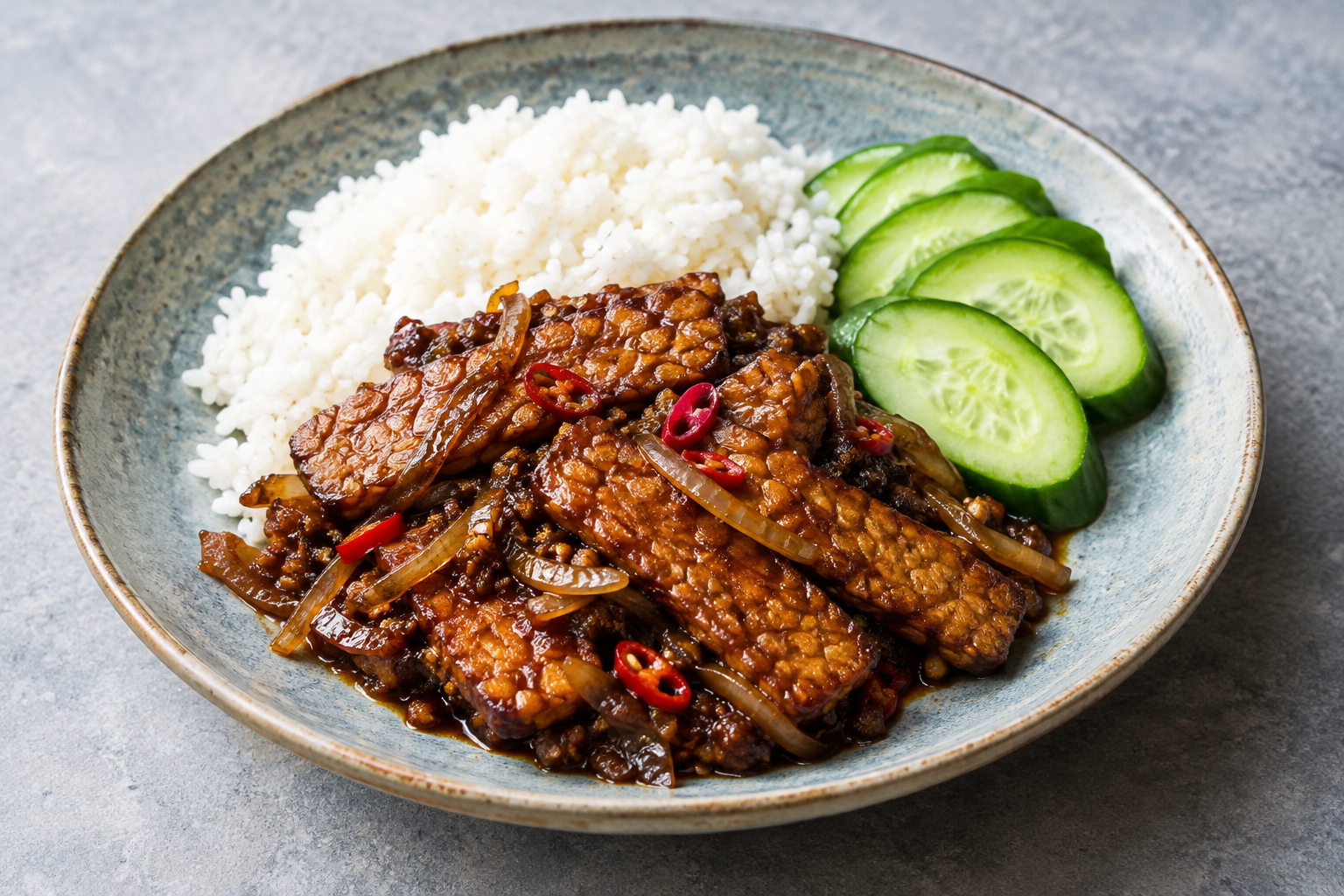
Masak kicap refers to a preparation made with kicap, the Malay word for soy sauce. In this Malaysian version, tempeh gets a glossy sauce made with kecap manis, the sweet, thick soy sauce widely used in the region. The tempeh stays firm and nutty, while onion, garlic, ginger and chili make the sauce more savory and aromatic. Tamarind is no mere garnish here: its acidity cuts through the sweetness and keeps the flavor lively.
First fry the tempeh slices until golden brown, then let them simmer in the sauce. If you put the moist block straight into the sauce, it will get less color and can soften more quickly. Use a large frying pan and give the slices room; fry them in two batches if needed. They don’t need to be completely crisp. A browned exterior adds flavor and holds up better during the brief simmer.
Kecap manis varies in thickness and sweetness from brand to brand. Start with the amount given and taste the sauce after adding the tamarind. If it’s too sweet, stir in a little more tamarind; if it’s sharply sour, add a splash of kecap manis. Don’t use regular salty soy sauce as a one-to-one substitute for this dish: it lacks the sweet, thick base. A little extra sugar can make up for the sweetness, but it won’t give the sauce the same depth of flavor. Adjust the amount of chili to your preferred level of heat.
Serve the tempeh with steamed white rice to soak up the sauce, and cucumber for a cool, crisp contrast. Slice the cucumber just before eating; it doesn’t need dressing. Refrigerate any leftover tempeh, covered, within two hours and use it within three to four days. Reheat it in a pan with a splash of water until piping hot throughout; this loosens the sauce again and helps keep the tempeh from drying out too quickly. Cook only as much rice as you need, or cool any leftovers quickly and store them separately from the tempeh.

 Main course

