ABOUT THIS RECIPESweetly spiced, briefly fried
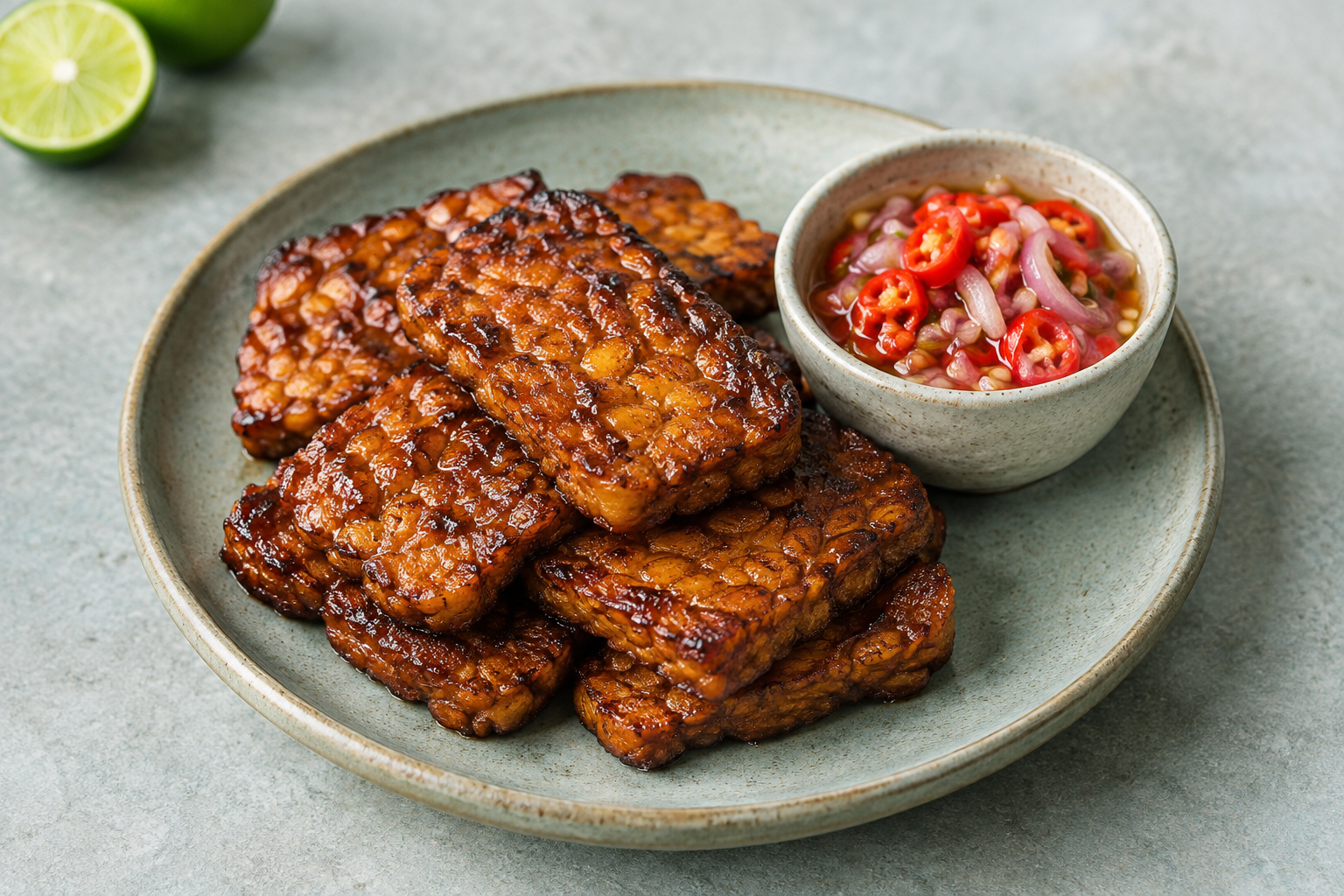
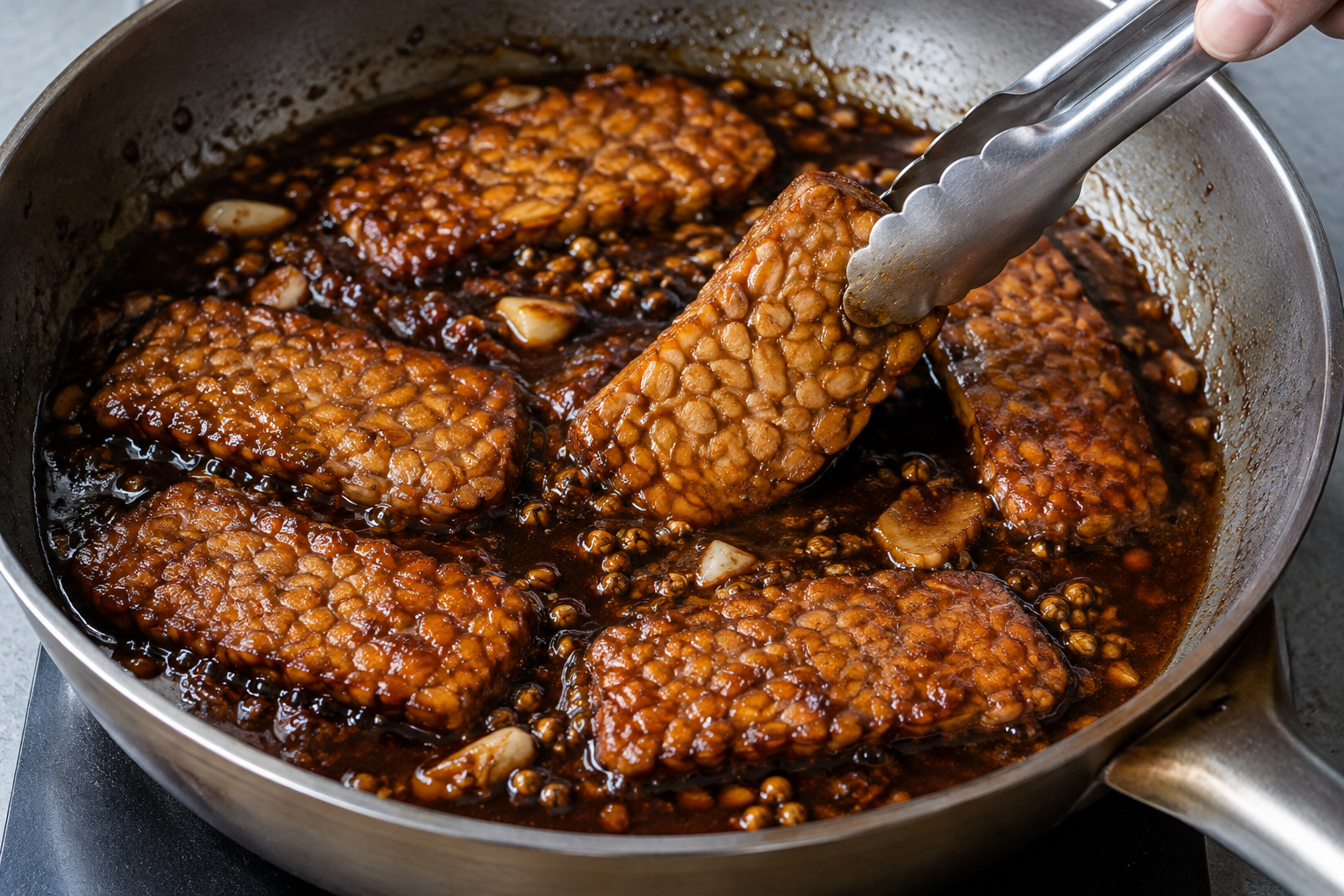
Bacem is a cooking method in which ingredients are gently cooked in a spiced, often sweet-savory liquid. Tempeh holds its shape as it simmers while absorbing flavor into its firm texture. In this version, gula jawa and ketjap manis bring sweetness and depth; coriander seeds and galangal add an earthy, lightly citrusy aroma. The result should not be dry or crisp inside: the slices stay firm and juicy, with a glossy exterior after frying.
Gula jawa is Indonesian palm sugar, usually sold in blocks. Grate or finely chop the block so it dissolves evenly. If you can’t find it, use dark palm sugar or brown sugar; the flavor will be a little less complex. Ketjap manis is sweet Indonesian soy sauce and is important here for both flavor and a syrupy sheen. Regular soy sauce is not a direct substitute: it is saltier and much less sweet. If you do use it, add extra sugar to taste and keep in mind that the result will be different.
Galangal, also called laos, adds a fresh, peppery spiciness that differs from ginger. If possible, use a fresh slice and bruise it so you can easily remove it from the pan after simmering. Ground coriander seeds add warmth without overpowering the sambal. Let the tempeh simmer gently rather than boil hard: this gives the flavors time to infuse and lets the liquid evaporate gradually. Keep an eye on the pan toward the end, as the sugar and ketjap can start to stick once little liquid remains.
After simmering, you can fry the slices in a skillet with a little oil or place them on a hot griddle. Work quickly and turn them carefully; the aim is a caramelized, sticky exterior, not a hard crust. The lime sambal balances it with chili, shallot and acidity. Adjust the amount of chili to your preference and taste the sambal before serving: limes vary in juiciness and acidity.
Serve two or three slices per person as a starter, with the sambal on the side, or include them among other small dishes in a rijsttafel. Steamed rice and crisp cucumber go well with them if you’re making a more substantial meal. Refrigerate leftovers promptly in a sealed container and eat within two days. Reheat the tempeh thoroughly in a pan; add a splash of water if the ketjap coating has become too firm.
 Main course

