ABOUT THIS RECIPERice Cakes with Coconut Broth
Lontong is rice cooked until compact, then served in slices or cubes. In many versions, regular rice is cooked in a mould or wrapped in banana leaves; glutinous rice is not the usual choice. For this practical version, we use glutinous rice, which makes firm cubes after steaming and pressing. This is a deliberate adaptation of the rice preparation, while the combination with kuah lodeh remains at the heart of the dish.
Kuah lodeh is a coconut broth with vegetables and aromatic spices. The exact ingredients vary from household to household and from region to region. Javanese cuisine has influenced Malaysian cuisine, and dishes with this name and related preparations appear in several Southeast Asian food traditions. That makes it difficult to point to one fixed, universal version. Here, shallots, garlic, ginger, turmeric and lemongrass give the broth its spiced base; coconut milk makes it mellow and rounded.
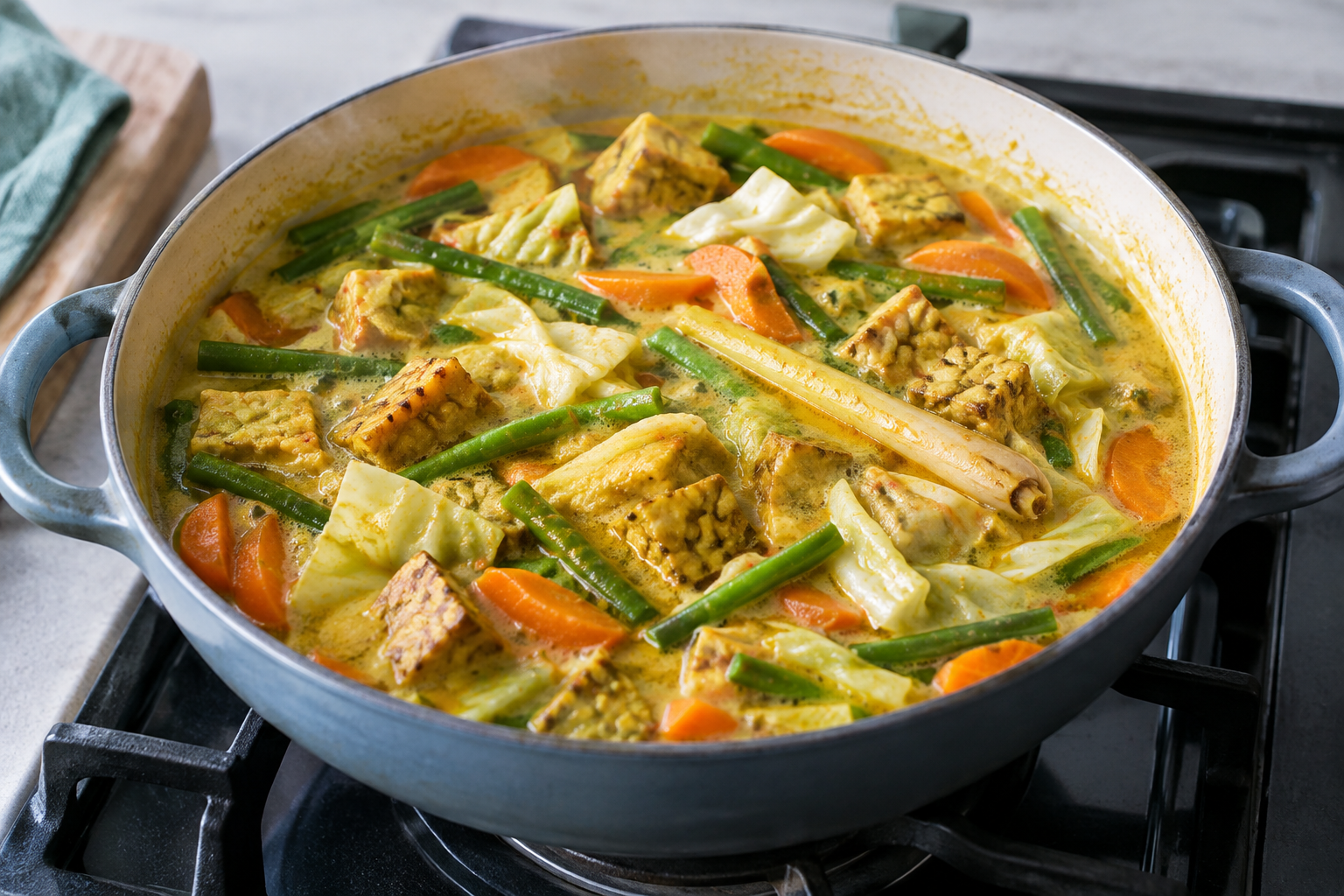
Tempeh is more than an add-in here: the cubes absorb flavour as they simmer and give the dish a firm, nutty bite. Brown them lightly first so they don’t soften straight away in the broth. Then keep the heat low when you add the coconut milk. A gentle simmer helps the flavours come together without letting the sauce boil vigorously. The cabbage and carrot are at their best when tender but still retaining a little texture.
The rice takes a little planning ahead: soak the glutinous rice for a few hours, steam it until cooked and press it firmly into a parchment-lined tin. Leave it covered to cool and set before cutting; it is still fragile while warm. You can briefly warm the cubes in the broth before serving, or keep them separate so they hold their shape. If you’re short on time, you can use ready-made lontong and follow the package instructions.
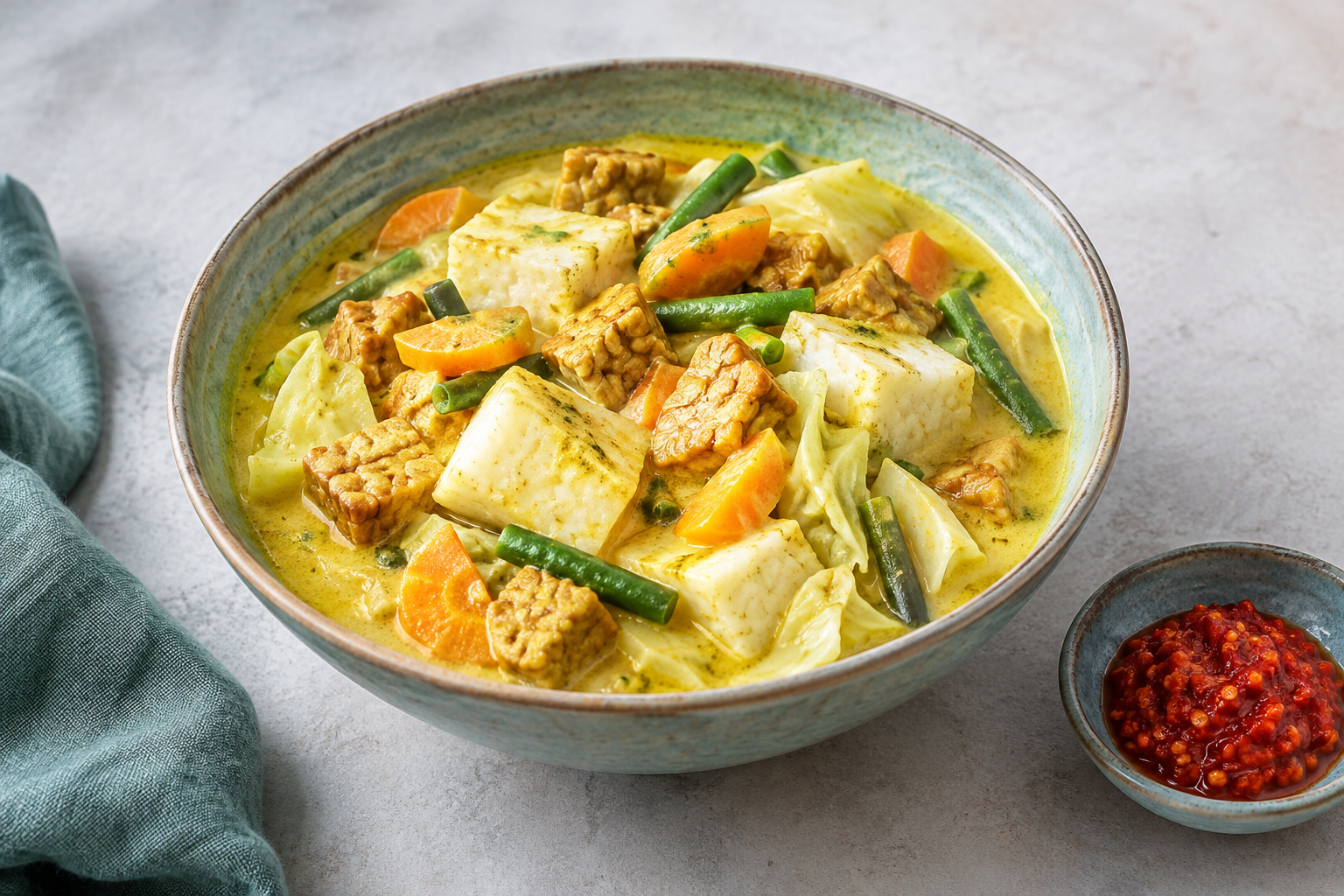
Carrots and cabbage are available all year round. You can replace some of them with, for example, green beans or aubergine; add firm vegetables earlier than leafy greens, which need only a short time to cook. For a milder broth, use less red chilli and serve sambal on the side. Serve the lontong in deep bowls, with plenty of vegetables and tempeh in each, so every bite has rice, sauce and something substantial.
 Main course

