ABOUT THIS RECIPESoft batter, quick fry
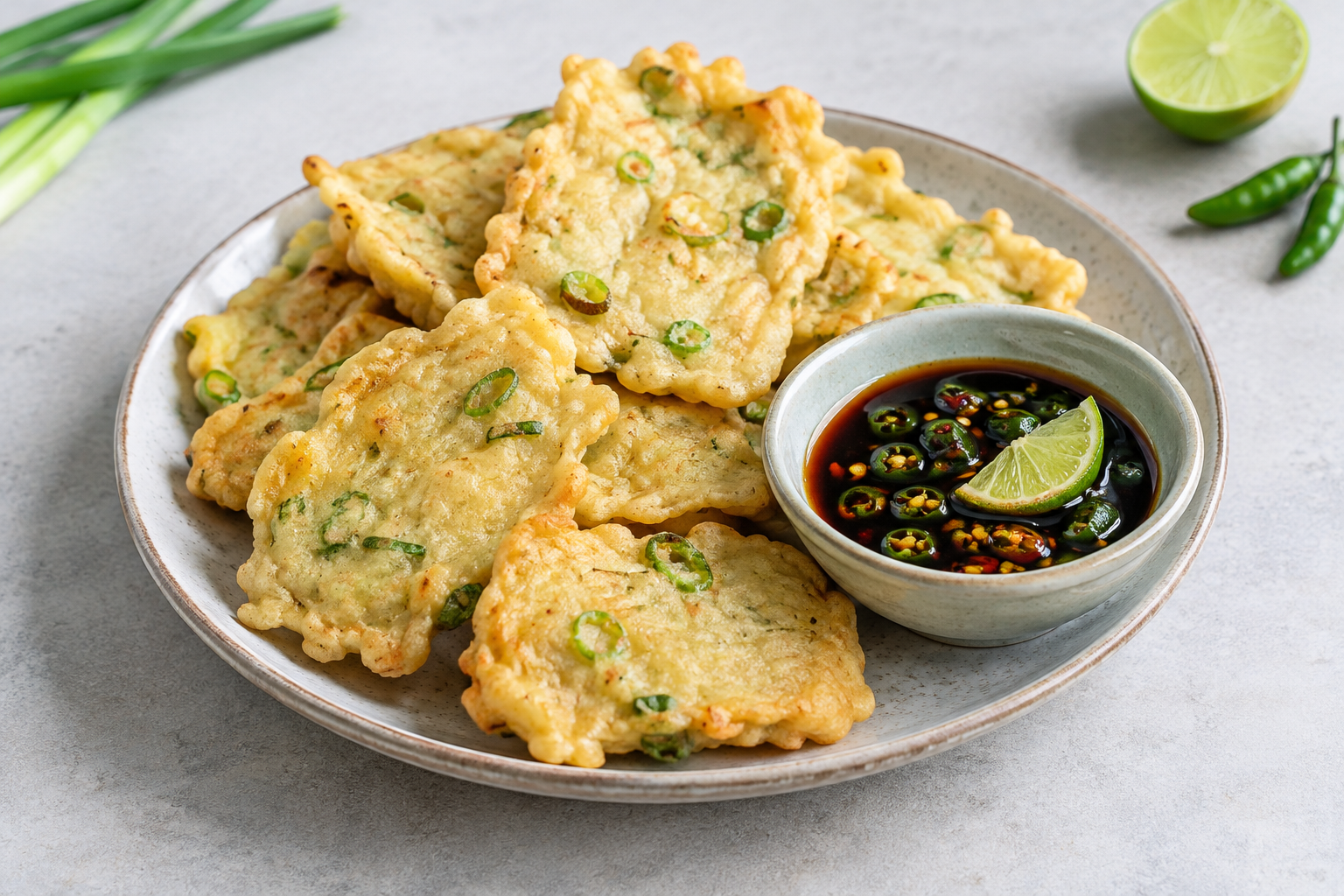
Mendoan is associated with Banyumas, in Central Java, and differs from tempeh that is fried until completely golden and crisp. The slices are thin and coated in a loose batter; after a brief fry, the coating is cooked but still soft. That soft result doesn’t mean the frying time was too short. If you fry the slices for too long, they dry out, and the distinctive contrast between the thin layer of batter and the firm tempeh is lost.
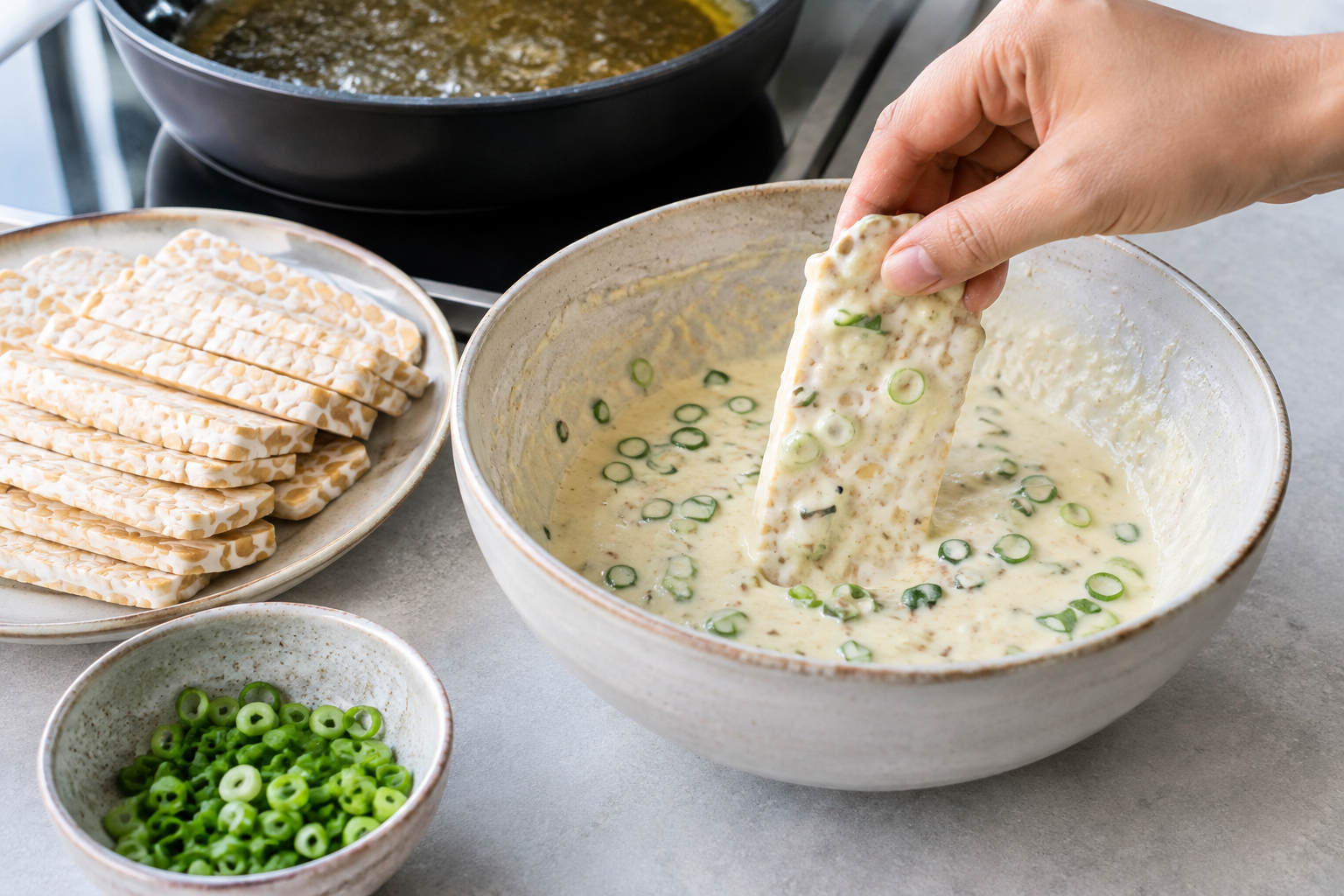
Rice flour makes the batter light and less elastic, while wheat flour gives it enough structure to cling to the slices. Cold water helps keep the batter light. Stir it only until the flour is incorporated: a few small lumps are fine, but beating it thoroughly can make the texture tough. Scallion, garlic and ground coriander add fragrance and flavor without overpowering the tempeh. Finely slice the scallion so it’s evenly distributed through the batter.
Cut the tempeh into slices about half a centimeter thick. Thin slices cook quickly and let the batter take center stage; thicker pieces need more time and are less tender. A thermometer makes frying predictable: at around 170 °C, the batter sets quickly, so you don’t need to fry the slices for long. Fry in small batches so the oil temperature doesn’t drop much. After frying, let the slices drain briefly on a rack or paper towels, and don’t stack them; this keeps the outside from getting soggy.
Kecap manis gives the dip its sweet-and-savory base. Lime juice cuts through with freshness, and finely chopped green rawit chilies bring a direct hit of heat. Adjust the amount of rawit to your preference, or serve the chilies on the side if not everyone likes the same level of heat. Don’t have kecap manis? Use regular soy sauce with a little sugar, though the dip will be thinner and less syrupy. Ground coriander is practical here; don’t replace it with coriander leaves, which have a different flavor.
Serve the mendoan straight away as a side dish, for example alongside rice and vegetable dishes, or put them on the table as a savory snack with the dip on the side. They’re best straight from the pan: the batter loses its soft, freshly fried texture when stored. So it’s better to make only as much as you plan to serve right away. Keep the dip separate until serving so the underside of the tempeh doesn’t get damp.
 Main course

