ABOUT THIS RECIPELeeks take the lead, rice provides the contrast
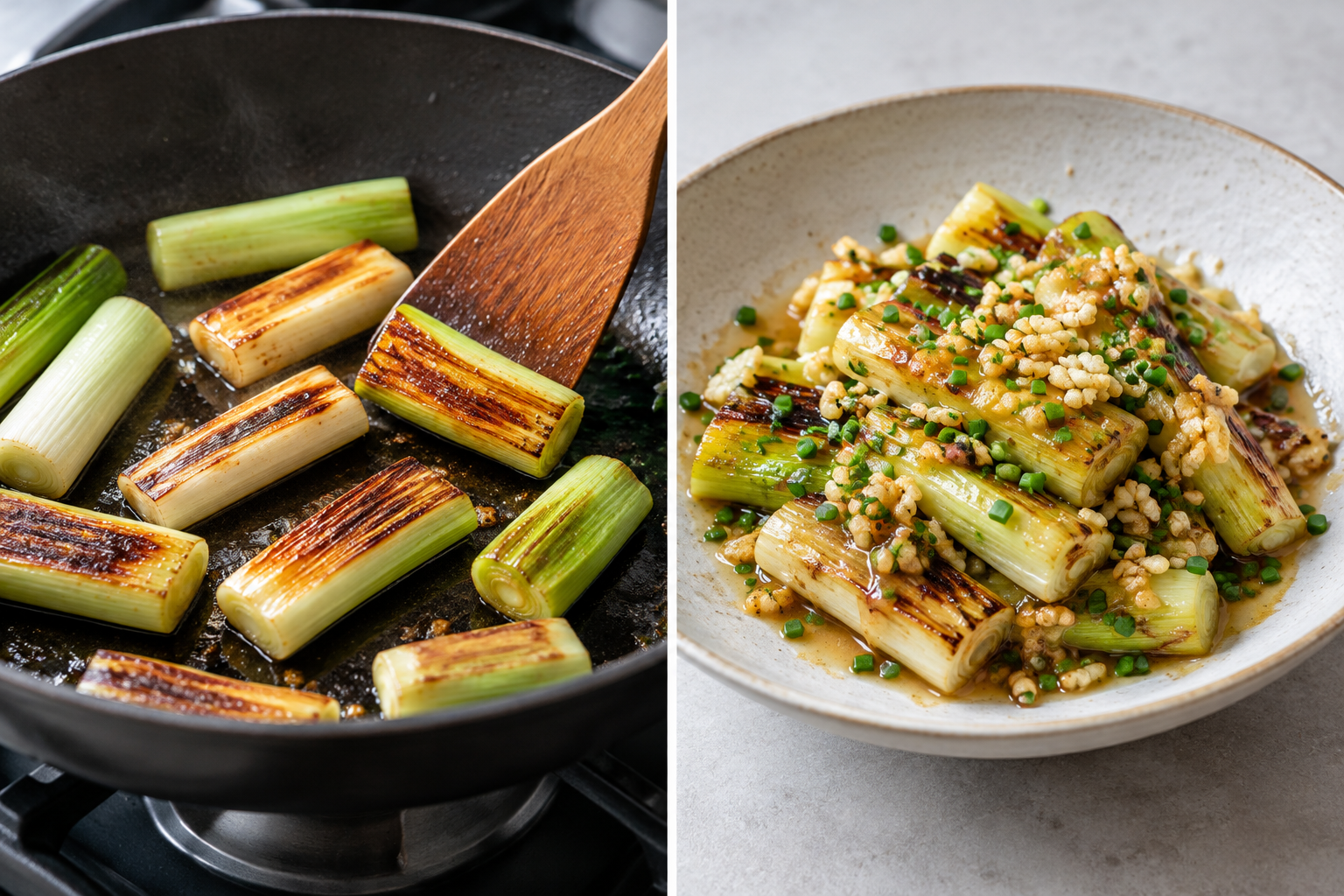
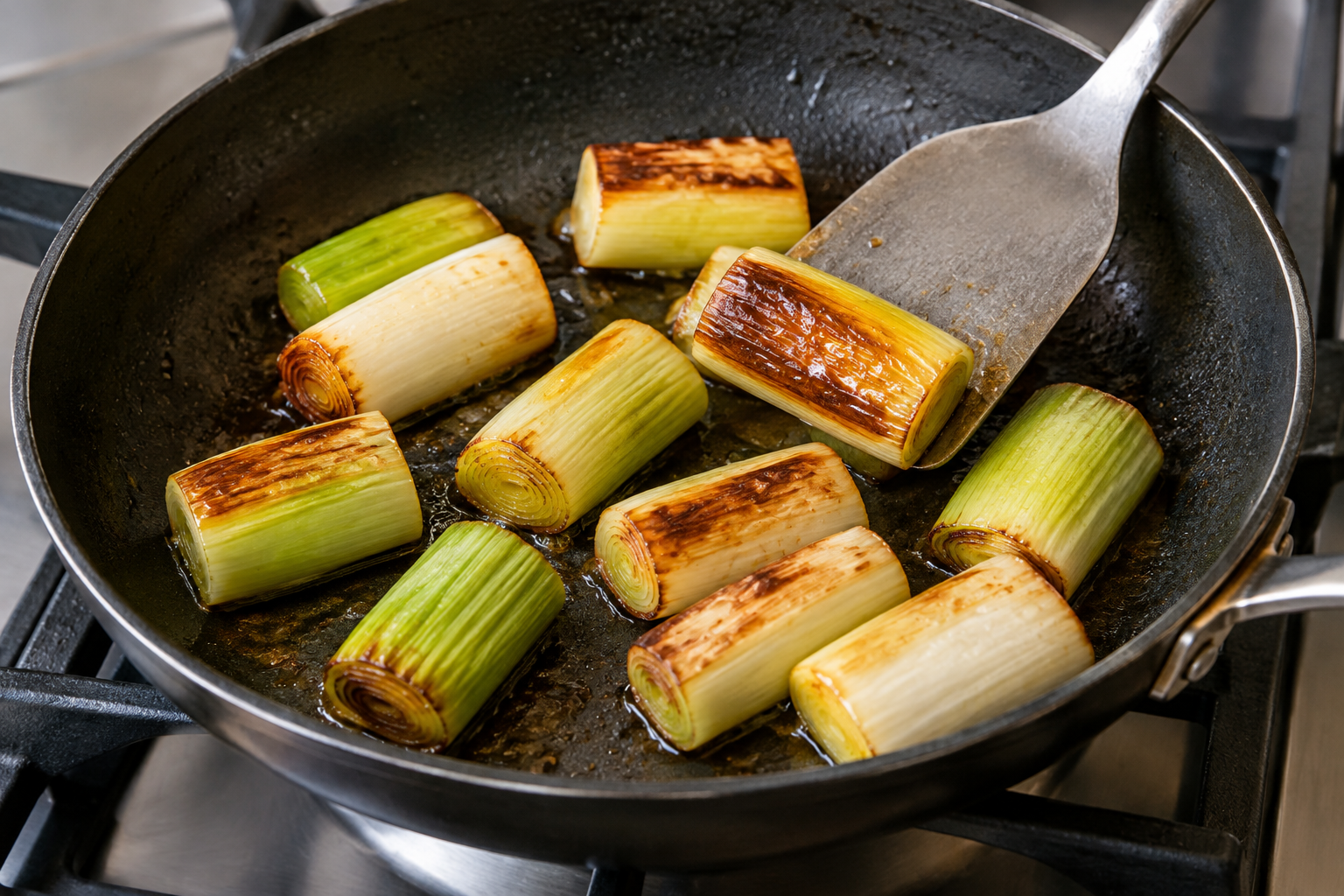
Yaki-negi refers to grilled negi, a Japanese onion that turns mild and sweet when cooked over a flame. Dutch leeks have a similar gentle onion flavor, but are larger and often a little firmer. In this dish, leeks are a practical relative, not a like-for-like substitute with the same shape or a claim to traditional preparation. Browning the pieces first, then covering the pan to finish cooking, gives the leeks both charred edges and a tender center.
The dark spots matter for flavor: the leeks’ natural sugars brown in the hot pan, adding a roasted, lightly sweet note. Let the pan get properly hot, but keep the heat manageable; the leeks should brown without the outside burning before the inside turns tender. A splash of water and a lid help the firmer parts cook through. Use thick leek stalks if possible, so the pieces hold their shape. Thin leeks work too, but need less time under the lid.
White miso brings savory umami and a mild, rounded flavor. Dashi makes the sauce thin enough to run around the leeks; instant dashi is a handy choice, as long as you prepare it according to the package. Stir the miso into warm, not boiling, dashi. This helps it blend smoothly and keeps the sauce tasting fresh. Rice vinegar cuts through the richness. The sesame oil is deliberately used sparingly: a small amount adds fragrance without overpowering the leeks or dashi. If you don’t have white miso, another mild miso will work, although the sauce will probably taste saltier and more robust.
The crispy rice gives a different kind of bite from the tender vegetables. Cooked rice dries out into crunchy grains in the oven; spread it out generously and stir it as it bakes so more of the rice dries evenly. Cold rice is practical, but use leftovers that were cooled quickly after cooking and kept refrigerated. Rice vinegar, dashi and miso are usually available at shops selling Japanese or wider-ranging Asian ingredients. Chives provide a fresh, green counterpoint; no extra garnish is needed to finish the dish.
Serve the leeks as a side with steamed rice, tofu or pan-fried fish, or put them on the table with an extra portion of rice for a light lunch. Spoon the sauce over the warm leeks just before serving and scatter the crispy rice on top at the last moment, so it stays crunchy for as long as possible. Store leftovers covered in the fridge and heat them through thoroughly; keep the crispy rice separate and add it afterward. The rice will lose some of its crunch in storage, so it’s best made fresh.
 Main course

