ABOUT THIS RECIPEA play of soft, nutty and syrupy
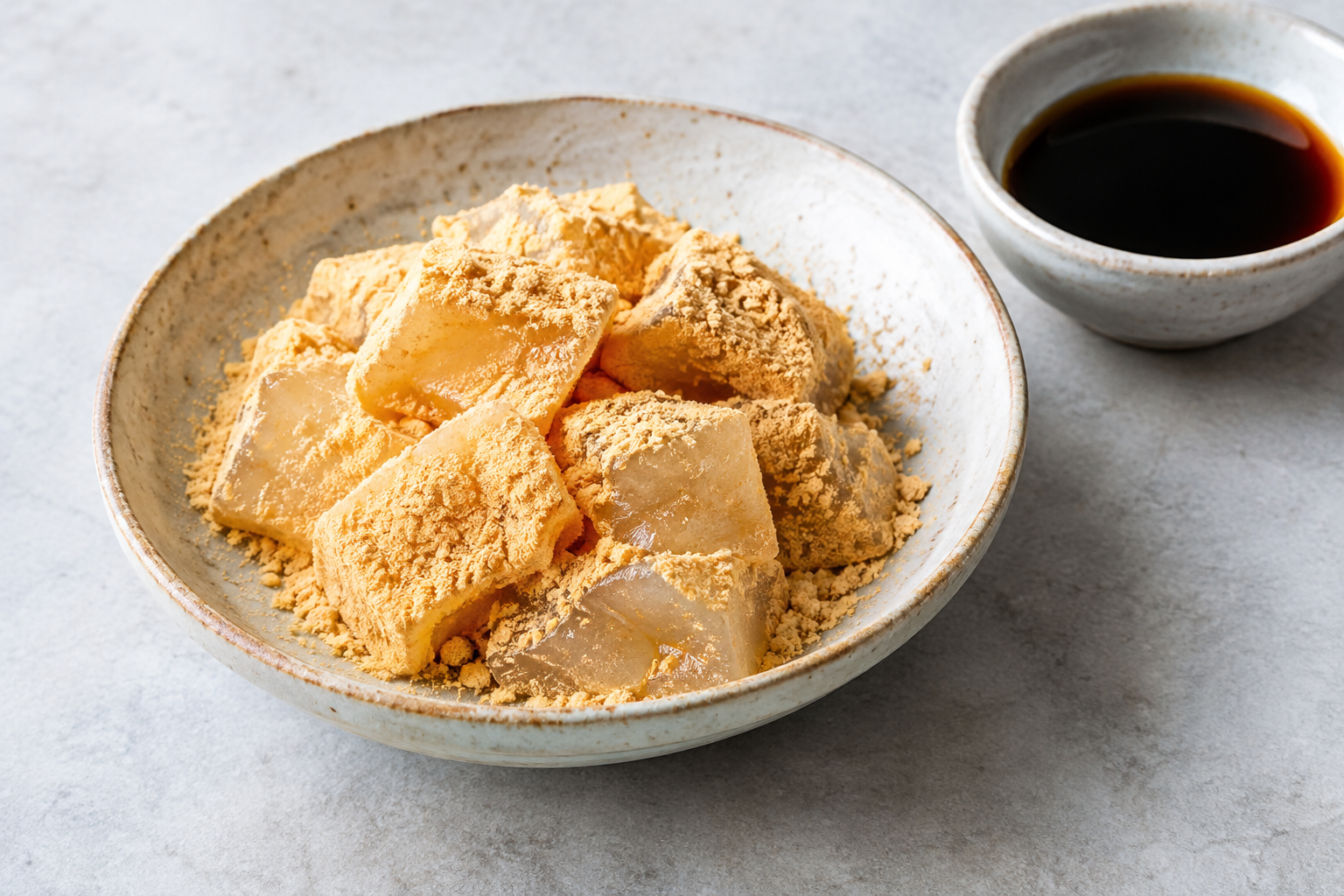
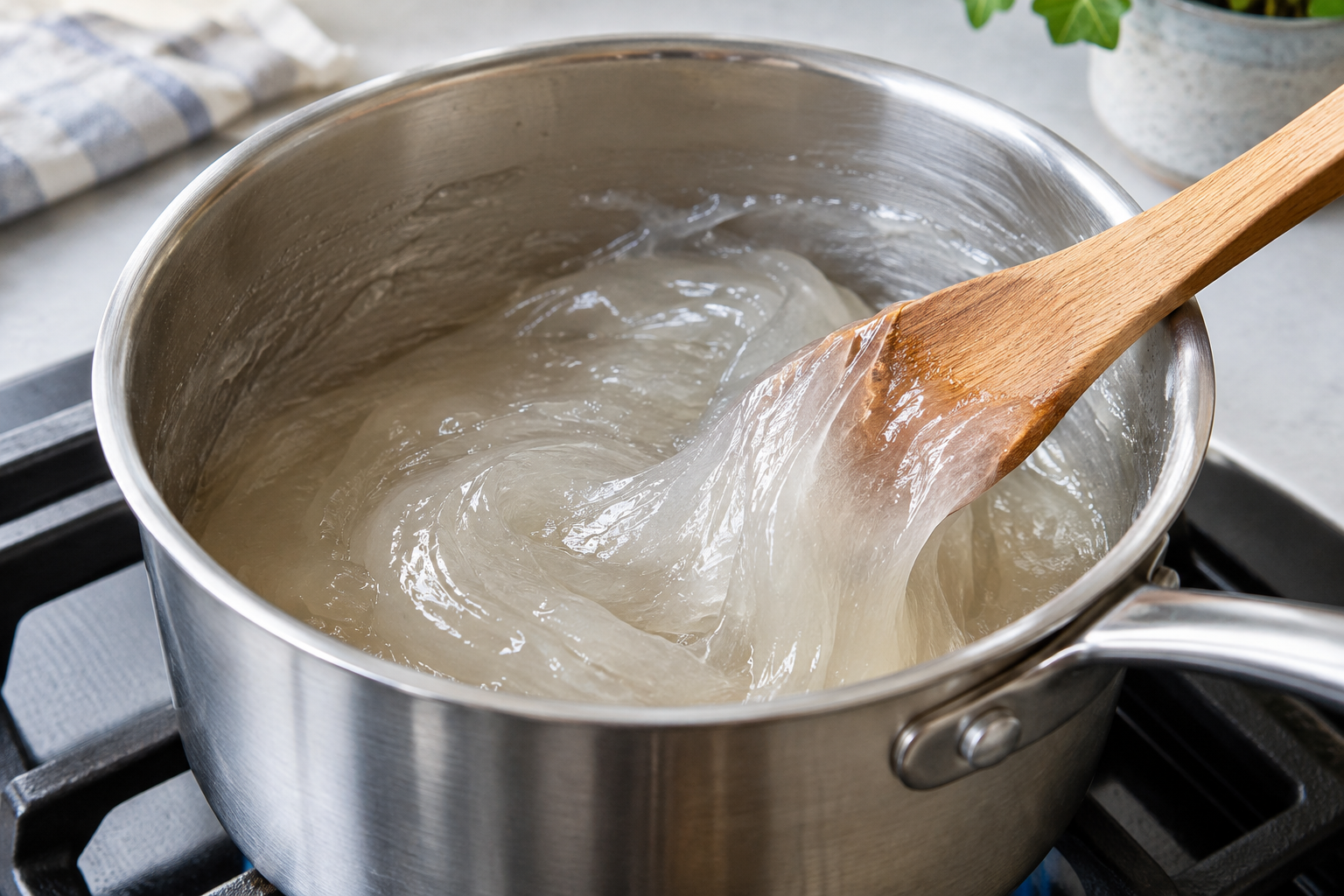
Warabi mochi is all about texture: the little cubes are soft and elastic, quite different from the firmer rice mochi many people know. The base is warabiko, starch from the rhizome of the bracken fern. First stir it with cold water until smooth, then heat it while stirring. In the pan, the mixture changes from milky white to glossy and translucent; that’s the sign that the starch is cooked. Keep stirring, including along the bottom and sides, so it thickens evenly and doesn’t stick.
Check the packaging when you buy it: warabi-ko products can be made from pure bracken-root starch, or from a blend with, for example, tapioca starch or sweet potato starch. The ingredients affect the firmness and sometimes the amount of water needed. This recipe is designed for warabiko; if you’re using a blend, follow the package directions if they differ significantly. Regular cornstarch is not a direct substitute for the same characteristic springiness. Pure warabiko is often more expensive, but gives the most distinctive, soft texture.
Kinako is roasted soybean flour. It tastes dry, lightly toasted and nutty, and absorbs some of the sticky coating, making the cubes easier to pick up. Mix it with a little sugar and salt: this not only makes it sweeter, but also brings out the toasted flavour. Kuromitsu is a dark syrup made from black sugar. Kokutō is a good choice for this; dark brown sugar also works, although the flavour will be more caramel-like and less distinctive.
Let the mochi cool after cooking until it’s firm enough to cut, but don’t chill it for longer than necessary. Refrigeration can change its soft, elastic bite. A lightly moistened knife helps with cutting; coat the pieces with kinako straight away. Serve the syrup on the side or drizzle a little over the mochi, so the kinako doesn’t get wet straight away. Warabi mochi is best eaten the day it’s made. Store any leftovers covered in the refrigerator and bring them back to room temperature before serving; the texture may be firmer.
 Main course

