ABOUT THIS RECIPEThe dark side of the pudding
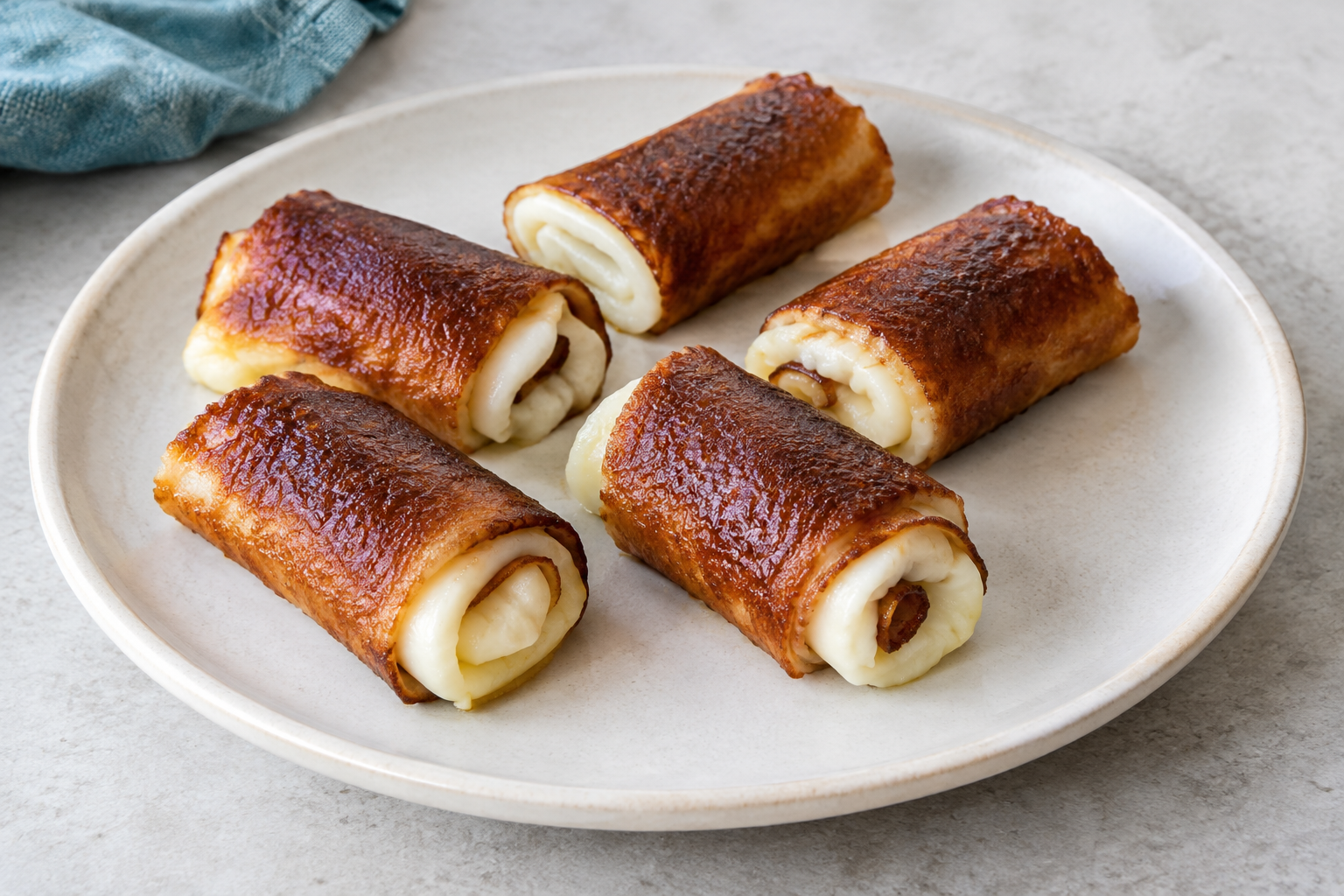
Kazandibi literally means the bottom of the pan, and that bottom is exactly what makes this dessert different from an ordinary milk pudding. The pudding itself is mild, creamy and smooth; as it heats, the underside develops a dark brown color and a slightly bittersweet flavor. That contrast is the goal, not a sign that the whole pudding has burned. In this version, milk, sugar, cornstarch and rice flour make a firm pudding that can be neatly cut into strips once chilled.
Kazandibi is also made as a variation on tavuk göğsü, a Turkish pudding that includes finely shredded chicken breast. This recipe leaves out the chicken and keeps things simple with a milk pudding. Rice flour gives it a slightly softer bite and a subtle grain flavor; cornstarch helps the pudding set. If you don’t have rice flour, replace it with the same amount of cornstarch. The texture will be a little smoother. Use whole milk for a rounded flavor, if possible, and first whisk the starches into a smooth mixture with cold milk to prevent lumps.
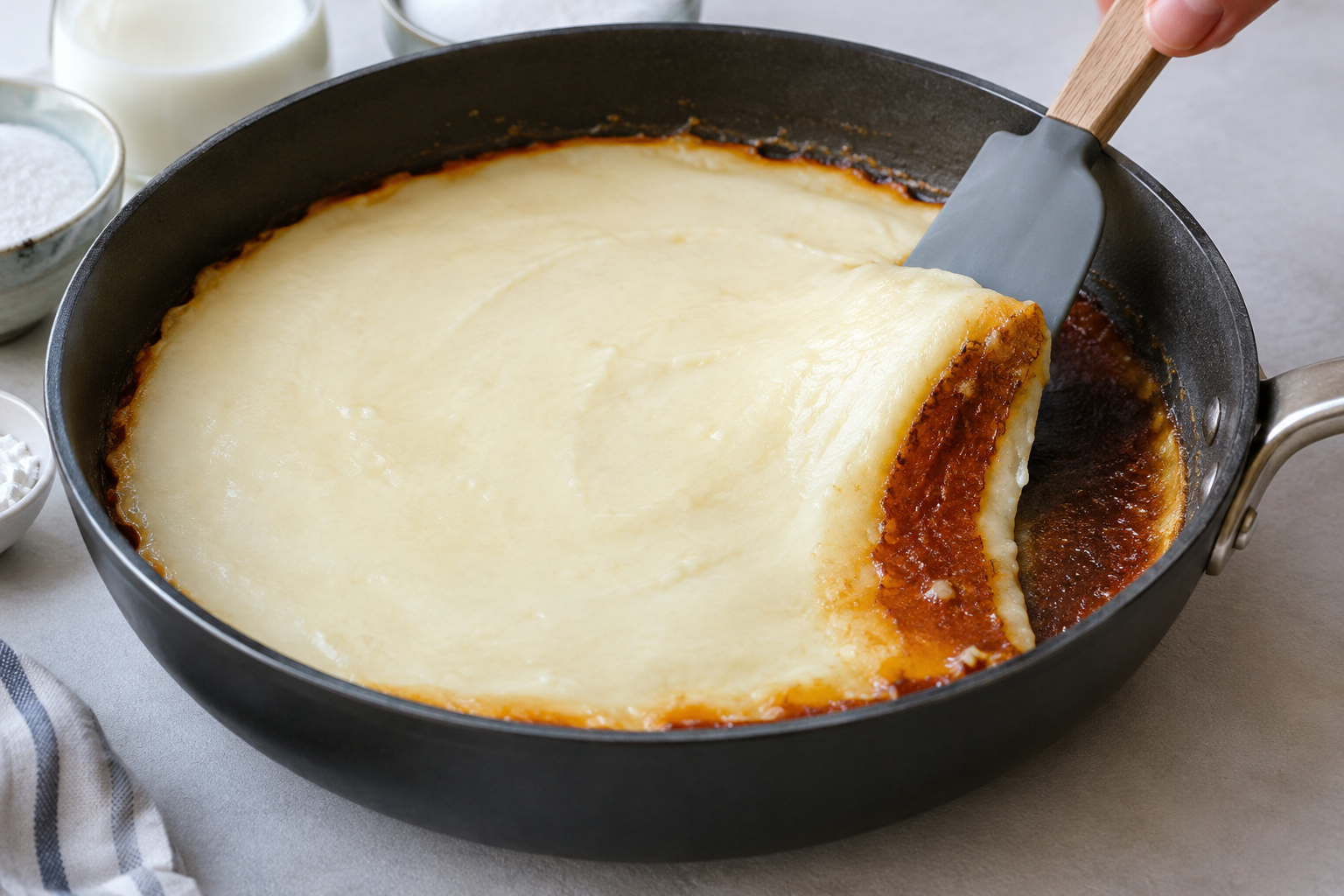
The technique calls for patience and steady, low heat. First, the pudding is cooked until thick on the stove, then spread in a wide pan with sugar on the bottom. Gently turning the pan helps the base color gradually. A nonstick pan with a thick base gives you more control than a thin pan; keep the heat low and stay nearby. The sugar can turn dark amber, but once it turns black, it tastes sharp and bitter. The color can vary a little depending on your stove and pan, so pay attention to the smell of the caramel, too.
Once it has caramelized, the pudding needs to cool completely and then set in the refrigerator for at least four hours. Cut it into strips with a thin knife and carefully roll or fold them, with the caramelized side facing out. If a piece tears, fold it in half: the flavor is the same, and soft pudding is simply more delicate than a baked cake. Serve the pieces chilled, without extra sauce; that way, you can clearly taste the difference between the creamy inside and the dark base.
If you make your kazandibi ahead of time, cover the cooled pudding and store it in the refrigerator. It’s best to cut and roll the portions just before serving, so the caramel layer stays visible. Eat the pudding within two days and don’t leave it at room temperature for an extended period. A small portion is enough after a meal, but it also goes well with strong Turkish tea or coffee, whose bitter flavor pairs nicely with the caramel.
 Main course

