ABOUT THIS RECIPEFluffy rice, tender chickpeas
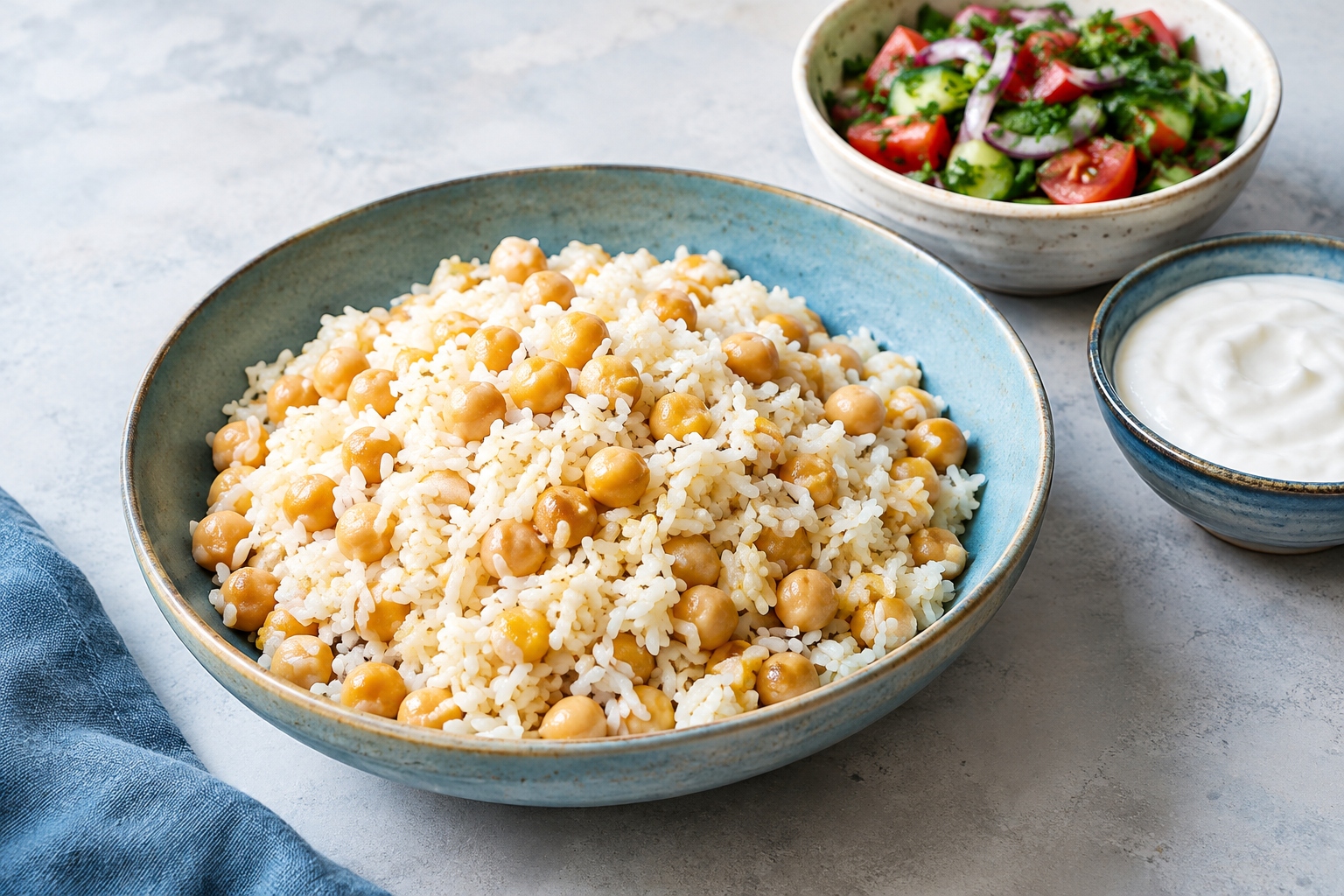
Nohutlu pilav is rice with chickpeas, with the legumes simmered together with the rice rather than simply piled on top. Butter gives the pilaf a rounded flavor; broth adds savory depth without the need for many extra spices. The grains should be cooked and separate, while the chickpeas stay whole. That makes this dish work as a main meal, especially with yogurt and a fresh salad on the side.
Choosing the right rice matters for pilaf. Baldo, a firm rice variety available in Turkish shops, is a good option. Medium-grain rice also works; basmati gives you a slimmer, more aromatic grain. The amount of liquid can vary slightly by variety, so keep the package instructions in mind and don’t add extra broth without checking. Rinsing removes loose starch from the surface. A brief soak in warm water helps the grains cook more evenly; draining them well prevents extra liquid from accidentally ending up in the pan.
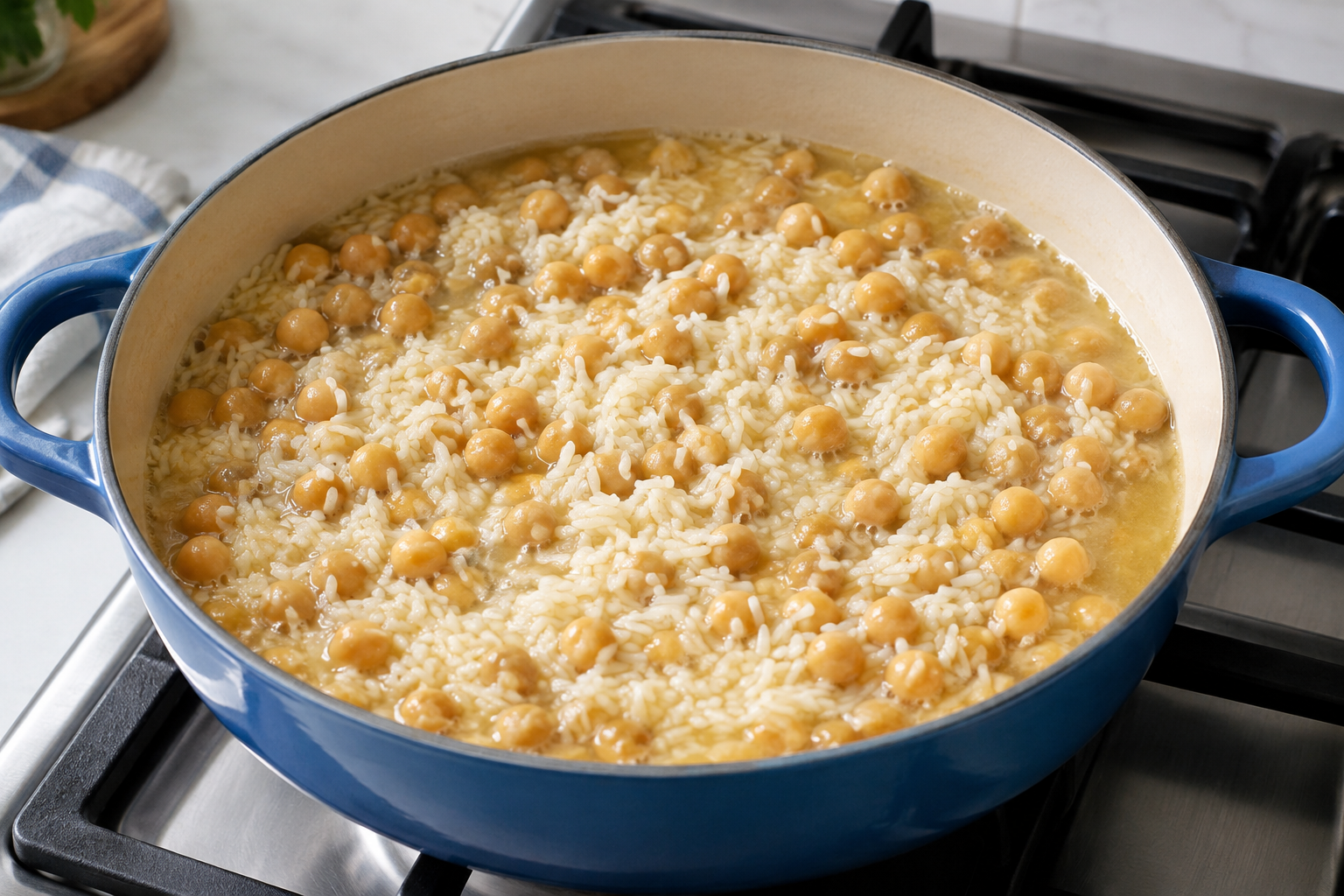
Frying the rice briefly in butter is more than just a flavor step. The grains get coated in fat all around and then absorb the broth gradually. Use a pan with a tight-fitting lid and let the rice cook gently over low heat after adding the broth. Don’t lift the lid in the meantime: this keeps the steam in the pan. Let the pilaf rest briefly after cooking, then gently fluff it with a fork. Stirring while it cooks can break the grains and make the rice sticky.
Use chickpeas that are already cooked, either from a jar or cooked from dried; rinse and drain jarred chickpeas. Add them at the same time as the broth so they warm through without falling apart. Vegetable broth keeps the dish vegetarian, while chicken broth gives it a heartier flavor. If the broth is salty, taste it before cooking and go easy on any extra salt. A pat of butter can be replaced with the same amount of mild olive oil, though the flavor will be less creamy.
The tomato, cucumber, parsley, and lemon salad makes a fresh contrast. Ripe tomatoes are especially good in summer; out of season, you can use small tomatoes, which often have more flavor than large, watery ones. Serve the salad separately so its acidity doesn’t make the rice soggy, and add plain yogurt on the side. Refrigerate leftovers promptly and keep them separate from the salad; it’s best to eat cooked rice within 24 hours and reheat it only once, until piping hot throughout.
 Main course

