ABOUT THIS RECIPEA hearty stew, without the long prep
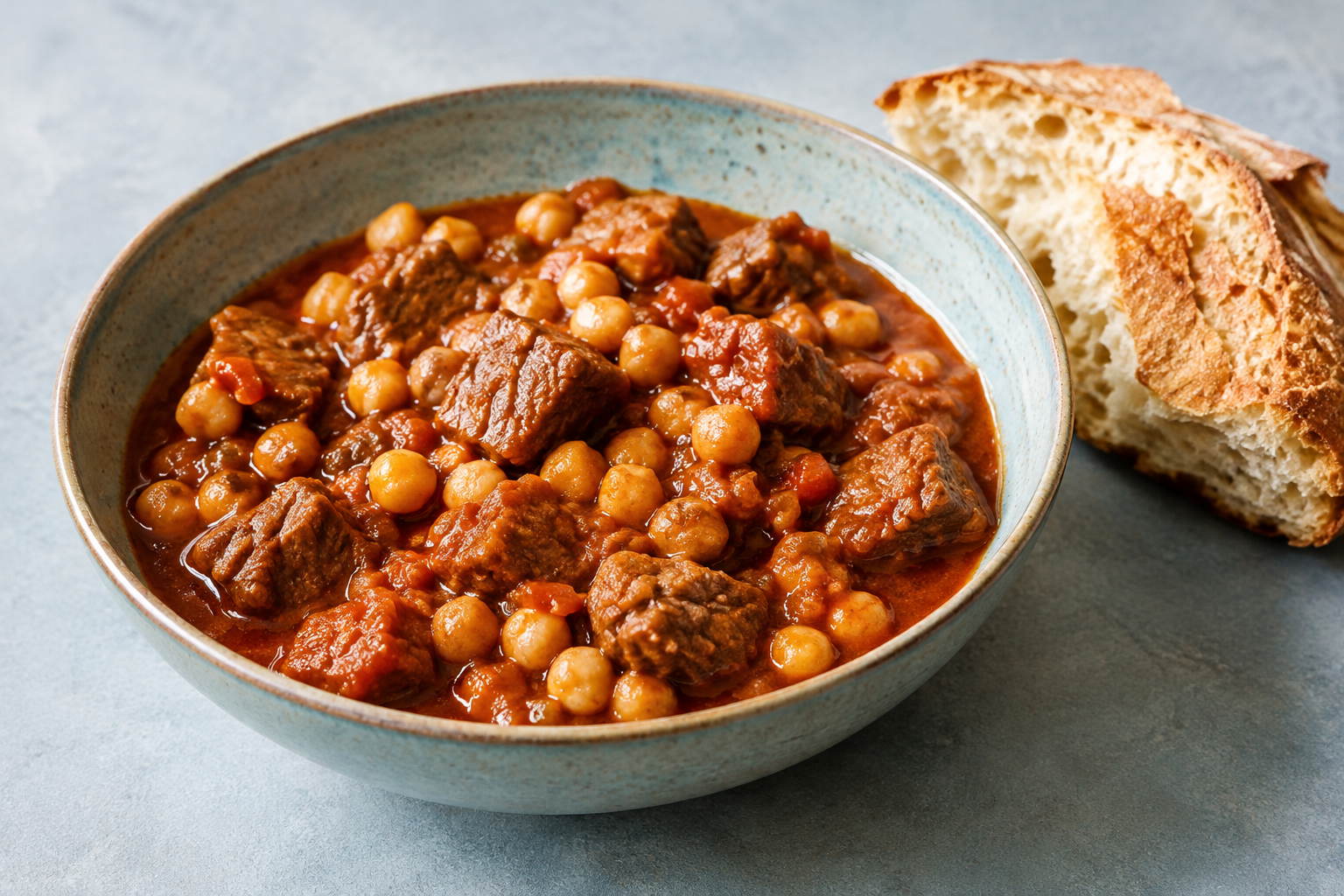
Nohut yemeği is a Turkish stew in which chickpeas take center stage. There are many home-style and regional versions: sometimes the dish is made with meat, sometimes without. This version combines chickpeas with lamb, onion, and tomato paste. The sauce is savory and concentrated, with soft chickpeas and meat that falls apart after a gentle simmer. Turkish pepper paste, biber salçası, adds extra depth and a mild, fruity pepper flavor; the heat varies from one jar to another.
Precooked chickpeas make this dish manageable on a weeknight. Rinse them before adding them to the pan to remove excess moisture and the salty liquid from the can. They need much less time than raw, soaked chickpeas, so they can be added near the end, once the meat is almost ready. That way, they stay whole while still taking on the flavor of the sauce. If you prefer dried chickpeas, soak them according to the package directions and cook them until tender first; allow extra prep time.
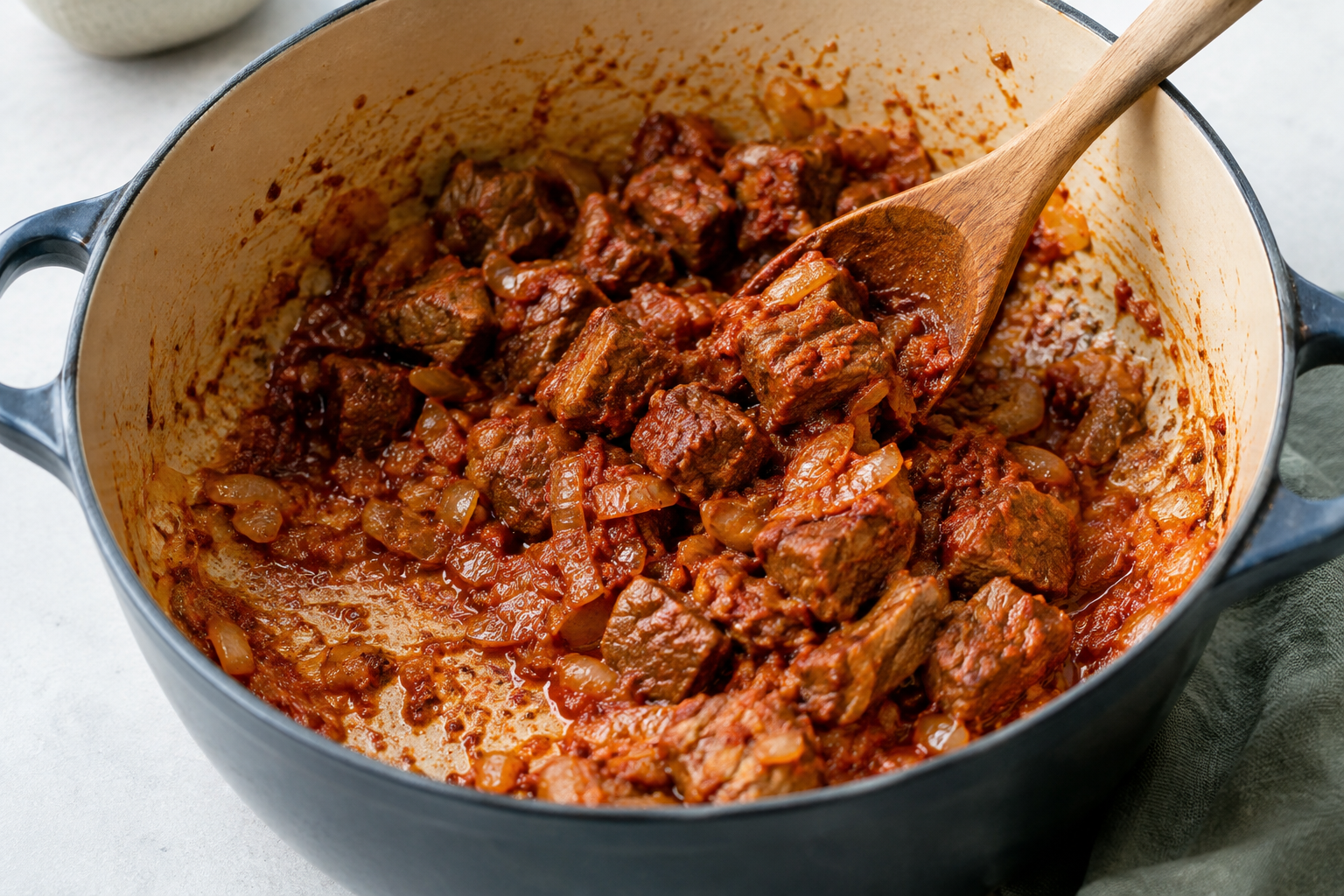
Lamb shoulder is well suited to slow cooking: its connective tissue gradually softens and gives the sauce body. Cut the meat into roughly equal-sized pieces and brown it in batches. A crowded pan cools quickly, making the meat more likely to release moisture than to brown. Then sauté the onion and briefly cook the tomato and pepper pastes. This cooks away their raw flavor and makes the base richer. Let the stew simmer gently, rather than boil hard; add a little hot water if the sauce thickens too much before the meat is tender.
Biber salçası is available at Turkish grocery stores. If you can’t find it, use extra tomato paste and add a little mild paprika to taste. This is a practical substitute, not an identical flavor. Taste before adding salt, too: the pepper paste and stock may already be salty. The sauce should be thick enough to cling to a spoon, but still loose enough to serve generously.
Serve the stew with rice or hearty bread, so none of the sauce goes to waste. A simple bowl of rice keeps the meal straightforward; bread is handy for mopping up the sauce. Refrigerate leftovers, covered, within two hours and eat them within three days. Reheat them gently in a pan until piping hot throughout; stir in a splash of water if the sauce has thickened while stored.
 Main course

