ABOUT THIS RECIPEPesto that clings to the trofie
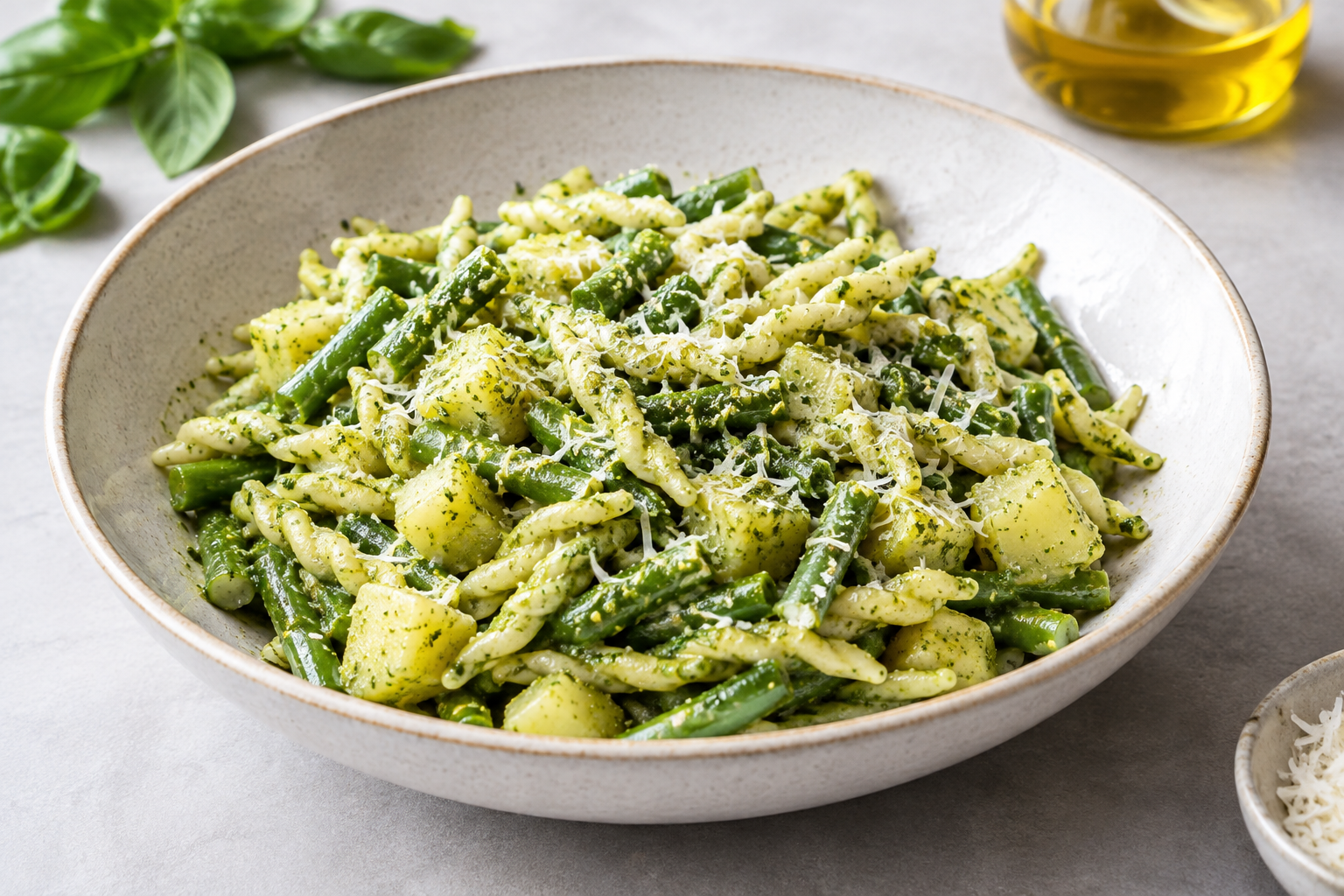
In Liguria, pesto is often paired with trofie, the short, twisted pasta that holds sauce well. Potatoes and green beans are part of many well-known versions of this dish: the potatoes make the meal more substantial, while the beans add bite and a green, mildly sweet flavour. In this recipe, they cook together with the pasta in one pan. Cut the potato into small, even pieces so it cooks through while the trofie cooks.
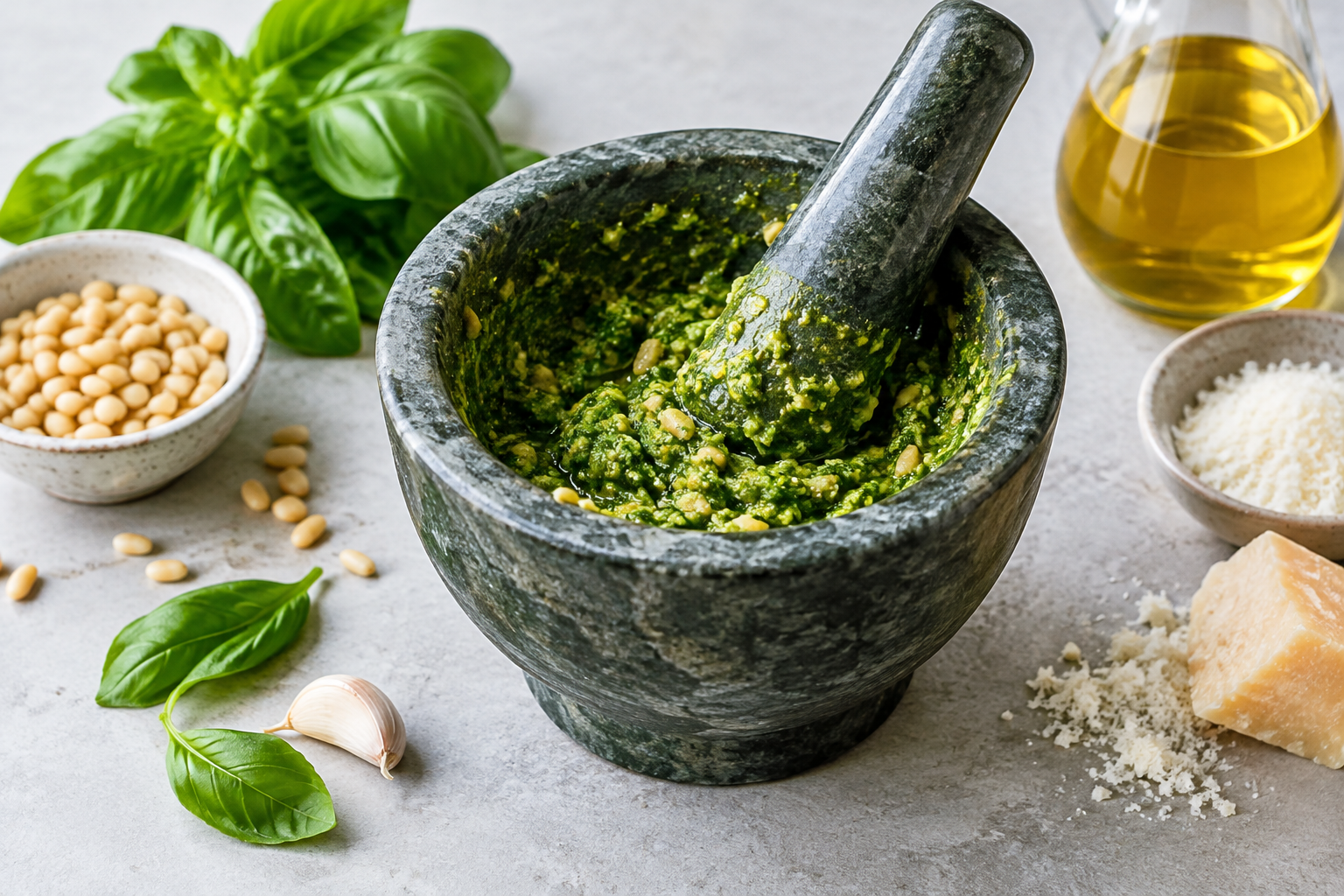
Pesto is an emulsion of basil, pine nuts, garlic, cheese and olive oil. In a mortar, the ingredients are gradually ground together, releasing oil from the basil to create a fragrant, slightly coarse paste. Use gentle pressure and add the basil in batches. A food processor works too, but grind briefly in pulses: running it for too long warms the herbs and can make the sauce less fresh-tasting. Wash the basil beforehand and dry the leaves well, as extra water will thin the pesto.
Choose a small garlic clove if you want a milder sauce. Parmigiano Reggiano brings savoury, nutty notes; Pecorino adds a saltier, sharper flavour. You can replace the pine nuts with almonds, bearing in mind that the flavour will be different. Extra virgin olive oil adds fruitiness and rounds out the sauce. In the Netherlands, basil is most readily available in abundance during the warmer months; out of season, greenhouse-grown basil can have a less pronounced flavour.
Set aside a mugful of cooking water before mixing. The starch in it helps bind the oil, cheese and pesto together, making the sauce smooth without cream. Drain the pasta and vegetables, toss them with the pesto off the heat, and add the water a splash at a time. Too much water will make the sauce thin; stop when it’s glossy and coating the trofie. Serve straight away, with a little extra grated cheese if you like. A simple salad with lemon or a bitter green vegetable makes a good accompaniment and keeps the meal fresh.
 Main course

