ABOUT THIS RECIPESweet-and-sour glaze, fresh contrast
This is a contemporary dish with Indonesian flavor notes, not a traditional preparation with one fixed regional form. Kecap manis, the thick, sweet Indonesian soy sauce, is at the heart of the glaze. Lime balances the sweetness; a small amount of sambal adds warmth without overpowering the fresh cucumber and herbs. Tempeh has a firm bite and a slightly nutty flavor of its own, so it holds its own against the assertive sauce.
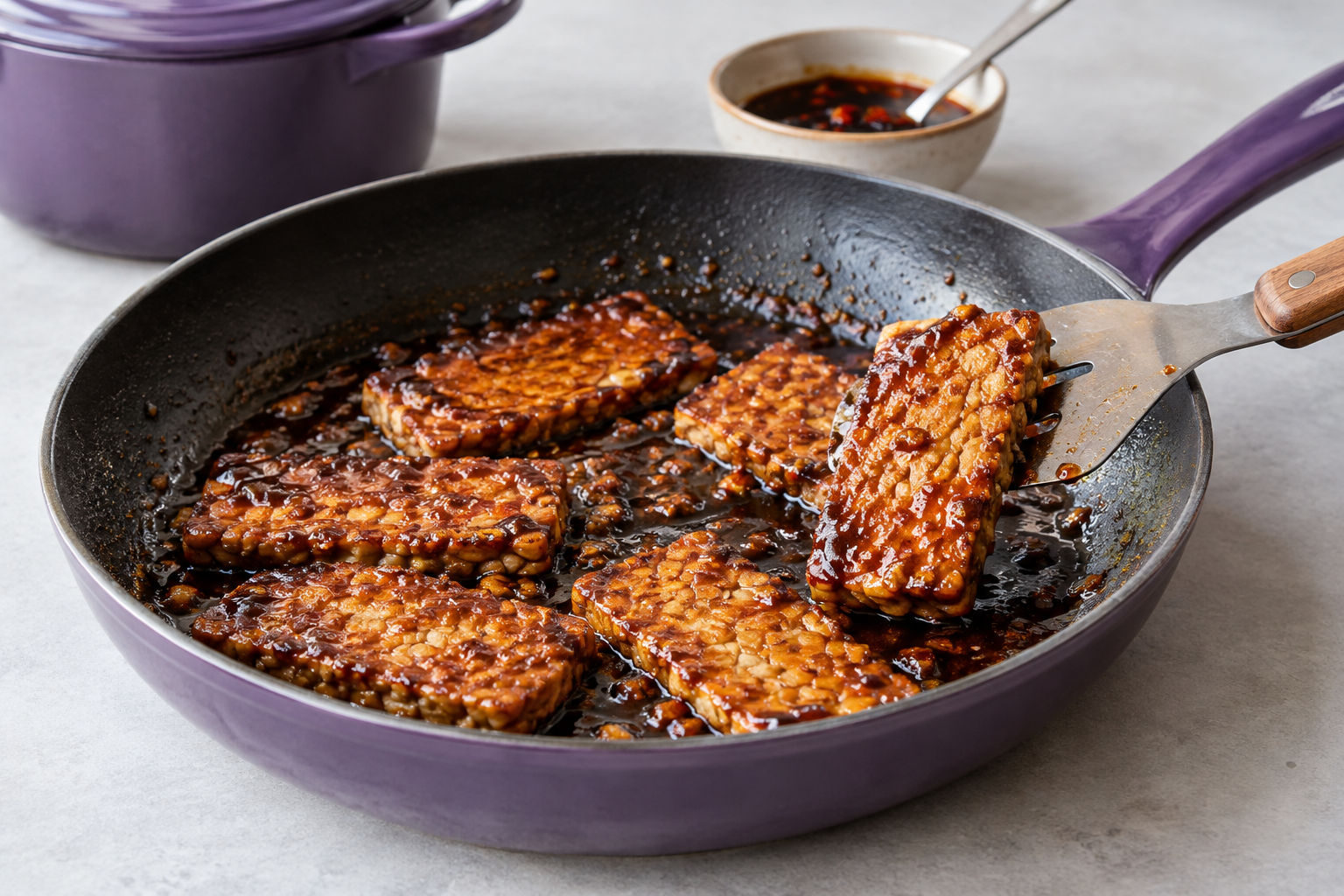
The order of frying and glazing makes a difference. Cut the tempeh into slices and give them time to turn golden brown on both sides in a large frying pan. Add the kecap mixture only after that, and turn the heat to low: the sugars in kecap manis color quickly and can burn. Turn the slices as the sauce reduces, so they get a thin, glossy coating. Remove the pan from the heat as soon as the sauce clings to the tempeh; you’re not aiming for a thick, dry coating.
Cucumber, mint and cilantro make a cool, herby contrast. Slice the cucumber just before serving so it stays crisp, and toss it with a little lime and salt. Dutch cucumbers are widely available during the warmer months, but this dish can be made all year round. No fresh lime on hand? Lemon works too, though it tastes a little different. If you don’t have mint, use extra cilantro, or vice versa. You can replace sambal with a finely chopped red chili; start with a little and taste the sauce before adding it to the pan.
Unsalted peanuts add a toasty crunch. Toast them briefly in a dry frying pan, keeping them moving: once they smell fragrant, they’re ready. Serve the tempeh with warm rice and add the cucumber and herbs at the last moment so the fresh elements don’t wilt. The quantities are intended for two people. Store leftovers covered in the refrigerator and use within two days; reheat the tempeh and rice thoroughly, then add the cucumber and herbs. Bear in mind that the cucumber will soften after storage.

 Main course

