ABOUT THIS RECIPESmall Eggs, Deep Flavor
Bacem is a Javanese way of gently cooking ingredients in a fragrant, sweet-and-savory liquid. In this telur puyuh bacem, peeled quail eggs soak up the flavors of kecap manis, palm sugar, coriander, galangal and salam leaves. Kecap manis brings both saltiness and syrupy sweetness; the spices add a warm, earthy aroma. The result isn’t a spicy snack, but a glossy egg with a bold, rounded flavor.
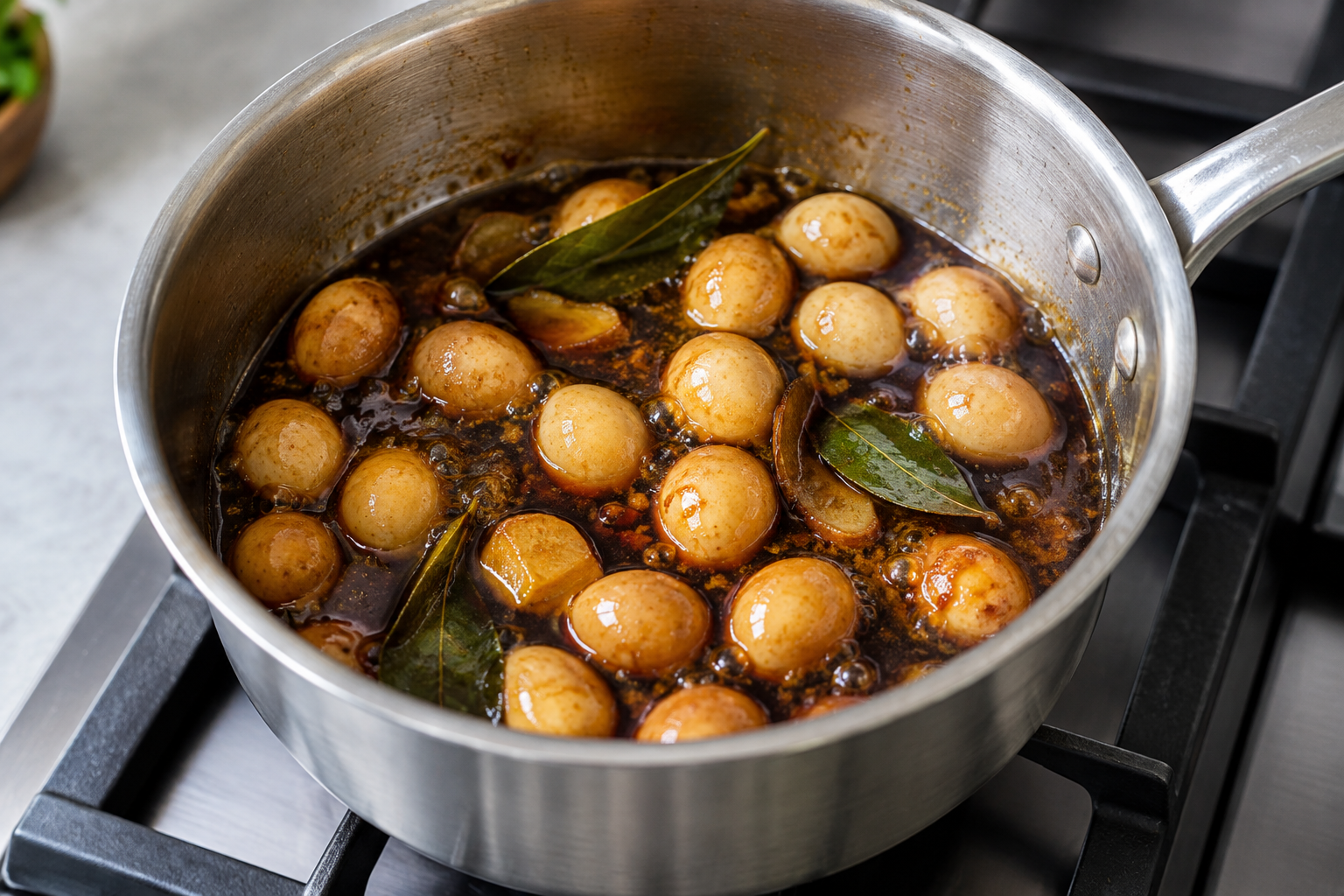
Quail eggs are small and cook quickly. First, boil them briefly until hard-boiled, then cool them right away so they’re easier to peel and don’t keep cooking. Peel them carefully: if the white tears, it may break down further as the eggs simmer. Then let the eggs absorb the flavors in the liquid over low heat. A gentle simmer matters more than a hard boil; if the liquid bubbles vigorously, the eggs can knock against one another and the sweet kecap can stick to the bottom of the pan.
The liquid should eventually be almost completely evaporated. Stay by the pan toward the end and gently turn the eggs with a spoon, because palm sugar and kecap can darken quickly. A brief final caramelization gives them a sticky coating and a few deep-brown spots without making the whites tough. Use palm sugar for its warm, slightly caramel-like flavor. Light brown sugar can be used instead, but the aroma will be a little less complex. Galangal is fresh laos; if fresh isn’t available, you can use a smaller amount of ground galangal.
Salam leaves have their own subtle aroma and are not the same as bay leaves. If you can’t find them, it’s better to leave them out than to add a large amount of bay leaves. Kecap manis is also characteristic of the flavor; in a pinch, regular soy sauce with a little extra sugar will work, but the result will be thinner and less syrupy. Don’t use the sauce as a guide to the final saltiness: the flavor will become more concentrated as it reduces.
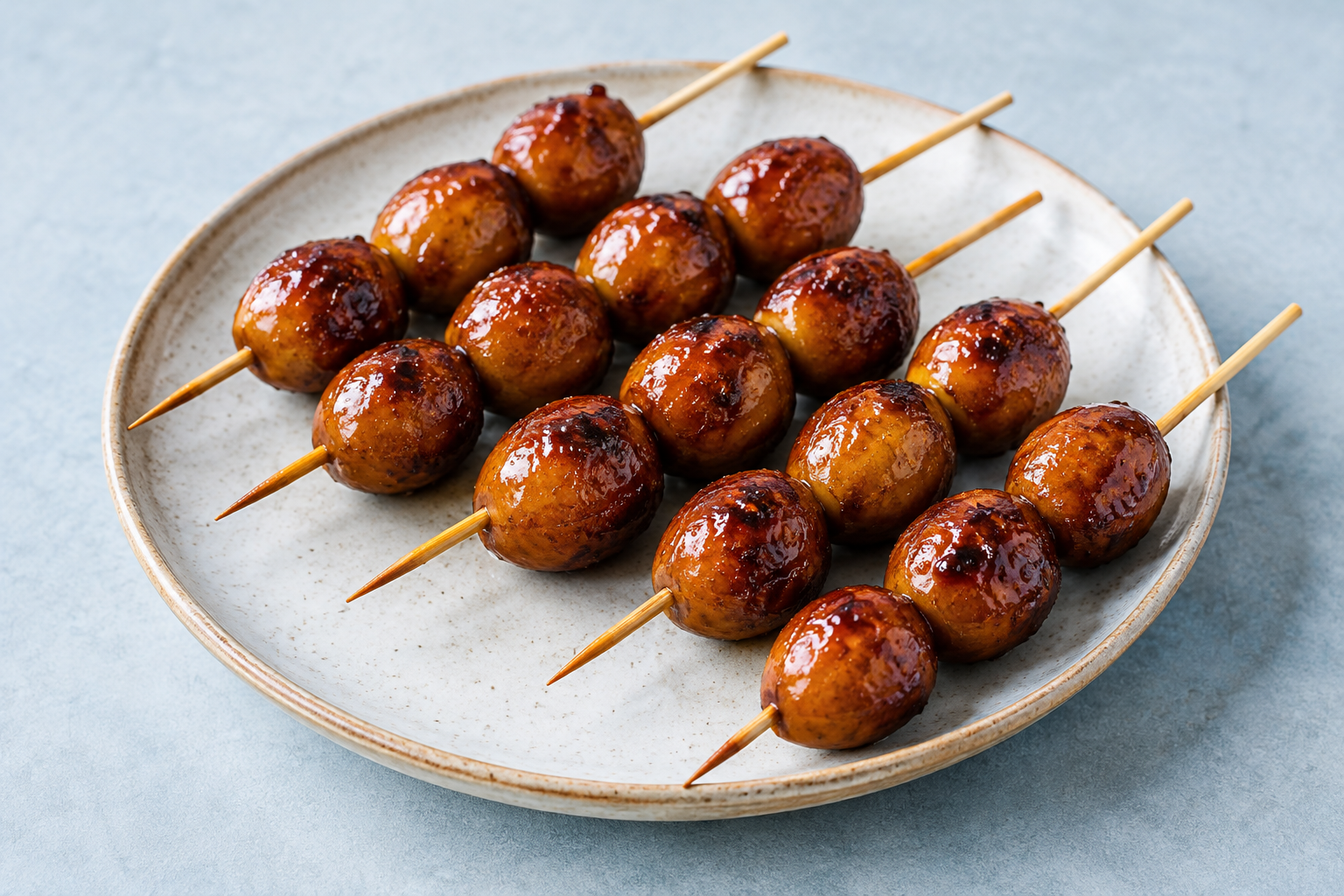
Thread the cooled or lukewarm eggs onto small skewers and serve them as an appetizer, for example alongside other small Indonesian-inspired bites. They also work well as part of a rijsttafel, where their sweet-and-savory flavor contrasts with fresher or spicier dishes. Keep the skewers simple: the glossy coating is already flavorful enough. It’s best not to make them too far ahead, so the caramelized outside stays nicely sticky.
 Main course

