ABOUT THIS RECIPEA bowl where rice and egg come together
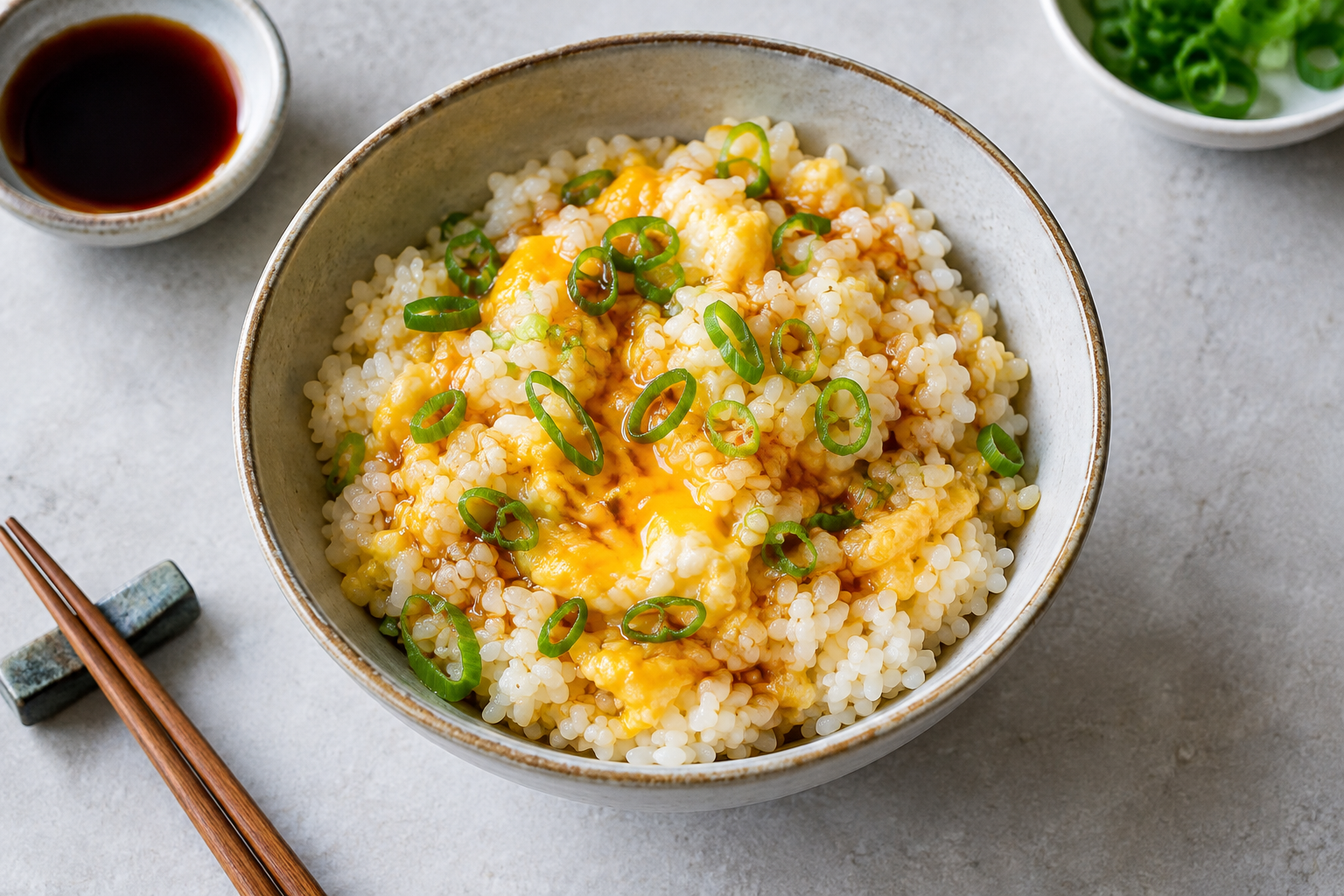
At its simplest, tamago kake gohan is warm rice, a raw egg and soy sauce. The name describes the combination: egg over rice. It is eaten in Japan as a simple breakfast or light meal; the exact garnish varies from table to table. This version keeps the flavours restrained, so the soft, slightly sticky rice and creamy egg take centre stage. Spring onion adds a fresh, savoury bite, but it is not essential.
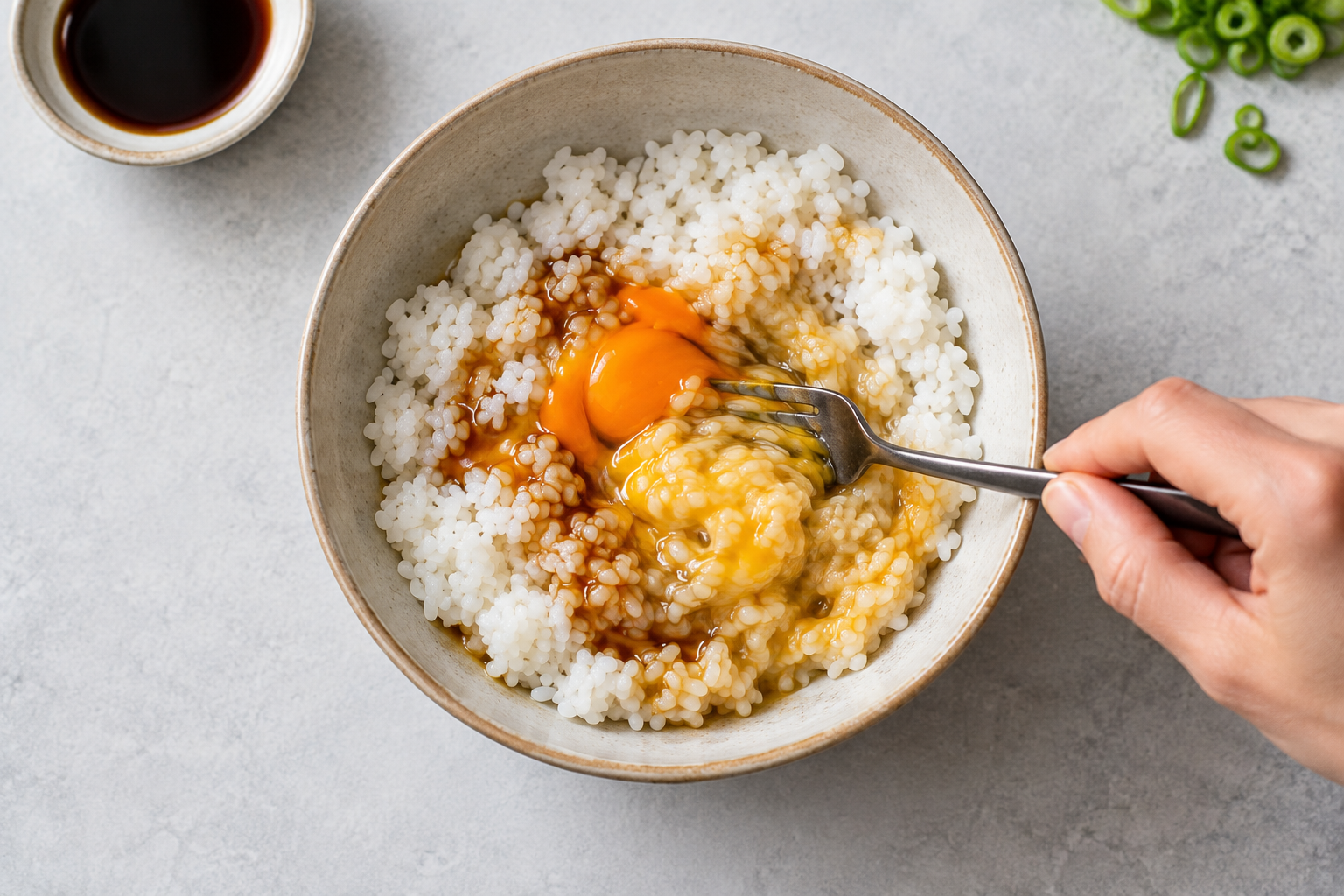
Japanese short-grain rice is best, as it becomes soft and sticky when cooked and holds the egg well. Wash the rice until the rinsing water is less cloudy: this removes loose starch from the outside and makes the texture less mushy. A short resting time after cooking helps distribute the moisture evenly. The rice should still be very hot when you stir in the egg; the heat thins the mixture and lets it coat the grains. However, the rice does not reliably cook the egg to a safe internal temperature.
Since the egg remains raw, choosing it carefully matters. Use a pasteurised egg or an egg (product) explicitly suitable for eating raw, and handle it with clean hands and kitchen equipment. Keep the egg refrigerated until use and mix it into the rice just before eating. Raw eggs are not recommended for pregnant people, young children, older adults and people with a weakened immune system. A soft-boiled egg is an alternative with a different texture, but it is not the same as fully cooked and does not eliminate the risk entirely; anyone who needs to be extra cautious should choose a fully hard-boiled egg.
Japanese short-grain rice gives the most suitable texture. If it is not available, sushi rice can be used; it is similar, but sometimes a little firmer or stickier. Long-grain rice works too, though the result will be less creamy. Soy sauce is salty, so start with a little and add a few more drops at the table if you like. Spring onion brings a light onion flavour. Use just a small amount so the topping does not overpower the mild base.
Eat the bowl straight away, while the rice is hot and the egg has just been mixed in. If you like, serve it with miso soup or some pickled vegetables for a more substantial breakfast. Do not leave cooked rice at room temperature for a long time: cool leftovers quickly, store them covered in the refrigerator and heat them through completely later. Do not keep rice mixed with raw egg for another meal; combine them only when you are ready to eat.
 Main course

