ABOUT THIS RECIPEThe turning makes all the difference
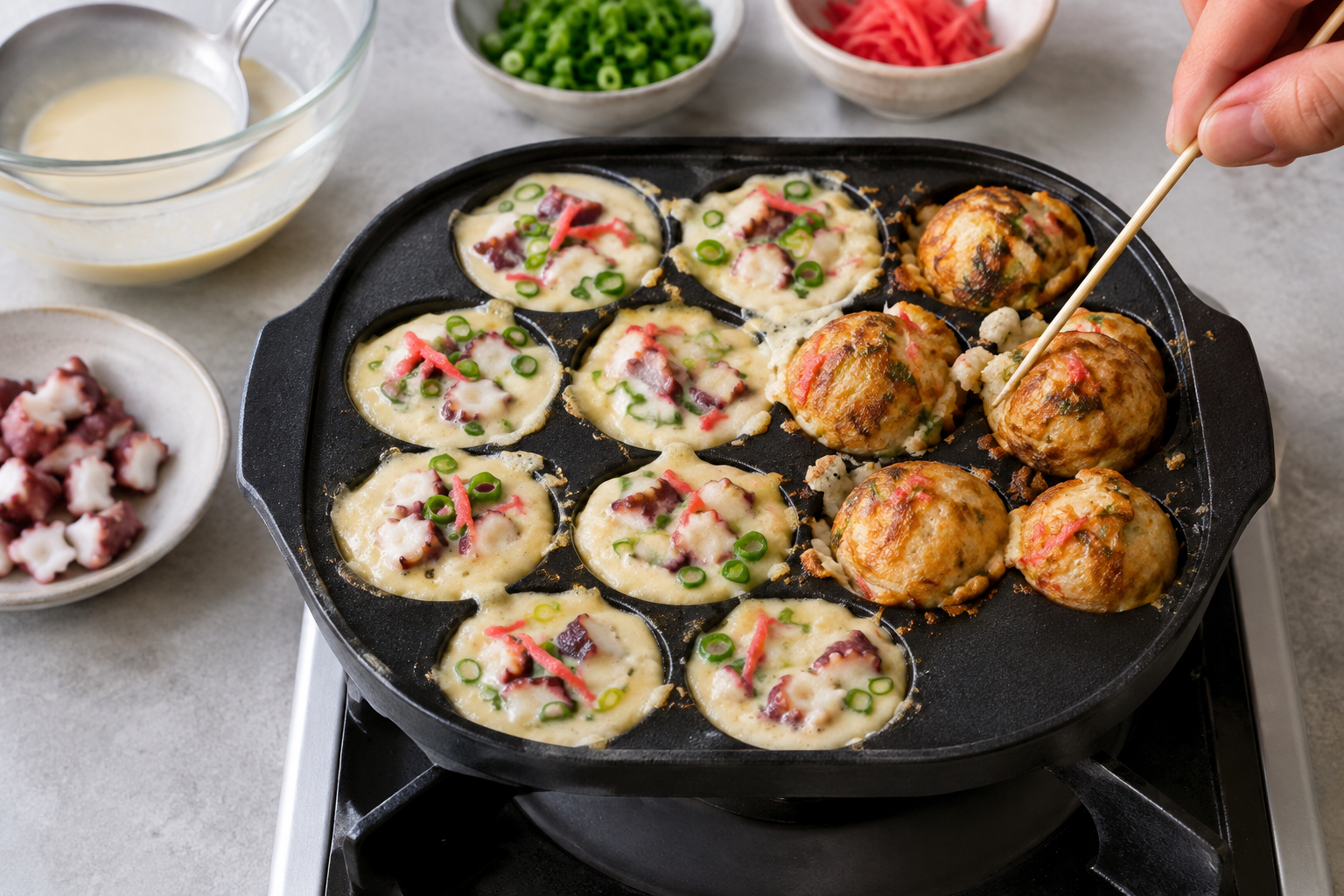
Takoyaki are round, savory bites known as a specialty of Osaka. The name combines tako, meaning octopus, and yaki, meaning grilled or fried. One key difference from a regular pancake is the way the batter cooks in a pan with hemispherical wells: as the outside sets, the bites are turned with a skewer, gradually taking on a round shape. The technique takes a little attention, but you don’t have to make a perfect ball from the start. A few loose edges of batter actually help fill the well as you turn the bites.
The batter is thinner than that of a classic pancake and gets its savory flavor from dashi, a Japanese broth often made with kombu and bonito. Ready-made dashi is convenient; be sure to prepare the broth according to the package instructions and let it cool before mixing it with the eggs. If you don’t have dashi, you can use a light vegetable broth, though the flavor will be less pronounced. Soy sauce adds extra savoriness and salt, so keep the amount of salt modest.
Use cooked octopus, cut into small pieces, so the filling warms through during the short cooking time. Scallions add a fresh, slightly sharp note, while pickled ginger brings acidity and a little heat. Beni shoga is the Japanese red pickled ginger often used in takoyaki. If you can’t find it, finely chopped pickled ginger works too; rinse it briefly if it tastes very sweet. The bites are soft and moist inside, so cook them over medium heat until the outside is firm and golden brown before turning them further.
A takoyaki pan is the easiest to use, but models vary in size and heat. Grease the wells well and keep a chopstick or thin skewer handy; a metal fork can damage the nonstick coating. Cook in batches if the pan can’t heat all the bites evenly at once. Fill the wells generously and turn the bites as soon as the edges begin to set. You can use the skewer to fold any batter that spills over the edges back inside.
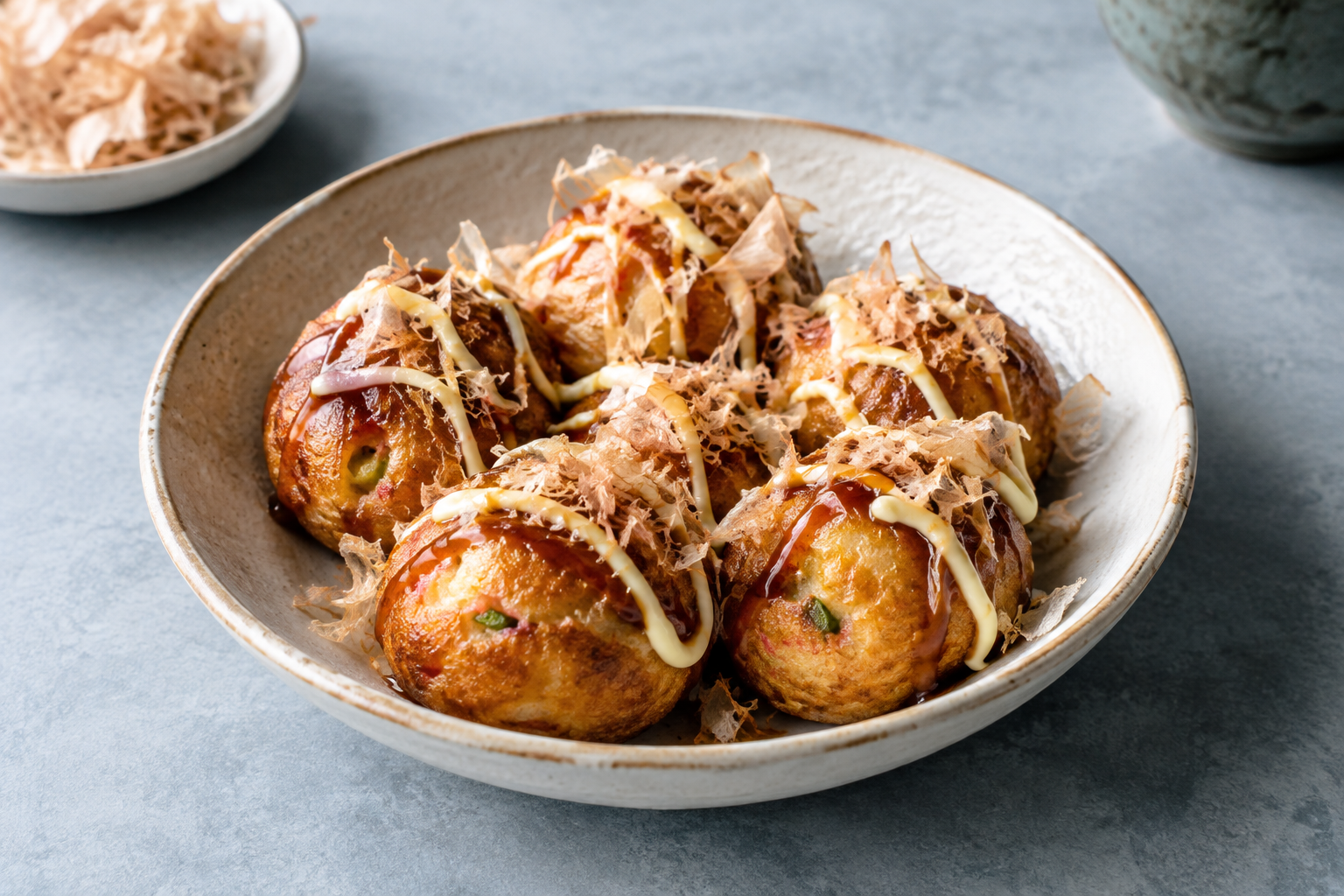
Serve takoyaki straight from the pan with takoyaki sauce and Japanese mayonnaise. These toppings are rich and savory; a thin zigzag is enough to avoid covering the crisp exterior. Katsuobushi, thin bonito flakes, is a common extra topping, but you can leave it out. Takoyaki are meant to be served warm and shared, and make a good appetizer. Store leftovers covered in the refrigerator and reheat them thoroughly in an oven or air fryer; cooking them again in a lightly greased pan can help crisp up the outside.
 Main course

