ABOUT THIS RECIPELentils with a Hearty Bite
Kibbet adas belongs to a broader family of kibbeh dishes in which lentils and bulgur form the base. This version contains no meat: soft lentils give the mixture body, while fine bulgur absorbs moisture and holds the portions together. The combination is compact but not heavy, with sweet notes from fried onion, warm cumin and a fresh hint of lemon. There are various regional and household versions, so the exact seasoning and shape can differ. This recipe keeps the flavor deliberately simple and lets the lentils take center stage.
Red lentils are practical because they cook until soft quickly and mix easily with the bulgur. Rinse them first until the water is less cloudy, then cook until tender, allowing any excess moisture to evaporate at the end: a wet purée makes shaping difficult. Use fine bulgur, often sold as bulgur number 1. Coarser grains absorb moisture more slowly and produce a grainier result. If there is still a lot of liquid in the pan, transfer the lentils to a bowl with a slotted spoon and gradually add the cooking liquid back until the mixture is firm enough.
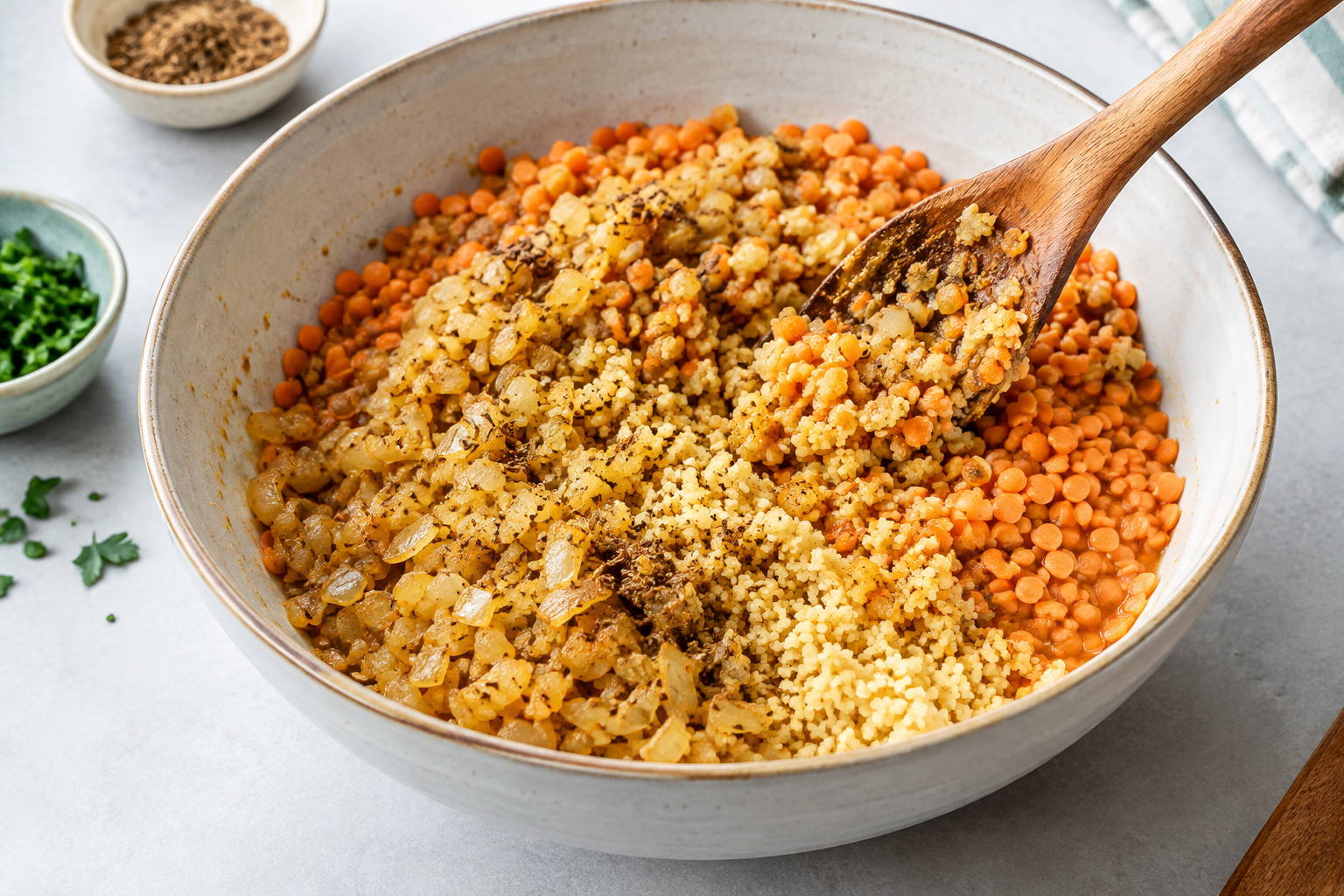
Cook the onion separately over a gentle heat until golden, so it becomes soft and slightly sweet rather than sharp. The cumin can briefly cook with the onion; the heat releases its aroma. Stir the bulgur into the hot lentils and give it time to absorb the moisture. Then let the mixture cool before stirring in the lemon and onion and shaping the portions. If the mixture is still sticky, let it cool further. Too dry? A spoonful of warm water can help. It’s best to add the lemon juice a little at a time so the mixture doesn’t become too wet.
Serve the kibbet adas at room temperature with finely chopped parsley. They’re a good fit for a mezze table alongside, for example, flatbread, yogurt or crisp raw vegetables, but also make a hearty side dish with grilled vegetables. Make the oval portions small enough to eat by hand; slightly damp hands help keep the mixture from sticking. Store leftovers covered in the refrigerator and eat them within three days. Don’t leave them out of the refrigerator for more than two hours before serving; let them come to temperature briefly, then serve.

 Main course

