ABOUT THIS RECIPECrisp with a Savory Glaze
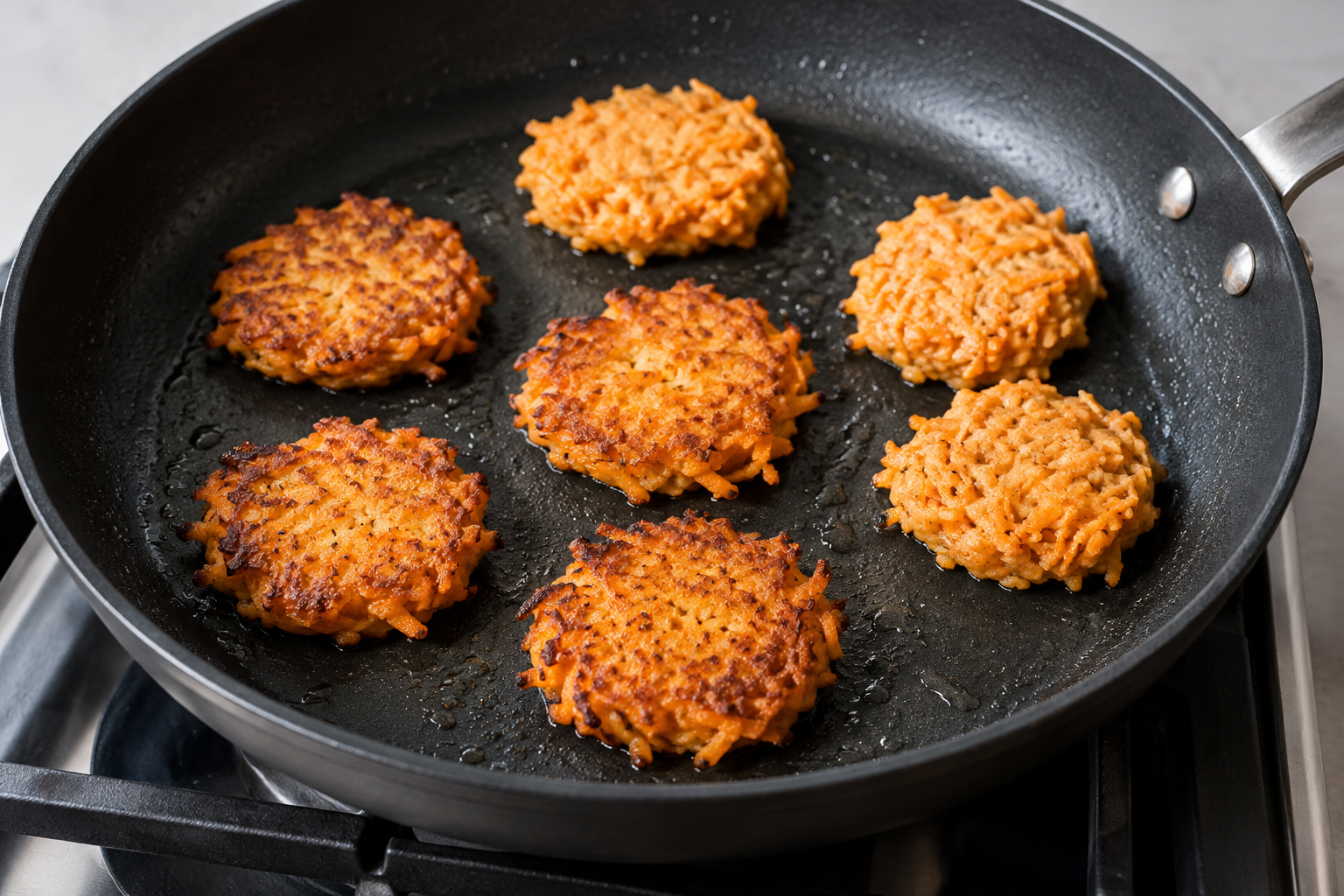
Sweet potatoes have a naturally soft, somewhat moist texture and contain more natural sugars than the potatoes often used for rösti. This gives the edges a lovely brown color, but also calls for a slightly different approach: make the rösti small and press them firmly together so they hold their shape in the pan. A little cornstarch and egg help bind them without turning the vegetables into a heavy batter. Briefly squeezing out the grated sweet potato prevents moisture from running into the pan and causing the bottoms to steam rather than fry.
Use a coarse grater so the strands stay distinct and the outside can crisp up while the center cooks until soft. Medium heat works better than a scorching-hot pan: the sweet potato needs time to cook through, and too much heat will darken the outside before the middle is tender. Cook in batches and leave room around each rösti. If you crowd the pan, the temperature drops and the edges won’t get as crisp. A large skillet and a thin layer of oil give the most even results.
Miso adds salt and deep umami flavor, while butter makes the paste spreadable and helps create a thin, glossy coating. White miso is mild and slightly sweet; red miso has a stronger, saltier flavor, so use a little less. Since miso darkens quickly, add the glaze to the rösti only once they’re cooked through. Turn the heat low and keep an eye on the pan: you want light caramelization, not burnt miso. Sesame seeds add a dry, nutty crunch; spring onion provides a fresh, slightly sharp contrast.
The ingredients are readily available all year round. Spring onion is especially handy as a fresh garnish, but you can replace it with finely sliced chives. No cornstarch on hand? Potato starch works in a similar way. You can leave out the sesame, though you’ll miss some of the crisp contrast. When tasting the mixture before cooking, don’t judge the saltiness alone: miso is already salty, and how much you need depends in part on the type of miso.
Serve the rösti straight away as a side dish with, for example, pan-fried tofu, fish or a simple vegetable dish. They’re best while the edges are still crisp. If you have leftovers, let them cool and refrigerate them covered within two hours; use within two days. Reheat them in a skillet over medium-low heat until hot throughout and crisp again. They’ll warm up in the microwave, but lose their crisp edges.

 Main course

