ABOUT THIS RECIPEA Spiced Crust, a Fresh Counterpoint
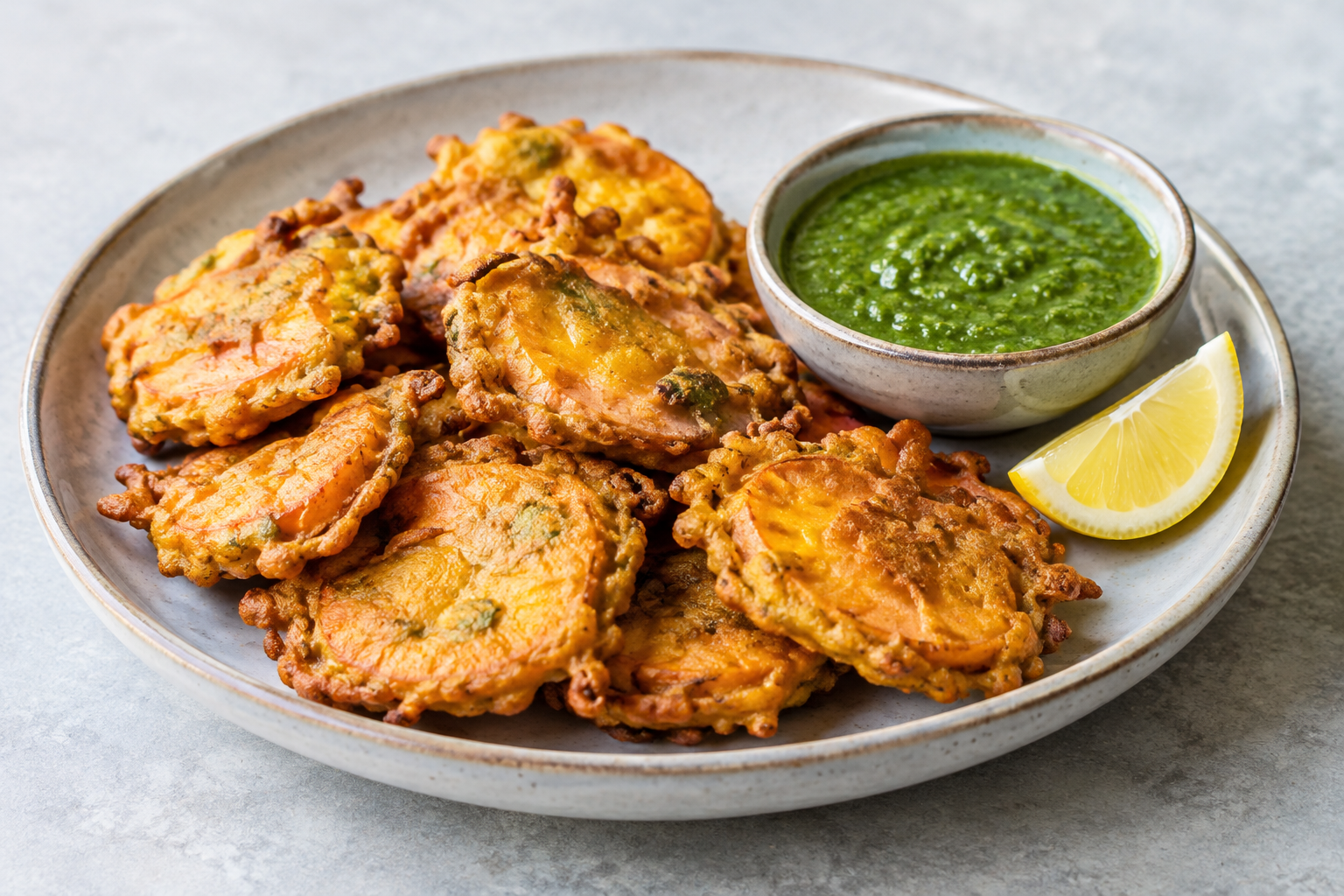
Pakora is a popular Indian snack made by deep-frying vegetables in a spiced chickpea-flour batter. The exact vegetables and spices vary from region to region and household to household; here, sweet potato takes center stage. Cut into thin slices, it stays recognizable and soft inside, while the batter forms a golden-brown, lightly craggy crust. Serve the pakora as a starter or as part of a spread of small dishes.
Chickpea flour, also called besan, gives the batter its distinctive flavor and binds without eggs. Don’t add more water than you need: batter that clings to the slices makes for an even crust. Ajwain has a pronounced, savory flavor that can bring thyme to mind. Turmeric colors the batter, and ground chili adds heat; adjust the amount of the latter if you prefer a milder dish. Regular wheat flour is not an equivalent substitute for besan, as the flavor and texture will be different.
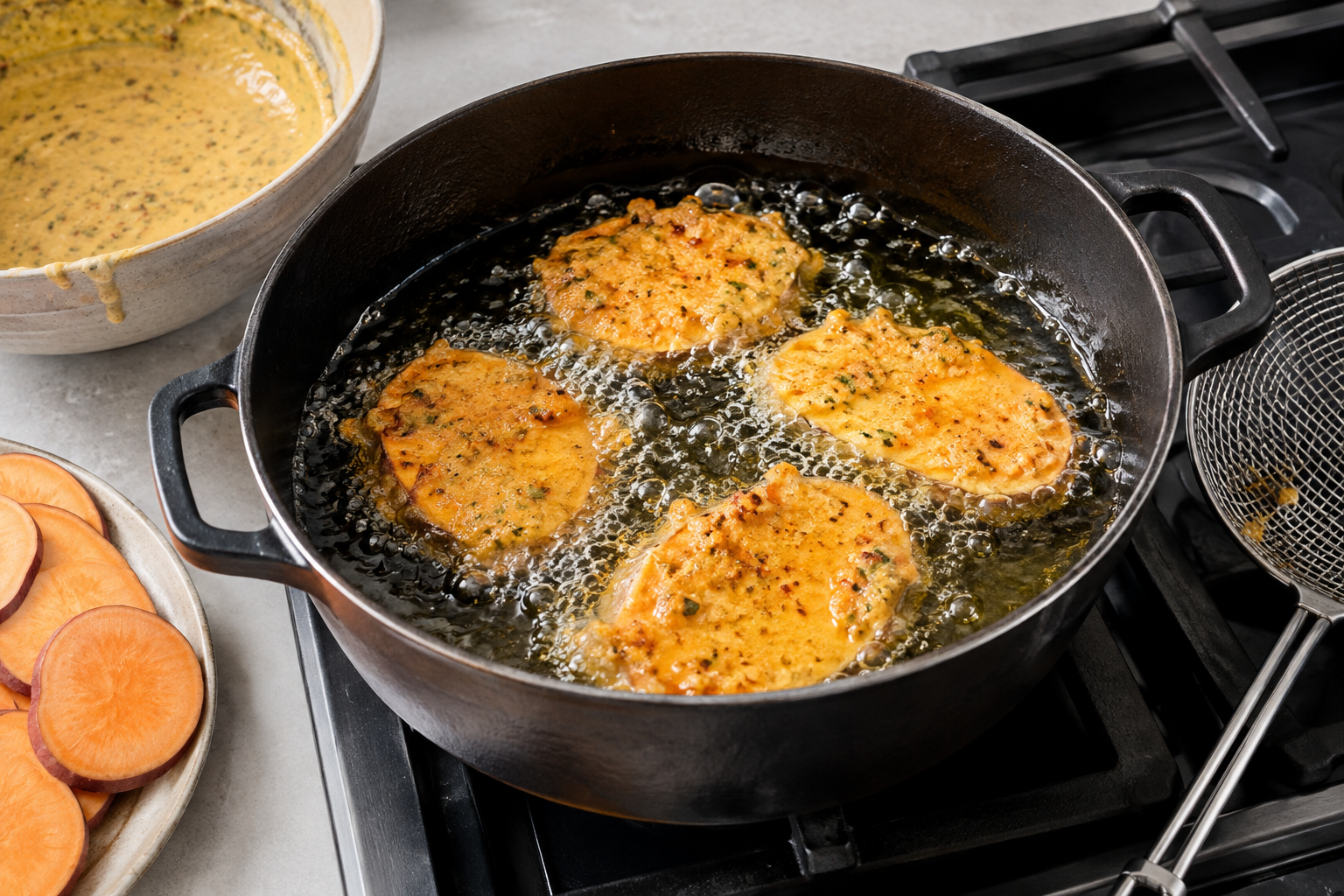
The thickness of the slices and the temperature of the oil matter a lot. Slices about three millimeters thick cook quickly enough to become tender, without the crust needing to spend too long in the oil. Keep the oil around 170–175 °C: oil that’s too cool makes the batter greasy, while a temperature that’s too high can darken the outside before the potato is cooked through. Fry in small batches so the temperature doesn’t drop too much, and drain the pakora on a wire rack or paper towels after frying.
The chutney provides a counterpoint with lemon, coriander and mint. A little ajwain ties the fresh sauce to the spiced crust without overpowering the herbs. If you don’t have fresh mint, use extra coriander; the sauce will taste a little less cooling. Taste before serving and add more lemon juice or salt if needed. A green chili makes the chutney hotter, but can be left out.
Eat the pakora as soon as they’re fried: that’s when the contrast between the crust and the soft sweet potato is most pronounced. Serve the chutney on the side to keep the crust crispy. They go well with other small Indian dishes, but also make a simple starter on their own. Deep-frying requires care: use a deep pan that’s no more than half full of oil, and don’t leave it unattended while frying.
 Main course

