ABOUT THIS RECIPEWhat pomtayer needs in the oven
Pom gets its distinctive texture from pomtayer: grated tayer root that turns soft and holds together as it bakes. In Dutch shops, it is often sold frozen. It’s best to thaw the pomtayer in the refrigerator and drain off any liquid that has been released. The root itself has a fairly neutral flavor, so citrus, stock and the spiced chicken are important for a well-balanced casserole. Orange adds a mild, fruity acidity; a little lemon makes it brighter without overpowering the tayer.
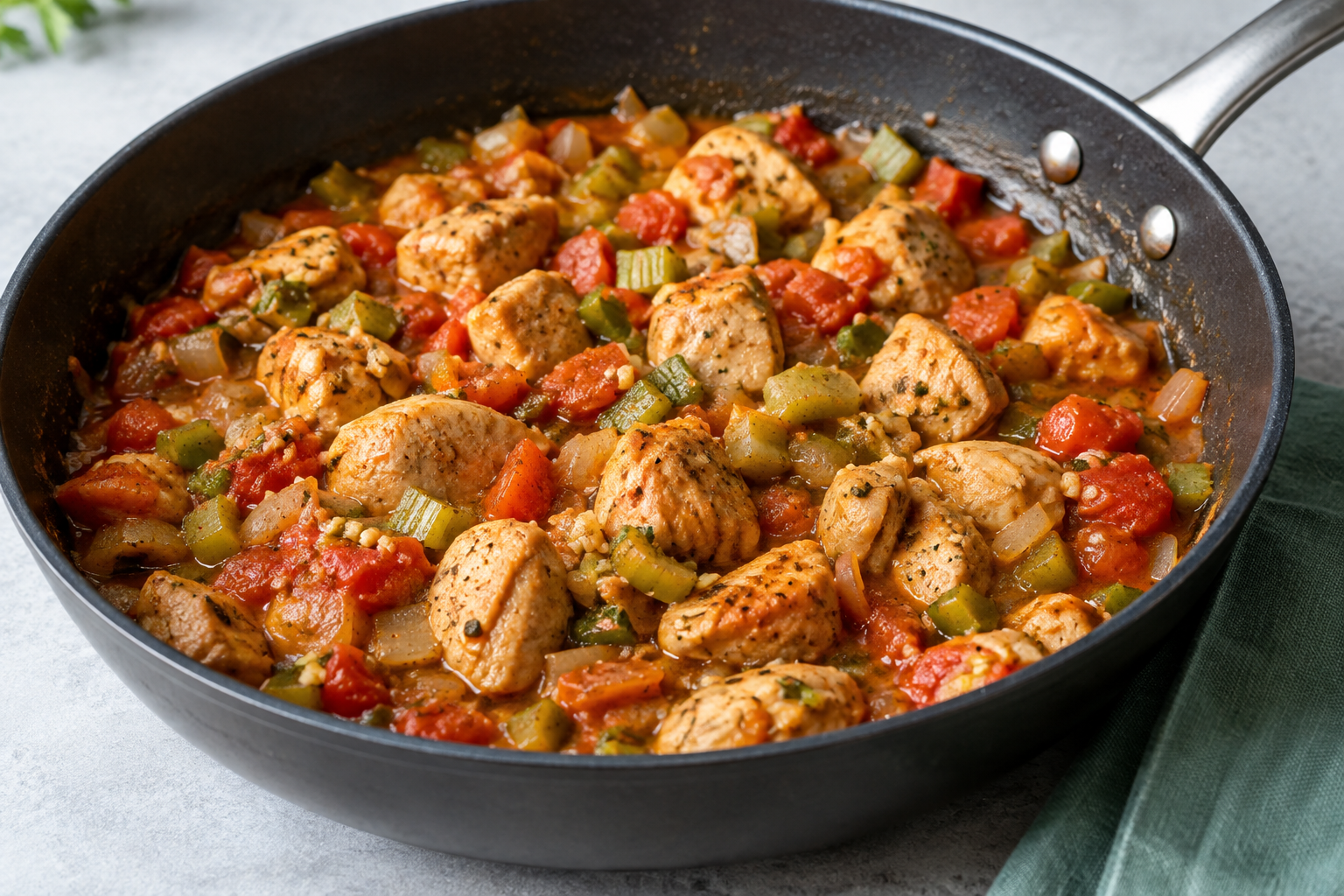
The chicken filling should be juicy and well seasoned, not watery. Onion, garlic and tomato make a savory base, while celery and nutmeg add extra depth. Brown the chicken first, then let it cook gently with the tomato until tender. This gives the filling flavor before it disappears between the layers. Salted beef is an optional addition, not a requirement: rinse it well and cook it separately to reduce the saltiness. Taste the filling before adding extra salt.
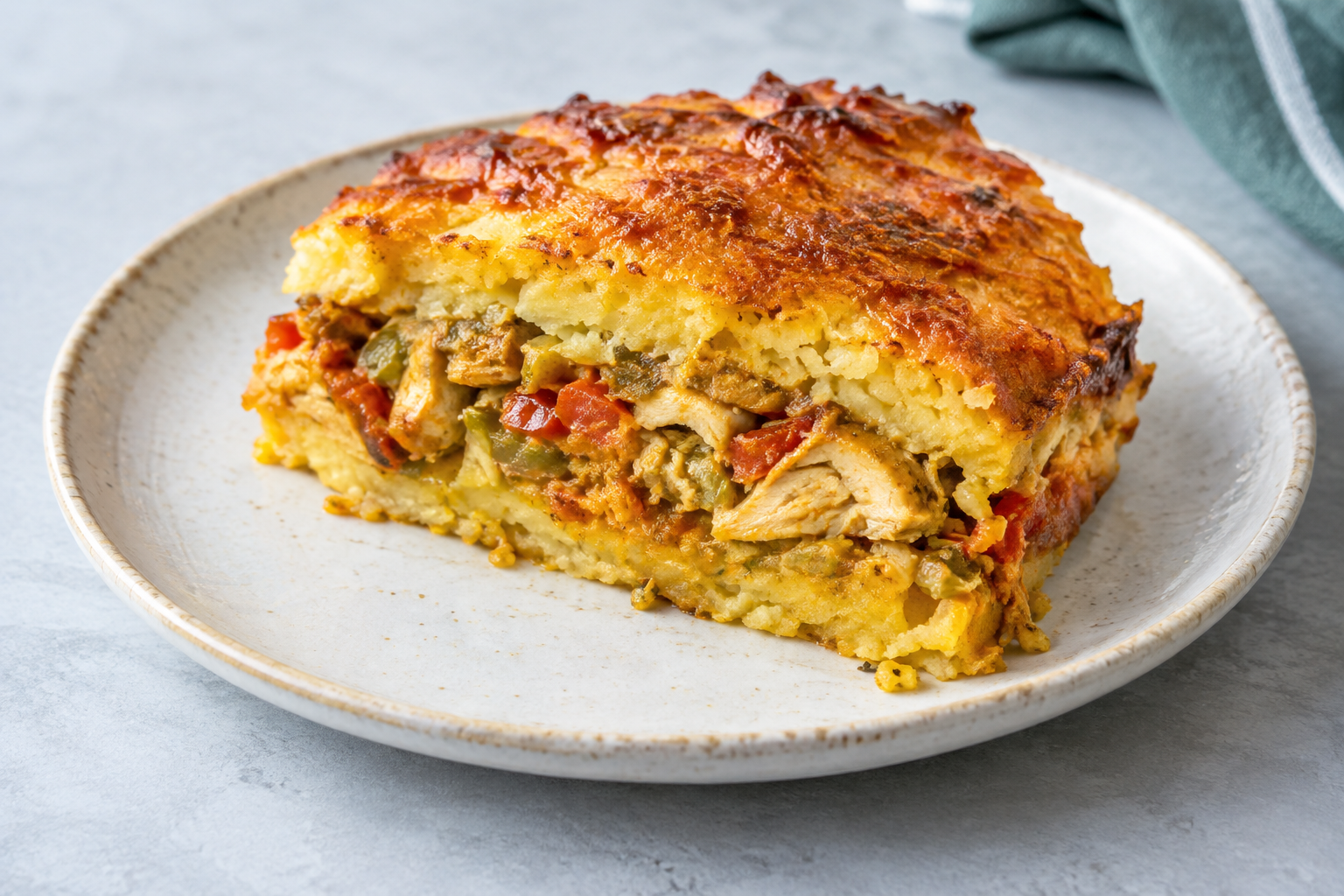
The layers are what make pom distinctive: pomtayer on the bottom and top, with the chicken in between. Keep the top layer even and smooth it out so the heat cooks it at roughly the same rate all over. A roomy baking dish helps the pom cook evenly. The top should be deep golden brown and the center firm but still moist; too little moisture makes the tayer dry, while a wet filling can leave the layers mushy. A splash of stock and citrus mixed into the pomtayer helps keep the center soft.
Serve the pom warm, cut into sturdy pieces after letting it rest briefly. A fresh salad or some pickled cucumber goes well with it and balances the hearty casserole. You can refrigerate leftovers, covered, within two hours and keep them for up to two days. Reheat them in the oven until the center is piping hot too; add a small splash of stock if the pom seems dry as it reheats. Don’t leave a large baking dish at room temperature for long.
 Main course

