ABOUT THIS RECIPEA one-pot dish that gets more flavorful as it cooks
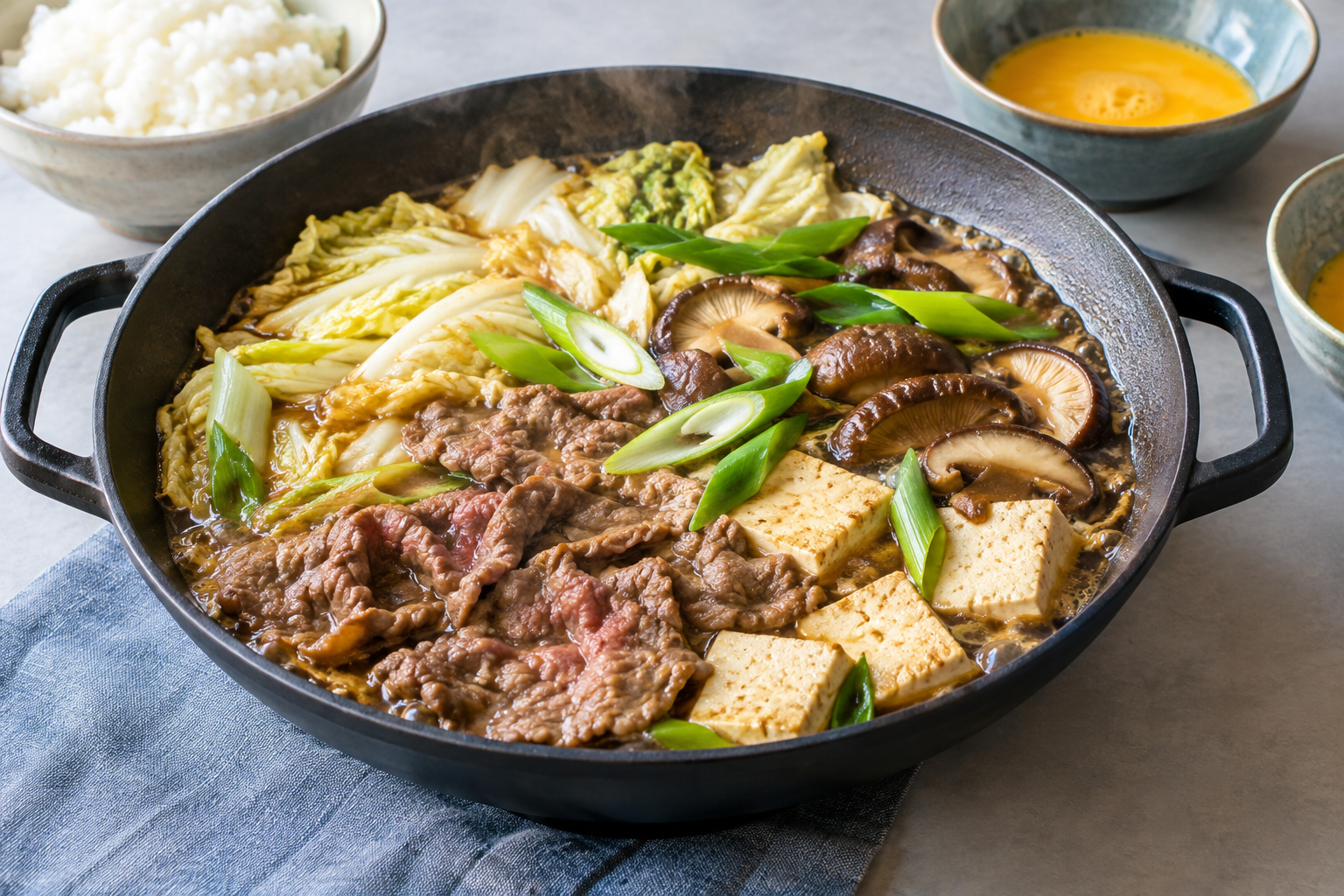
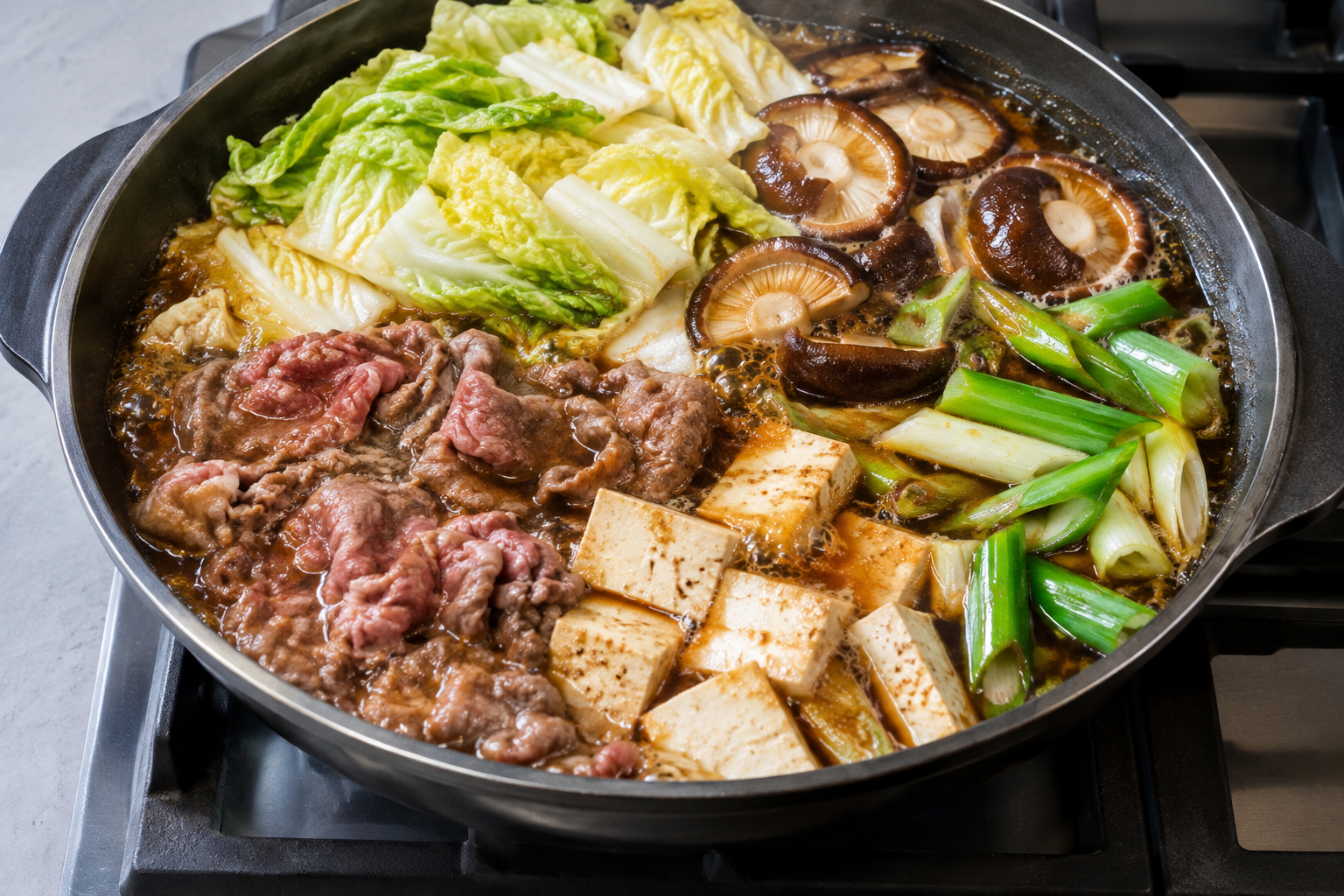
Sukiyaki is a Japanese hotpot: meat and vegetables cook in a shallow pan with a bold, sweet-savory sauce. In this recipe, the sauce is made with soy sauce, mirin, sake, a little sugar and water. As the shiitake, cabbage, tofu and spring onions cook, they release their flavor into the liquid. That makes the sauce richer by the end than it was at the start. The flavor should be distinctly savory and slightly sweet, but not syrupy, so don’t just add extra sugar before everything has had a chance to cook in the pan.
There are several ways to make sukiyaki. In a widely used Kanto-style version, a premixed sauce, often called warishita, goes into the pan. In Kansai-style versions, the meat is more often fried in the pan first and seasoned as it cooks. This version uses the first approach, which makes the sauce easy to measure and helps the ingredients cook evenly. A wide skillet or shallow braising pan works well; a tabletop cooker is handy if everyone wants to serve themselves from the same pan.
The beef should be thinly sliced so it cooks quickly and stays tender. Japanese sukiyaki slices are available at some butchers and Asian grocery stores. Otherwise, ask for thinly sliced ribeye or sirloin; it’s easier to slice the meat yourself if you put it in the freezer for 20 to 30 minutes first. Cut the cabbage into bite-sized pieces and don’t slice the shiitake too thinly: that way, they’ll hold their shape alongside the soft tofu. Napa cabbage gives a mild, juicy bite; firm pointed cabbage works too, although it stays a little firmer.
Add the ingredients in batches rather than piling everything into the pan. This lets the sauce simmer gently and helps the cabbage retain some bite. Shiitake brings pronounced umami; cremini mushrooms are a good alternative, but make the sauce milder. Use firm tofu that will hold its shape as you toss the ingredients. Serve with steaming rice and, if you like, a small bowl of beaten raw egg for dipping the meat. Only use eggs that are suitable for eating raw; if you want to avoid raw egg, simply leave it out. Refrigerate leftovers within two hours, covered, for up to two days, and reheat until piping hot throughout.
 Main course

