ABOUT THIS RECIPEHearty rolls with fresh accompaniments
Savoy cabbage works well for these rolls: its large leaves are sturdy enough to hold the filling and become pliable after a brief blanch. White cabbage also works, though the outer leaves can sometimes be a little tougher. Choose whole leaves large enough to wrap around a few spoonfuls of filling. In the Netherlands, cabbage is a familiar vegetable, especially in the cooler months, but it is available year-round. Partially trim the thick rib at the base so the leaves are easier to roll.
Bulgur gives the filling a lightly nutty flavor and a pleasantly grainy bite. Medium-grain bulgur works well here: it absorbs boiling water without turning mushy. Leave it covered to soak, then fluff the grains with a fork. Cook the onion until soft, not browned; this gives it a sweet, savory flavor without overpowering the parsley and mint. Lemon zest adds fragrant freshness, while the herbs remain distinct after cooking.
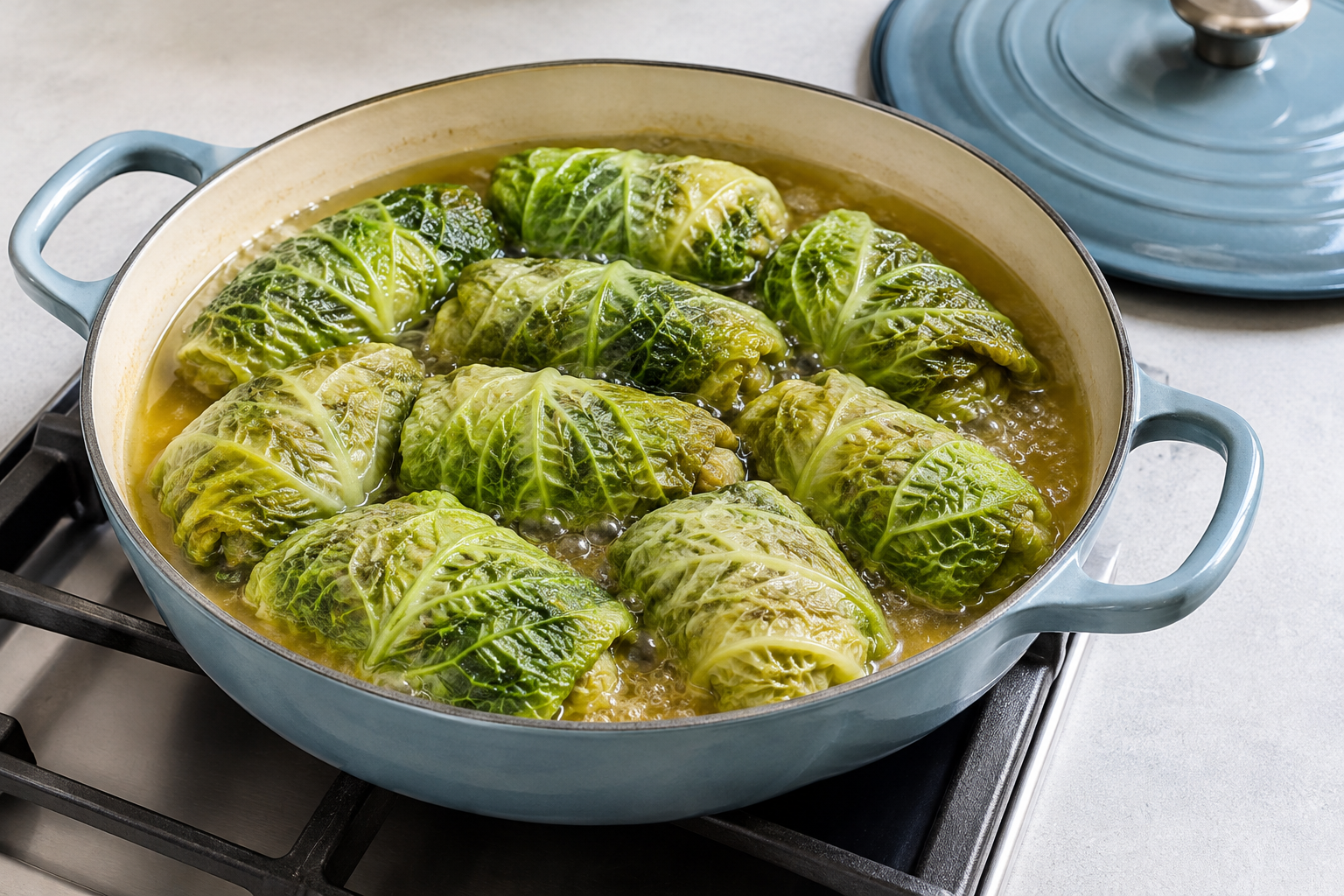
A brief blanch is more important than cooking the cabbage all the way through. The leaves should be pliable but still have enough structure to withstand being filled and then cooked in the pan. Trim away a little of the thick central rib if it is still in the way, but don’t make a hole in the leaf. Place each filled leaf seam-side down in the pan and arrange the rolls snugly together; this helps them stay in place as they simmer.
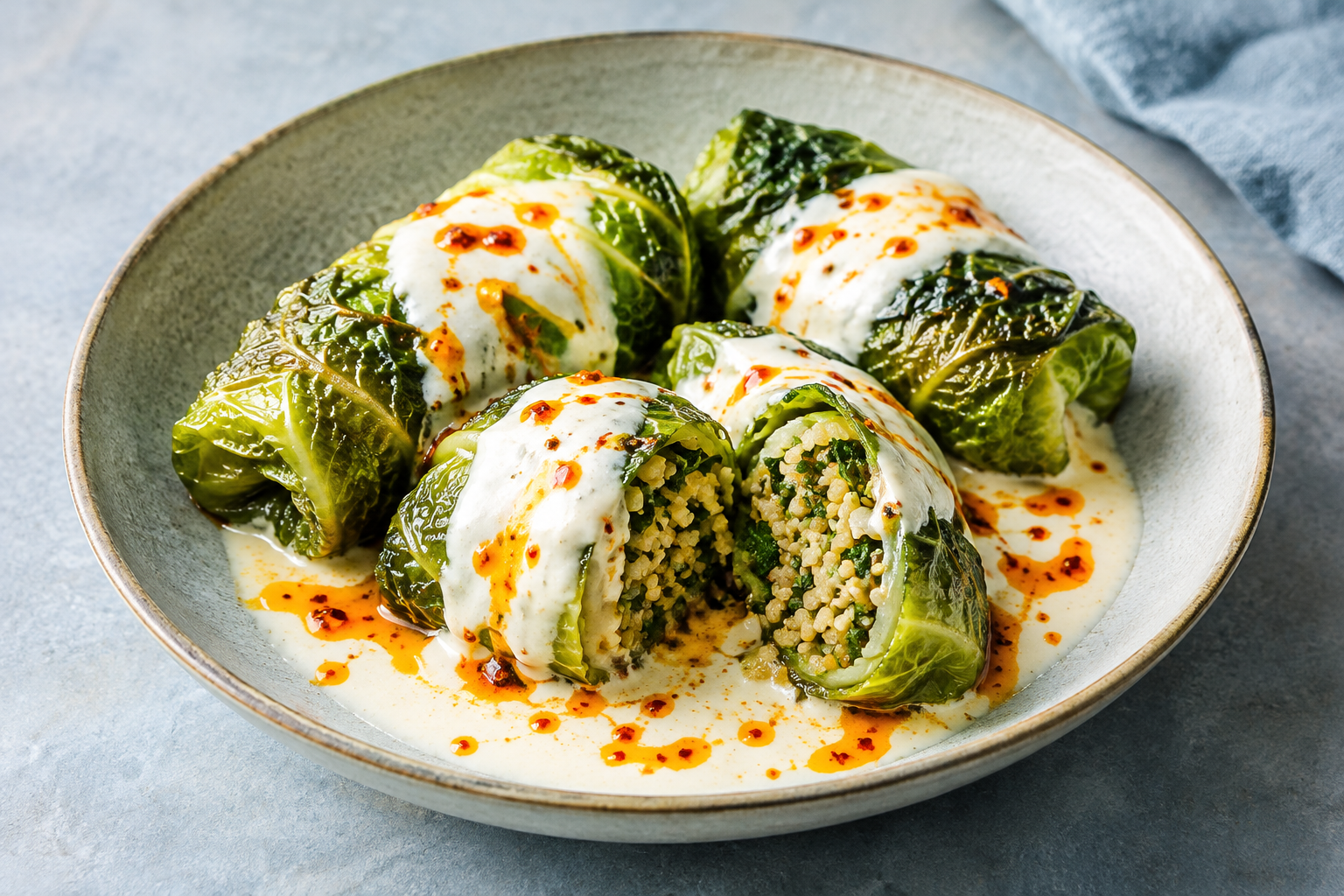
Tahini yogurt adds creaminess and a lightly bitter, toasted sesame flavor. First stir the tahini with the lemon juice and a little water until smooth, then add the yogurt. This makes a sauce that’s easy to spoon over the rolls. Use Greek yogurt for a thicker sauce, or regular full-fat yogurt and add less water. Chili oil adds heat and a glossy finish; leave it out or serve it on the side if not everyone likes spicy food.
Serve the rolls as a main course with the sauce alongside or spooned over them, and add a little of the cooking liquid to the plate if you like. A simple cucumber salad with lemon makes a good accompaniment if you’d like some extra freshness. You can prepare the rolls ahead and store them in the refrigerator: cool them quickly after cooking, refrigerate within two hours, and eat them within three to four days. Reheat them gently, covered, with a splash of broth, until piping hot throughout.
 Main course

