MAIN COURSE · NOORS KITCHENStrapatsada: Greek Scrambled Eggs with Tomato and Feta
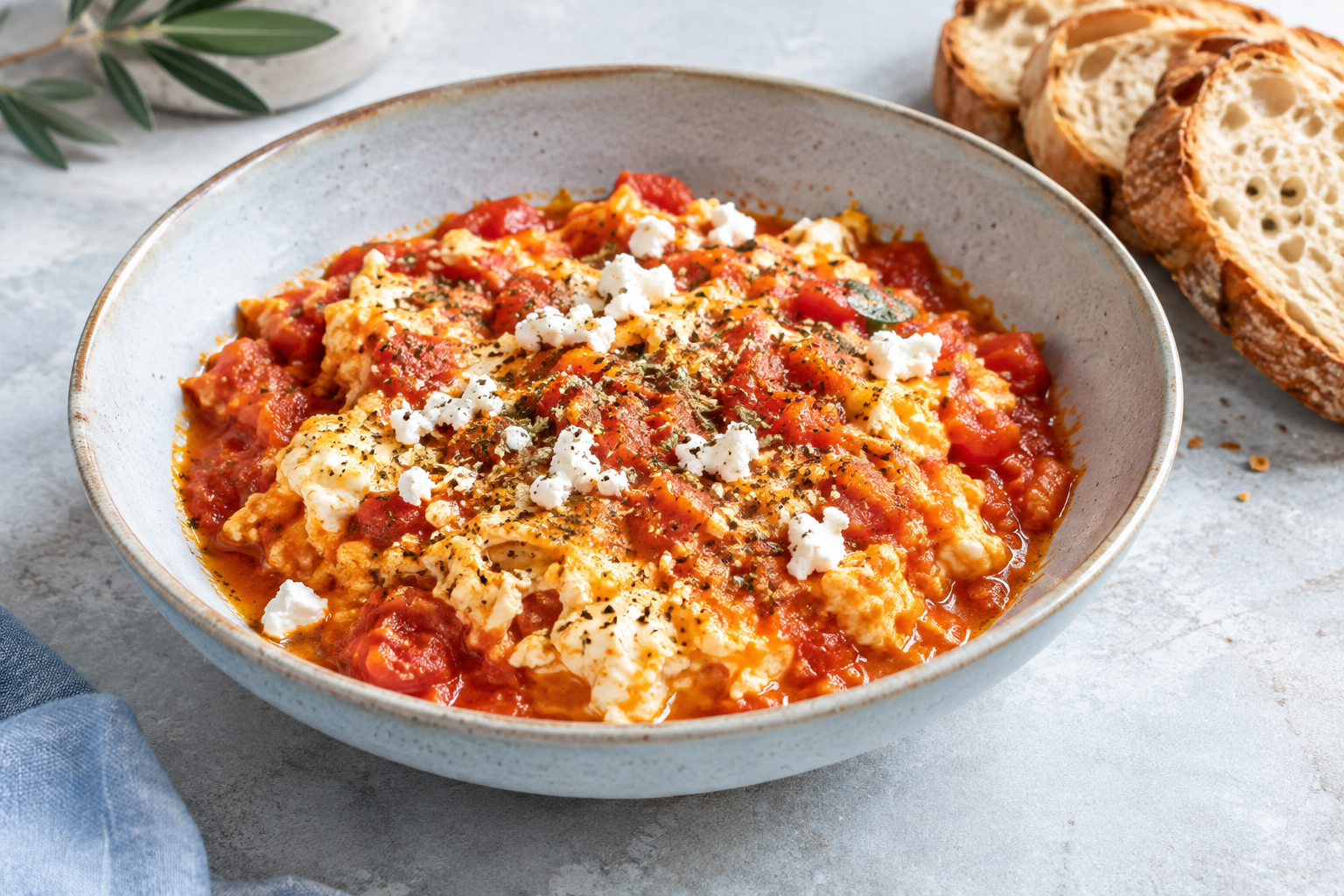
In strapatsada, ripe tomato isn’t a garnish for the eggs; it forms the concentrated, slightly tangy base. Let the tomato cook down gently, and stir in the eggs only at the very end: that way, they stay soft, and every bite has tomato, egg and salty feta.
ABOUT THIS RECIPETomato first, then the eggs
Strapatsada, also known as kagianas, is a Greek dish of tomato and eggs made in several different versions. The exact name and additions can vary from region to region and from one household to another. The essentials are simple: ripe tomatoes are cooked in olive oil until they form a thick sauce, then the eggs are stirred in. Feta makes a fitting, salty finish, but the tomato remains the main ingredient and defines the flavor.
Ripe tomatoes are at their best in summer: juicy, fragrant and full enough to make a bold base once cooked down. Firm, ripe vine tomatoes work well out of season, too; taste the sauce before adding the eggs. If it’s very sour, let it cook down a little longer. Don’t use tomato paste as a substitute for the fresh tomatoes: it makes the flavor more concentrated and lacks their fresh acidity.
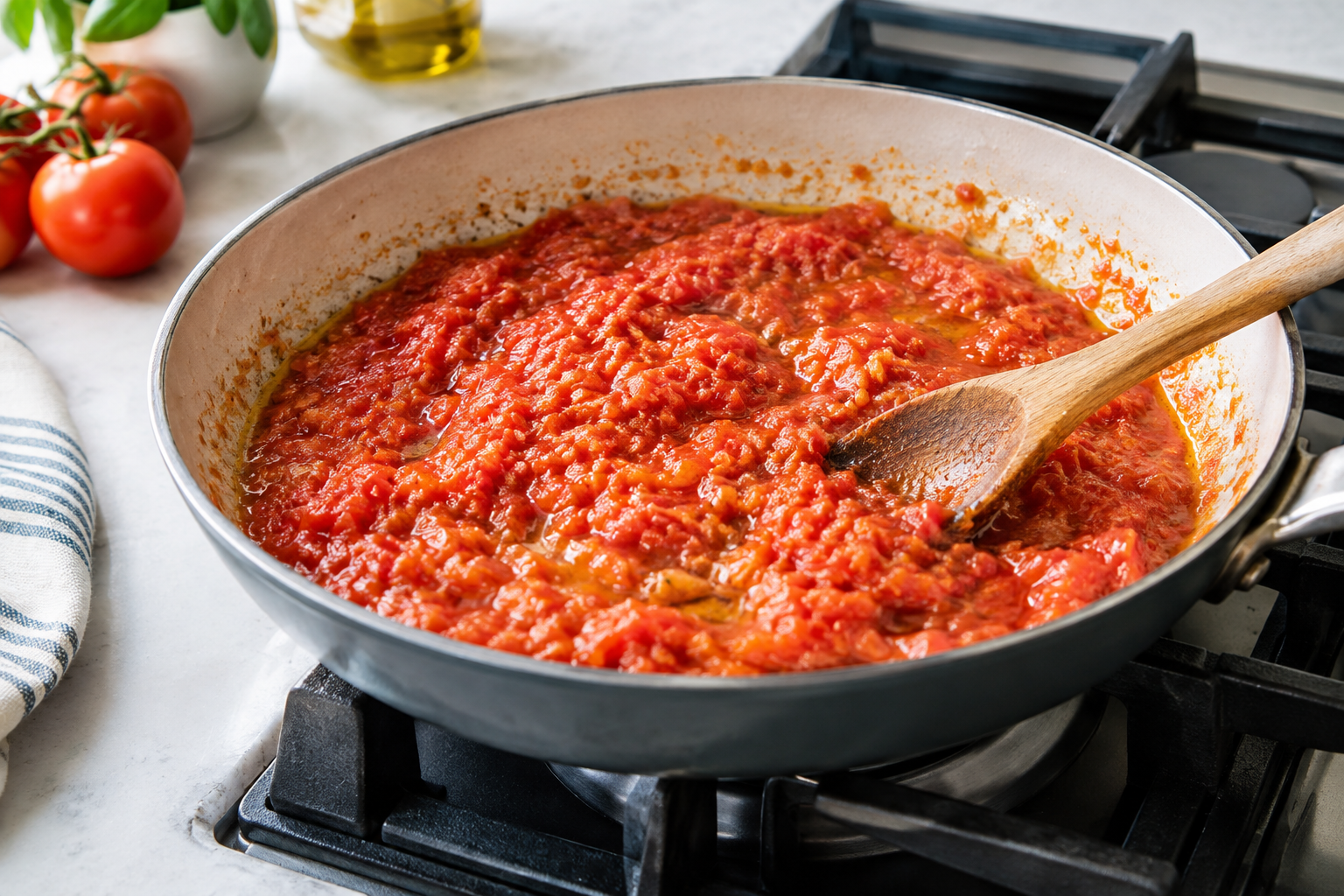
Grate the tomatoes with a coarse grater over a bowl and discard the skins. This makes the flesh fine enough to cook evenly. Then let it simmer in olive oil until the visible liquid has evaporated and the sauce has thickened. This takes longer than cooking the eggs, but it’s key to the texture: a tomato base that’s too wet will make the finished dish watery. Stir occasionally and keep the heat moderate so the tomato can thicken without scorching.
Lower the heat before adding the eggs. Stir them loosely into the tomato and take the pan off the heat while they’re still glossy; the residual heat will finish setting them. This keeps them soft instead of dry and grainy. The feta adds saltiness and a creamy, crumbly bite, so go easy on extra salt and taste once the cheese is on. A little dried oregano and black pepper go well, but aren’t needed to make the dish recognizable.
Serve strapatsada right away, with sturdy bread to mop up the tomato sauce. For a light meal, cucumber, olives or a simple green salad are all you need alongside it. If your tomatoes don’t have much moisture, take care not to cook the sauce until it’s too dry; a tablespoon of water can help. Cool leftovers quickly, store them covered in the refrigerator and eat within two days. Reheat them gently in a pan; the eggs will set further as they warm.
 Main course

