ABOUT THIS RECIPEEarthy, sweet and fresh in one bowl
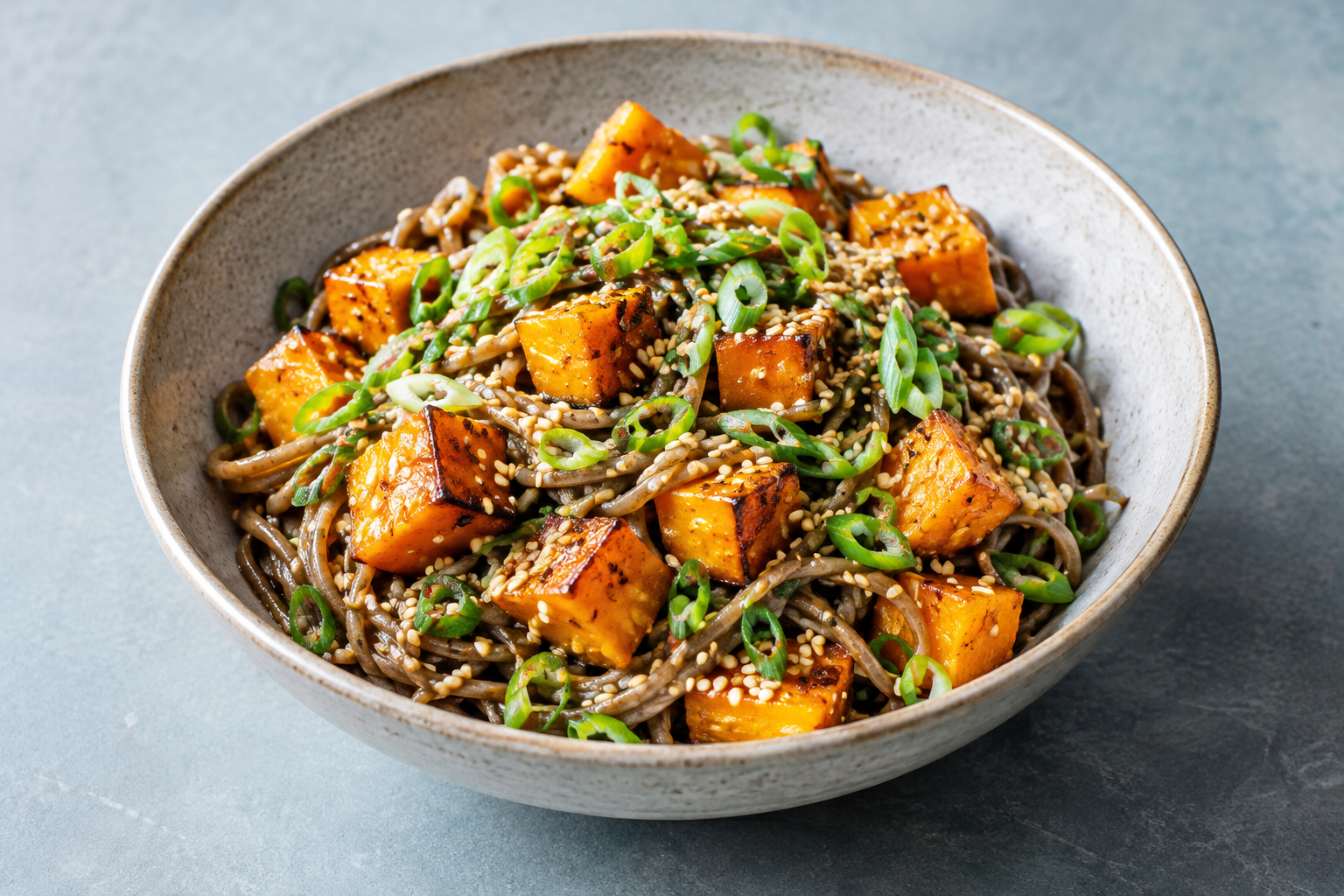
Soba is the Japanese name for noodles made from buckwheat; many varieties also contain wheat flour, so check the packaging if you’re specifically looking for buckwheat noodles. Their lightly earthy flavor pairs well with pumpkin, which grows sweeter in the oven and caramelizes at the edges. In this dish, the noodles make a hearty base, while the pumpkin adds soft, almost creamy pieces. Spring onions and sesame bring freshness and a little crunch.
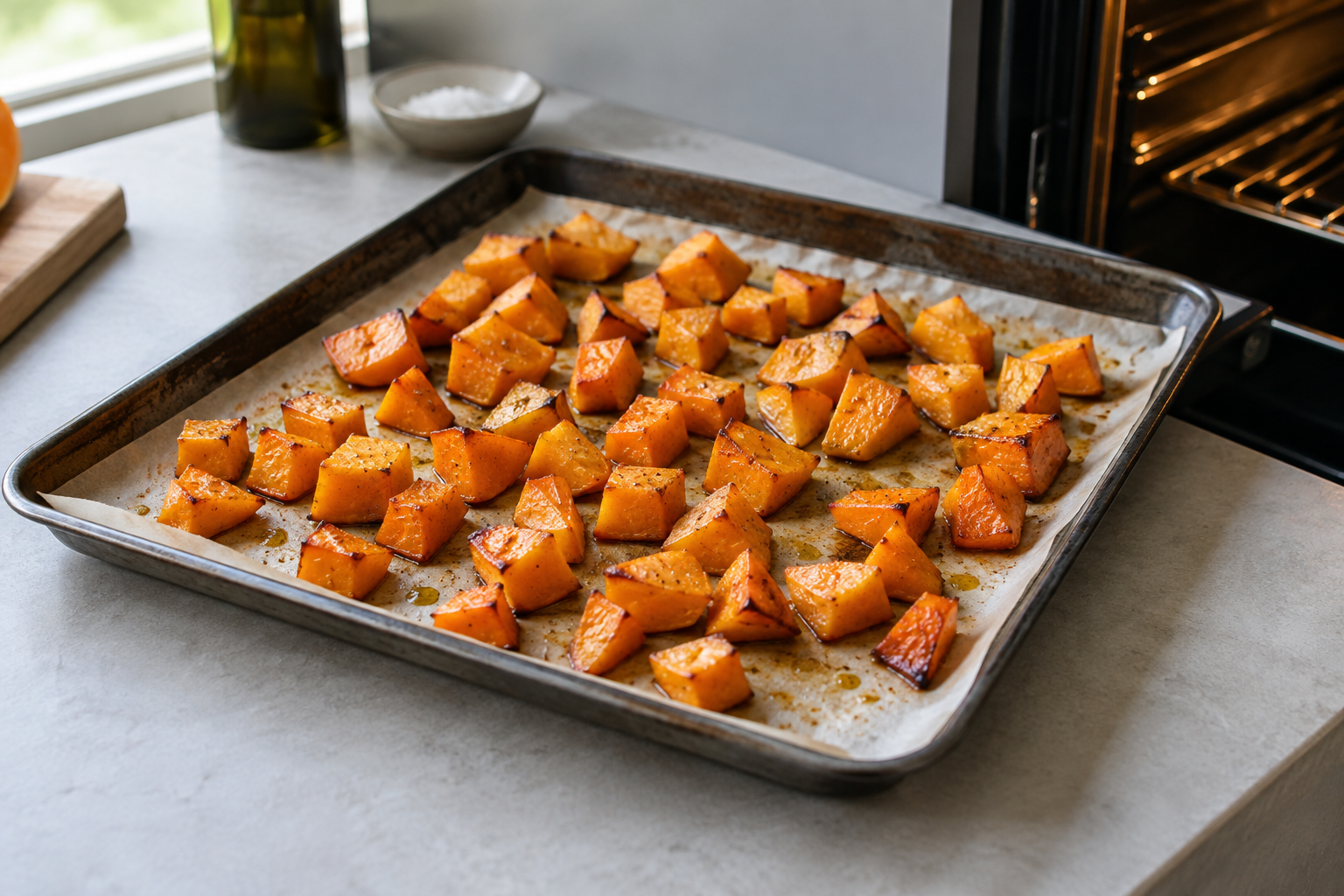
Pumpkin is widely available, especially in autumn and winter, but this combination works with different varieties, such as butternut squash or a firm orange pumpkin. Cut the pieces to roughly the same size so they cook evenly. Spread them out on a baking sheet: they roast better with space between them than when piled on top of each other. The hot oven gives them browned edges and a deeper flavor; simply boiling them would make the pumpkin softer and more watery.
The dressing is built around soy sauce, rice vinegar, fresh ginger and sesame oil. The vinegar balances the sweetness of the pumpkin, while ginger adds a fresh, gently pungent note. Sesame oil has a pronounced flavor, so one tablespoon is enough to give the dressing a distinctive nuttiness without overpowering the other flavors. Stir in a little water if you want to thin it, so it coats the noodles more easily. Taste before mixing: soy sauces vary in saltiness, and you can adjust the amount of vinegar slightly to taste.
Cook the soba according to the package instructions and keep a close eye on it toward the end; the noodles can go from al dente to too soft quickly. Rinsing briefly with cold water removes loose starch and stops the cooking. Then drain them well so the dressing doesn’t become unnecessarily watery. Mix in the sauce while the noodles are still a little warm. Use tamari instead of soy sauce if that suits what you have on hand better; the flavor will still be savory, but check the saltiness in this case too.
Serve the soba warm or at room temperature, with the pumpkin on top and spring onion and toasted sesame to finish. The noodles are best on the day they’re made, as they absorb the dressing and can become firmer. Store leftovers covered in the refrigerator and eat them within two days; stir in a splash of water or rice vinegar before serving if the dressing has been absorbed. To make it a more substantial meal, serve it with a simple bowl of miso soup, for example.
 Main course

