ABOUT THIS RECIPECauliflower, Slowly Cooked in Wine
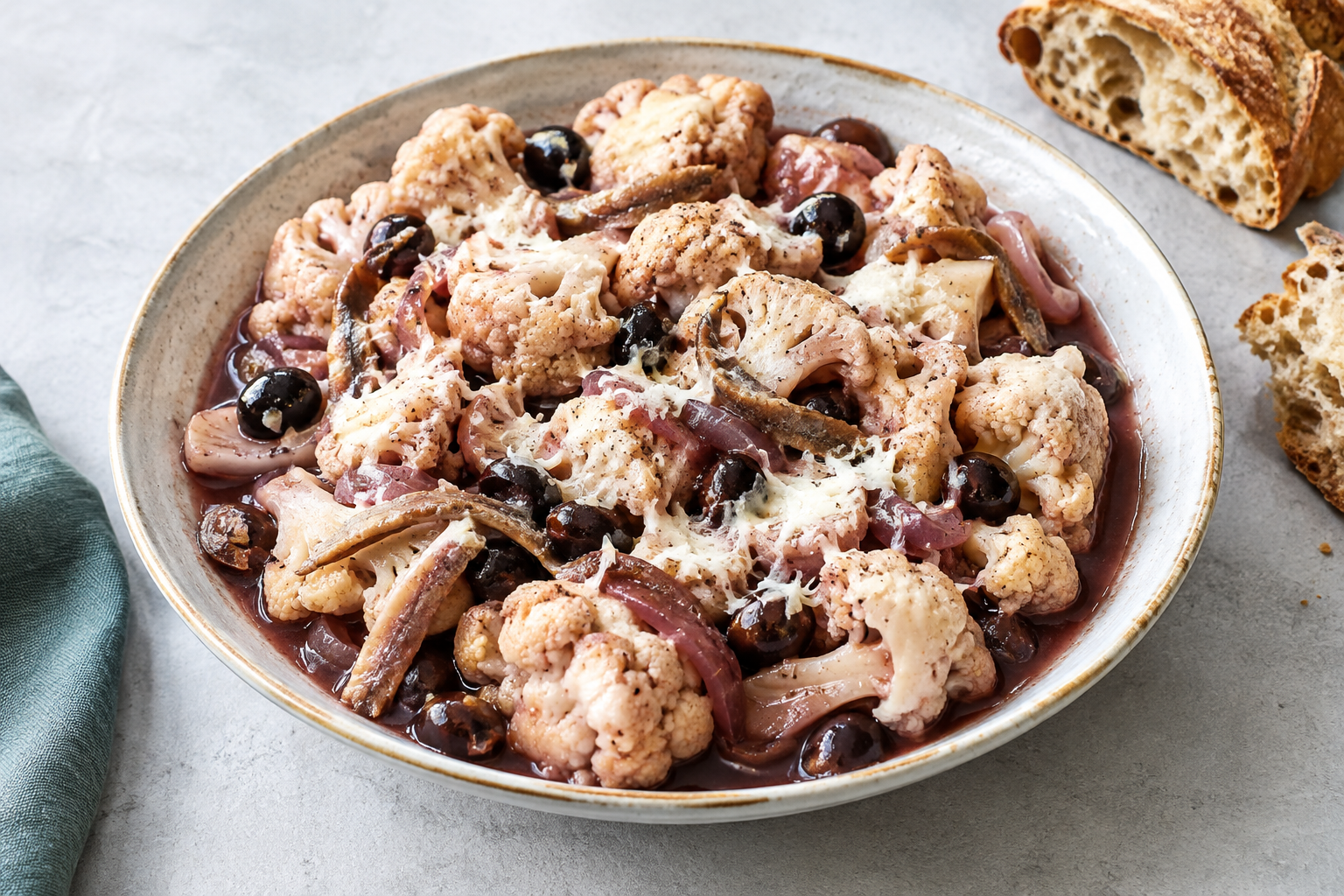
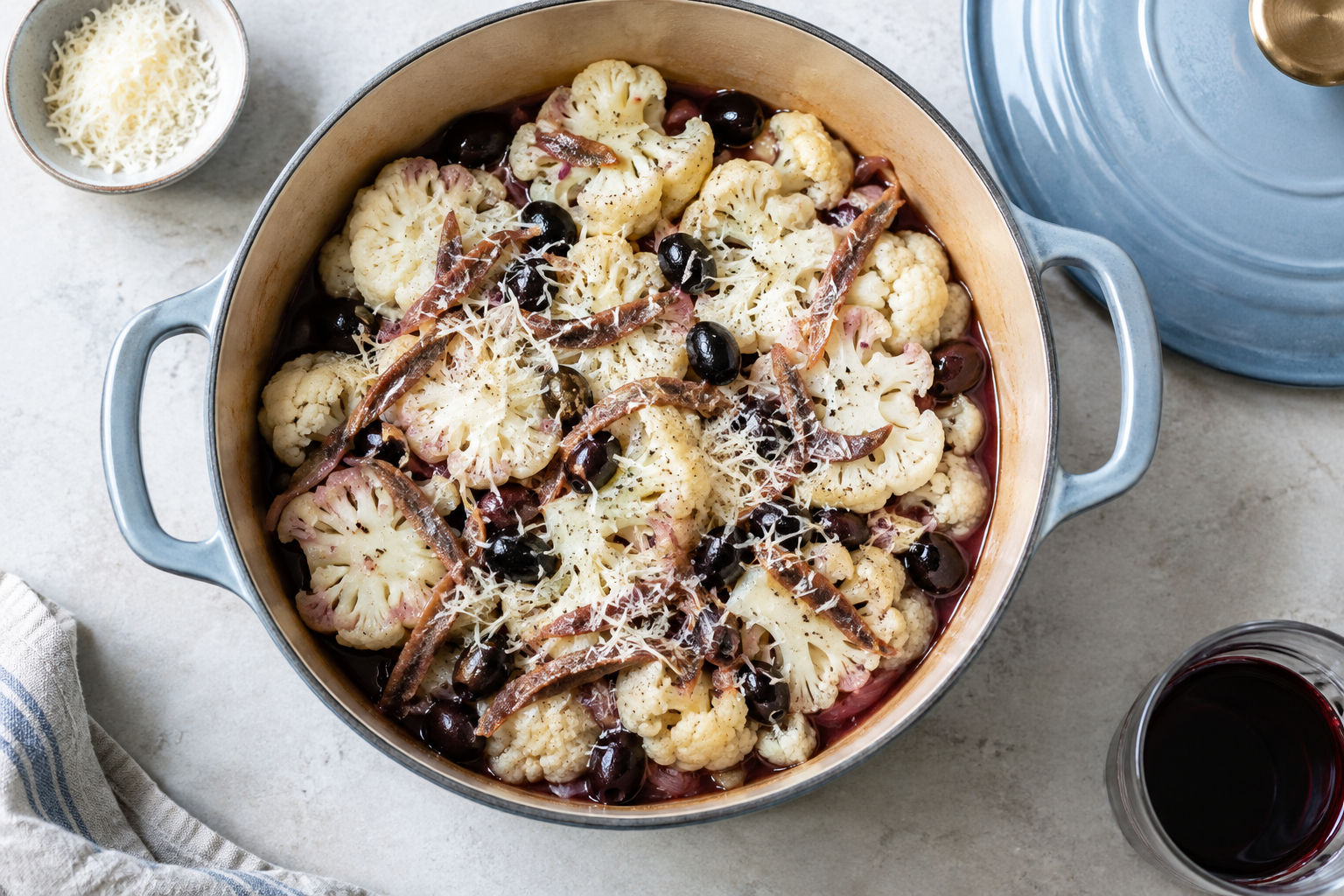
Cavolfiore affogato literally means ‘drowned cauliflower’: the vegetable is cooked, covered, in liquid—here, mainly red wine. It’s a Sicilian preparation with regional and household variations. One version might use a different cheese or leave out ingredients; the ratio of wine to cauliflower varies too. This recipe uses onion, anchovies, olives and pecorino. Together, they give the cauliflower savory depth, while the wine creates a dark, fragrant liquid as it braises.
In the Netherlands, cauliflower is widely available from late summer through winter, though you can find it in shops year-round. Choose a firm head with compact florets and cut it into roughly equal-sized pieces. You can use the stem too: peel away the tough outer layer and slice the tender inside. This helps everything cook evenly and leaves less to waste.
Gentle cooking matters more than browning. In a pan with a well-fitting lid, the cauliflower can slowly steam and braise in the liquid released by the wine, onion and vegetable. Keep the heat low; if it’s too high, the wine will evaporate before the cauliflower is tender. A heavy pan helps distribute the heat evenly. Try not to stir often as it cooks, so the florets stay intact. If the bottom of the pan is dry while the vegetable is still firm, add a small splash of water.
The anchovies mostly dissolve, adding salt and umami without necessarily making the dish taste strongly of fish. So taste at the end before adding salt: the olives, anchovies and pecorino are already salty. Black olives bring a full, slightly fruity flavor; green olives can be used instead, but make the dish brighter and more assertive. Pecorino adds a sharp, salty note. If you prefer a milder flavor, you can use a mild Italian cheese that melts well.
Serve the cauliflower warm as a side dish, with the braising liquid spooned over it and hearty bread alongside to soak up the sauce. It goes well with roast meat or fish, but can also be part of a meal with other vegetable dishes. Refrigerate leftovers promptly in a covered container and eat within three days. Reheat gently in a pan with a splash of water, until piping hot throughout.
 Main course

