ABOUT THIS RECIPESour, sweet and gently stewed
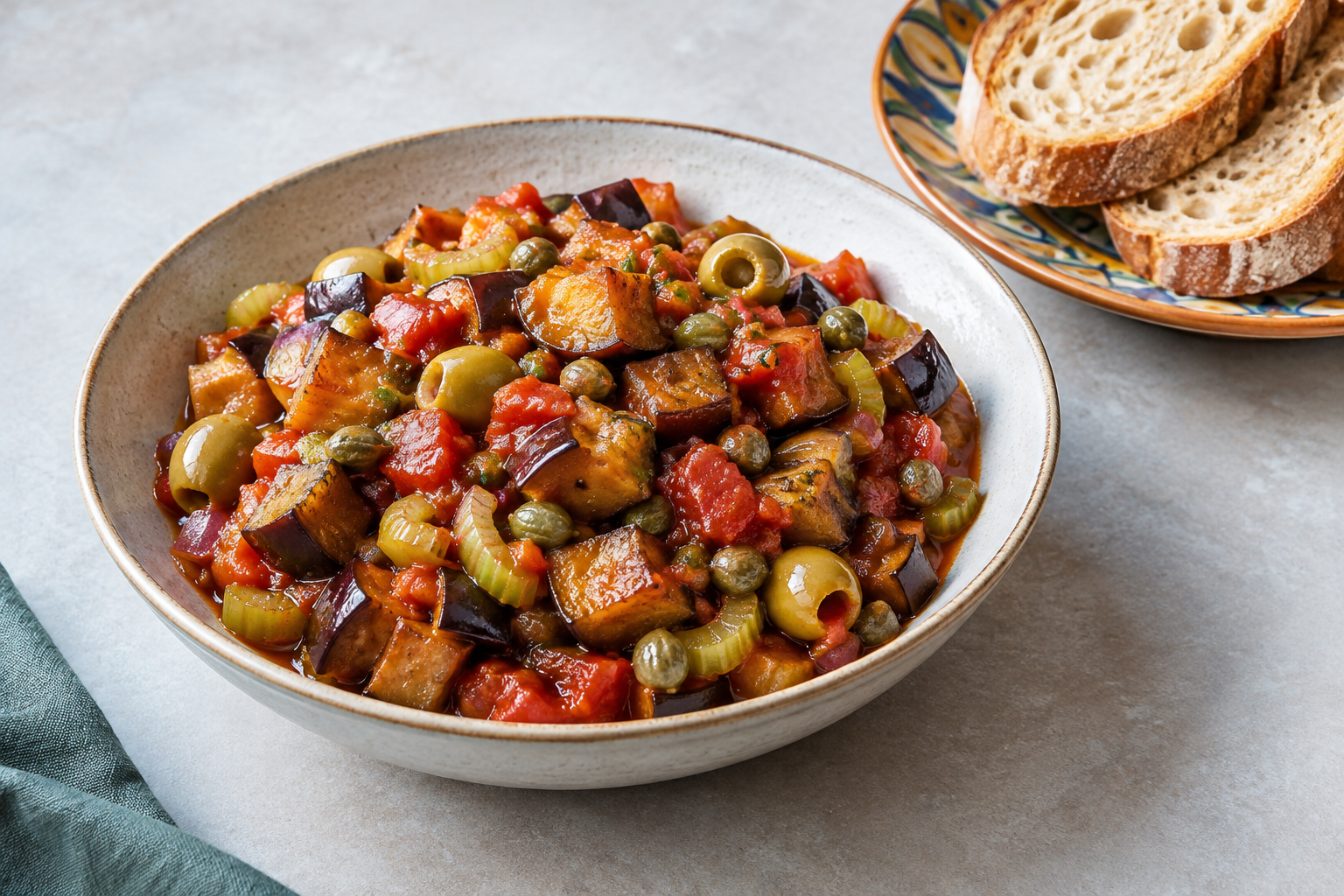
Caponata is a Sicilian dish with eggplant at its heart. Celery, tomato, olives and capers bring contrast to the soft vegetable: savoury, salty notes alongside juicy tomato and bright vinegar. A little sugar rounds out the acidity. This combination is often called agrodolce, an Italian word for sweet and sour. The balance should be clearly noticeable, but the caponata shouldn’t taste like a sweet-and-sour sauce; taste it at the end and add vinegar or sugar gradually.
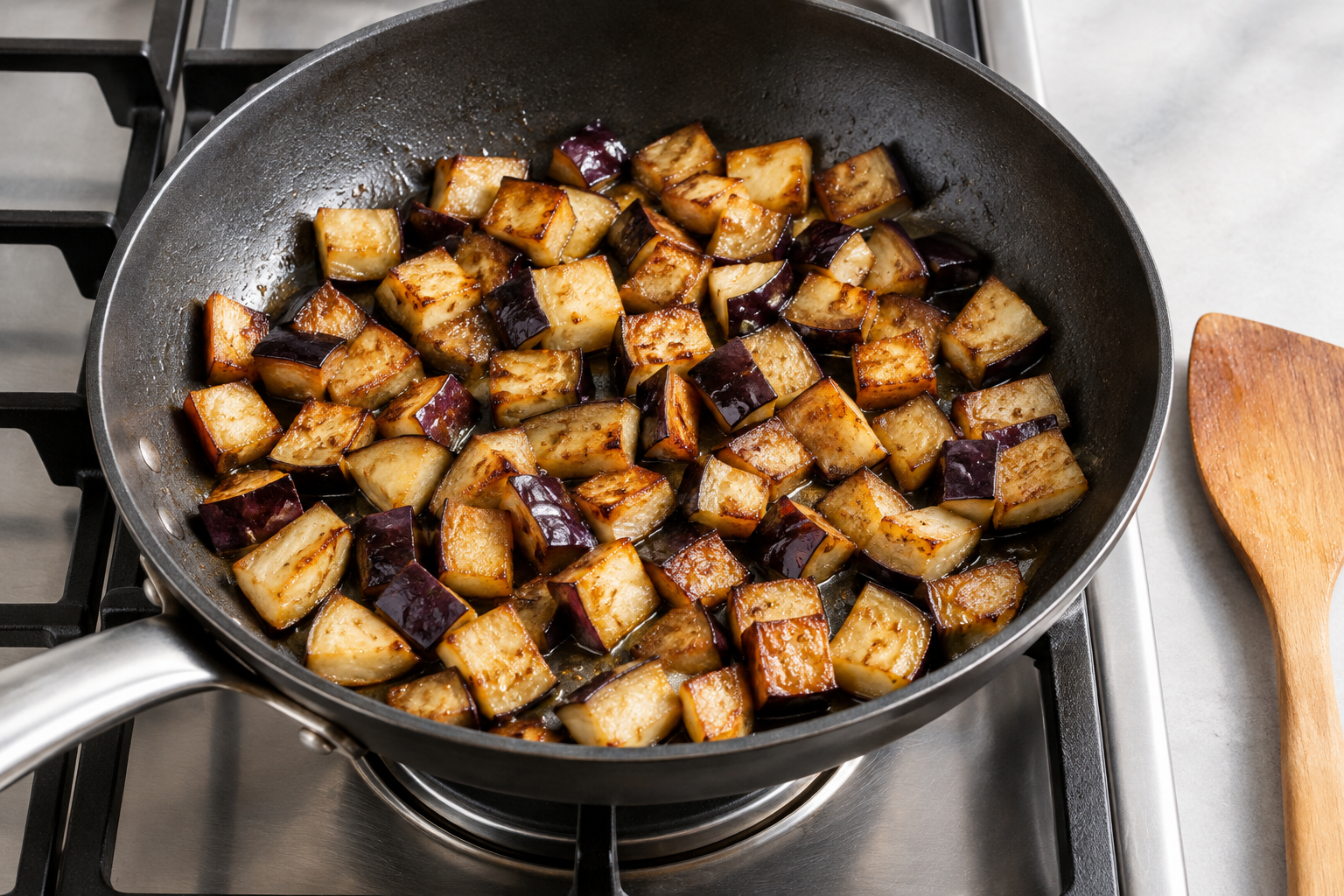
The cooking starts with diced eggplant, browned in oil until tender inside. Fry it in batches so the pan doesn’t get crowded and the pieces actually fry rather than steam. Eggplant absorbs oil easily; add more during cooking only if the pan is dry. The celery is then cooked gently until tender but still with a little bite. Tomato brings the vegetables together into a juicy mixture. Don’t cook the caponata so long that the eggplant completely falls apart.
There are many versions of caponata in Sicily, with variations including the types of olives used, the ratio of vinegar to sugar and any additional ingredients. This recipe keeps the focus on the combination of eggplant, celery, tomato, olives and capers. Green olives bring a robust, savoury flavour; use pitted olives and roughly chop them. Briefly rinse salted capers, or drain capers from a jar. Since both ingredients add salt, it’s best to season generously only at the end.
Eggplant and tomato are widely available in the Netherlands during the warmer months, although you can usually find them all year round. Choose eggplants that feel firm and have smooth skin. Ripe fresh tomatoes can be used instead of canned tomatoes, as long as they’re juicy; chop them small and bear in mind that the cooking time may vary slightly. Red wine vinegar works well with the bold flavours, but mild white wine vinegar is also suitable. Let the caponata cool after cooking and serve it at room temperature, giving the flavours time to come together.
Serve caponata as an antipasto with crusty bread, or put it on the table alongside other small dishes. It also goes well with grilled vegetables or simple fish, where its sour and salty notes provide contrast. Store leftovers covered in the fridge and refrigerate them within two hours of cooking. Let a portion come gently to room temperature before serving; reheat only what you want to eat warm, and don’t store previously reheated leftovers again.
 Main course

