ABOUT THIS RECIPECrisp on the Outside, Soft on the Inside
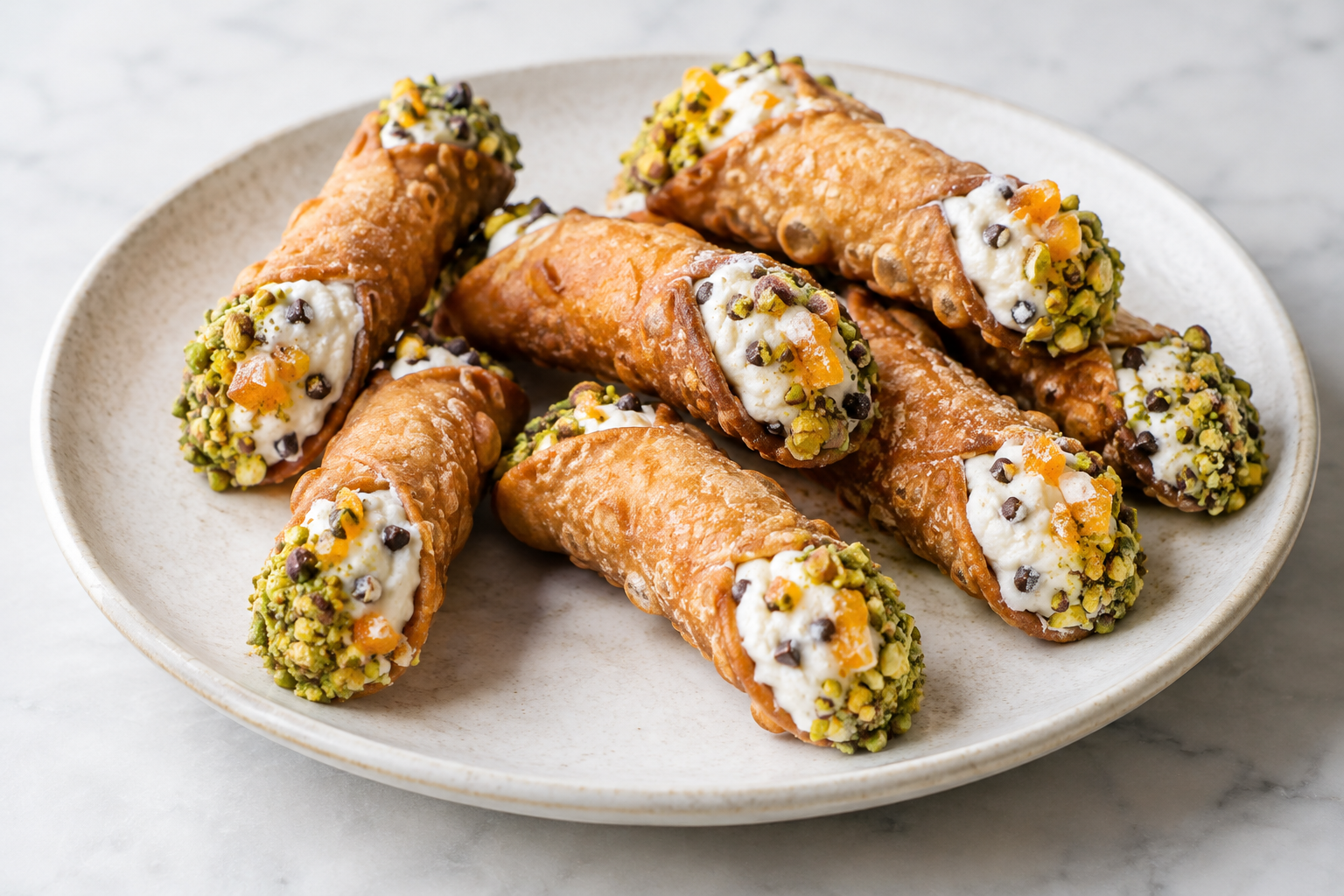
With cannoli, contrast is key: the shell should be thin and crisp, while the filling is soft and fresh. The ricotta gets its flavor from powdered sugar, orange zest and small pieces of dark chocolate; pistachios or candied orange at the ends add a little more bite. Since the filling is mild and creamy, dark chocolate works better here in small pieces than as a thick layer of sauce. That way, the orange still comes through and the cannolo doesn’t feel heavy.
Use full-fat ricotta and let it drain for at least four hours, preferably overnight, in a fine-mesh sieve in the refrigerator. Ricotta naturally contains moisture; if it remains in the filling, the filling will turn loose and soak into the shells more quickly. The exact amount of moisture varies by brand, so focus on the texture: after draining, the cheese should be firm enough to hold its shape on a spoon or in a piping bag. Stir in the sugar only once the ricotta has drained well.
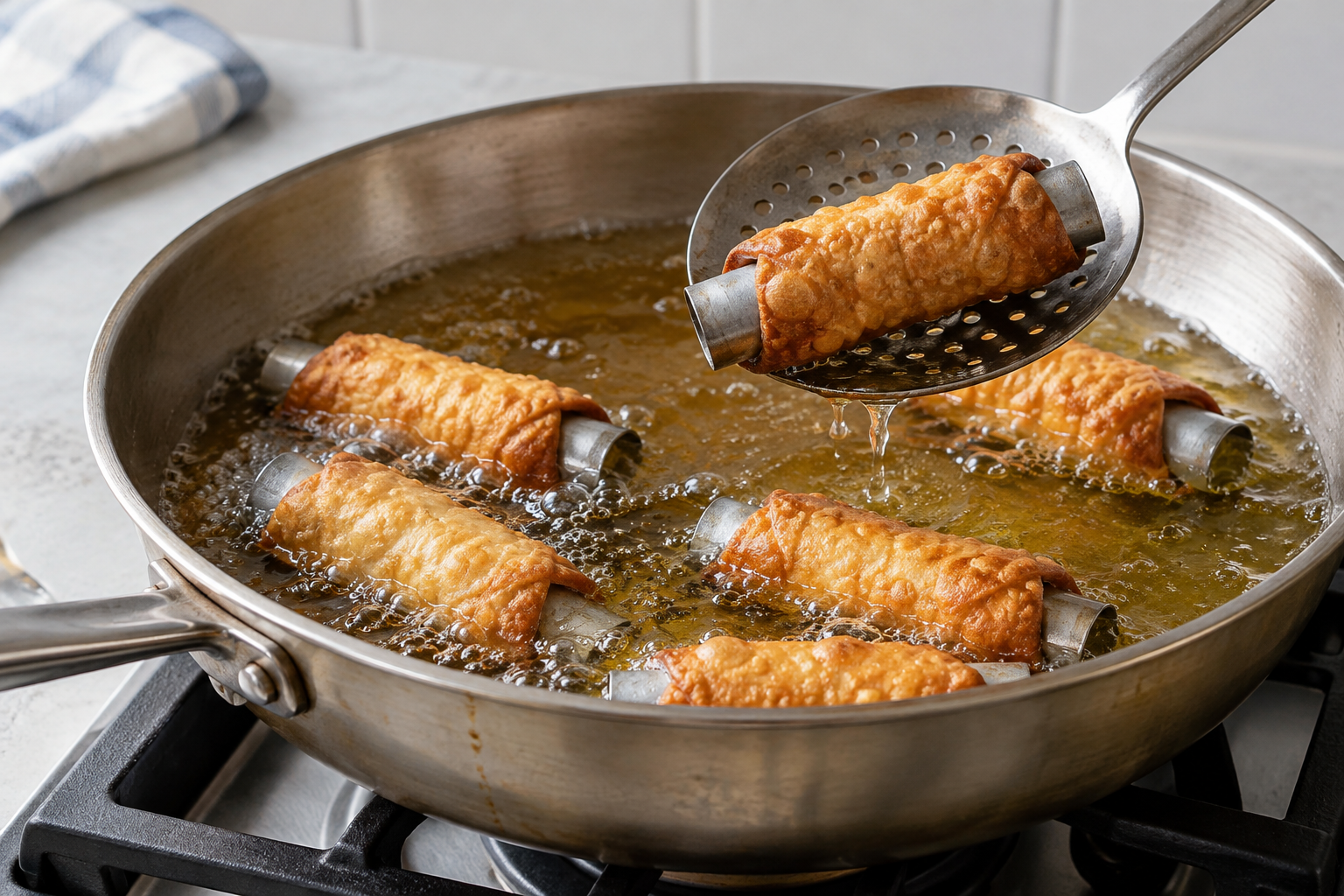
Wine gives the dough its pliability, and it is shaped around metal cannoli tubes. Roll it out thinly: a thick layer is more likely to turn chewy than crisp. Lard gives the shells a distinct crispness and is used in traditional recipes; cold butter is a practical substitute, but gives a slightly different flavor and texture. The wine evaporates during frying and helps create a light, blistered crust. Keep the oil around 175 °C. If it’s too cool, the shells absorb more oil; if it’s too hot, they brown before they’re cooked through. A kitchen thermometer makes it easier to judge.
Fill the shells just before serving; otherwise, the dough absorbs moisture and loses its crispness. A piping bag makes filling easy, but a small spoon works too; fill from both ends and finish with pistachios, candied orange or both. Cannoli are a Sicilian classic, but fillings and toppings vary. This version keeps the ricotta at the heart of it, with orange and chocolate as flavor accents. Serve them as dessert after a meal or with coffee. If you want to get ahead, store the cooled, unfilled shells in an airtight container and the ricotta filling, covered, in the refrigerator; bring them together at the table.
 Main course

