ABOUT THIS RECIPESour, salty and with a crunchy bite
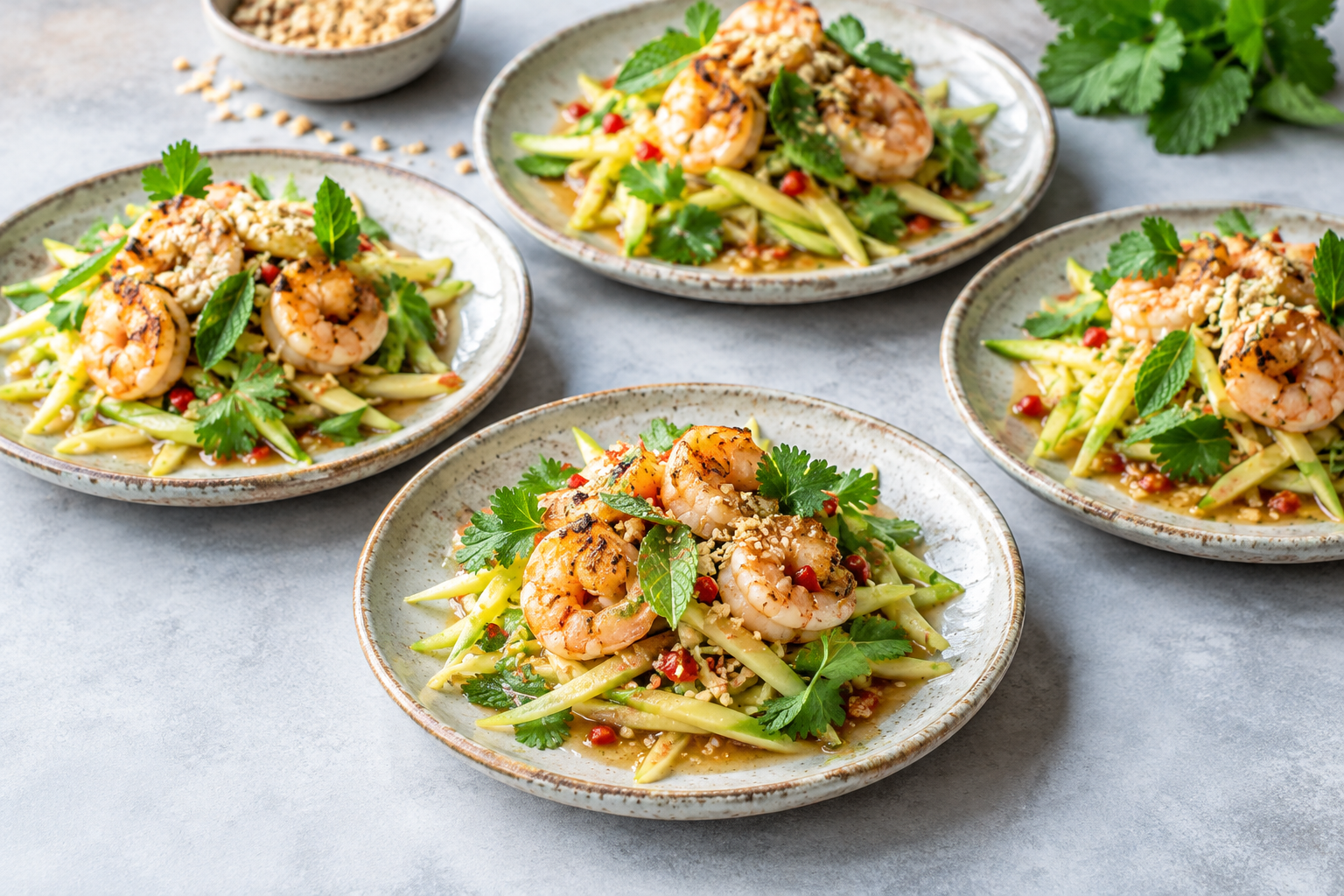
This modern starter combines ingredients and contrasting flavors found in various Southeast Asian cuisines, without claiming to represent a traditional regional dish. Green mango is firm and distinctly sour; ripe mango is softer and sweeter, so it works less well here. Look for a hard, unripe mango at an Asian grocery store or a larger supermarket. If you can’t find one, use a firm Granny Smith apple. It tastes different, but gives a similarly fresh bite.
Tamarind brings a fruity tartness with a rounded, slightly malty flavor, while lime brightens the dressing. Fish sauce adds salt and umami, so taste before adding any extra salt. Tamarind paste varies in thickness and tartness by brand. If the dressing is too sharp, stir in a little more sugar. If it’s too sweet or heavy, add lime. A finely chopped piece of red chili adds warmth, but leave out the seeds if you prefer a milder heat.
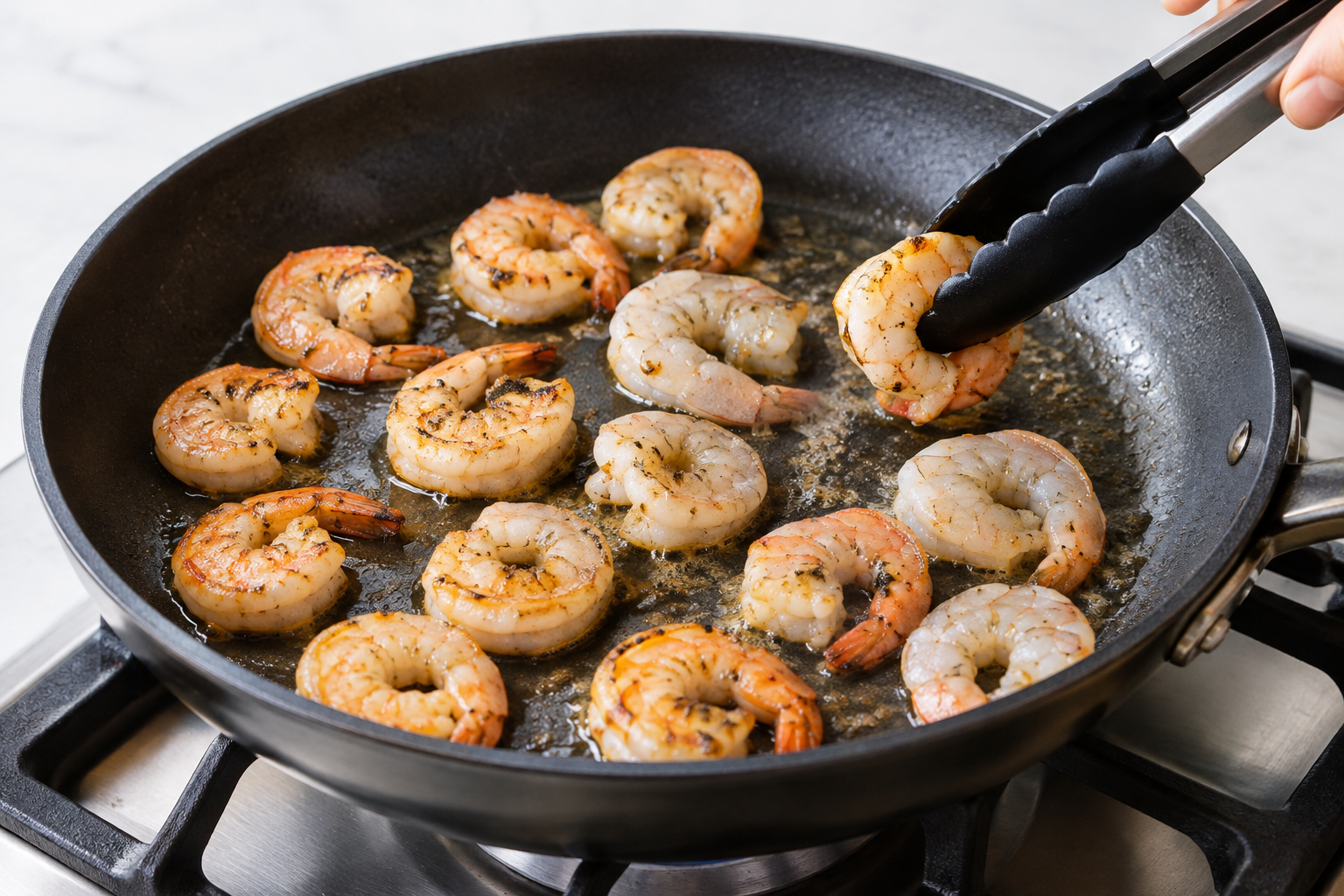
Shrimp need only a short time over the heat. Pat them dry before they go into the pan, and cook them in a hot pan with space between them; that way, they brown instead of steam. Small shrimp cook faster than large ones. Take them off the heat as soon as they turn opaque and feel just firm. Cooking them too long makes them tough. Buy them peeled and deveined to keep prep short, or use shell-on shrimp and allow extra time for cleaning them.
The rice is first toasted dry. Keep it moving so it browns evenly and develops a nutty flavor; let it cool before pounding it coarsely so the grains stay crisp. A mortar and pestle is handy, but a sturdy pan and the bottom of a glass work too. Sprinkle the rice over the mango and shrimp just before serving, otherwise it will absorb moisture and lose its crunch.
Serve the dish right away, for example as a starter before grilled fish or a mild noodle meal. Mint and cilantro add a cool, herbal note; use a smaller amount of each if one herb dominates. You can mix the dressing ahead and keep it covered in the refrigerator, but slice the mango and cook the shrimp as close to serving as possible. Refrigerate leftovers with shrimp and eat them within two days; reheat them gently or serve them cold.
 Main course

